To find sustainable alternatives to fast fashion, focus on brands committed to ethical manufacturing, using eco-friendly materials, and supporting local or small-scale producers. Opt for clothing that’s designed to last, can be recycled, or repurposed, and consider secondhand purchases or clothing swaps. These choices reduce environmental harm and promote fair labor practices. If you keep exploring, you’ll discover even more practical ways to make eco-conscious fashion decisions that align with your values.
Key Takeaways
- Choose brands committed to ethical manufacturing and transparent supply chains.
- Opt for secondhand, vintage, or clothing swap platforms to extend garment lifespan.
- Support companies using eco-friendly materials like organic cotton and recycled fabrics.
- Buy from local artisans and small-scale producers to reduce carbon footprint and boost community economies.
- Prioritize durable, timeless designs and repair or repurpose garments to minimize waste.
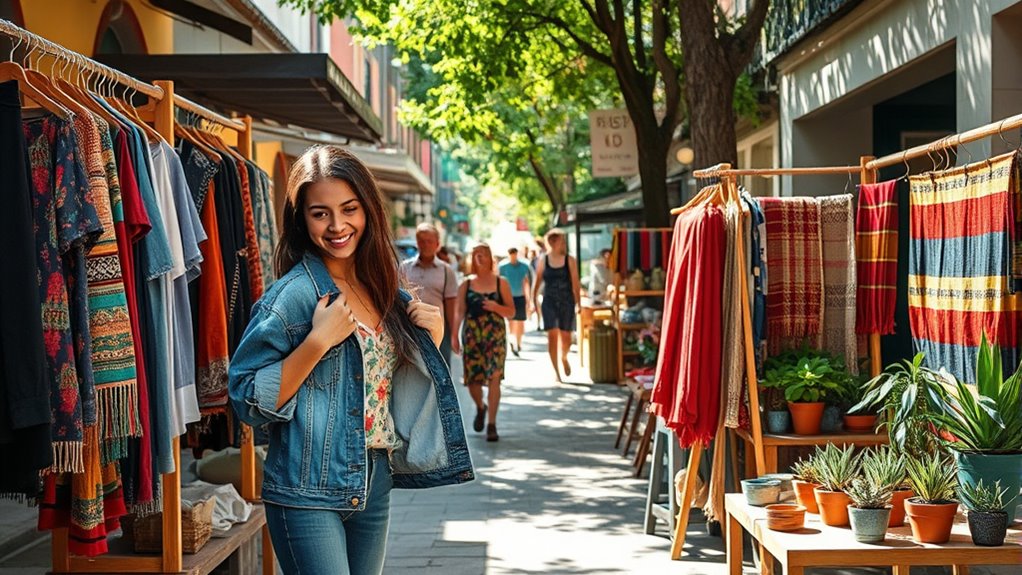
Have you ever wondered if there’s a way to stay stylish without harming the planet? The good news is, there are sustainable alternatives to fast fashion that allow you to look good while making eco-conscious choices. One of the most important shifts you can make involves supporting brands committed to ethical manufacturing. These companies prioritize fair wages, safe working conditions, and transparent supply chains, ensuring that the people behind your clothes aren’t exploited. When you choose brands that emphasize ethical manufacturing, you help promote social responsibility and reduce the unethical practices often associated with fast fashion. This way, your wardrobe reflects your values and contributes to a more equitable industry.
Another powerful approach is embracing the circular economy. Unlike the traditional linear model—where products are made, used, and then discarded—the circular economy encourages reuse, recycling, and longevity. When you buy from brands that adopt circular principles, you’re supporting designs that are built to last and can be easily recycled or repurposed at the end of their life cycle. This reduces waste and minimizes the demand for new raw materials, lessening the environmental footprint of your wardrobe. You might also consider purchasing secondhand or vintage clothing, which keeps garments in use longer and cuts down on textile waste. Participating in clothing swaps or reselling items you no longer wear can further extend the lifespan of clothing and support a more sustainable fashion ecosystem.
Embrace the circular economy with durable, recyclable, and secondhand clothing to reduce waste and support sustainable fashion.
By choosing brands that focus on ethical manufacturing and practicing the circular economy, you actively contribute to transforming the fashion industry. These companies often use eco-friendly materials, such as organic cotton or recycled fabrics, and design their pieces with durability in mind. Your purchasing decisions become a statement against the throwaway culture of fast fashion, encouraging companies to adopt more sustainable practices. *furthermore*, supporting local artisans and small-scale producers can reduce carbon footprints associated with long-distance shipping and large-scale manufacturing. Additionally, understanding the importance of sustainable supply chains helps you make more informed choices and supports transparency in the industry.
Ultimately, staying stylish doesn’t mean sacrificing your commitment to the environment. You have the power to influence the fashion industry by being intentional with your choices. Opt for brands that prioritize ethical manufacturing and sustainable practices, and look for ways to extend the life of your clothing through repair, resale, or repurposing. Every small step adds up, pushing the industry toward a more sustainable, circular future. Your wardrobe can be a reflection of your values—chic, responsible, and kind to the planet.

Organic Clothing For Women Organic 100% Cotton Linen Tank Tops For Women Comfy Lounge Wear Summer Gauze Sleeveless Crewneck Hemp Shirt Seniors Casual Loose Fit Lightweight Cami Trendy Beach
Fabric:Crafted from 60% linen,40% cotton,this sleeveless tank top is lightweight,loose fit,moisture-wicking,breathable but non-see-through.It keeps you cool and dry…
As an affiliate, we earn on qualifying purchases.
As an affiliate, we earn on qualifying purchases.
Frequently Asked Questions
How Can Consumers Identify Genuinely Sustainable Fashion Brands?
You can identify genuinely sustainable fashion brands by checking for certification labels like Fair Trade or GOTS, which verify ethical sourcing and eco-friendly practices. Look for transparency in their supply chain, clear information about materials, and commitments to fair labor. Brands that openly share their sustainability efforts and hold recognized certifications demonstrate genuine dedication, helping you make informed decisions that support ethical and environmentally responsible fashion choices.
What Are the Environmental Impacts of Different Sustainable Fabrics?
Think of sustainable fabrics as the green lungs of fashion. Eco-friendly dyes reduce toxic runoff, protecting water sources, while water conservation minimizes resource use during production. Organic cotton, hemp, and recycled fibers generally have lower environmental impacts, unlike conventional fabrics. By choosing these, you help cut pollution and save water, making your wardrobe a gust of fresh air for the planet. Your choices ripple outward, fostering a greener, more sustainable industry.
How Does the Cost of Sustainable Fashion Compare to Fast Fashion?
The cost comparison shows sustainable fashion is generally more expensive than fast fashion, mainly due to higher-quality materials and ethical production. You might face affordability challenges, but investing in sustainable pieces often means they last longer and reduce waste. While the upfront cost is higher, your choice supports better environmental practices and can lead to savings over time, making it a worthwhile, eco-conscious investment.
Can Secondhand Shopping Fully Replace New Sustainable Clothing?
Secondhand shopping can considerably reduce your environmental impact, but it might not fully replace new sustainable clothing. You can explore vintage shopping for unique finds, participate in clothing swaps to refresh your wardrobe, and support brands committed to ethical practices. While secondhand options help, combining them with sustainable new purchases maximizes your positive impact. It’s about making mindful choices, reducing waste, and embracing a versatile, eco-friendly wardrobe.
What Policies Support the Growth of Sustainable Fashion Industries?
You can support sustainable fashion industries by advocating for government incentives that encourage eco-friendly practices and investments in sustainable brands. Additionally, push for trade regulations that favor ethically produced and eco-conscious clothing, making sustainable options more accessible and affordable. Your actions, like choosing brands aligned with these policies, help create a market where sustainable fashion thrives, ultimately reducing environmental impact and fostering industry growth.

NookZuzu 100% Rayon Derived from Bamboo Fabric by The Yard,Dark Gray Cooling Fabric,56 Inch Wide 1 Yard Lining Fabric for Wedding,Decoration,Apparel,DIY Crafting,Sewing
【PRODUCT INCLUDES】1 Yard bamboo fabric 36l x 56w inch. Each quantity comes in separate piece. Ex: If you…
As an affiliate, we earn on qualifying purchases.
As an affiliate, we earn on qualifying purchases.
Conclusion
By choosing sustainable fashion options, you gently help the planet breathe easier and embrace a more mindful way of dressing. Every small step you take toward eco-friendly brands and mindful consumption adds up, creating a brighter future for everyone. Remember, your choices hold quiet power—shaping a world where beauty and responsibility go hand in hand. With each conscious decision, you’re nurturing hope and making a subtle yet meaningful difference that truly matters.

How to Dress Vintage: Re-Create the Most Iconic Looks of the 20th Century
As an affiliate, we earn on qualifying purchases.
As an affiliate, we earn on qualifying purchases.
clothing swap platform
As an affiliate, we earn on qualifying purchases.
As an affiliate, we earn on qualifying purchases.