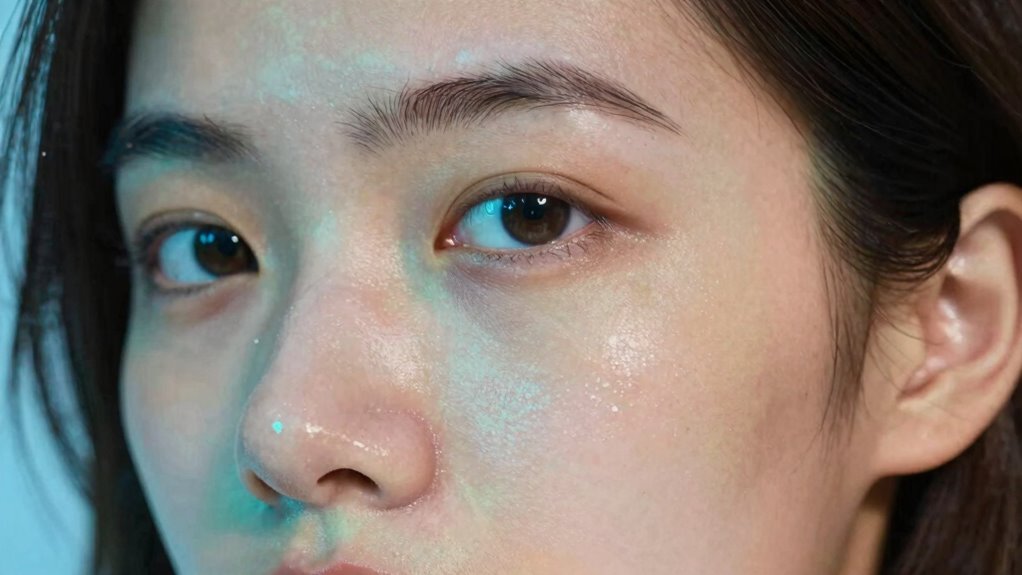

LED lights with low CRI and TLCI scores often cause skin tones to look off because they don’t accurately reproduce colors, especially in the red and amber spectra that make skin appear natural. Narrow spectrum or unbalanced color temperatures can make skin look dull, yellow, or washed out. To get true-to-life skin tones, you need high-quality LEDs with broad spectral coverage and high scores. Keep exploring to learn how proper lighting choices can improve your results.
Open a free Amazon Business account
Business pricing, bulk buying and tax-exempt orders.
As an affiliate, we earn on qualifying purchases.
Key Takeaways
- Poor spectrum coverage and skewed spectral distribution cause LED lights to distort skin tones.
- Low CRI or TLCI scores indicate inadequate color fidelity, leading to dull or unnatural skin appearances.
- Inconsistent or improper color temperature settings can make skin look yellow, washed out, or off-tone.
- Narrow spectrum LEDs lack broad color reproduction, impacting the natural vibrancy of skin tones.
- High-quality LEDs with balanced spectrum, high CRI/TLCI, and correct temperature ensure accurate, vibrant skin colors.
high CRI LED light for photography
As an affiliate, we earn on qualifying purchases.
As an affiliate, we earn on qualifying purchases.
Why Do Skin Tones Look Off Under LED Lights?
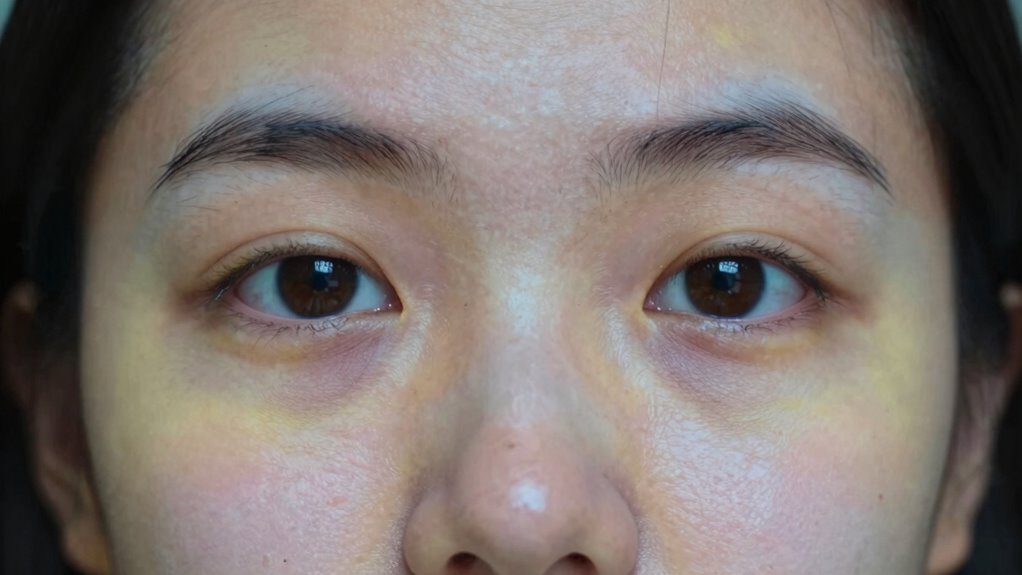
Have you ever noticed that skin tones can look strange or washed out under certain LED lights? This often happens because of the LED color, which impacts how your skin tone appears. Not all LEDs reproduce colors accurately; some emit a skewed spectrum that can distort skin hues. When the LED’s color temperature isn’t balanced or the light lacks a broad spectrum, your skin can look dull, overly yellow, or washed out. This is especially noticeable in makeup, photography, or video, where true skin tone matters. Poor color rendering from the LED light causes these issues, making your skin appear less natural. To avoid this, choose LEDs with high-quality color rendering capabilities that better match natural light, ensuring your skin tone looks vibrant and true. Additionally, the Color Rendering Index (CRI) of LED lights is a key factor in evaluating how accurately they reproduce colors.
What Are CRI and TLCI, and Why Do They Matter?
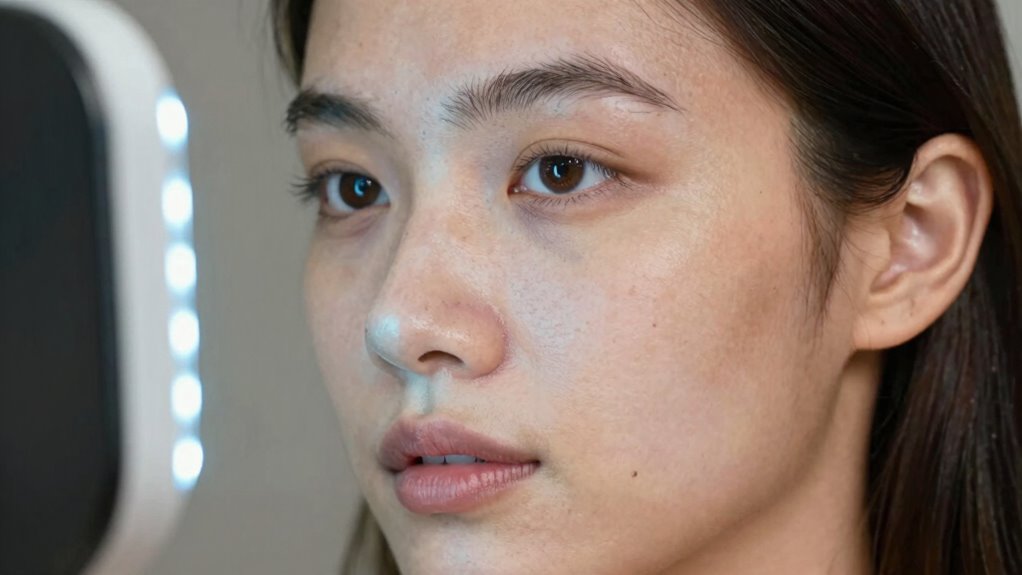
Understanding CRI (Color Rendering Index) and TLCI (Television Lighting Consistency Index) is essential because they measure how accurately a light source displays colors. High CRI and TLCI scores indicate that the light reveals true colors, which is critical for tasks like photography and video. These scores consider factors like color temperature, which affects how warm or cool the light appears, and light distribution, which influences how evenly the light spreads across your subject. When choosing LED lights, paying attention to CRI and TLCI guarantees your skin tones look natural and consistent. Lights with poor scores can distort colors, making skin look dull or off, even if the light’s color temperature seems ideal. That’s why understanding these metrics helps you select lighting that produces accurate, vibrant results. Additionally, selecting lights with high filtration efficiency ensures allergens and dust particles are less likely to distort or obscure true color representation.
How Do CRI and TLCI Scores Affect Your Skin Tones?

Your skin tones can look drastically different depending on the CRI and TLCI scores of your lighting. Higher scores ensure more accurate color reproduction, making your skin appear natural and vibrant. Lighting with good color temperature complements your skin, avoiding unnatural hues. Flicker reduction is also essential, preventing subtle flickering that can distort skin tones on camera. Here’s a quick comparison:
| CRI/TLCI Score | Color Temperature | Flicker Reduction |
|---|---|---|
| Low | Cool or warm | Minimal |
| Moderate | Slightly off | Some flicker |
| High | Accurate, neutral | Excellent |
| Very High | Perfect match | No flicker |
Choosing lights with high CRI/TLCI scores guarantees your skin looks natural, with true-to-life tones and minimal flicker issues.
How to Read and Interpret LED Lighting Scores
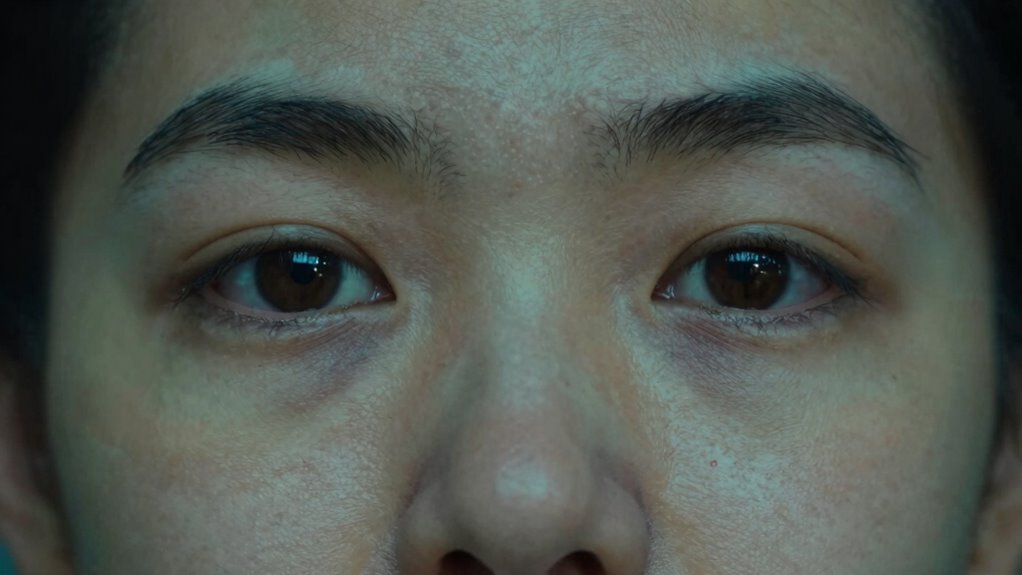
Reading LED lighting scores like CRI and TLCI might seem complex at first, but understanding what these numbers mean is essential for choosing the right lights. When interpreting scores, pay attention to the color temperature, which influences how warm or cool the light appears and affects skin tones. Higher scores generally indicate more accurate color rendering, helping skin look natural. Additionally, consider light diffusion qualities, as well-diffused light reduces harsh shadows and uneven color spots, making scores more reliable. Keep in mind that a high CRI or TLCI doesn’t guarantee perfect skin tones if the color temperature isn’t suitable for your setting. By understanding these scores and how they relate to color temperature and diffusion, you can select LED lights that enhance your subjects’ appearance naturally. Color rendering, which measures how accurately a light source displays colors, plays a crucial role in achieving natural-looking skin tones.
Comparing LED Lights: Which Scores Are Best for Natural Skin?
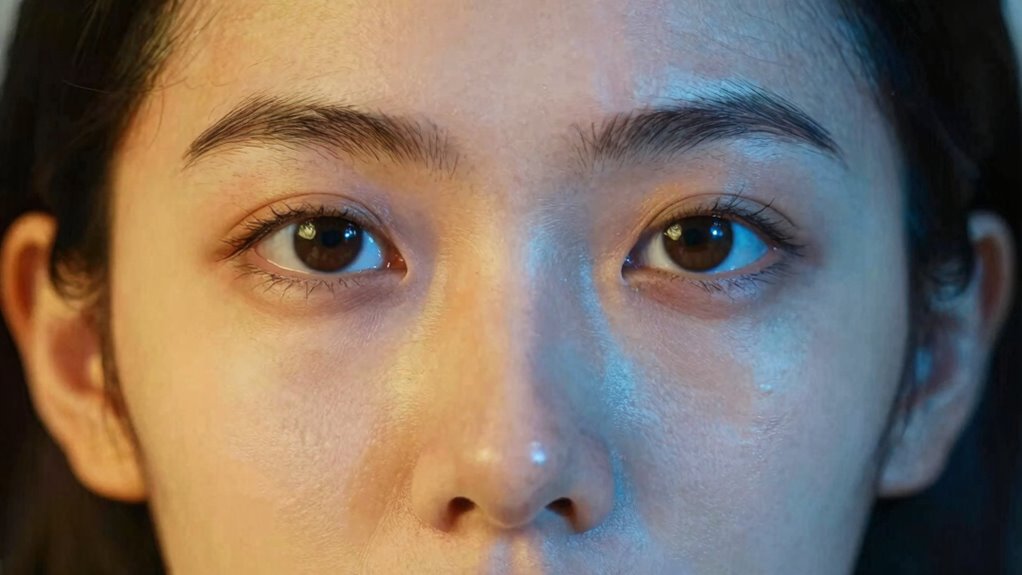
When comparing LED lights for natural skin tones, focusing on their CRI and TLCI scores can make a significant difference. Higher scores—above 90—indicate better color accuracy and faithful skin reproduction. Pay attention to color temperature; a balanced warm-to-neutral range (around 3200K to 5600K) helps achieve more natural skin tones. Additionally, spectral distribution matters: LEDs with broad, even spectral output produce more realistic colors by covering the full visible spectrum. Lights with poor spectral distribution can cause skin to appear washed out or unnaturally colored, regardless of score. Ultimately, the best LED lights provide high CRI and TLCI scores, appropriate color temperature, and even spectral distribution, ensuring your subjects’ skin looks authentic and vibrant on camera. spectral distribution also influences how well the light reproduces subtle skin tones and textures.
Common Lighting Mistakes That Make Skin Look Unnatural
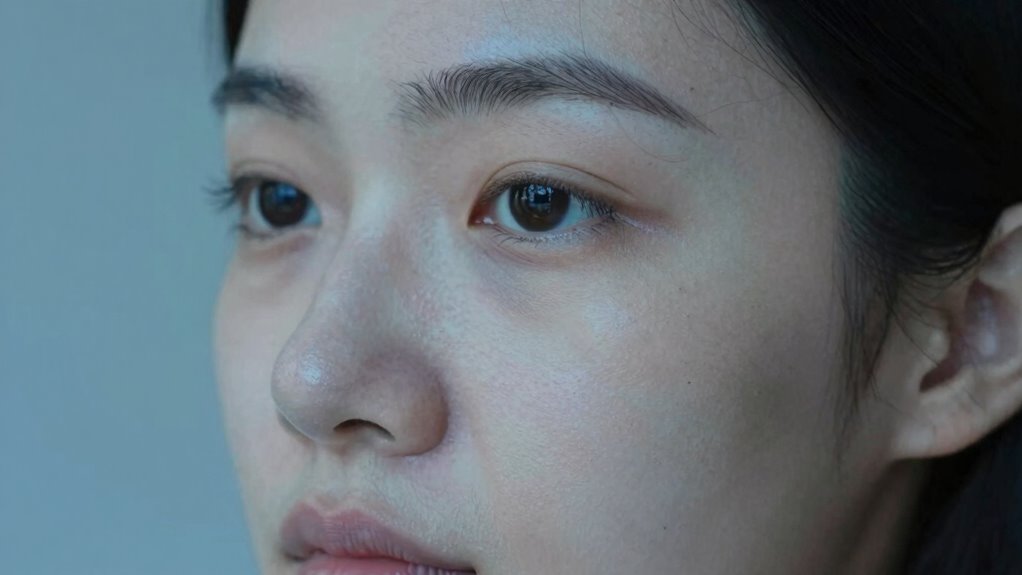
Poor lighting choices can quickly make skin look unnatural, even with high-quality LEDs. Using improper camera settings, like incorrect white balance, can distort skin tones further. Avoid harsh, uneven light that creates unflattering shadows or washes out features. Makeup techniques also matter—overly matte or shiny finishes can clash with your lighting, making skin appear dull or overly reflective. To prevent these mistakes, opt for soft, even lighting and fine-tune your camera’s white balance to match your environment. Keep your makeup subtle and natural to complement the lighting setup. Remember, the goal is to mimic natural light as closely as possible, ensuring your skin looks vibrant and true to life on camera. Understanding Free Floating lighting concepts can also help you achieve a more balanced and flattering look.
How to Choose High-CRI LED Lights for Better Skin Colors

To guarantee your LED lights flatter skin tones, focus on choosing lights with a high Color Rendering Index (CRI). The quality of the light spectrum directly impacts how natural and vibrant skin appears, so look for options that offer accurate color reproduction. Paying attention to skin tone accuracy helps you select lighting that highlights true colors without distortion. Additionally, considering the impact of indoor air quality can enhance overall comfort and health while using your lighting.
Color Rendering Index (CRI)
Choosing high-CRI LED lights is essential if you want your skin tones to look natural and vibrant. A high CRI score (closer to 100) means the light accurately renders colors, making skin look more true-to-life. When selecting LED lights, consider the color temperature, as it influences how warm or cool your skin appears. For balanced, natural tones, aim for a neutral or slightly warm temperature. Light diffusion also plays a role; diffused light softens shadows and minimizes harsh reflections, helping skin look smoother and more flattering. Guarantee the LED’s CRI rating is high, preferably above 90, to achieve the best color fidelity. Additionally, the spectral distribution of the light affects how well skin tones are rendered and can influence overall appearance. By paying attention to these factors, you can create lighting that enhances skin tones and delivers a more authentic visual experience.
Light Spectrum Quality
Ever wondered how the light spectrum impacts skin tones? The key lies in choosing LED lights with a high-quality light spectrum that offers consistent color. Here’s what to look for:
- Broad spectrum coverage, including red and amber tones, to mimic natural sunlight.
- Even distribution across wavelengths, ensuring no color gaps that distort skin hues.
- High color consistency, so skin tones stay true regardless of the lighting angle or distance.
- Minimal green or magenta spikes that can skew skin coloration.
Opting for LEDs with these qualities ensures your skin appears natural and vibrant. A balanced light spectrum enhances skin tone accuracy and provides reliable color rendering, making your images or videos look authentic and professional. Always prioritize spectrum quality for the best skin color results.
Skin Tone Accuracy
Achieving accurate skin tones with LED lighting hinges on selecting high-CRI (Color Rendering Index) lights that faithfully reproduce colors. When your lighting provides true-to-life skin tone matching, makeup application becomes easier and more precise. Look for LEDs with a CRI of 90 or above to guarantee subtle color nuances are visible, avoiding washed-out or unnatural looks. Proper lighting helps you see how makeup interacts with different skin tones, reducing guesswork. This accuracy is especially vital in professional settings like photography, videography, or beauty salons, where color fidelity impacts results. By choosing high-CRI LED lights, you confirm skin tones appear natural and consistent, helping you achieve better makeup application and more authentic portraits.
Tips to Fix and Improve Skin Tones When Using LED Lighting
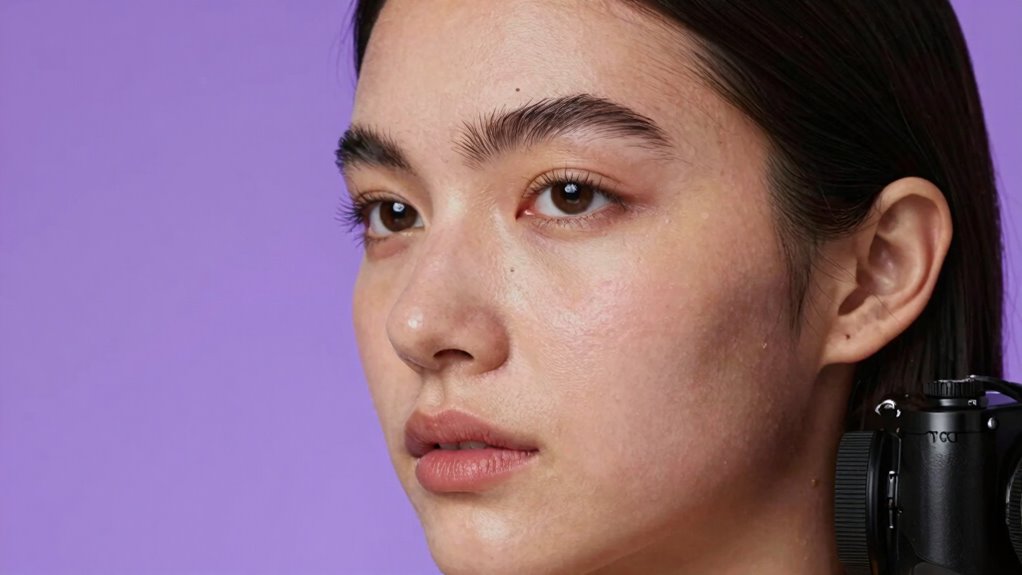
When working with LED lighting, skin tones can often appear unnatural or washed out if the color rendering isn’t properly balanced. To improve this, adjust your lighting setup and camera settings. Here are some tips:
- Use lights with high CRI or TLCI ratings for better skin tone accuracy.
- Balance your lighting angles to avoid harsh shadows that distort skin colors.
- Adjust your camera’s white balance to match your LED lights, ensuring true-to-life tones.
- Consider adding a color correction gel or filter if your lights skew warm or cool tones.
- Regularly monitor your lighting with accurate skin tone reproduction to ensure consistent results.
Testing and Comparing Your LED Lights for Accurate Skin Tones
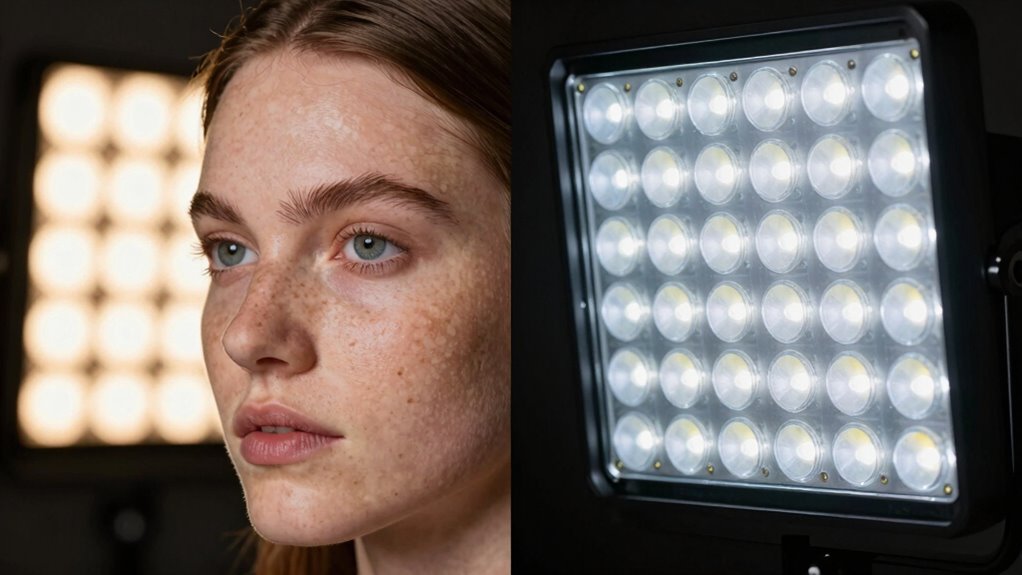
To make certain your LED lights produce accurate skin tones, it’s essential to test and compare their performance systematically. Start by checking the LED efficiency—how well each light reproduces colors without loss of vibrancy. Use a color chart or a standardized skin tone sample to see how natural the hues appear under different lights. Pay attention to the color temperature; lights with a consistent, appropriate Kelvin rating (around 5600K for daylight or 3200K for tungsten) will help maintain true skin tones. Conduct side-by-side comparisons, noting any shifts or distortions in skin color. This process allows you to identify which LED lights deliver the most accurate, balanced results, ensuring your footage or photos look natural and professional. Additionally, understanding color rendering indices like CRI and TLCI can give you deeper insights into how accurately a light source reproduces colors, especially for skin tones.
Quick Tips for Flawless Skin Appearance in Videos and Photos

Optimizing your LED lighting setup can make a noticeable difference in how smooth and radiant your skin appears on camera. To enhance your look, focus on these quick tips:
- Use soft, diffused lighting to reduce harsh shadows and highlight natural skin glow.
- Apply makeup evenly, emphasizing a matte finish to prevent shine under bright lights.
- Keep skin hydrated before shooting; well-moisturized skin reflects light better.
- Adjust your camera angle and distance to minimize imperfections and create a flattering effect.
- Be aware of Color Rendering Index (CRI) ratings, which influence how accurately skin tones are represented under your lighting.
Frequently Asked Questions
How Do Different LED Light Spectra Impact Skin Tone Accuracy?
Different LED light spectra considerably impact skin tone accuracy by influencing spectral distribution and light quality. When the spectrum lacks balanced wavelengths, skin tones can appear washed out or unnatural. You’ll notice better color fidelity with LEDs that offer a full, even spectral distribution, ensuring accurate reproduction of skin tones. High-quality light sources improve overall color rendering, making your subjects look more natural and vibrant under different lighting conditions.
Can Adjusting Camera Settings Improve Skin Tones Under LED Lighting?
Yes, adjusting camera settings can improve skin tones under LED lighting. You should start with camera calibration to match your camera’s color profile to the lighting environment. Use lighting modifiers like diffusers or softboxes to soften and even out the light, reducing color inconsistencies. Fine-tune white balance and color temperature settings on your camera to better capture skin tones accurately, ensuring they look natural and true to life.
Are There Specific LED Brands Known for Better Skin Color Rendering?
Ever wondered if some LED brands truly excel at rendering natural skin tones? You’ll want to look for brands with a strong reputation for high CRI and TLCI scores, like Bi-Color or high-end professional options. Check consumer reviews to see real-world performance, especially regarding skin color accuracy. Brands like Aputure or Falcon Eyes often receive praise for their reliable color rendering, making your subjects look their best without color shifts.
How Does Room Reflectivity Influence Skin Tone Appearance in LED Lighting?
Room reflectivity considerably influences how your skin tone appears under LED lighting. If walls have high reflectance or glossy surfaces, they bounce more light, which can distort skin color, making it look off. Conversely, matte walls with low reflectance absorb light, providing a more accurate skin tone. So, consider wall surface gloss and reflectivity when setting up lighting—these factors directly impact how natural or off your skin looks.
What Role Does Color Temperature Play in Skin Tone Representation?
You should know that color temperature greatly impacts how your skin tone appears under LED lighting. A warmer temperature (around 2700K-3000K) makes skin look healthier and more natural, while cooler temperatures (above 5000K) can give skin a bluish or washed-out look. Adjusting the color temperature helps you achieve accurate skin tone representation, ensuring your subjects look their best and natural in photos or videos.
Conclusion
Ultimately, understanding the nuances of CRI and TLCI can help you achieve more natural, flattering skin tones under LED lighting. By selecting the right scores and making subtle adjustments, you can elevate your visuals to a refined level. Remember, a touch of knowledge goes a long way in subtly enhancing your environment, ensuring your skin always looks its best without drawing unnecessary attention. Embrace these insights, and your lighting will quietly do the work for you.
Fall yard work Picks
leaf blowers
As an affiliate, we earn on qualifying purchases.