Wattage isn’t the best way to judge a PA speaker’s performance or sound quality. High wattage doesn’t guarantee clearer or better sound—quality components and efficient design matter more. Focusing only on wattage can lead you to choose speakers that are loud but lack clarity or are less energy-efficient. If you want true sound quality and reliability, it’s better to take into account features like efficiency, distortion, and design—all explored further below.
Key Takeaways
- Wattage only indicates potential volume, not sound quality or clarity.
- High wattage speakers don’t necessarily deliver better sound performance.
- Power efficiency and component quality are more important than wattage alone.
- Excessive wattage can lead to energy waste and equipment complexity without improving sound.
- Balanced sound quality and dispersion are crucial, not just high wattage ratings.
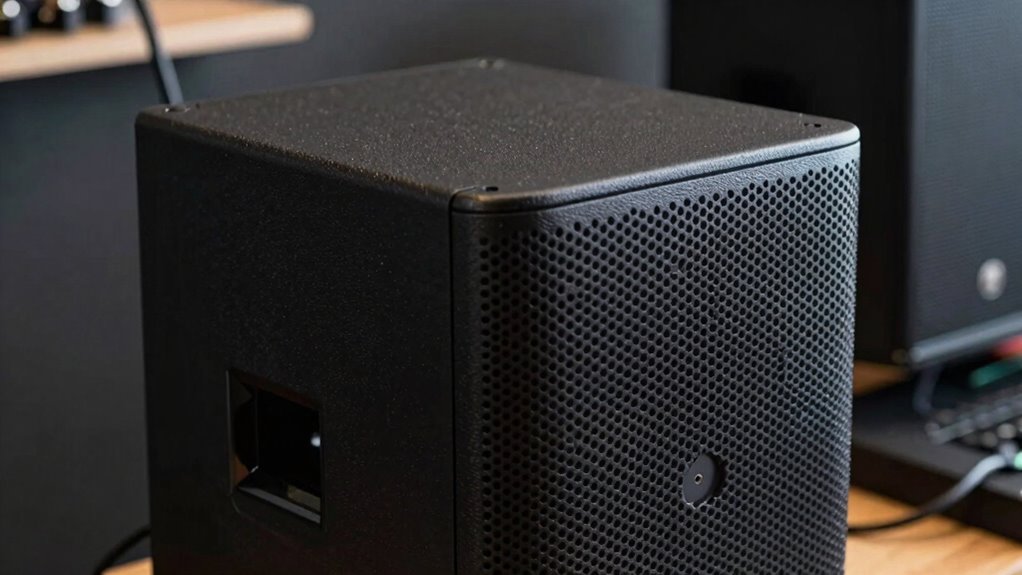
Are you looking for a reliable way to amplify sound for your event or presentation? If so, you’ve probably noticed that many people focus heavily on wattage when choosing PA speakers. But wattage isn’t the whole story, and it definitely isn’t the most important factor when it comes to sound quality and overall performance. While higher wattage can indicate a speaker’s potential volume, it doesn’t guarantee clear, crisp sound or efficiency. In fact, many professional setups rely more on the quality of the components and design rather than just raw power.
What truly matters is how effectively a PA speaker converts power into sound without distortion. Power efficiency plays a significant role here, as it determines how much of that wattage is actually used to produce clear audio rather than wasted as heat. A speaker with good power efficiency delivers better sound quality at lower wattages, making it more suitable for smaller venues or events where clarity is essential. You don’t want to overwhelm your audience with boomy bass or muddled vocals just because you’ve chosen a speaker with the highest wattage rating. Instead, focus on models that prioritize sound clarity, balanced frequency response, and minimal distortion at moderate volumes.
Another key point is that higher wattage speakers often require more power, bigger amplifiers, and additional cooling, which can be less efficient and more costly. This means that simply opting for the most powerful PA speaker isn’t always the smartest move. You could end up with a system that’s louder than necessary but lacking in sound quality, or you might find yourself investing in a setup that consumes more energy than it needs to. The goal is to find a balance between sound quality and power efficiency, ensuring your setup delivers clear sound without unnecessary energy waste or equipment complexity. Proper sound dispersion ensures that the audio is evenly distributed throughout the venue, which is essential for maintaining clarity across the entire audience. Additionally, understanding the importance of audio components can help you choose speakers that provide better overall performance. Remember, the goal isn’t just to be loud—it’s to be heard clearly. By focusing on sound quality and power efficiency rather than wattage alone, you’ll get a more reliable, versatile sound system that suits your needs, whether it’s a small gathering or a large event.
professional PA speakers with clear sound
As an affiliate, we earn on qualifying purchases.
As an affiliate, we earn on qualifying purchases.
Frequently Asked Questions
How Does Speaker Placement Affect Sound Quality?
Proper speaker placement directly impacts sound quality by ensuring even distribution of sound across your space. If you position speakers too close to walls or corners, you’ll get exaggerated bass and muddled sound. Keep them at ear level and spaced correctly for clear, balanced audio. Experiment with placement, avoid obstructing sound paths, and aim for a central position to maximize clarity and coverage, enhancing your overall listening experience.
What Are the Best PA Speakers for Small Venues?
For small venues, you should choose PA speakers that prioritize durability and appropriate power handling. Look for models that are lightweight yet sturdy, so they’re easy to transport and withstand frequent use. Speakers like the QSC K8.2 or Yamaha DXR8 offer reliable power handling and durability, ensuring your sound stays clear without risking damage. Remember, wattage isn’t everything—focus on how well the speakers perform in real-world conditions.
How Do I Match PA Speakers With Amplifiers?
To match PA speakers with amplifiers, start by checking the speaker impedance, usually marked in ohms. Verify the amplifier’s output matches this impedance for compatibility. Avoid overloading the amp, which can cause damage. You also want to match the amplifier’s power output with the speaker’s handling capacity. Proper matching of impedance and power ensures ideal sound, prevents damage, and provides reliable performance for your setup.
What Maintenance Is Required for PA Speakers?
Imagine your PA speakers as the knights of your sound castle, needing armor and upkeep. To maintain speaker durability and power efficiency, regularly clean the vents and connections, check for dust or corrosion, and guarantee they’re stored in a cool, dry place. Avoid overdriving them, and periodically test the components. This way, your speakers stay battle-ready, delivering crisp sound while avoiding costly repairs.
Are Wireless PA Speakers Reliable?
Wireless PA speakers can be quite reliable if you choose high-quality models with strong wireless reliability features. They often have good battery life, but it’s essential to monitor battery levels and carry extra batteries or chargers for extended use. While technology has improved, interference and distance can affect wireless performance. Overall, with proper care and selection, wireless PA speakers provide dependable sound reinforcement for various events.
high efficiency public address speakers
As an affiliate, we earn on qualifying purchases.
As an affiliate, we earn on qualifying purchases.
Conclusion
So, next time you’re impressing your friends with a massive wattage number, remember: louder isn’t always better. You might be waving around a giant speaker with plenty of watts, but if it’s not paired with the right setup, your sound could still fall flat. Ironically, the real “flex” isn’t the wattage at all—it’s how well your speaker fills the space without blowing out your ears. Sometimes, less really is more.
low distortion PA speaker systems
As an affiliate, we earn on qualifying purchases.
As an affiliate, we earn on qualifying purchases.
balanced frequency response PA speakers
As an affiliate, we earn on qualifying purchases.
As an affiliate, we earn on qualifying purchases.