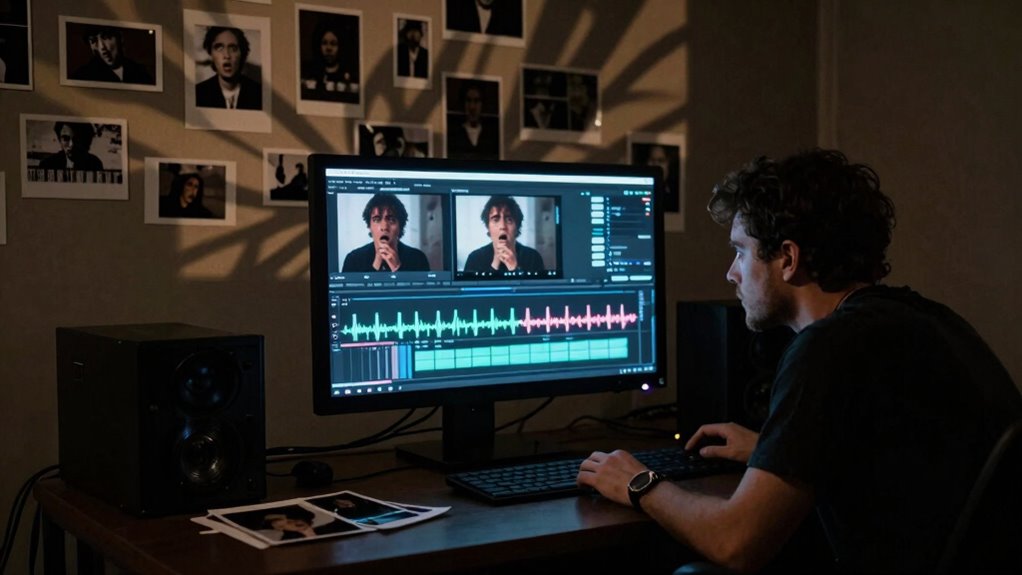

Film editing shapes tension far better than dialogue ever could. It controls rhythm and pacing, using rapid cuts to create urgency or longer takes to build suspense. Close-ups intensify emotions, while montages compress time and elevate stakes. The seamless integration of sound heightens every moment, making you feel the characters’ experiences viscerally. Each edit heightens anticipation, pulling you deeper into the story. Discover how these techniques keep you on the edge of your seat in thrilling ways.

Get business pricing on office and shipping supplies
- Business-only prices and quantity discounts
- Tax-exempt purchasing
- Multiple users, one account, clear invoices
Key Takeaways
- Film editing creates rhythm and pacing that builds tension, often more effectively than dialogue alone.
- Rapid cuts increase anxiety, while longer takes allow for suspense to develop gradually.
- The montage effect compresses time and amplifies urgency through quick shots and sound integration.
- Close-ups convey emotional depth, engaging viewers in a way that dialogue may not achieve.
- Sound design complements visual editing, enhancing emotional impact and deepening audience immersion.
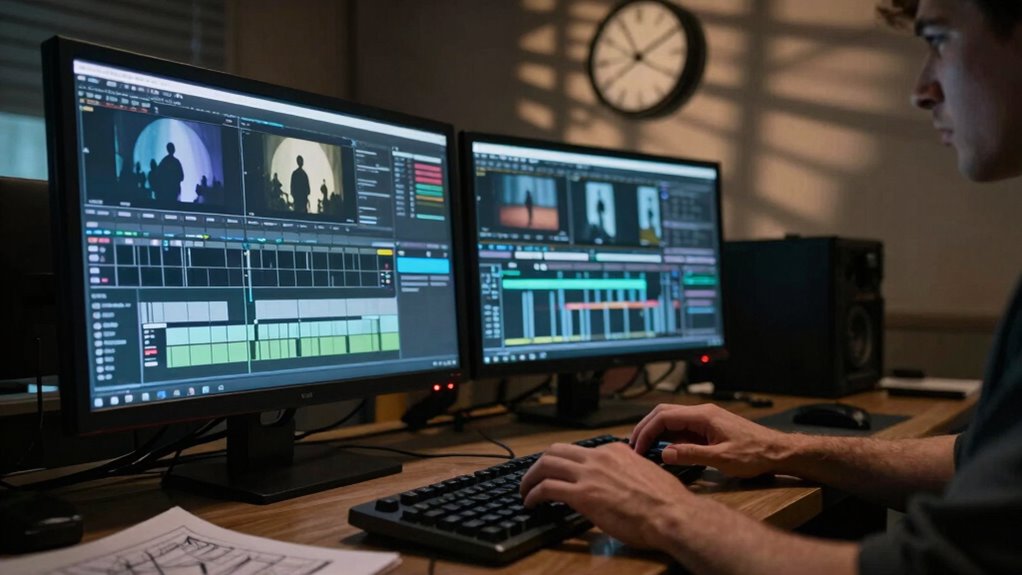
Film editing plays an essential role in building tension, as it shapes the rhythm and pacing of a story. You might not realize it, but the way scenes are cut together can create an emotional impact that dialogue alone can’t achieve. When you watch a film, you’re often pulled into the narrative flow not just by what characters say but by how their actions are visually presented. The cutting rhythm established by the editor crafts a tempo that keeps you on edge, making you feel the weight of every moment.
Film editing intricately shapes story rhythm, crafting tension that resonates far beyond dialogue, pulling viewers deeper into the narrative experience.
Pacing techniques are vital in this process. For instance, rapid cuts can heighten anxiety, while longer takes allow suspense to build gradually. You can feel the tension rise as the editor manipulates time through shot selection. A well-placed close-up on a character’s anxious face can convey fear far more powerfully than any line of dialogue. This visual juxtaposition of shots creates a dynamic interplay that engages you emotionally. It’s not just about what you see; it’s how those images are stitched together.
Consider the montage effect, where a series of shots are edited in quick succession to convey an idea or emotion. This technique can compress time and create urgency, pulling you deeper into the narrative. When you see a character racing against the clock, the quick cuts combined with strategic sound integration can amplify the sense of impending doom. The music swells, the cuts get faster, and suddenly, you’re holding your breath right alongside the character.
Moreover, the emotional impact of a scene can hinge on how sound and visuals work together. A moment of silence can have a profound effect when juxtaposed with a sudden loud noise, heightening the tension. This layering of sound with visual elements enriches your viewing experience, making you feel the stakes more acutely. Additionally, the editing techniques used to manipulate time and space can significantly influence how tension is perceived.
Ultimately, film editing shapes tension more than dialogue because it manipulates your perception in ways that words simply can’t. It engages you on a visceral level, pulling you into the heart of the story. The editor’s choices in cutting rhythm, pacing techniques, and shot selection create a tapestry of suspense that resonates with you long after the credits roll. So next time you watch a film, pay close attention to the editing; it’s the unsung hero behind the tension you feel.
Popular right now

TCL 55-Inch T7 Series 4K QLED Smart Google TV, 55T7

iRobot Roomba 105 Robot Vacuum with LiDAR Navigation

Breville Barista Express Espresso Machine with Grinder, Black Truffle
As an affiliate, we earn on qualifying purchases.
Frequently Asked Questions
How Do Different Editing Styles Affect Audience Engagement?
Different editing styles greatly impact audience engagement. You’ll notice how visual rhythm, created through shot selection and timing techniques, pulls you into the story. Quick cuts can heighten excitement, while longer takes allow for reflection. The choice of cut shifts also shapes your emotional response, either building suspense or providing relief. By manipulating these elements, editors can keep you invested, making each moment feel intentional and immersive.
What Role Does Pacing Play in Film Editing?
Pacing plays a vital role in film editing by controlling how you experience a story. Through cutting techniques and rhythm variations, editors create tension or relief, guiding your emotions. Scene shifts can either build suspense or provide a breather, enhancing the overall flow of visual storytelling. When you feel the pace quicken, excitement surges; when it slows, you absorb deeper moments. This dynamic pacing keeps you engaged and invested in the narrative.
Can Editing Create Tension in Non-Thriller Genres?
Absolutely, editing can ignite tension even in non-thriller genres, like a storm brewing on a calm day. As you cut between scenes, you enhance character development and deepen emotional connections, weaving visual storytelling that keeps viewers on the edge of their seats. Quick cuts and lingering pauses can reflect inner turmoil, making even mundane moments pulse with anticipation. Your choices shape the narrative rhythm, transforming ordinary experiences into gripping journeys.
How Does Music Interact With Editing to Build Tension?
Music interacts with editing to build tension by using musical motifs that align with rhythmic cuts and sound design. You’ll notice how emotional crescendos amplify the visuals, creating a heartbeat effect that keeps you engaged. Silence also plays a vital role, heightening anticipation and making subsequent sounds more impactful. By genre blending, filmmakers can surprise you, using unexpected musical elements to enhance the tension even further, drawing you deeper into the experience.
Are There Famous Examples of Effective Tension-Building Edits?
You’ve seen famous examples of tension-building edits, like in “Psycho,” where cut shifts amplify fear during the shower scene. The use of montage techniques creates a frantic pace, heightening anxiety. In “The Godfather,” juxtaposition effects between violent and peaceful moments build suspense. Rhythm manipulation in action sequences, like in “Mad Max: Fury Road,” keeps you on edge, making every cut feel urgent and impactful. These techniques are essential for crafting unforgettable tension in film.
Conclusion
In the world of film, editing is the heartbeat that quickens the pulse of tension, often more than dialogue ever could. By cutting and juxtaposing scenes, it crafts a rhythm that keeps you on the edge of your seat. While words can convey emotion, it’s the sharp shifts and lingering shots that ignite your imagination and stir your fears. So next time you watch a film, pay attention—editing may just be the unsung hero of suspense.