
📊 Full opportunity report: Understanding Anthropic’s $965B Series H: The Compute Revolution on ThorstenMeyerAI.com — validation score, market gap, and execution plan.
TL;DR
Anthropic’s $965 billion valuation is primarily a strategic move to fund the hardware infrastructure needed for large-scale AI models like Claude. The round includes commitments from major chipmakers and hyperscalers, signaling a shift toward infrastructure investment in AI growth.
Anthropic’s $65 billion Series H funding round has been announced, valuing the company at $965 billion. This move is primarily aimed at securing the physical infrastructure—chips, memory, and power—necessary to scale large AI models like Claude, rather than just increasing valuation metrics. For a detailed analysis, see Understanding Anthropic’s $965B Series H: The Compute Revolution. The focus on hardware commitments from major players underscores a strategic shift in AI development priorities.
Anthropic’s funding round, led by major investors including Amazon and other hyperscalers, totals $65 billion and is centered on infrastructure investments. Over $10 billion of this commitment comes from chipmakers and cloud providers, directed toward expanding data center capacity, high-speed memory, and power supply to support AI model scaling.
Recent revenue data shows rapid growth from about $1 billion in late 2024 to a $47 billion annualized rate in early 2026, fueling investor confidence and driving the valuation to nearly a trillion dollars. Despite this, the valuation multiple has decreased from 27× to roughly 20.5×, indicating a shift from speculative valuation to actual revenue scaling.
Strategic partnerships with companies like Micron, Samsung, and SK Hynix highlight a focus on securing supply chains for critical hardware components. This infrastructure push aims to prevent physical bottlenecks—such as chip shortages—that could limit AI model performance and deployment at scale.
$965B and climbing — it’s really a compute bet
The viral headline is the valuation. The interesting story is in the press release’s middle paragraphs — and in three chipmakers Anthropic just named as strategic partners. This is a capacity round dressed as a funding round.
The numbers nobody can quite parse in sequence
Read together they describe a trajectory with no precedent in enterprise software. Read individually, each looks like a typo.
AI hardware infrastructure components
As an affiliate, we earn on qualifying purchases.
As an affiliate, we earn on qualifying purchases.
From $61.5B to $965B in fourteen months
Salesforce took roughly two decades to reach revenue numbers Anthropic just blew past. The sequence below is the part most coverage skips — it’s not the size, it’s the shape.
Anthropic’s valuation ladder · Mar 2025 → May 2026
Five rounds, fourteen months. Bar height is the valuation; the climb itself is the story. Tap any milestone for context.

NVIDIA Jetson Orin Nano Super Developer Kit
The NVIDIA Jetson Orin Nano Developer Kit sets a new standard for creating entry-level AI-powered robots, smart drones,…
As an affiliate, we earn on qualifying purchases.
As an affiliate, we earn on qualifying purchases.
The multiple actually got cheaper
Bubbles look like multiples expanding while revenue lags. Anthropic’s pattern is the inverse — the valuation tripled, but revenue grew faster, and the multiple compressed.
Revenue-to-valuation multiple · Series G → Series H
Same company, three months apart. The denominator (revenue) is outrunning the numerator (valuation) — exactly the opposite of what a bubble narrative predicts.

Arcity 5V 12V 24V Output Switching Power Supply Unit Adjustable for Video Multi Games Machine Console Cocktail CCTV Computer DIY Horizontal New(+5V/8A +12V/8A +24V/3A)
High Stability: The switching power supply turns out to be small in size, featuring high stability, low ripple…
As an affiliate, we earn on qualifying purchases.
As an affiliate, we earn on qualifying purchases.
10+ gigawatts and three chipmakers
When you name Micron, Samsung & SK hynix alongside your equity backers, you’re saying the binding constraint isn’t demand or model quality — it’s the physical supply of memory chips. The Series H is a capacity round.
Compute commitments backing Anthropic’s capacity bet
$200B+ in announced compute spend across multi-year contracts. The $65B Series H raise has to be read against that bill, not against operating losses.
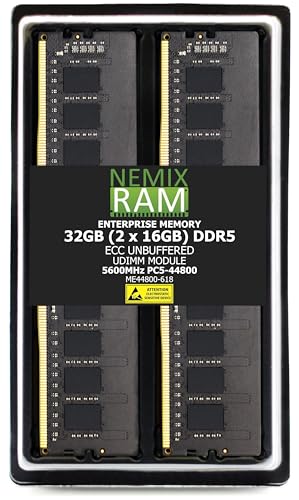
NEMIX RAM 32GB (2X16GB) DDR5 5600MHZ PC5-44800 1Rx8 1.1V CL46 288-PIN ECC Unbuffered UDIMM KIT Compatible with Dell PowerEdge R260 Rack Server
NEMIX RAM is a Distributor and Manufacturer of Computer Memory and Storage Upgrades. Specializing in Enterprise Storage RAM…
As an affiliate, we earn on qualifying purchases.
As an affiliate, we earn on qualifying purchases.
A genuinely durable bet — or a structural exposure?
Both readings can be true at once. The answer arrives over the next 18–24 months as the gigawatts come online and either fill with paying demand or don’t.
Revenue growth has no precedent in B2B software ($1B → $47B in 17 months). The multiple is compressing, not expanding. Claude is the only frontier model on all 3 major clouds. Enterprise AI spend share went from ~10% to >65% in a year. Compute commitments are tied to specific contracts with capacity dates.
20× revenue is not cheap by any historical software-investing standard. Revenue is reported gross of cloud-reseller pass-throughs, which inflates the top line. Profitability is 2 years out. Amodei’s own warning: a 12-month delay in AI progress “would make him bankrupt” — the compute commitments are a structural exposure to demand persistence.
The valuation race — and the IPO context
Anthropic shipped Opus 4.8 the same morning as Series H — not a coincidence. One week after OpenAI filed confidentially for IPO. The late-2026 frame is set: two frontier AI companies racing to public markets, each pitching durability.
Why Infrastructure Investment Defines AI’s Future
This funding round marks a pivotal shift in AI development, emphasizing physical hardware infrastructure as the key enabler of future model scaling. By investing heavily in chips, memory, and power, Anthropic aims to overcome bottlenecks that could slow AI progress. This approach signals a strategic move where hardware capacity, not just software innovation, will determine the pace and scale of AI advancements. For more insights, see $965B and Climbing: Anthropic’s Series H Is Really a Compute Bet.From Software to Hardware: The Infrastructure Revolution
Anthropic’s valuation skyrocketed from $380 billion in February to nearly a trillion dollars by May 2026, driven by rapid revenue growth and investor confidence. The company’s revenue increased over fivefold in four months, from approximately $1 billion to a $47 billion annual rate, reflecting surging demand for its AI models like Claude.
While high valuation multiples initially suggested speculative hype, the recent decrease in the valuation-to-revenue ratio indicates a market shift toward valuing real revenue and capacity expansion. Major investors, including Amazon, Microsoft, and Nvidia, have committed billions toward infrastructure, signaling a broader industry trend toward physical hardware investments to support AI scaling.
“The commitments from chipmakers like Micron and Samsung show that supply chain and hardware capacity are now central to AI’s future growth.”
— Amit Patel, tech investor
Unclear Impact of Hardware Bottleneck Solutions
While the focus on infrastructure is clear, it remains uncertain how quickly supply chain issues for chips and memory modules can be resolved and whether these investments will fully prevent hardware bottlenecks. The long-term effectiveness of these commitments in supporting AI scaling at the projected levels is still to be seen.
Next Steps for Infrastructure and AI Scaling
Anthropic and its hardware partners are expected to accelerate data center expansions and chip supply agreements over the coming months. Monitoring the deployment of new infrastructure and the resulting impact on AI model performance and scalability will be key. Additionally, industry analysts will watch for how these investments influence AI development timelines and competitive positioning among tech giants.
Key Questions
What does the $965 billion valuation really represent?
The valuation primarily reflects investor confidence and future potential, but the focus of the funding round is on securing physical infrastructure—chips, memory, and power—to support AI model scaling.
Why are chipmakers like Micron and Samsung involved?
They are key suppliers of high-speed memory and chips necessary for training and deploying large AI models, and their involvement indicates a focus on supply chain resilience and capacity expansion.
How does this infrastructure focus affect AI development?
It aims to remove physical bottlenecks, enabling faster, larger, and more efficient AI models, but requires significant upfront investment and long-term planning.
Will hardware shortages delay AI progress?
Potentially, yes. While investments are being made to mitigate this risk, supply chain disruptions could still impact the pace of AI scaling if not managed effectively.
Source: ThorstenMeyerAI.com