
📊 Full opportunity report: Capability or Control: The European Enterprise AI Playbook for the AI Act Era on ThorstenMeyerAI.com — validation score, market gap, and execution plan.
TL;DR
European companies now face a strategic choice between capability and control in AI deployment, driven by the EU AI Act, licensing, infrastructure, and geopolitical considerations. The new playbook emphasizes origin, licensing, and location over model nationality.
European enterprises are now navigating a complex landscape shaped by the EU AI Act, which emphasizes control over AI models regardless of origin. This shift is forcing companies to prioritize licensing, deployment location, and data jurisdiction over model nationality to ensure compliance and mitigate geopolitical risks.
The EU AI Act, effective from August 2025 with enforcement deadlines in 2026 and 2027, does not ban models by nationality but imposes strict compliance, licensing, and data residency requirements. Companies must choose workload-specific models based on their license, deployment environment, and legal jurisdiction, rather than origin alone.
Recent developments include the signing of a voluntary AI Code of Practice by major providers like OpenAI and Google, with notable absences such as Meta and Chinese providers. Open-source models, especially those with open licenses like Mistral’s Apache-2.0, are gaining prominence as compliance-friendly options. Infrastructure investments include Europe’s deployment of supercomputers and AI factories, with sovereign cloud offerings from AWS and Microsoft, though US jurisdictional risks persist due to laws like the CLOUD Act.
European models, designed with GDPR and the AI Act in mind, are suitable for deployment within EU infrastructure, but often lag behind US models in capability. US models like GPT-5.x and Gemini offer higher performance but carry legal risks related to US laws and export controls. Chinese models remain misunderstood, with distinctions critical for compliance and geopolitical considerations.
Capability or Control
● EnterpriseThe EU AI Act doesn’t ban models by origin. Together with the CLOUD Act, GDPR, and a supply chain that can be switched off, it forces European enterprises to choose — workload by workload — between capability and control. Origin matters far less than license, deployment, and jurisdiction.
Nationality isn’t the gate. License, data destination, and where you deploy are.
No single point is right for a whole company. The right answer is a portfolio, assigned per workload.
Sort workloads by data sensitivity & regulatory exposure, then match each to a stack.
Independent commentary, produced with AI assistance under human editorial oversight; the views are the author’s own and may change. This is analysis and opinion, not legal, compliance, investment, or technical advice; the EU AI Act, its implementation, and model availability are evolving — verify specifics with qualified counsel and primary regulatory sources before acting. Figures and milestones are drawn from public sources read as of June 2026 and are subject to change. References to specific companies, models, regulators, and government actions are factual and analytical, not partisan, and imply no affiliation or endorsement.
Implications of the Shift to Capability and Control
This evolving landscape significantly impacts enterprise AI strategies by shifting focus from model origin to licensing, deployment, and jurisdiction. Companies must balance AI capability with legal compliance and geopolitical risks, influencing procurement, infrastructure choices, and operational practices. This approach aims to ensure compliance under the EU AI Act while maintaining operational resilience amid geopolitical uncertainties.European cloud server for AI deployment
As an affiliate, we earn on qualifying purchases.
As an affiliate, we earn on qualifying purchases.
EU Regulatory and Infrastructure Developments Shaping AI Deployment
Throughout 2025 and 2026, the EU has implemented new regulations, including the AI Act and related enforcement deadlines, emphasizing compliance, licensing, and data sovereignty. Parallel investments in infrastructure, such as supercomputers and AI factories, aim to bolster European AI sovereignty. US hyperscalers have responded with sovereign cloud offerings, but jurisdictional laws like the CLOUD Act continue to pose risks. The distinction between model origin, licensing, and deployment location is now central to enterprise AI planning, with open-source models gaining strategic importance.“We are building a regulatory framework that promotes trustworthy AI while respecting sovereignty and legal boundaries within the EU.”
— European Commission spokesperson

Understanding Open Source and Free Software Licensing
Used Book in Good Condition
As an affiliate, we earn on qualifying purchases.
As an affiliate, we earn on qualifying purchases.
Remaining Uncertainties in AI Deployment Strategies
It is still unclear how enforcement will be practically applied across diverse jurisdictions and providers. The effectiveness of open-source exemptions, the actual compliance of non-signatory providers, and the future geopolitical impacts on supply chains and access remain uncertain. Additionally, the evolving capabilities of European models versus US and Chinese counterparts continue to develop, influencing strategic choices.
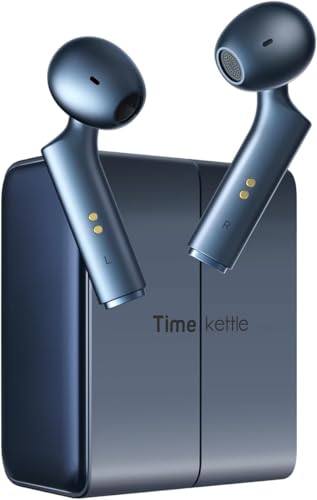
Timekettle W4 Translation Earbuds,Bone-Voiceprint Sensor for Clear Voice in Noise, AI Translator Correction,Protected Privacy with GDPR,Bluetooth,iOS/Android APP for Business & Relationships Blue
40% More Accurate with Patented Bone-Voiceprint:Utilizing exclusive Bone-Voiceprint technology and dual-mic arrays, W4 captures your voice even in…
As an affiliate, we earn on qualifying purchases.
As an affiliate, we earn on qualifying purchases.
Enterprises should focus on assessing their current AI models and infrastructure against the new regulatory requirements, prioritizing licensing and deployment location. Monitoring developments in open-source licensing and European infrastructure investments will be crucial. Companies also need to prepare for ongoing legal and geopolitical shifts, including potential export controls and jurisdictional risks, while engaging with regulators and industry consortia for guidance.

ENTERPRISE AI INFRASTRUCTURE: Modern MLOps, Vector Databases, GPU Clusters, and Scalable Data Architecture for LLMs (The Enterprise AI Architect’s Handbook)
As an affiliate, we earn on qualifying purchases.
As an affiliate, we earn on qualifying purchases.
Key Questions
How does the EU AI Act affect model choice for European companies?
The Act emphasizes licensing, jurisdiction, and deployment environment over origin, meaning companies must evaluate legal compliance and control factors rather than simply model nationality.
Are US or Chinese models usable in Europe under the new regulations?
Yes, US and Chinese models can be used if they meet licensing and deployment requirements, but US models pose legal risks due to the CLOUD Act, and Chinese models are often misunderstood in terms of compliance and geopolitical considerations.
What infrastructure options are available for European AI deployment?
European investments include supercomputers, AI factories, and sovereign clouds from providers like AWS and Microsoft, but jurisdictional laws like the CLOUD Act still pose legal risks for US-hosted data and models.
What is the significance of open-source models in this landscape?
Open-source models with clear licenses, such as Mistral’s Apache-2.0, offer a compliance advantage, reducing regulatory burdens and enabling more control over deployment within EU infrastructure.
Source: ThorstenMeyerAI.com