

The best digital marketing analytics tools in 2026 aren’t one-size-fits-all — they range from hands-on software guides to statistical frameworks that treat your data like a research dataset. Marketing Analytics: Essential Tools for Data-Driven Decisions stands out as the best overall pick because it balances practical tool coverage with decision frameworks that work across channels. Two other options deserve early attention: A Practical Guide to Digital Marketing Analytics for readers who want KPI tracking and dashboard-building workflows, and Marketing Analytics: Statistical Tools Using SPSS for those who need rigorous consumer-behavior analysis rather than surface-level reporting. The core tradeoff in this category is breadth versus depth — practical guides get you measuring quickly, while statistical and academic texts give you analytical durability but demand more effort upfront. There’s also a price-versus-currency tension: older classics cost less but may lag behind AI-era practices. Keep reading for the full breakdown of which option fits your team, skill level, and budget.

Get business pricing on office and shipping supplies
- Business-only prices and quantity discounts
- Tax-exempt purchasing
- Multiple users, one account, clear invoices
Key Takeaways
- The lineup splits cleanly into three camps: practical practitioner guides, academic/statistical texts, and AI-forward strategy books — the right pick depends on whether you need to measure, model, or modernize.
- The best overall pick won because it covers tool categories and decision frameworks without locking the reader into one platform, while single-platform SPSS or dashboard guides trade versatility for depth.
- Beginner-oriented titles (Digital Analytics 101, Digital Marketing Essentials) overlap heavily; the deciding factor between them is structure and pacing, not content coverage.
- AI coverage became the biggest differentiator for 2026: only two titles treat AI-driven analytics as a core discipline rather than an add-on chapter, which matters for forward-looking teams.
- The classic text (Web Analytics 2.0) still rewards readers with timeless customer-centricity principles, but its age makes it a supplement rather than a primary reference for current tooling.
| Digital Marketing Essentials: Master Content Strategy, Social Media, SEO, Advertising, and Key Metrics for Digital Growth |  | Best for Beginners Building a Foundation | Format: Print / digital book | Topic areas: Content strategy, social media, SEO, advertising, key metrics | Experience level: Beginner to intermediate | VIEW LATEST PRICE | See Our Full Breakdown |
| Marketing Analytics: Essential Tools for Data-Driven Decisions |  | Best for Decision-Making Frameworks | Format: Print / digital book | Focus: Analytics tools for decision-making | Experience level: Intermediate | VIEW LATEST PRICE | See Our Full Breakdown |
| Digital Analytics for Marketing (Mastering Business Analytics) |  | Best for Advancing Past the Basics | Format: Print / digital book | Series: Mastering Business Analytics | Focus: Digital analytics for marketing effectiveness | VIEW LATEST PRICE | See Our Full Breakdown |
| Web Analytics 2.0: The Art of Online Accountability and Science of Customer Centricity |  | Best Classic for Web Measurement Mindset | Format: Print / digital book | Focus: Web analytics, online accountability, customer centricity | Experience level: Intermediate | VIEW LATEST PRICE | See Our Full Breakdown |
| Marketing Analytics: Statistical Tools for Marketing and Consumer Behavior Using SPSS | 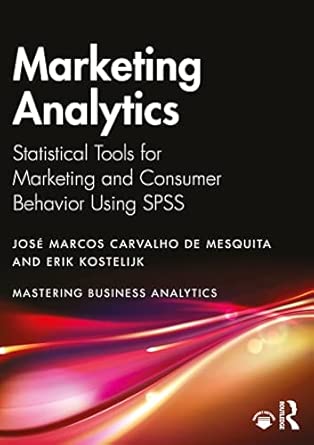 | Best for Statistical Rigor and Coursework | Format: Print / digital book | Software covered: SPSS | Focus: Statistical tools for marketing and consumer behavior | VIEW LATEST PRICE | See Our Full Breakdown |
| Digital Analytics 101 |  | Best for Absolute Beginners | Format: Book | Experience Level: Beginner | Focus: Digital analytics fundamentals | VIEW LATEST PRICE | See Our Full Breakdown |
| The AI Marketing Canvas, Second Edition: A Five-Step AI Plan for Marketers |  | Best for AI Strategy | Format: Book (Second Edition) | Experience Level: Intermediate | Focus: AI marketing strategy and adoption | VIEW LATEST PRICE | See Our Full Breakdown |
| A Practical Guide to Digital Marketing Analytics: Track KPIs, Build Dashboards, and Make Data-Driven Decisions in the Age of AI |  | Best All-Around Pick | Format: Book | Experience Level: Intermediate to advanced | Focus: KPIs, dashboards, data-driven decisions, AI | VIEW LATEST PRICE | See Our Full Breakdown |
| Digital Marketing Analytics: Making Sense of Consumer Data in a Digital World |  | Best for Consumer Data Interpretation | Format: Book | Experience Level: Beginner to intermediate | Focus: Consumer data interpretation and marketing decisions | VIEW LATEST PRICE | See Our Full Breakdown |
| digital marketing analytics tool | Format | Experience level | Focus | Approach |
|---|---|---|---|---|
| Digital Marketing Essentials: | Print / digital book | Beginner to intermediate | Digital marketing fundamentals with measurement context | Strategy-first, metrics-second |
| Marketing Analytics: Essential | Print / digital book | Intermediate | Analytics tools for decision-making | Framework-driven, tool-agnostic |
| Digital Analytics for Marketin | Print / digital book | Intermediate to advanced | Digital analytics for marketing effectiveness | Conceptual and systematic |
| Web Analytics 2.0: The Art of | Print / digital book | Intermediate | Web analytics, online accountability, customer centricity | — |
| Marketing Analytics: Statistic | Print / digital book | Intermediate to advanced, statistics-oriented | Statistical tools for marketing and consumer behavior | Academic, method-driven with software instruction |
| Digital Analytics 101 | Book | Beginner | Digital analytics fundamentals | — |
| The AI Marketing Canvas | Book (Second Edition) | Intermediate | AI marketing strategy and adoption | — |
| A Practical Guide to Digital M | Book | Intermediate to advanced | KPIs, dashboards, data-driven decisions, AI | Practical and workflow-oriented |
| Digital Marketing Analytics: M | Book | Beginner to intermediate | Consumer data interpretation and marketing decisions | Insight-driven and strategic |
More Details on Our Top Picks
Digital Marketing Essentials: Master Content Strategy, Social Media, SEO, Advertising, and Key Metrics for Digital Growth
Most analytics books assume you already know what a marketing funnel looks like. This one does not, which is exactly why it earns the beginner slot. It walks through content strategy, social media, SEO, and advertising before touching metrics, so readers learn why the numbers matter rather than just how to read them. Compared with Marketing Analytics: Essential Tools for Data-Driven Decisions, which jumps straight into analytical technique, this title makes more sense for someone whose real gap is the marketing fundamentals underneath the data. The tradeoff is depth: anyone who already runs campaigns will find the analytics sections thin, and Digital Analytics for Marketing covers the measurement side far more rigorously.
Pros:- Covers all major digital channels in one place, so readers see how metrics connect across channels
- Gentle learning curve that suits readers with no marketing background
- Metrics are introduced in the context of strategy, not as isolated formulas
- Broad enough to serve as a reference while building a first marketing plan
Cons:- Analytics coverage is introductory rather than practical at the dashboard-and-tooling level
- Little information available about author credentials or edition details before buying
Best for: New marketers, career changers, and small business owners who need the whole digital marketing picture before worrying about advanced analytics
Not ideal for: Analysts who already understand channels and want statistical or technical depth — this stays at survey level
- Format:Print / digital book
- Topic areas:Content strategy, social media, SEO, advertising, key metrics
- Experience level:Beginner to intermediate
- Focus:Digital marketing fundamentals with measurement context
- Primary audience:Marketers building foundational skills
- Approach:Strategy-first, metrics-second
Our verdict“Buy this if you need the fundamentals of digital marketing and analytics together; skip it if you already run campaigns and only need measurement depth.”
Marketing Analytics: Essential Tools for Data-Driven Decisions
This pick earns its spot for a different reason than the others: it is less about crunching numbers and more about turning analysis into decisions. Where Marketing Analytics: Statistical Tools for Marketing and Consumer Behavior Using SPSS trains you on statistical software, this title focuses on the tools and mental models a marketing manager needs to act on data — which segments to trust, which metrics justify budget, and how to frame results for leadership. That makes it a strong middle step between Digital Marketing Essentials and the heavier technical titles in this roundup. The drawback is abstraction: readers expecting step-by-step software walkthroughs or dashboard builds will finish wanting more concrete examples.
Pros:- Frames analytics around business decisions rather than equations
- Strong bridge between introductory marketing books and technical analytics texts
- Useful for communicating findings to non-technical stakeholders
- Concepts apply across channels, tools, and industries
Cons:- Light on concrete tool walkthroughs and worked datasets
- Sparse publisher detail and content overview make it hard to judge depth before buying
Best for: Marketing managers and team leads who commission analysis and need frameworks for interpreting and acting on results
Not ideal for: Hands-on analysts who need software tutorials or statistical formulas — this stays at the decision layer
- Format:Print / digital book
- Focus:Analytics tools for decision-making
- Experience level:Intermediate
- Primary audience:Marketing professionals and managers
- Approach:Framework-driven, tool-agnostic
- Prerequisites:Basic familiarity with marketing metrics
Our verdict“Choose this if your job is deciding what the data means for budget and strategy; choose a hands-on title if your job is running the analysis yourself.”
Digital Analytics for Marketing (Mastering Business Analytics)
Of the titles here, this one sits closest to a graduate-level treatment of digital analytics. It assumes you already know what a conversion rate is and pushes into analytical technique and marketing effectiveness — a clear step up from Digital Marketing Essentials, which covers similar territory at survey depth. The structure suits marketers who have outgrown beginner books and want their measurement work taken seriously. That ambition is also the tradeoff: the lack of hands-on technical implementation means readers still need tool documentation or a course to actually build what the book describes. Compared with Web Analytics 2.0, it is more systematic and less opinionated, which some readers will prefer and others will find dry.
Pros:- In-depth conceptual coverage that goes well beyond introductory texts
- Connects analytics technique directly to marketing effectiveness
- Systematic structure suited to study rather than skimming
- Strong second book after a fundamentals title like Digital Marketing Essentials
Cons:- Minimal technical implementation guidance — theory-heavy without tool walkthroughs
- Too advanced for readers new to marketing measurement
Best for: Mid-career digital marketers who understand the basics and want a rigorous, structured treatment of analytics
Not ideal for: Complete beginners — the assumed knowledge will make early chapters frustrating and unproductive
- Format:Print / digital book
- Series:Mastering Business Analytics
- Focus:Digital analytics for marketing effectiveness
- Experience level:Intermediate to advanced
- Approach:Conceptual and systematic
- Primary audience:Practicing marketers deepening analytics skills
Our verdict“This is the logical next step once introductory books feel thin — provided you are willing to learn the software side elsewhere.”
Web Analytics 2.0: The Art of Online Accountability and Science of Customer Centricity
This is the veteran of the lineup, and it still earns a place because of its distinctive point of view. Rather than cataloging tools, it argues for a customer-centric philosophy of measurement — online accountability as a discipline, not a report generator. Compared with Digital Analytics for Marketing, it is more opinionated, more readable, and more concerned with why organizations measure the wrong things. That voice is its strength and its weakness: the tooling references show their age, so readers should treat the frameworks as durable and the screenshots as historical. Anyone wanting current software instruction is better served by a practical dashboard-building guide, but anyone wanting to think like an analyst should start here.
Pros:- Enduring frameworks for customer-centric measurement that outlast any specific tool
- Engaging, opinionated writing that explains why organizations measure poorly
- Strong treatment of online accountability for reporting to leadership
- Concepts transfer directly to modern analytics practice
Cons:- Tool-specific content is dated relative to current analytics platforms
- Little guidance on modern implementation such as current tag management or AI-era tooling
Best for: Marketers and analysts who want the foundational mindset of web measurement — asking better questions of data about customers
Not ideal for: Readers who need current tool tutorials — the platforms discussed have changed substantially since publication
- Format:Print / digital book
- Focus:Web analytics, online accountability, customer centricity
- Experience level:Intermediate
- Style:Opinionated, framework-driven
- Primary audience:Web analysts and digital marketers
- Longevity:Frameworks durable; tool references dated
Our verdict“Read this for the mindset that never expires; pair it with a current hands-on guide for the tooling that does.”
Marketing Analytics: Statistical Tools for Marketing and Consumer Behavior Using SPSS
This is the most technically demanding title in the batch, and it fills a role none of the others attempt: teaching statistical analysis in SPSS applied to marketing and consumer behavior questions. Where Marketing Analytics: Essential Tools for Data-Driven Decisions stays at the decision layer, this one goes to the method layer — regression, testing, and consumer behavior models with worked software guidance. That makes it a natural fit for university courses and for analysts whose organizations actually license SPSS. The tradeoff is narrowness: digital marketers working in Google Analytics or social platforms will find little that maps to their daily tools, and compared with Digital Analytics for Marketing, the scope is academic rather than practitioner-oriented.
Pros:- Step-by-step statistical guidance tied to real marketing and consumer behavior problems
- One of the few titles that teaches the software and the statistics together
- Well suited to coursework, with academic depth most marketing books avoid
- Covers consumer behavior analysis, not just campaign metrics
Cons:- Locked to SPSS, which limits value for teams using R, Python, or cloud BI tools
- Academic tone and pace may frustrate practitioners seeking quick wins
Best for: Students, instructors, and analysts who use SPSS and need rigorous statistical methods for consumer behavior research
Not ideal for: Practitioners living in web and social analytics dashboards — SPSS-centric content will not transfer to their daily workflow
- Format:Print / digital book
- Software covered:SPSS
- Focus:Statistical tools for marketing and consumer behavior
- Experience level:Intermediate to advanced, statistics-oriented
- Primary audience:Students and analytics professionals
- Approach:Academic, method-driven with software instruction
Our verdict“Buy this if you need defensible statistics in SPSS for marketing research or a course; skip it if your analytics work happens in web dashboards.”
Digital Analytics 101
Every roundup needs a genuine starting point, and Digital Analytics 101 fills that slot without pretending to be more than it is. This option stands out for translating the vocabulary of digital measurement — metrics, benchmarks, basic interpretation — into language a newcomer can actually absorb. Compared with A Practical Guide to Digital Marketing Analytics, which assumes familiarity with KPI frameworks and dashboard logic, this book deliberately keeps things simple, and that restraint is its main value. The practical examples help concepts stick rather than remaining abstract definitions. The tradeoff is real, though: readers who already run campaigns will outgrow it quickly, and it names no specific platforms or tools, so it won’t help you actually configure GA4 or build a report. Think of it as the on-ramp before tackling heavier titles like Marketing Analytics: Essential Tools for Data-Driven Decisions.
Pros:- Builds a solid foundational vocabulary for digital analytics
- Genuinely approachable for readers with no prior data background
- Practical examples make abstract metrics easier to grasp
- Fast read that won’t overwhelm someone new to the field
Cons:- No coverage of specific tools or platforms, so nothing is directly actionable
- Lacks the technical depth needed beyond the beginner stage
- Experienced marketers will find little new material
Best for: Career-changers, small business owners, and junior marketers who need plain-English fundamentals before touching any analytics platform
Not ideal for: Working analysts or intermediate marketers who need tool-specific instruction and technical depth — this book stops well short of that
- Format:Book
- Experience Level:Beginner
- Focus:Digital analytics fundamentals
- Includes Examples:Yes, practical examples
- Tool Coverage:None specified
- Technical Depth:Introductory
Our verdict“Pick this if you’re brand new to marketing data and want a low-pressure introduction before investing in more advanced, tool-focused guides.”
The AI Marketing Canvas, Second Edition: A Five-Step AI Plan for Marketers
The AI Marketing Canvas earns its place by being the only title in this lineup built around a structured AI adoption plan rather than a general analytics education. Its five-step framework gives marketers a sequence to follow, which matters because most AI initiatives fail from poor planning, not poor technology. Compared with Digital Analytics 101, this is several levels up in strategic sophistication — it assumes you already understand marketing basics and are now deciding how AI fits into your workflow. The second edition refreshes the material for current AI capabilities, an advantage over older classics like Web Analytics 2.0, which predates the AI era entirely. The tradeoff: it leans conceptual, so readers wanting hands-on dashboard building should pair it with A Practical Guide to Digital Marketing Analytics rather than expect implementation detail here. Some beginners may also find the framework dense on first pass.
Pros:- Clear, actionable five-step framework for AI marketing adoption
- Updated second edition reflects current AI capabilities
- Strong on workflow integration, not just AI theory
- Directly relevant to marketers facing AI decisions right now
Cons:- Lacks detailed case studies to ground the framework in real outcomes
- Can feel technical for marketers new to AI concepts
- Little guidance on specific analytics tools or platforms
Best for: Marketing managers and strategists tasked with leading AI adoption who need a structured rollout plan rather than tool tutorials
Not ideal for: Hands-on practitioners who want step-by-step platform instructions — the framework here is strategic, not operational
- Format:Book (Second Edition)
- Experience Level:Intermediate
- Focus:AI marketing strategy and adoption
- Framework:Five-step AI plan
- Audience:Marketers integrating AI
- Case Studies:Limited
Our verdict“The right choice if your challenge is planning how marketing adopts AI, not learning analytics mechanics — pair it with a practical guide for implementation.”
A Practical Guide to Digital Marketing Analytics: Track KPIs, Build Dashboards, and Make Data-Driven Decisions in the Age of AI
If one book in this batch has to cover the most ground usefully, A Practical Guide to Digital Marketing Analytics is the one I’d point to first. It connects the three things working marketers actually do daily: define KPIs, build dashboards, and turn results into decisions — with AI woven in as a working layer rather than a bolt-on topic. Compared with The AI Marketing Canvas, which is stronger on AI strategy but thinner on execution, this guide flips the balance toward doing. Against Digital Analytics 101, the difference is ambition: this assumes you already know the basics and want operational competence. That positioning is also its main drawback — the content can run past beginners, and like several titles here it skips named tools, so you’ll still need platform-specific resources for GA4 or Looker Studio work. As the centerpiece of a small bookshelf, though, it makes the most sense for the largest group of buyers.
Pros:- Covers the full workflow: KPI selection, dashboard building, and decision-making
- Integrates AI into the analytics process rather than treating it separately
- Practical orientation that maps directly to on-the-job tasks
- Broadest relevance across roles and company sizes in this lineup
Cons:- No specific tools or platforms covered, so setup help is absent
- Pace and assumed knowledge may frustrate beginners
- Some sections favor concepts over step-by-step execution
Best for: In-house marketers and mid-level analysts who need to go from raw metrics to dashboards and defensible decisions in their day-to-day work
Not ideal for: Complete newcomers who haven’t yet learned core analytics vocabulary — start with Digital Analytics 101 instead
- Format:Book
- Experience Level:Intermediate to advanced
- Focus:KPIs, dashboards, data-driven decisions, AI
- Approach:Practical and workflow-oriented
- Tool Coverage:None specified
- Audience:Working marketers and analysts
Our verdict“The strongest single purchase for marketers who want one book bridging KPIs, dashboards, and AI-driven decisions — just not their first book if they’re starting from zero.”
Digital Marketing Analytics: Making Sense of Consumer Data in a Digital World
Where most titles in this roundup treat analytics as an operational skill, Digital Marketing Analytics: Making Sense of Consumer Data in a Digital World takes the interpretation angle — its value lies in explaining what consumer behavior data means and how that meaning should shape marketing decisions. This model is better suited to readers who can already pull a report but struggle to read it intelligently. Compared with A Practical Guide to Digital Marketing Analytics, this book spends less time on dashboards and more on the reasoning behind the numbers, which makes the two genuinely complementary rather than redundant. It also sits closer to real business questions than the more academic Marketing Analytics: Statistical Tools for Marketing and Consumer Behavior Using SPSS, which demands statistical software skills this book does not. The honest weakness: sparse detail on tools and thin review feedback make it harder to verify depth before buying, so skim a sample first.
Pros:- Focused specifically on interpreting consumer data, a gap in most analytics books
- Connects data insights directly to marketing decision-making
- Accessible without requiring statistical software or coding background
- Broad enough to apply across channels and campaign types
Cons:- No detailed specifications or tool coverage provided
- Limited customer feedback available to gauge real-world reception
- Doesn’t teach the hands-on mechanics of building reports or dashboards
Best for: Marketers and strategists who want to get better at interpreting consumer data and translating insights into campaign decisions
Not ideal for: Readers wanting tool tutorials or statistical rigor — this book focuses on interpretation, not execution or SPSS-style analysis
- Format:Book
- Experience Level:Beginner to intermediate
- Focus:Consumer data interpretation and marketing decisions
- Approach:Insight-driven and strategic
- Tool Coverage:None specified
- Statistical Requirements:None required
Our verdict“A smart second or third book for marketers who can already gather data and now want to make smarter sense of what consumers are telling them.”

How We Picked
My evaluation centered on five buyer-relevant criteria: practical applicability (can a working marketer implement the ideas this week?), analytical rigor (does the method hold up when data gets messy?), currency (does it reflect AI-era and privacy-era marketing realities?), accessibility (can a non-analyst follow along?), and versatility across channels (paid, organic, social, and email, not just web). I weighted practical applicability and versatility highest because most readers of a digital marketing analytics roundup need cross-channel decision support, not a single-domain deep study.
The ranking logic follows skill-level coverage: the best overall pick had to serve both working marketers and their managers, while specialist picks earned their positions by being unmatched within a narrow use case — SPSS-based statistics, dashboard construction, or AI planning. Older titles were not penalized for age alone; they were penalized when age prevented actionable use. Similarly, beginner books ranked on clarity and progression rather than raw content volume, since an overwhelming beginner guide defeats its own purpose.
| digital marketing analytics tool | Format | Experience level | Primary audience | Approach |
|---|---|---|---|---|
| Digital Marketing Essentials: | Print / digital book | Beginner to intermediate | Marketers building foundational skills | Strategy-first, metrics-second |
| Marketing Analytics: Essential | Print / digital book | Intermediate | Marketing professionals and managers | Framework-driven, tool-agnostic |
| Digital Analytics for Marketin | Print / digital book | Intermediate to advanced | Practicing marketers deepening analytics skills | Conceptual and systematic |
| Web Analytics 2.0: The Art of | Print / digital book | Intermediate | Web analysts and digital marketers | — |
| Marketing Analytics: Statistic | Print / digital book | Intermediate to advanced, statistics-oriented | Students and analytics professionals | Academic, method-driven with software instruction |
| Digital Analytics 101 | Book | Beginner | — | — |
| The AI Marketing Canvas | Book (Second Edition) | Intermediate | — | — |
| A Practical Guide to Digital M | Book | Intermediate to advanced | — | Practical and workflow-oriented |
| Digital Marketing Analytics: M | Book | Beginner to intermediate | — | Insight-driven and strategic |
Factors to Consider When Choosing Digital Marketing Analytics Tools
Choosing among digital marketing analytics resources comes down to matching the material to your actual job, not collecting the thickest book on the shelf. These are the factors that separate a purchase you’ll use for years from one that gathers dust.Match the Format to Your Learning Style
Practitioner guides, academic textbooks, and strategic frameworks teach analytics in fundamentally different ways, and buying the wrong format is the most common mistake in this category. Textbook-style titles build understanding progressively with exercises and cases, which suits readers who retain knowledge through structure and repetition. Practitioner guides assume you have live campaigns waiting and get you measuring within the first chapters — better for time-pressed marketers. Strategy frameworks, like the five-step AI planning approach, are meant for planning sessions rather than daily reference. If you skip this step, you may end up with an academically excellent book you never open because it doesn’t match how you actually work.
Beware the Free-Tool Trap
Many buyers assume that because Google Analytics and similar platforms are free, the learning material should be nearly free too. The real cost of analytics isn’t the tool — it’s the misinterpretation of data that leads to wrong budget decisions. A well-matched guide pays for itself the first time it prevents you from scaling a campaign that only looked profitable due to attribution error. That said, don’t overpay for platform-specific instructions that will be outdated when the vendor ships its next interface redesign; prioritize resources that teach measurement principles over button locations. This is exactly why older classics still earn shelf space despite dated screenshots.
Decide Whether You Need Statistics or Dashboards
Buyers frequently conflate two very different skills: building reports and conducting analysis. Dashboard-building guides teach you to collect, organize, and visualize KPIs — ideal for marketing generalists and small teams. Statistical resources, including SPSS-based texts, teach you to test hypotheses about consumer behavior — ideal for analysts, researchers, and anyone whose decisions carry six-figure consequences. Neither replaces the other. If your job description includes the word ‘insights’ rather than ‘reporting,’ lean statistical. If it includes ‘campaigns,’ lean practical. Teams should honestly ask which skill gap is actually costing them money before buying both and finishing neither.
Currency Matters More in 2026 Than Ever
Analytics has been disrupted twice in recent years: once by privacy changes that broke cookie-based attribution, and again by AI-driven analysis that changed what marketers can automate. A resource written before these shifts can still teach fundamentals, but its guidance on tracking, segmentation, and reporting may actively mislead. Check the publication or revision date, and favor recently revised editions when the core concepts haven’t changed. One practical compromise: pair one timeless text on measurement principles with one current guide on AI-era practice. That combination usually costs less than a single premium subscription to a reporting tool and lasts far longer.
Scale the Purchase to the Team, Not the Individual
A guide that’s perfect for a solo marketer may fail a ten-person team because it doesn’t create a shared vocabulary for metrics and decisions. If you’re buying for a team, prioritize resources with frameworks and named methodologies that can be referenced in meetings — five-step plans and defined KPI taxonomies work well here. If you’re buying for yourself, prioritize readability and pacing over reference structure. And if you’re buying to train junior staff, beginner-level titles with progressive exercises will outperform advanced texts every time, even if the advanced book contains more total knowledge. The most expensive mistake is buying above your team’s current capability level.
Frequently Asked Questions
Do I need to know statistics to use digital marketing analytics resources?
Not for most of them. The majority of options in this comparison assume no statistical background and focus on interpreting metrics, tracking KPIs, and building dashboards. Statistics only becomes a prerequisite for the SPSS-based text, which walks through statistical tests for consumer behavior and expects comfort with quantitative reasoning. If you can read a conversion rate and a trend line, the practical and beginner-level guides will serve you well. If you want to run significance tests on A/B results or model customer segments, that’s when the statistical titles justify their steeper learning curve.
Is an older book like Web Analytics 2.0 still worth buying in 2026?
Yes, but with a specific purpose in mind. The customer-centricity principles and measurement accountability frameworks in that classic haven’t been superseded — they’re the reason it stays in this comparison at all. What has aged is the tooling landscape: specific platform instructions and cookie-era tracking assumptions no longer reflect current practice. My suggestion is to treat it as a principles text and pair it with a current AI-era guide for execution details. Buyers who expect a current operational manual from it will be disappointed; buyers who want durable analytical thinking will get more than their money’s worth.
Which option is best if I only manage one channel, like email or social?
The cross-channel guides still make more sense than they might seem to, because single-channel measurement increasingly depends on understanding how other channels contribute to conversions. That said, the practical KPI-and-dashboard guide is the most efficient choice for single-channel managers since its workflows translate directly to any channel’s metrics. The academic texts are overkill if your scope is narrow and your reports are weekly rather than research-driven. What you want to avoid is a resource so broad that you spend most of your reading time on channels you don’t touch — skim the table of contents before committing.
How do the AI-focused options compare to traditional analytics guides?
The AI-focused options differ in ambition, not just in topic. The AI marketing canvas approach is a planning framework — it helps you decide where AI fits in your marketing operations, which is valuable before you automate anything. The practical analytics guide treats AI as part of the analyst’s toolkit within a broader KPI and dashboard workflow. Traditional guides, by contrast, teach the measurement fundamentals that AI tools assume you already understand. If you can’t interpret what an AI-generated insight means, the AI tool doesn’t help — so teams new to analytics should start traditional and add the AI material second.
What should a complete beginner buy first?
Start with a dedicated beginner-level introduction rather than a broad practitioner guide, because pacing matters more than coverage in your first months. The entry-level options in this lineup are built for readers who have never opened an analytics platform and define every term before using it. Once you’re comfortable reading basic reports, move to the best overall pick to add decision frameworks and cross-channel thinking. Jumping straight to the statistical or AI-focused texts as a beginner almost always ends with an abandoned book, because they assume vocabulary and context you haven’t built yet. Two short books finished beat one advanced book abandoned.
Conclusion
The right pick here depends less on budget and more on what job you need analytics to do. For most working marketers, Marketing Analytics: Essential Tools for Data-Driven Decisions is the best overall choice — it covers the tool landscape and the decision frameworks that turn numbers into action, without narrowing you to one platform or skill level. For best value, the beginner-level introductions deliver the largest knowledge-per-dollar return, especially Digital Analytics 101 for true newcomers. For a premium, career-defining investment, the SPSS-based statistical text is the deepest resource in the lineup and rewards analysts who commit to it. For beginners, pair a 101-level guide with the essentials-focused title and skip anything academic until the basics feel routine. For specific needs: choose the practical KPI-and-dashboard guide if you need to build reporting fast, the AI marketing canvas if your team is planning AI adoption, and Web Analytics 2.0 if you want the timeless customer-centricity principles that outlast every tool cycle. Whichever route you take, buy one, finish it, and put it to work before adding the next.
Fall Picks
fall essentials
As an affiliate, we earn on qualifying purchases.