Shopping for budget-friendly wireless barcode scanners means balancing three things that rarely coexist at low prices: scan versatility, battery life, and connection reliability. After comparing 15 affordable options, the Tera Portable Wireless 2D Barcode Scanner stands out as the best overall pick because it handles both 1D and 2D codes over a stable 2.4G connection without creeping into professional-tier pricing. If your budget is even tighter, the Symcode 2-in-1 Wireless and Wired 1D Laser Scanner delivers dependable laser scanning with a wired fallback, while the Tera HW0009 earns its spot with a built-in screen and charging cradle that most rivals at this price simply don’t include. The main tradeoff you’ll face throughout this category is between 1D-only laser scanners that scan fast and cheap, and 2D imagers that read QR codes but cost a bit more and drain batteries faster. Keep reading for the full breakdown of which scanner fits your workflow.

Get business pricing on office and shipping supplies
- Business-only prices and quantity discounts
- Tax-exempt purchasing
- Multiple users, one account, clear invoices
Key Takeaways
- Tri-mode connectivity (Bluetooth + 2.4G wireless + USB wired) was the biggest differentiator in this lineup — scanners like the NETUM 2D and Symcode Mini give you a wired fallback that single-mode models can’t match.
- 1D-only laser scanners (Symcode, Inateck, NetumScan, Tera laser) consistently offered faster long-range scanning and longer battery life than 2D imagers, but they can’t read QR codes at all — a dealbreaker if your labels are moving to 2D.
- A charging cradle dramatically changes daily usability: the Tera HW0009 and Eyoyo EY-037 justify their slightly higher price by eliminating cable clutter and keeping scanners always ready.
- Mini and pocket-size models (Eyoyo Mini, Symcode Mini) trade scan range and battery capacity for portability — great for mobile sellers, weak for all-day warehouse scanning.
- The Eyoyo and Tera brands dominate this roundup because they offer the widest range of configurations, but their budget models cut corners on build quality compared to the NETUM and Inateck alternatives.
| Tera Portable Wireless 2D Barcode Scanner |  | Best Overall | Connectivity: Bluetooth, 2.4 GHz wireless, USB 2.0 | Barcode formats: 1D and 2D including QR, PDF417, Data Matrix, Aztec, MaxiCode | Water and dust resistance: IP66 | VIEW LATEST PRICE | See Our Full Breakdown |
| Eyoyo Portable Mini 2D QR Bluetooth Barcode Scanner |  | Best for Beginners | Battery capacity: 2000 mAh | Battery life: Up to 20 hours continuous scanning | Connections: Bluetooth, 2.4G wireless, USB wired | VIEW LATEST PRICE | See Our Full Breakdown |
| Tera HW0009 Wireless Barcode Scanner with Screen and Charging Cradle |  | Best Workstation Setup | Model: HW0009 | Barcode types: 1D and 2D including QR, Data Matrix, PDF417, Aztec, UPC/EAN, Code 128, Code 39 | Connections: Bluetooth, 2.4G wireless, USB wired | VIEW LATEST PRICE | See Our Full Breakdown |
| Wireless 1D and 2D QR Barcode Scanner |  | Best Battery Life | Supported barcode types: 1D and 2D including QR, Data Matrix, PDF417 | Battery capacity: 2000 mAh rechargeable | Continuous working time: Up to 72 hours | VIEW LATEST PRICE | See Our Full Breakdown |
| NETUM 2D Barcode Scanner |  | Best for Offline Batch Scanning | Connection types: Bluetooth, 2.4 GHz wireless receiver, USB wired | Supported OS: Windows XP/7/8/10, Mac OS, Windows Mobile, Android, iOS | Battery capacity: 2600 mAh | VIEW LATEST PRICE | See Our Full Breakdown |
| Symcode 2-in-1 Wireless and Wired 1D Laser Barcode Scanner |  | Best for Offline Inventory Mode | Barcode type: 1D laser | Connectivity: 2.4 GHz wireless and USB cable | Wireless range: Up to 400 m open air; up to 100 m indoors | VIEW LATEST PRICE | See Our Full Breakdown |
| Inateck Wireless 1D Barcode Scanner with 2000mAh Battery |  | Best Battery Life | Barcode types: 1D | Battery capacity: 2000mAh | Battery life: Up to 3 months normal use; ~1 month high-frequency use | VIEW LATEST PRICE | See Our Full Breakdown |
| Eyoyo EY-037 Industrial 2D QR Barcode Scanner with Wireless Charging Stand |  | Best Rugged Pick | Barcode types: 1D, 2D, QR | Connectivity: 2.4 GHz wireless, Bluetooth, USB | Durability: IP65; 100 drops from 3 m; 7,000 tumbles from 1 m | VIEW LATEST PRICE | See Our Full Breakdown |
| Eyoyo Wireless 1D and 2D Barcode Scanner |  | Best All-Around 2D Value | Connection: Bluetooth, 2.4 GHz wireless, USB wired | Supported barcodes: 1D and 2D including UPC, EAN, Code 128, QR Code, Data Matrix, PDF417 | Scanning modes: Manual trigger, continuous, auto-sensing | VIEW LATEST PRICE | See Our Full Breakdown |
| Eyoyo Mini 1D Bluetooth Barcode Scanner |  | Best Pocket-Sized Pick | Barcode types: Printed 1D barcodes | Connection modes: 2.4G wireless, Bluetooth, USB wired | Transmission range: Up to 30 m (2.4G); up to 50 m (Bluetooth, no barriers) | VIEW LATEST PRICE | See Our Full Breakdown |
| PecuMecu TM-10B Bluetooth 1D/2D Barcode Scanner |  | Best Overall Wireless Flexibility | Barcode Types: 1D and 2D (QR Code, Data Matrix, PDF417) | Connectivity: Bluetooth, 2.4 GHz wireless, USB | Wireless Range: Up to 230 ft (2.4 GHz), 65 ft (Bluetooth) | VIEW LATEST PRICE | See Our Full Breakdown |
| PecuMecu 2-Pack 2D Barcode Scanner with Bluetooth, USB, and 2.4G Wireless |  | Best Value for Small Teams | Pack Size: 2 scanners | Barcode Types: 1D and 2D (QR, Data Matrix, Aztec, Micro PDF417) | Connectivity: Bluetooth, 2.4G wireless, USB wired | VIEW LATEST PRICE | See Our Full Breakdown |
| NetumScan Bluetooth 1D Barcode Scanner |  | Best for Rough-and-Tumble Workflows | Barcode Types: 1D only | Sensor: CCD | Scanning Speed: Up to 350 scans per second | VIEW LATEST PRICE | See Our Full Breakdown |
| Symcode Mini Bluetooth 1D Barcode Scanner – 3-in-1 Wireless (Bluetooth, 2.4G) & USB |  | Best Compact Pick | Weight: 35 g | Barcode Types: 1D only | Connection Modes: Bluetooth, 2.4 GHz wireless dongle, USB wired | VIEW LATEST PRICE | See Our Full Breakdown |
| Tera Wireless 1D Laser Barcode Scanner with Battery Indicator |  | Best Plug-and-Play Simplicity | Barcode Types: 1D only (UPC-A, EAN-13, Code 128, Code 39, and more) | Connectivity: 2.4 GHz wireless and USB 2.0 wired | Wireless Range: Up to 328 ft barrier-free | VIEW LATEST PRICE | See Our Full Breakdown |
| budget-friendly wireless barcode scanner | Barcode types | Connectivity | Battery capacity |
|---|---|---|---|
| Tera Portable Wireless 2D Barc | — | Bluetooth, 2.4 GHz wireless, USB 2.0 | 450 mAh |
| Eyoyo Portable Mini 2D QR Blue | 1D and 2D including QR, Data Matrix, PDF417 | — | 2000 mAh |
| Tera HW0009 Wireless Barcode S | 1D and 2D including QR, Data Matrix, PDF417, Aztec, UPC/EAN, Code 128, Code 39 | — | 2500mAh |
| Wireless 1D and 2D QR Barcode | — | 2.4G USB dongle and USB cable | 2000 mAh rechargeable |
| NETUM 2D Barcode Scanner | — | — | 2600 mAh |
| Symcode 2-in-1 Wireless and Wi | — | 2.4 GHz wireless and USB cable | — |
| Inateck Wireless 1D Barcode Sc | 1D | 2.4G wireless, Bluetooth, USB | 2000mAh |
| Eyoyo EY-037 Industrial 2D QR | 1D, 2D, QR | 2.4 GHz wireless, Bluetooth, USB | — |
| Eyoyo Wireless 1D and 2D Barco | — | — | 2500 mAh |
| Eyoyo Mini 1D Bluetooth Barcod | Printed 1D barcodes | — | 650 mAh |
| PecuMecu TM-10B Bluetooth 1D/2 | 1D and 2D (QR Code, Data Matrix, PDF417) | Bluetooth, 2.4 GHz wireless, USB | — |
| PecuMecu 2-Pack 2D Barcode Sca | 1D and 2D (QR, Data Matrix, Aztec, Micro PDF417) | Bluetooth, 2.4G wireless, USB wired | — |
| NetumScan Bluetooth 1D Barcode | 1D only | Bluetooth, 2.4 GHz wireless, USB 2.0 | — |
| Symcode Mini Bluetooth 1D Barc | 1D only | — | — |
| Tera Wireless 1D Laser Barcode | 1D only (UPC-A, EAN-13, Code 128, Code 39, and more) | 2.4 GHz wireless and USB 2.0 wired | — |
More Details on Our Top Picks
Tera Portable Wireless 2D Barcode Scanner
This Tera portable scanner earns the top spot because it balances portability, durability, and flexibility better than anything else at this price. The IP66 rating sets it apart — most budget scanners in this roundup, including the NETUM 2D, offer no water or dust protection at all, which matters if you scan in a warehouse doorway or a busy kitchen. With Bluetooth, 2.4 GHz wireless, and USB in one device, it covers nearly every setup a small business might have, and vibration alerts let you confirm scans in quiet retail spaces where beeping would annoy customers.
The tradeoffs are real, though. The 450 mAh battery is the smallest in this lineup — the Eyoyo mini offers roughly four times the capacity — so heavy all-day users will recharge often. And anyone running Square POS should rule it out immediately.
Pros:- IP66 water and dust resistance, rare at this price
- Three connection modes (Bluetooth, 2.4 GHz, USB) cover nearly any device
- Reads both 1D and 2D codes from labels and screens
- Vibration alerts enable silent scanning in customer-facing settings
Cons:- Small 450 mAh battery requires frequent recharging under heavy use
- Not compatible with Square point-of-sale systems
- Wireless range drops sharply from 656 ft to 98 ft when walls interfere
Best for: Small retail or field-service businesses that need a rugged, pocketable 2D scanner across multiple devices
Not ideal for: Square POS users (incompatible) and high-volume operations needing multi-day battery life
- Connectivity:Bluetooth, 2.4 GHz wireless, USB 2.0
- Barcode formats:1D and 2D including QR, PDF417, Data Matrix, Aztec, MaxiCode
- Water and dust resistance:IP66
- Wireless range:Up to 656 ft unobstructed; 98 ft with obstacles
- Battery capacity:450 mAh
- Dimensions:3.4 × 1.57 × 0.78 in
- Weight:1.4 oz
- Compatible devices:Desktop, laptop, smartphone, tablet (not Square)
Our verdict“Buy this if you want the most versatile, durable all-rounder — skip it if you run Square or scan continuously all day.”
Eyoyo Portable Mini 2D QR Bluetooth Barcode Scanner
If the idea of pairing dongles and configuring scan modes feels like homework, this Eyoyo mini is the friendliest entry point here. Its clip-on design attaches to a pocket or lanyard, so it works as a grab-and-go companion for pop-up shops, libraries, or event check-ins. The 2,000 mAh battery comfortably outlasts the Tera portable‘s 450 mAh cell, and the stated 20 hours of continuous scanning is enough for a full weekend market on one charge.
Where it gives ground is toughness and flexibility: unlike the Tera, it has no ingress protection rating, and its auto-sensing and continuous modes require digging into configuration — fine for tinkerers, less intuitive for true novices at first. Compared with the Tera HW0009 below, it also lacks the on-device screen for adjusting settings.
Pros:- Pocket-size clip-on design keeps it hands-free and portable
- 2,000 mAh battery rated for up to 20 hours of scanning
- Three connection options across phones, tablets, and computers
- Reads QR and Data Matrix codes from both labels and phone screens
Cons:- Changing scan behavior requires manual configuration rather than an on-screen menu
- No water or dust resistance rating for harsh environments
- Real-world battery runtime may fall short of the stated 20 hours under heavy use
Best for: First-time buyers and small mobile operations like markets, events, and pop-ups who want a clipable, forgiving starter scanner
Not ideal for: Dusty or damp environments, since there is no water or dust resistance rating
- Battery capacity:2000 mAh
- Battery life:Up to 20 hours continuous scanning
- Connections:Bluetooth, 2.4G wireless, USB wired
- Barcode types:1D and 2D including QR, Data Matrix, PDF417
- Compatible devices:Laptop, PC, Mac, iPhone, Android, tablet
- Scanning modes:Key trigger, auto-sensing, continuous
- Design:Pocket-size with clip
Our verdict“A sensible first scanner for casual mobile use — just don’t expect rugged durability or menu-driven setup.”
Tera HW0009 Wireless Barcode Scanner with Screen and Charging Cradle
This model stands out for desk-side convenience rather than raw specs. The built-in screen is the differentiator: you can flip settings and check barcode counts on the device itself, while rivals like the Eyoyo mini force you to scan configuration barcodes from a manual. Paired with the included charging cradle, it behaves like a mini workstation — park it, and it’s always topped up, which matters more than you’d think when the whole team shares one scanner.
The 2,500 mAh battery sits between the Eyoyo’s 2,000 and NETUM’s 2,600, so endurance is solid rather than class-leading. Its wireless range (328 ft clear, 114 ft obstructed) is roughly half the Tera portable’s unobstructed figure, and the larger body means it belongs at a counter, not in a pocket.
Pros:- On-device screen for adjusting settings and viewing scan counts without manuals
- Charging cradle included, keeping a shared scanner always ready
- Broad format support including QR, Data Matrix, PDF417, Code 128, and Code 39
- Works across Windows, macOS, iOS, Android, and Linux
Cons:- Obstructed wireless range of 114 ft limits use across large or wall-divided spaces
- Bulkier footprint than pocket models, so it’s awkward to carry all day
- Craddle adds desk clutter and another cable to manage
Best for: Checkout counters, receiving docks, and back offices where the scanner lives in one spot and gets shared across a team
Not ideal for: Roaming or field use — it’s cradle-dependent and less pocketable than the Tera portable
- Model:HW0009
- Barcode types:1D and 2D including QR, Data Matrix, PDF417, Aztec, UPC/EAN, Code 128, Code 39
- Connections:Bluetooth, 2.4G wireless, USB wired
- Battery capacity:2500mAh
- 2.4G transmission range:Up to 328 ft unobstructed; 114 ft with obstacles
- Compatibility:Windows, Mac OS, iOS, Android, Linux
- Included components:Scanner, charging cradle, charging cable, user manual
Our verdict“Pick this if your scanner lives at a counter and you value cradle charging and on-screen setup over portability.”
Wireless 1D and 2D QR Barcode Scanner
Endurance is the entire pitch here: a 2,000 mAh battery rated for up to 72 hours of continuous scanning and a month of standby. That figure dwarfs the NETUM 2D‘s 9-plus hours from a physically larger 2,600 mAh cell, and it means multi-day inventories without hunting for a charger. Plug-and-play setup with no software install also makes it a safe pick for volunteers or seasonal staff.
The catch is connectivity: there’s no Bluetooth, only the 2.4G dongle and USB cable. Compared with the Tera portable or Eyoyo mini, both of which pair to phones and tablets, this one is effectively a computer accessory — iOS and Android users get nothing. If your workflow lives on a laptop or desktop, that limitation costs you little; if it doesn’t, look elsewhere.
Pros:- Up to 72 hours of continuous scanning on a single charge
- Trigger and auto-sensing modes suit both item-by-item and bulk scanning
- Reads 2D codes from mobile screens as well as paper labels
- True plug-and-play on Windows, Mac, and Linux with no extra software
Cons:- No Bluetooth, so phones and tablets are off the table
- Wireless mode occupies a USB port with the 2.4G dongle
- Brand recognition is thin compared with Tera, Eyoyo, or NETUM
Best for: Computer-based operations like stockrooms and library catalogs that run long sessions and can’t charge mid-shift
Not ideal for: Anyone scanning into phones or tablets — no Bluetooth support at all
- Supported barcode types:1D and 2D including QR, Data Matrix, PDF417
- Battery capacity:2000 mAh rechargeable
- Continuous working time:Up to 72 hours
- Standby time:Up to 1 month
- Connectivity:2.4G USB dongle and USB cable
- Scanning modes:Key trigger and auto sensing
- Compatible operating systems:Windows, Mac, Linux
- Setup:Plug and play, no additional software
Our verdict“The marathon runner of the bunch for desktop workflows — a poor fit the moment tablets enter the picture.”
NETUM 2D Barcode Scanner
This NETUM 2D is the tool for a specific problem: scanning where there’s no computer nearby. Its 130,000-barcode offline storage means you can walk a warehouse, count an entire stockroom, and upload everything later — no rival in this lineup matches that capacity, including the Tera HW0009, which only displays counts rather than storing bulk data. The CMOS sensor reads omnidirectionally at up to 300 scans per second, so orientation never slows you down, and it handles codes on screens as well as paper.
The price of that big battery and storage is bulk: at 2,600 mAh it’s the heaviest-feeling option here, and unlike the Tera portable there’s no protection rating. Its quoted 9-plus hours of continuous runtime also trails the 72-hour claim of the dongle-only scanner above, so it trades endurance for data capacity.
Pros:- Stores up to 130,000 barcodes offline for out-of-range batch scanning
- Omnidirectional CMOS sensor reads 1D/2D codes from paper and screens at 300 scans/sec
- Bluetooth, 2.4 GHz wireless, and USB wired all supported
- Two months of standby with a roughly 4-hour full charge
Cons:- Bulkier and heavier than pocket-sized rivals due to the large battery
- No water or dust resistance for harsh environments
- Continuous runtime trails some rivals despite the bigger cell
Best for: Warehouse managers and auditors who need to batch-scan thousands of codes offline and upload later
Not ideal for: Tight pockets and one-handed mobile work — the large battery makes it the bulkiest pick in this batch
- Connection types:Bluetooth, 2.4 GHz wireless receiver, USB wired
- Supported OS:Windows XP/7/8/10, Mac OS, Windows Mobile, Android, iOS
- Battery capacity:2600 mAh
- Battery life:9+ hours continuous, 2 months standby, ~4 h full charge
- Scanning speed:300 scans per second
- Storage capacity:130,000 barcodes offline
- Sensor:CMOS, omnidirectional reading
- Warranty:1 year
Our verdict“The clear choice when offline storage matters most; overkill for anyone who scans live into a connected device all day.”
Symcode 2-in-1 Wireless and Wired 1D Laser Barcode Scanner
This Symcode model stands out for its massive offline storage of up to 100,000 barcodes, which is ten times what the Eyoyo EY-037’s sibling scanner B0BLGJ8M4D offers. That makes it the pick for warehouse walks or off-site stock counts where a wireless connection can’t be guaranteed — scan everything, then upload when back in range. The dual 2.4 GHz and USB wired connections give a fallback if interference cuts the signal, and the 2000 mAh battery carries a full shift. The tradeoff is real: it’s a 1D laser scanner only, so no QR codes or phone-screen barcodes, and it flatly won’t work with Square, Shopify, or Clover POS. Compared with the Inateck B0CJJ49MY1, which reads damaged and dirty 1D codes, the Symcode leans toward volume storage rather than difficult-code reading.
Pros:- Stores up to 100,000 barcodes offline for later batch upload
- Dual wireless and USB wired connections provide a reliable fallback
- 2000 mAh rechargeable battery supports extended shifts
- Long stated wireless range for large facilities
Cons:- Not compatible with Square, Shopify, or Clover POS software
- 1D laser only — cannot read QR codes or screens
- Indoor wireless range falls well short of the open-air figure
Best for: Warehouse managers and inventory counters who scan thousands of items offline before uploading in batches
Not ideal for: Small retailers running Square, Shopify, or Clover POS, since the scanner is incompatible with all three
- Barcode type:1D laser
- Connectivity:2.4 GHz wireless and USB cable
- Wireless range:Up to 400 m open air; up to 100 m indoors
- Battery:2000 mAh rechargeable lithium-ion
- Offline storage:Up to 100,000 barcodes
- Compatible devices:Desktop, laptop, smartphone, tablet
- POS compatibility:Not compatible with Square, Shopify, or Clover
Our verdict“A strong choice for high-volume offline inventory work, provided you don’t need 2D codes or popular cloud POS support.”
Inateck Wireless 1D Barcode Scanner with 2000mAh Battery
Battery life is where this Inateck scanner earns its place: up to three months of normal use on a single charge, a figure nothing else in this lineup approaches. Where the Eyoyo B0BLGJ8M4D tops out at 16 hours of continuous scanning, the Inateck is built to sit on a desk or shelf and simply work for months. It also reads blurry, damaged, and dirty 1D codes in variable lighting, which matters more in a busy stockroom than raw scan speed. The triple connection options (2.4G, Bluetooth, USB) plus broad OS support mean it plays well with nearly any device you already own. The tradeoff: it’s 1D-only, so QR codes and digital coupons on phone screens are off the table, and heavy daily use drops runtime to about a month.
Pros:- Exceptional battery life of up to 3 months with normal use
- Reads blurry, damaged, and dirty 1D barcodes in bright or dim light
- 2.4G wireless, Bluetooth, and USB connection modes
- Broad OS compatibility across Windows, macOS, iOS, Android, and Linux
Cons:- 1D barcodes only — no QR or screen scanning
- Battery life drops to roughly one month with high-frequency use
- No offline storage mode mentioned for out-of-range scanning
Best for: Small shops and libraries that scan occasionally and want a scanner they rarely need to recharge
Not ideal for: Businesses scanning QR codes, event tickets, or digital loyalty codes from phone screens
- Barcode types:1D
- Battery capacity:2000mAh
- Battery life:Up to 3 months normal use; ~1 month high-frequency use
- Connectivity:2.4G wireless, Bluetooth, USB
- Compatible OS:Windows, Mac OS, iOS, Android, iPad OS, Linux
- Dimensions:3.58 × 2.69 × 6.5 inches
- Certifications:CE, FCC, RoHS
Our verdict“The most low-maintenance option here for 1D-only workflows that value months between charges over 2D versatility.”
Eyoyo EY-037 Industrial 2D QR Barcode Scanner with Wireless Charging Stand
If your scanner gets dropped, knocked, or dusty, the EY-037 is the obvious choice: IP65 dust and water resistance, rated for 100 falls from 3 meters and 7,000 tumbles from 1 meter. The Eyoyo B0BLGJ8M4D in this lineup is only rated for drops from around 1.8 meters, so the EY-037 is clearly the tougher tool for industrial settings. Its wireless charging stand also solves the daily charging chore — drop it in the cradle between uses, unlike the Inateck, which needs a cable and manual attention. It reads both 1D and 2D codes and matches the Symcode’s 100,000-barcode offline storage. The tradeoff: setup requires real time with the manual, and Eyoyo doesn’t publish a battery life figure, which makes shift planning a guessing game.
Pros:- IP65 sealing plus extreme drop and tumble ratings for harsh environments
- Reads both 1D and 2D barcodes including QR codes
- Wireless charging stand keeps it powered without cable handling
- Offline storage for up to 100,000 barcodes
Cons:- Setup requires consulting the user manual rather than true plug-and-play
- No published battery life figure
- Likely heavier than pocket-sized alternatives
Best for: Warehouse and workshop crews who need a scanner that survives drops, dust, and moisture while reading 2D codes
Not ideal for: Buyers who want plug-and-play simplicity, since configuration requires studying the manual
- Barcode types:1D, 2D, QR
- Connectivity:2.4 GHz wireless, Bluetooth, USB
- Durability:IP65; 100 drops from 3 m; 7,000 tumbles from 1 m
- Scanning modes:Manual trigger, continuous, auto-sensing
- Storage capacity:Up to 100,000 barcodes
- Compatible OS:Windows, macOS, iOS, Android, Linux
- Included accessory:Wireless charging stand
Our verdict“The durability leader of this group for tough job sites, as long as you can tolerate a fiddlier setup and unclear runtime specs.”
Eyoyo Wireless 1D and 2D Barcode Scanner
This is the balanced pick for buyers who want both 1D and 2D scanning without paying rugged-pick prices. It handles UPC, EAN, Code 128, QR Code, Data Matrix, and PDF417 — including digital codes on phone screens — which puts it ahead of the 1D-only Symcode B0D73L99LS for any business scanning mobile tickets or coupons. The 2500 mAh battery delivers up to 16 hours of continuous use, plenty for a full retail shift even if it can’t touch the Inateck’s months-long standby figure. Its auto-sensing mode enables hands-free presentation scanning at a counter, and offline memory covers 5,000 codes — enough for routine out-of-range moments, though far short of the Symcode’s 100,000. Durability is moderate, not industrial, so treat it as a counter-and-backroom tool rather than a warehouse beater.
Pros:- Reads both 1D and 2D barcodes including codes on phone screens
- 16 hours of continuous use from a 2500 mAh battery
- Bluetooth, 2.4 GHz, and USB wired connection options
- Auto-sensing mode enables hands-free counter scanning
Cons:- Offline memory limited to 5,000 barcodes versus 100,000 on some rivals
- Drop resistance ratings don’t guarantee protection from every impact
- Actual runtime varies with usage conditions
Best for: Retailers and small businesses that need QR and phone-screen scanning for a full shift on one charge
Not ideal for: Harsh industrial environments — the rugged Eyoyo EY-037 is far better suited to drops and dust
- Connection:Bluetooth, 2.4 GHz wireless, USB wired
- Supported barcodes:1D and 2D including UPC, EAN, Code 128, QR Code, Data Matrix, PDF417
- Scanning modes:Manual trigger, continuous, auto-sensing
- Battery capacity:2500 mAh
- Continuous use:Up to 16 hours
- Memory capacity:Up to 5,000 UPC barcodes
- Cable length:1.5 m / 4.9 ft
- Drop resistance:Multiple 0.5 m tumbles; drops from up to 1.8 m / 6 ft
Our verdict“The most versatile everyday scanner in this batch for mixed 1D/2D retail work at a budget price.”
Eyoyo Mini 1D Bluetooth Barcode Scanner
At 35 grams (1.2 oz), this mini scanner is the portable option of the group — it fits in a pocket in a way the full-sized Inateck (3.58 × 2.69 × 6.5 inches) simply can’t. For mobile vendors, pop-up shops, or anyone scanning on foot, that weight difference is the whole story. It still offers three connection modes (Bluetooth, 2.4G, USB) and handles damaged or reflective printed 1D codes, with a vibration mode for quiet confirmation when a beep would be intrusive. The compromises are structural: a 650 mAh battery lasts about 8 hours versus 16 on the larger Eyoyo B0BLGJ8M4D, and it can’t read QR codes or anything displayed on a screen — a hard limit for ticketing or digital-coupon use. It also won’t pair with Square POS or Square Register.
Pros:- Featherlight 35 g build travels in a pocket
- Three connection modes including Bluetooth for phones and tablets
- Reads damaged and reflective printed 1D barcodes
- Vibration feedback for quiet scanning environments
Cons:- Cannot scan QR codes or barcodes displayed on screens
- Not compatible with Square POS or Square Register
- Smaller 650 mAh battery limits runtime to about 8 hours
Best for: Mobile sellers, market vendors, and couriers who need a featherweight scanner for printed 1D codes on the go
Not ideal for: Anyone scanning QR codes, phone screens, or using Square POS — all are unsupported
- Barcode types:Printed 1D barcodes
- Connection modes:2.4G wireless, Bluetooth, USB wired
- Transmission range:Up to 30 m (2.4G); up to 50 m (Bluetooth, no barriers)
- Weight:35 g (1.2 oz)
- Battery capacity:650 mAh
- Continuous operating time:Up to 8 hours
- Charging time:2 hours
- Compatibility:Windows XP–11, Mac OS, Linux; PCs, laptops, POS, smartphones, tablets
Our verdict“The pick when portability outranks versatility — ideal for printed 1D codes on the move, limiting for anything QR-related.”
PecuMecu TM-10B Bluetooth 1D/2D Barcode Scanner
This model stands out for being the most connection-flexible option in the budget tier, pairing Bluetooth, 2.4 GHz wireless, and USB in a single device that also decodes 2D formats like QR and Data Matrix. Compared with the Tera Wireless 1D Laser Scanner, which is limited to 1D symbologies, the TM-10B future-proofs a growing business that may add QR-based ticketing or inventory labels. The 130,000-barcode offline storage means warehouse counts can continue far from the host device, and a 2600 mAh battery stretches past nine hours of continuous scanning. The tradeoff is real, though: anyone running Square POS is out of luck, and the advertised range assumes an unobstructed path, so expect shorter reach through shelving and walls.
Pros:- Decodes both 1D and 2D formats including QR Code and Data Matrix
- Three connection modes: Bluetooth, 2.4 GHz wireless, and USB
- Offline storage for up to 130,000 barcodes enables long inventory walks
- Works across Windows, Mac, Linux, tablets, smartphones, and POS hardware
Cons:- Not compatible with Square POS software
- Stated wireless range only holds in barrier-free environments
Best for: Small retailers and warehouse teams who need 2D QR scanning plus three connection modes without paying premium-brand prices
Not ideal for: Square POS users — the scanner simply won’t pair, and Bluetooth range shrinks behind barriers
- Barcode Types:1D and 2D (QR Code, Data Matrix, PDF417)
- Connectivity:Bluetooth, 2.4 GHz wireless, USB
- Wireless Range:Up to 230 ft (2.4 GHz), 65 ft (Bluetooth)
- Battery:2600 mAh lithium-ion
- Continuous Scanning:Over 9 hours
- Offline Storage:Up to 130,000 barcodes
- Scanning Speed:Up to 350 scans per second
- Compatibility:Windows XP–11, Mac OS, Linux, mobile, POS
Our verdict“Buy this if your operation needs one scanner that handles both 1D and 2D codes across nearly any device except Square.”
PecuMecu 2-Pack 2D Barcode Scanner with Bluetooth, USB, and 2.4G Wireless
Buying scanners in pairs is where budget value gets interesting: this two-pack costs less per unit than equipping a checkout counter and a back room separately, and it even adds Aztec and Micro PDF417 decoding beyond what the single PecuMecu TM-10B covers. Each unit carries the same 2600 mAh battery, 350 scans-per-second engine, and 130,000-barcode offline buffer, so nobody on the team gets the weaker device. The tradeoff mirrors the single unit — Square incompatibility rules it out for food trucks and cafés on that platform, and Bluetooth drops to roughly 65 feet before barriers. If your team already standardized on Square, the NetumScan Bluetooth 1D won’t help either, so check your software first.
Pros:- Two matched scanners lower the per-unit cost for small teams
- Broadest 2D format support in this batch, including Aztec and Micro PDF417
- Over 9 hours of scanning and up to 2 months standby per unit
- Works with Windows, Mac, Linux, Android, and iOS
Cons:- Not compatible with Square POS
- Bluetooth range limited to about 20 m without obstacles
Best for: Two-person shops that need matching scanners for front counter and stockroom at a lower per-unit cost
Not ideal for: Solo sellers who only need one scanner, or any Square-based business
- Pack Size:2 scanners
- Barcode Types:1D and 2D (QR, Data Matrix, Aztec, Micro PDF417)
- Connectivity:Bluetooth, 2.4G wireless, USB wired
- Wireless Range:Up to 230 ft (2.4G), 65 ft (Bluetooth)
- Battery:2600 mAh lithium-ion per scanner
- Offline Storage:Up to 130,000 barcodes
- Charging Time:4 hours
- Compatibility:Windows, Mac OS, Linux, Android, iOS
Our verdict“The smart pick when you need two capable 2D scanners and your software isn’t Square.”
NetumScan Bluetooth 1D Barcode Scanner
Where the Symcode Mini is a pocketable lightweight, this NetumScan takes the opposite approach: a CCD-based 1D reader with an IP54 rating and drop protection to 6.57 feet, built to survive concrete floors and dusty stockrooms. Its CCD sensor reads from paper and screens alike, including damaged and smudged codes that would stymie a basic laser unit. The three scanning modes — manual, auto-sensing, and continuous — make it comfortable for long label runs, something the Tera Wireless 1D Laser doesn’t offer as explicitly. The obvious limitation: it’s 1D only, so QR-heavy operations should look at the PecuMecu models instead. Also note that deeper customization may require contacting the seller directly rather than scanning config codes.
Pros:- IP54 sealing and 6.57 ft drop tolerance for harsh environments
- Reads damaged, fuzzy, and screen-displayed 1D barcodes
- Manual, auto-sensing, and continuous scanning modes
- Triple connectivity: Bluetooth, 2.4 GHz wireless, and USB 2.0
Cons:- 1D barcodes only — no QR or 2D support
- Advanced customization may require contacting the seller
Best for: Workshop and warehouse users who drop things and need a scanner that reads scuffed labels off screens and paper
Not ideal for: Anyone scanning QR codes, tickets, or other 2D formats — this CCD engine won’t decode them
- Barcode Types:1D only
- Sensor:CCD
- Scanning Speed:Up to 350 scans per second
- Connectivity:Bluetooth, 2.4 GHz wireless, USB 2.0
- Battery:2000 mAh
- Standby Time:Up to 60 days
- Drop Resistance:Up to 6.57 feet
Our verdict“Choose this when durability and reading rough labels matter more than 2D capability.”
Symcode Mini Bluetooth 1D Barcode Scanner – 3-in-1 Wireless (Bluetooth, 2.4G) & USB
At 35 grams, this Symcode is the featherweight of the lineup — small enough for a lanyard or shirt pocket, which no other scanner here can claim. Compared with the full-size PecuMecu 2-pack, it trades battery capacity (650 mAh versus 2600 mAh) and 2D decoding for sheer portability, making it a fit for roaming sales reps rather than stationary checkout stations. Still, it keeps an impressive 16 MB of offline storage — roughly 100,000 codes — so batch-scanning away from a host device is genuinely practical. The 1D-only limitation is the main compromise, and its five-hour scan time demands more frequent charging than the PecuMecu or NetumScan options if your shifts run long.
Pros:- Featherweight 35 g body with lanyard-friendly pocket size
- 16 MB storage holds around 100,000 codes offline
- Three connection modes: Bluetooth, 2.4 GHz dongle, and USB
- 30-day standby suits intermittent use
Cons:- 1D symbologies only — no QR support
- Small 650 mAh battery limits continuous scanning to about 5 hours
Best for: Mobile sellers, market-stall vendors, and delivery drivers who need a scanner that disappears into a pocket
Not ideal for: All-day warehouse scanning or any workflow involving QR and 2D codes
- Weight:35 g
- Barcode Types:1D only
- Connection Modes:Bluetooth, 2.4 GHz wireless dongle, USB wired
- Battery:650 mAh Li-Polymer (≈5 h scanning, 30-day standby)
- Storage Capacity:16 MB (~100,000 codes)
- Transmission Range:20 m (Bluetooth), 15 m (2.4 GHz) barrier-free
- Supported OS:Android, iOS, Windows XP/7/8/10
Our verdict“The pick for buyers whose priority is carrying a scanner all day without noticing it, 1D codes only.”
Tera Wireless 1D Laser Barcode Scanner with Battery Indicator
This Tera model earns its place through zero-fuss setup: plug in the USB receiver and start scanning, with no drivers or software to configure — the friendliest onboarding in this batch for non-technical buyers. Its laser engine handles the classic retail 1D formats (UPC-A, EAN-13, Code 128, Code 39) and, like the NetumScan Bluetooth 1D, reads damaged, fuzzy, reflective, and smudged labels. A battery level indicator sounds minor but saves you from a dead scanner mid-inventory — something the Symcode Mini doesn’t provide as clearly. The compromises: no Bluetooth (so no direct phone pairing), no 2D support, and the 328 ft wireless range only applies barrier-free. For pure desktop-or-laptop workflows, though, it’s hard to beat the simplicity.
Pros:- True plug-and-play with no driver installation
- Reads damaged, fuzzy, reflective, and smudged 1D barcodes
- Battery level indicator prevents mid-shift surprises
- IP54 dust protection with shock-resistant cover rated for 6.56 ft drops
Cons:- No Bluetooth — limited to USB receiver or wired USB
- 1D formats only, with no 2D or QR capability
Best for: Retailers and offices that scan into a PC or laptop and want a driver-free, laser-based workhorse
Not ideal for: Users who need to pair with a phone or tablet — there’s no Bluetooth, and 2D codes are off the table
- Barcode Types:1D only (UPC-A, EAN-13, Code 128, Code 39, and more)
- Connectivity:2.4 GHz wireless and USB 2.0 wired
- Wireless Range:Up to 328 ft barrier-free
- Protection:IP54 dust protection; drop-tested to 6.56 ft
- Setup:Plug and play, no drivers required
- Battery:Rechargeable with level indicator
Our verdict“The right choice when you want to unbox, plug in, and scan into a computer with nothing to configure.”
How We Picked
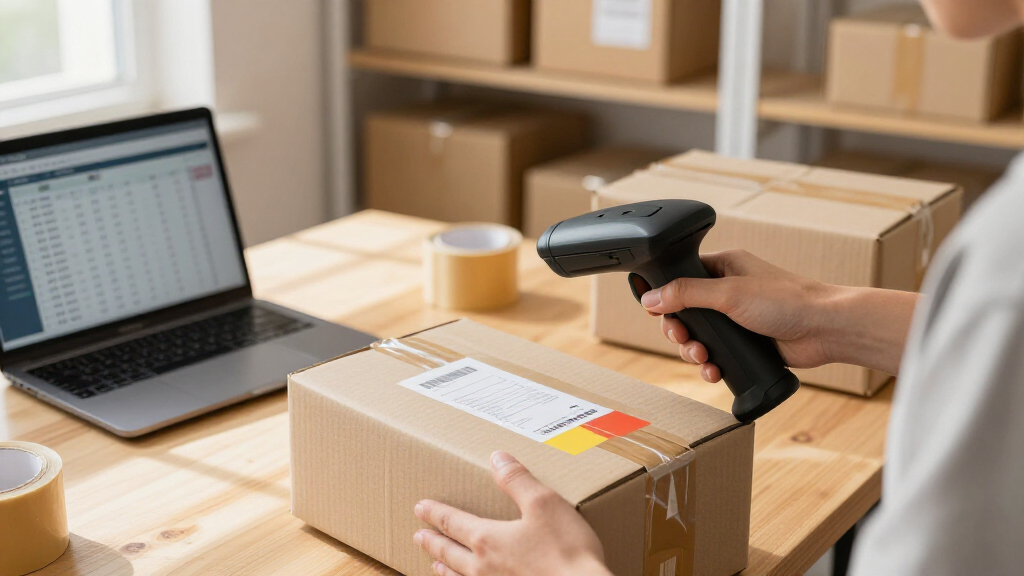
I ranked these budget-friendly wireless barcode scanners using five criteria weighted toward real-world usability. First, connectivity flexibility: models supporting multiple modes (Bluetooth, 2.4G dongle, and USB wired) ranked higher because a wired fallback saves you when wireless pairing fails mid-shift. Second, code compatibility: 2D-capable imagers earned an edge over 1D-only lasers since QR and DataMatrix adoption keeps growing, even at retail and small-business level. Third, battery and charging design — capacity matters, but a charging cradle or clear battery indicator often matters more day to day.
Fourth, I weighed build quality and ergonomics, because budget scanners that feel hollow or have mushy triggers tend to fail under repeated daily use. Finally, value positioning within the lineup: each pick had to justify its slot by doing something distinct better than a cheaper alternative, whether that’s the Tera HW0009’s screen, the PecuMecu two-pack’s per-unit cost, or the Symcode’s wired reliability. Models that overlapped almost entirely with a better-ranked option were ranked lower regardless of individual merit.
Factors to Consider When Choosing Budget-friendly Wireless Barcode Scanners
Before picking a scanner from the list above, it helps to understand what actually separates a smart budget purchase from a frustrating one. These are the factors that shaped my rankings — and the ones most buyers get wrong the first time.
1D Laser vs. 2D Imager: The Decision That Shapes Everything
This is the single biggest fork in the road, and it’s where most budget buyers overspend or underbuy. A 1D laser scanner reads traditional linear barcodes quickly, works at longer distances, and costs less — but it physically cannot read QR codes, which increasingly appear on shipping labels, tickets, and inventory systems. A 2D imager reads both, plus damaged or poorly printed codes, but typically scans slightly slower and drains battery faster. If your suppliers or customers have moved to QR-based labeling, paying slightly more for 2D now is cheaper than replacing a 1D scanner in a year. A common mistake is assuming “2D is newer so it’s automatically better” — for pure UPC/EAN retail scanning, a laser model like the Inateck or Symcode is often the more reliable tool.
Connectivity Modes and Why Redundancy Matters
Budget wireless scanners typically offer one of three connections: a 2.4G USB dongle, Bluetooth, or a USB wired mode. The dongle approach is the most plug-and-play with desktop POS systems, while Bluetooth wins for tablets, phones, and switching between devices. What many buyers overlook is that budget Bluetooth chips are the most common failure point — pairing drops, lag, and compatibility quirks with iOS are recurring complaints across this entire price bracket. That’s why tri-mode models like the NETUM 2D and Symcode Mini ranked highly: if Bluetooth misbehaves, you’re not dead in the water. If you pick a single-mode scanner, match the mode to your actual host device rather than whichever sounds most modern.
Battery Capacity vs. Charging Convenience
Spec sheets advertise milliamp-hours, but what determines daily satisfaction is how the scanner recharges and reports its charge. A 2,000mAh battery like the Inateck’s sounds great until you realize it charges over a micro-USB cable you’ll constantly misplace. Scanners with charging cradles (the Tera HW0009 and Eyoyo EY-037) solve the behavioral problem: you drop the scanner in the stand when not in use, and it’s always full. Similarly, a battery-level indicator, like the one on the Tera laser model, prevents the classic mid-shift shutdown. For high-volume environments, cradle charging is worth more than raw capacity numbers.
Batch Storage Mode: The Underrated Budget Feature
Several scanners in this roundup support offline batch scanning, where the device stores codes internally and uploads them later. This matters more than most buyers expect: it lets you scan inventory in a freezer aisle, a stockroom, or a delivery van far from your computer, then sync everything at once. Cheaper models sometimes limit batch storage to a few hundred codes, while others handle tens of thousands. If your workflow involves roaming away from a host device, check batch capacity before anything else — it’s the difference between a wireless scanner and a genuinely mobile one.
Build Quality: Where Budget Scanners Actually Cut Corners
At this price, manufacturers save money in predictable places: trigger mechanisms, housing thickness, and drop resistance. A mushy or double-firing trigger is the most common failure complaint on budget units and directly causes miscounts. Industrial-styled models like the Eyoyo EY-037 add rubberized armor that survives concrete drops, while mini pocket scanners trade durability for portability. A reasonable rule: if the scanner will live on a desk or counter, build quality matters less and you can spend the savings on features. If it will ride in a pocket or get dropped on warehouse floors, prioritize the sturdier housing even if it means fewer features per dollar.
Multi-Packs and Per-Unit Value
If you’re equipping multiple stations, two-pack bundles like the PecuMecu 2D set often undercut single-unit pricing considerably — but read the fine print on dongles. Some bundles pair both scanners to a single receiver, which means they can’t be used on separate computers simultaneously. Others include two dongles and behave as fully independent units. This is also the point where name-brand discipline pays off: a single reliable scanner from a brand with responsive support (NETUM, Tera, Inateck) frequently beats two flaky units from an unknown seller, even at identical total cost.
Frequently Asked Questions
Can a budget wireless barcode scanner really replace a $300 industrial scanner?
For light-to-moderate use, yes — the core scanning electronics in budget models have matured considerably, and a 2D imager like the NETUM or Eyoyo reads the same codes an industrial unit does. Where the gap shows up is in durability, scan speed at extreme volume, and support. Industrial scanners are rated for thousands of scans per day over years, with sealed housings and replaceable components. If you’re scanning a few hundred codes daily at a small shop or event, a budget model is genuinely sufficient. If you’re running a fulfillment line eight hours a day, the budget unit will likely fail within a year, and the replacement cost plus downtime erases the savings.
Will a cheap Bluetooth scanner work reliably with my iPad or Android tablet?
Mostly, but with caveats worth knowing before you buy. Budget Bluetooth scanners generally use HID keyboard emulation, which works with nearly any app that accepts typed input — the scanner just “types” the barcode contents. The common pain points are iOS auto-capitalization and autocorrect mangling scanned data, plus occasional sleep-mode reconnection delays. Scanners with tri-mode connectivity sidestep this entirely: if Bluetooth acts up, you switch to the 2.4G dongle or wired USB mode. If you plan to use an iPad as your primary POS, prioritize models specifically advertising iOS compatibility, and test the connection behavior on day one while returns are still easy.
Do I need 2D scanning if all my current barcodes are 1D?
Not today, but the industry trajectory matters. Retail and logistics are steadily migrating toward 2D codes (QR and DataMatrix) because they hold more data — expiry dates, serial numbers, batch info. GS1, the organization behind retail barcodes, has been driving adoption toward 2D-readable point-of-sale by the end of the decade. A 1D laser scanner will keep working for existing labels, but a 2D imager costs only modestly more in this budget bracket and future-proofs you. The exception: if you scan long-distance 1D codes in a warehouse, lasers still outperform budget imagers on range, so a laser model like the Inateck remains the right tool for that specific job.
What’s the real difference between 2.4G wireless and Bluetooth on these scanners?
2.4G wireless uses a dedicated USB dongle, so it pairs only with whatever the dongle is plugged into — extremely reliable, near-zero lag, but tied to one host unless you move the dongle. Bluetooth connects directly to phones, tablets, and computers without occupying a USB port, and lets you switch between devices, but budget implementations can suffer pairing drops and slight input lag. A practical rule: fixed checkout station, use 2.4G; roaming between a phone and a laptop, use Bluetooth. And if your workflow mixes both, the tri-mode scanners in this lineup exist precisely so you never have to choose permanently.
Are charging cradles worth paying extra for on a budget scanner?
In my assessment, cradles are one of the few budget-tier upgrades that consistently pay off, and here’s why: battery complaints on cheap scanners usually aren’t about capacity — they’re about charging behavior. A scanner that charges via a loose cable ends up sitting on a desk at half charge, while a cradle turns “putting the scanner down” into “charging the scanner” with zero extra effort. Cradle-equipped models like the Tera HW0009 and Eyoyo EY-037 also double as a stable stand for presentation-mode scanning, where you present codes to a stationary scanner instead of aiming the scanner at codes. If two models are otherwise similar, the cradle version is usually the smarter long-term buy.
Conclusion
Matching the right scanner to your situation comes down to what you scan, where, and how often. For the best overall pick, the Tera Portable Wireless 2D Barcode Scanner hits the sweet spot of 2D compatibility, solid wireless range, and dependable everyday performance. The best value belongs to the Symcode 2-in-1 — its wired fallback and fast laser scanning deliver the most reliability per dollar in the lineup, especially for pure 1D workflows. If you want the closest thing to a premium experience on a budget, the Tera HW0009 with its screen and charging cradle, or the armored Eyoyo EY-037 for rough environments, justify their higher positioning.
Beginners setting up a first POS or inventory system should start with the NETUM 2D or Symcode Mini, since tri-mode connectivity forgives pairing mistakes and grows with your setup. For specific needs: multi-station buyers get the best per-unit cost from the PecuMecu two-pack, mobile sellers scanning on a phone should grab an Eyoyo Mini Bluetooth model, and long-range 1D warehouse work favors the Inateck with its 2,000mAh battery. Whatever your choice, buy from a return-friendly seller and stress-test the scanner in your first week — that habit matters more than any spec on the box.
Fall Picks
fall essentials
As an affiliate, we earn on qualifying purchases.