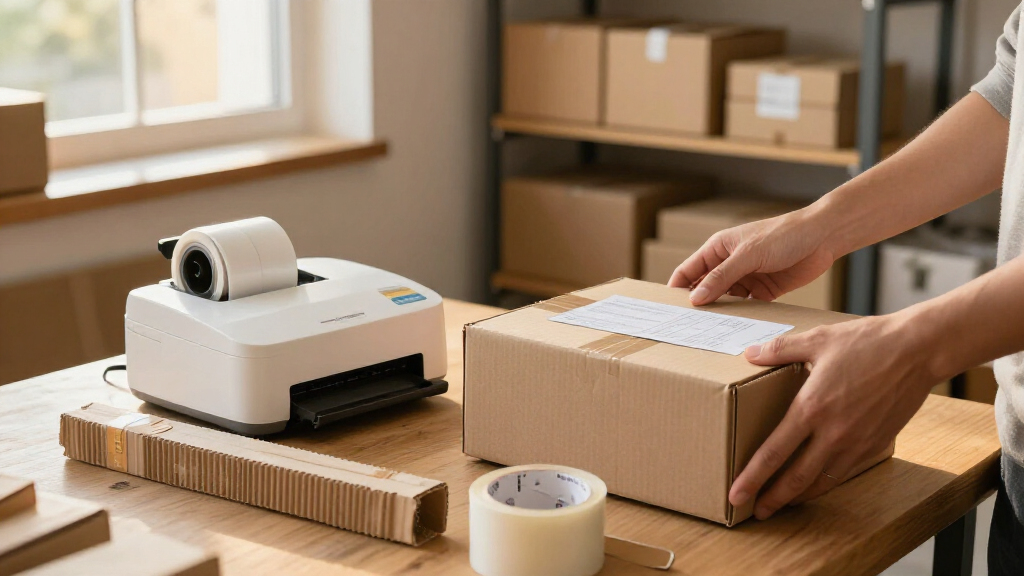

For most small businesses, I’d start with the Rollo USB 4×6 Thermal Shipping Label Printer for its straightforward wired workflow, then compare it with the MUNBYN Bluetooth models if wireless printing matters and the D450BT if built-in label storage would help keep a packing station tidy. Across these 15 small business shipping label printers, the main choice is between a stable USB connection and Bluetooth convenience, with compact portability and label handling adding further tradeoffs. Many models share the same 4×6 thermal-label focus, so compatibility, setup, and desk layout can matter more than small feature differences. I’ve ranked the options by how well they fit practical shipping workflows, not by appearance alone. Continue reading for the full breakdown and advice on matching a printer to your order volume and workspace.

Get business pricing on office and shipping supplies
- Business-only prices and quantity discounts
- Tax-exempt purchasing
- Multiple users, one account, clear invoices
Key Takeaways
- Rollo USB is the clearest wired-first pick: its role stands apart from the Bluetooth-heavy lineup for businesses that prefer a direct computer connection over wireless setup.
- MUNBYN’s two listed models need careful comparison: their product names are very similar, so buyers should verify the exact model and connection details before choosing between them.
- Bluetooth convenience comes with setup tradeoffs: the KNAON, JADENS, Phomemo, Nelko, Rongta, and other wireless options suit flexible workspaces, but device and software compatibility deserves attention.
- The D450BT is the standout for label organization: its built-in label bin addresses a packing-station problem that the other listed products do not emphasize.
- Portable and color-focused picks serve narrower needs: the KNAON Y41BT is the portable option, while the pink Gloryang may suit buyers prioritizing appearance; neither should outrank workflow fit for routine shipping.
| Rongta RP425 Bluetooth 4×6 Thermal Shipping Label Printer |  | Best for Broad Device Compatibility | Printer type: Direct thermal | Connectivity: Bluetooth | Compatible operating systems: Windows 7 or newer, macOS 10.11 or newer, Chrome OS, iOS, Android | VIEW LATEST PRICE | See Our Full Breakdown |
| KNAON Y41BT Portable Thermal Shipping Label Printer |  | Best Compact Pick for Faster Label Runs | Printer type: Thermal | Connectivity: Bluetooth, USB | Compatible operating systems: macOS, Windows 7 or later, ChromeOS, Linux | VIEW LATEST PRICE | See Our Full Breakdown |
| Gloryang Bluetooth Thermal Shipping Label Printer, Pink |  | Best Compact Style Pick | Brand and model: Gloryang 668BT | Printer type: Thermal, inkless | Connectivity: Bluetooth | VIEW LATEST PRICE | See Our Full Breakdown |
| MUNBYN Bluetooth Thermal Label Printer, Wireless 4 x 6 Shipping Label Printer |  | Best for Customizing Labels Across Devices | Printer type: Thermal | Connectivity: Bluetooth, USB | Supported label width: 1.57–4.3 in | VIEW LATEST PRICE | See Our Full Breakdown |
| MUNBYN Bluetooth Thermal Label Printer, Wireless 4×6 Shipping Label Printer |  | Best for Automatic Label Alignment | Brand and model: MUNBYN RW403B | Printer type: Thermal | Connectivity: Bluetooth | VIEW LATEST PRICE | See Our Full Breakdown |
| Rollo USB 4×6 Thermal Shipping Label Printer |  | Best for USB-First Shipping Workflows | Printer type: Direct thermal | Connectivity: USB 2.0, wired | Print speed: Up to 150 mm/s; up to one 4×6 label per second | VIEW LATEST PRICE | See Our Full Breakdown |
| KNAON Bluetooth Thermal Shipping Label Printer, 4 x 6, White |  | Best for App-Based Mobile Label Design | Printer type: Thermal, monochrome | Connectivity: Bluetooth, USB | Maximum paper width: 4.2 inches | VIEW LATEST PRICE | See Our Full Breakdown |
| Phomemo 241BT Bluetooth Thermal Label Printer with 20 Labels |  | Best for Broad Device Compatibility | Printer type: Direct thermal | Connectivity: Bluetooth, USB | Compatible systems: iOS, Android, Windows, macOS, Chrome OS, Linux | VIEW LATEST PRICE | See Our Full Breakdown |
| labelhive Bluetooth Thermal Shipping Label Printer, 4×6 |  | Best for Mixed Roll and Fanfold Media | Printer type: Direct thermal | Resolution: 203 DPI | Supported label width: 1.57–4.41 inches | VIEW LATEST PRICE | See Our Full Breakdown |
| KNAON 4×6 Bluetooth Thermal Shipping Label Printer |  | Best for Fast, Wide-Format Label Runs | Printer type: Thermal, monochrome | Connectivity: Bluetooth, USB | Compatible operating systems: macOS, Windows 7 or later, ChromeOS, Linux | VIEW LATEST PRICE | See Our Full Breakdown |
| JADENS Bluetooth Thermal Shipping Label Printer, 4×6 | 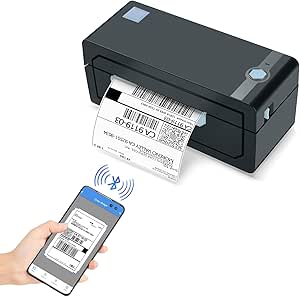 | Best for Flexible Label Formats | Model: JD268BT | Printer type: Thermal | Print resolution: 203 × 203 DPI | VIEW LATEST PRICE | See Our Full Breakdown |
| Rongta RP425 Wireless Thermal Shipping Label Printer |  | Best for Simple 4×6 Workflows | Model: RP425-WH | Printer type: Thermal | Print resolution: 203 × 203 dpi | VIEW LATEST PRICE | See Our Full Breakdown |
| Nelko Bluetooth Thermal Shipping Label Printer, 4 × 6 | 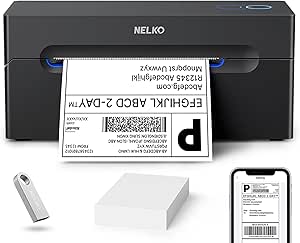 | Best for Fast Label Runs | Printer type: Thermal | Print resolution: 203 × 203 DPI | Print speed: Up to 150 mm/s; up to 72 4×6 labels per minute | VIEW LATEST PRICE | See Our Full Breakdown |
| D450BT Bluetooth 4×6 Thermal Shipping Label Printer with Built-In Label Bin |  | Best for an Organized Packing Station | Model: D450BT | Printer type: Thermal | Print resolution: 203 × 203 dpi | VIEW LATEST PRICE | See Our Full Breakdown |
| NULLTONEX 4×6 Bluetooth Thermal Shipping Label Printer |  | Best for App-Based Label Customization | Printer type: Direct thermal | Print resolution: 203 DPI | Print speed: Up to 150 mm/s (72 labels per minute) | VIEW LATEST PRICE | See Our Full Breakdown |
| small business shipping label printer | Printer type | Connectivity | Print speed | Dimensions |
|---|---|---|---|---|
| Rongta RP425 Bluetooth 4×6 The | Direct thermal | Bluetooth | Up to 150 mm/s | — |
| KNAON Y41BT Portable Thermal S | Thermal | Bluetooth, USB | — | 7.2 × 3.15 × 2.65 in |
| Gloryang Bluetooth Thermal Shi | Thermal, inkless | Bluetooth | — | — |
| MUNBYN Bluetooth Thermal Label | Thermal | Bluetooth, USB | — | — |
| MUNBYN Bluetooth Thermal Label | Thermal | Bluetooth | — | 4.9 × 9.67 × 6.49 in (D × W × H) |
| Rollo USB 4×6 Thermal Shipping | Direct thermal | USB 2.0, wired | Up to 150 mm/s; up to one 4×6 label per second | 4 × 8 × 4 inches |
| KNAON Bluetooth Thermal Shippi | Thermal, monochrome | Bluetooth, USB | Up to 180 mm/s | — |
| Phomemo 241BT Bluetooth Therma | Direct thermal | Bluetooth, USB | Up to 150 mm/s | — |
| labelhive Bluetooth Thermal Sh | Direct thermal | Bluetooth, USB | — | 7.2 × 2.4 × 3.15 inches |
| KNAON 4×6 Bluetooth Thermal Sh | Thermal, monochrome | Bluetooth, USB | Up to 180 mm/s | 7.2 × 3.15 × 2.65 inches (description); 7.3 × 2.56 × 3.15 inches (product information) |
| JADENS Bluetooth Thermal Shipp | Thermal | Bluetooth, USB 2.0 | — | 5.91 × 9.06 × 5.91 inches |
| Rongta RP425 Wireless Thermal | Thermal | Bluetooth, USB | 15 pages per minute | — |
| Nelko Bluetooth Thermal Shippi | Thermal | Bluetooth through the NELKO app; USB | Up to 150 mm/s; up to 72 4×6 labels per minute | 9 × 5 × 6 inches |
| D450BT Bluetooth 4×6 Thermal S | Thermal | Bluetooth, USB | Up to 72 labels per minute | 7.3 × 6.3 × 5.35 inches |
| NULLTONEX 4×6 Bluetooth Therma | Direct thermal | Bluetooth, USB | Up to 150 mm/s (72 labels per minute) | 8.08 × 4.73 × 6.9 inches (D × W × H) |
More Details on Our Top Picks
Rongta RP425 Bluetooth 4×6 Thermal Shipping Label Printer
The Rongta RP425 is a flexible fit for small shops that switch between a phone and a computer: it supports iOS, Android, Windows, macOS, and Chrome OS, with Bluetooth mobile printing through the Rongta app. Its automatic label detection and 0.98–4.37-inch width range also suit sellers who print more than standard 4×6 shipping labels. The listed speed of up to 150 mm/s is lower than the KNAON Y41BT’s 180 mm/s, so it is less compelling when speed is the main priority. In return, the RP425 accepts narrower label stock than the KNAON, which can help with inventory or product labels. The tradeoff is app dependence for phones and monochrome-only output; this is a shipping-focused workhorse, not a color-label printer.
Pros:- Supports mobile and desktop operating systems, including Chrome OS.
- Automatic label detection helps feed different supported label sizes.
- Wide 0.98–4.37-inch media range covers narrow labels as well as 4×6 shipping labels.
- Bluetooth printing from iOS and Android devices through the Rongta app.
Cons:- Mobile printing requires the Rongta app.
- Maximum listed speed of 150 mm/s is below the KNAON Y41BT’s 180 mm/s.
- Monochrome output cannot produce color product labels.
Best for: Small sellers who print shipping and narrower inventory labels from a mix of phones, computers, and Chromebooks.
Not ideal for: High-volume shippers prioritizing the fastest listed print speed, or sellers who want mobile printing without a companion app.
- Printer type:Direct thermal
- Connectivity:Bluetooth
- Compatible operating systems:Windows 7 or newer, macOS 10.11 or newer, Chrome OS, iOS, Android
- Supported label width:0.98–4.37 in
- Print speed:Up to 150 mm/s
- Resolution:203 dpi
- Output:Monochrome
- Dimensions and weight:10.2 × 7.4 × 5.3 in; 0.65 kg
- Warranty:1 year
Our verdict“Choose the RP425 if your small business needs one printer for shipping labels and narrower label formats across phones and computers.”
KNAON Y41BT Portable Thermal Shipping Label Printer
The KNAON Y41BT makes a strong case for sellers who want a small printer that can keep up with routine batches: its listed speed reaches 180 mm/s, the highest stated here, and its 7.2 × 3.15 × 2.65-inch body is easy to store between shipping sessions. USB gives computer users an alternative to Bluetooth, while the FlashLabel Pro app handles wireless printing and offers templates, fonts, and icons. Compared with the larger Rongta RP425, the Y41BT takes up less room but does not accept labels narrower than 1.38 inches. Its companion-app requirement for Bluetooth and ChromeOS extension requirement add setup steps, and 200 × 200 dpi is a modest resolution for fine graphics. It is a practical shipping tool, not a general-purpose color printer.
Pros:- Listed print speed of up to 180 mm/s suits recurring label batches.
- Compact dimensions make storage and portable use easier.
- USB and Bluetooth provide both wired and wireless connection options.
- Companion app includes templates, fonts, and icons.
Cons:- Bluetooth printing requires the FlashLabel Pro app; devices do not connect directly.
- ChromeOS printing requires a browser extension.
- 200 × 200 dpi and monochrome output limit fine-detail and color label work.
Best for: Home-based sellers and small online shops with limited packing space who print recurring batches from a computer or phone.
Not ideal for: Businesses that need narrow labels below 1.38 inches or want Bluetooth printing without an app or ChromeOS extension.
- Printer type:Thermal
- Connectivity:Bluetooth, USB
- Compatible operating systems:macOS, Windows 7 or later, ChromeOS, Linux
- Supported paper width:1.38–4.41 in
- Maximum print speed:180 mm/s
- Resolution:200 × 200 dpi
- Output:Monochrome
- Dimensions:7.2 × 3.15 × 2.65 in
- Included accessories:20 test printing papers
Our verdict“Pick the Y41BT if desk space and brisk shipping-label batches matter more than direct Bluetooth setup or narrow-format support.”
Gloryang Bluetooth Thermal Shipping Label Printer, Pink
The Gloryang 668BT pairs a compact footprint with a distinctive pink finish, making it a fit for small workspaces where appearance matters alongside basic shipping-label capability. It prints standard 4×6 labels and supports widths from 1.57 to 4.1 inches, while Bluetooth compatibility spans iOS, Android, macOS, Windows, and Chromebooks. Its 203 dpi resolution is comparable to the MUNBYN B0D3PVP6VM, but the MUNBYN adds USB for computer connections and offers label-design tools, giving it more flexibility for mixed-device workflows. Gloryang’s simpler Bluetooth-only setup may suit a phone-centered seller, though the provided details do not state a print speed. Monochrome, simplex printing keeps it squarely focused on straightforward label output rather than color or two-sided jobs.
Pros:- Compact dimensions fit smaller packing desks.
- Bluetooth support covers iOS, Android, macOS, Windows, and Chromebooks.
- Handles 4×6 shipping labels and other supported widths from 1.57 to 4.1 inches.
- Direct thermal printing avoids ink and toner.
Cons:- Bluetooth is the only listed connection method, unlike the USB-equipped MUNBYN B0D3PVP6VM.
- Monochrome, simplex output does not support color or two-sided printing.
- No print speed is provided in the product data.
Best for: Small sellers who want a compact 4×6 printer with broad Bluetooth device compatibility and a pink design.
Not ideal for: Businesses that need USB connectivity, documented high-speed batch printing, or color and duplex output.
- Brand and model:Gloryang 668BT
- Printer type:Thermal, inkless
- Connectivity:Bluetooth
- Compatible devices and operating systems:iOS, Android, macOS, Windows, Chromebooks, tablets, laptops
- Supported label width:1.57–4.1 in
- Maximum print resolution:203 dpi
- Output:Monochrome, simplex
- Dimensions and weight:8.13 × 5.12 × 6.5 in; 1.12 kg
- Color:Pink
Our verdict“Choose the Gloryang if you want a compact, Bluetooth-only shipping printer with a distinctive finish and do not need USB or advanced output options.”
MUNBYN Bluetooth Thermal Label Printer, Wireless 4 x 6 Shipping Label Printer
This MUNBYN Bluetooth printer is the most versatile option here for sellers who create or adjust labels on the fly: its tools support templates, fonts, PDF and TXT imports, and OCR, with Bluetooth for phones and USB or Bluetooth for computers. That wired fallback matters in a small business workflow where a phone connection is convenient but a desktop connection may be more dependable. Compared with the Gloryang 668BT, it offers USB and more listed design functions; compared with the smaller KNAON Y41BT, it is larger and heavier at 2.3 pounds. The 203 × 300 dpi specification is listed alongside a 203 dpi resolution description, so buyers should not assume the printer adds color or premium graphic output. The manufacturer also warns that UPS thermal paper may not be compatible and recommends MUNBYN media.
Pros:- Bluetooth and USB connection options support phones, tablets, and computers.
- Label tools include templates, fonts, PDF and TXT imports, and OCR.
- Supports label widths from 1.57 to 4.3 inches, including 4×6 shipping labels.
- Direct thermal printing needs no ink or toner.
Cons:- Manufacturer notes possible incompatibility with UPS thermal paper.
- MUNBYN recommends its own thermal label paper for optimal performance.
- At 2.3 pounds, it is less portable than the KNAON Y41BT.
Best for: Small businesses that customize labels or import existing files and want both wireless mobile printing and a USB computer connection.
Not ideal for: Sellers who rely on UPS thermal paper, want the smallest printer, or prefer broad media flexibility without a brand-specific paper recommendation.
- Printer type:Thermal
- Connectivity:Bluetooth, USB
- Supported label width:1.57–4.3 in
- Maximum media size:4 × 6 in
- Resolution:203 × 300 dpi (also listed as 203 dpi)
- Output:Monochrome
- Weight and dimensions:2.3 lb; 8 × 6.88 × 4.72 in
- Label design features:Templates, fonts, PDF and TXT imports, OCR
- Warranty:Limited
Our verdict“Choose this MUNBYN if label customization and USB fallback are worth more to your workflow than compact size or unrestricted paper choice.”
MUNBYN Bluetooth Thermal Label Printer, Wireless 4×6 Shipping Label Printer
The MUNBYN RW403B earns its place for sellers who want help keeping labels aligned: its automatic calibration can reduce misfeeds and wasted stock during routine shipping runs. It supports 1.57–4.25-inch thermal labels, so one device can handle 4×6 postage labels and smaller inventory formats. Compared with the other MUNBYN in this lineup, the B0D3PVP6VM, this model lists a two-year warranty and a 500-sheet maximum capacity, while that printer offers USB and more specific file-import and design tools. The RW403B is Bluetooth-only in the supplied specs, which may be limiting for businesses that prefer a wired desktop connection. Its monochrome thermal output also means it is built for shipping and practical labeling, not colorful branding.
Pros:- Automatic calibration helps reduce label misalignment.
- Supports 1.57–4.25-inch labels for shipping and smaller labeling tasks.
- Two-year warranty is longer than the RP425’s listed one-year warranty.
- Thermal printing requires no ink.
Cons:- Bluetooth is the only connection method listed, with no USB option specified.
- Monochrome output cannot produce color branding or product labels.
- Thermal-media requirements limit it to compatible label stock.
Best for: Small online sellers who print shipping and inventory labels and want automatic calibration to help limit alignment errors.
Not ideal for: Teams that require USB connectivity, color labels, or a printer with detailed label-design tools and file-import support.
- Brand and model:MUNBYN RW403B
- Printer type:Thermal
- Connectivity:Bluetooth
- Compatible devices:Android, iOS, Windows, Mac, Chromebook, laptops, PCs, smartphones, tablets
- Label width:1.57–4.25 in
- Maximum media size:4 × 6 in
- Output and ink:Monochrome; no ink
- Dimensions:4.9 × 9.67 × 6.49 in (D × W × H)
- Warranty and maximum sheet capacity:2 years; 500 sheets
Our verdict“Pick the RW403B if automatic alignment and a longer listed warranty matter more than USB connectivity or label-design features.”
Rollo USB 4×6 Thermal Shipping Label Printer
The Rollo USB is the most straightforward pick here for a small business that prints from a computer and wants to avoid app-based setup. Its wired connection and compatibility with Windows and Mac make it a simpler fit for a fixed packing station than the Phomemo 241BT, which adds Bluetooth for mobile printing. At up to 150 mm/s, it can keep pace with regular label batches, while automatic label detection helps when switching between supported label sizes. Direct thermal printing also removes ink and toner from the supply list. The tradeoff is clear: this model has no listed wireless connection and prints monochrome only. Choose it for dependable desktop use, not for a team that needs phone printing or flexible placement away from a computer.
Pros:- Direct thermal printing avoids ink and toner purchases.
- Prints up to 150 mm/s, including up to one 4×6 label per second.
- Supports Windows and Mac and label widths from 1.57 to 4.1 inches.
- Automatic label detection and compact 2.2-pound body suit a fixed packing station.
Cons:- USB-only connectivity limits placement and excludes wireless mobile printing.
- Monochrome output cannot produce color-coded or full-color labels.
Best for: Small businesses with a dedicated Windows or Mac packing computer that want fast, inkless printing across shipping and product-label tasks.
Not ideal for: Sellers who need Bluetooth or phone-based printing, or who need color labels.
- Printer type:Direct thermal
- Connectivity:USB 2.0, wired
- Print speed:Up to 150 mm/s; up to one 4×6 label per second
- Resolution:203 × 203 DPI
- Label width:1.57–4.1 inches
- Compatible operating systems:Windows XP and newer; Mac 10.9 and newer
- Dimensions:4 × 8 × 4 inches
- Weight:2.2 pounds
- Warranty:Limited 1 year
Our verdict“Choose the Rollo USB if your shipping workflow centers on a Windows or Mac computer and wireless printing is not a requirement.”
KNAON Bluetooth Thermal Shipping Label Printer, 4 x 6, White
The KNAON Bluetooth 4 x 6 suits sellers who want to design or adjust labels on a phone, not just send a shipping file to print. Its FlashLabel Pro app includes templates, icons, and fonts, giving it a more hands-on mobile workflow than the computer-focused Rollo USB. USB connections and broad operating-system support also leave a route for desktop printing. The printer reaches up to 180 mm/s, the highest listed speed among these five, and accepts media up to 4.2 inches wide. That flexibility comes with a setup caveat: Bluetooth printing depends on the app, and shipping platform labels may need to be saved as PDFs and imported. The conflicting published dimensions also make it harder to judge its exact footprint before buying.
Pros:- Bluetooth app offers label templates, icons, and fonts for mobile customization.
- USB connectivity adds a computer-printing option.
- Up to 180 mm/s print speed supports brisk label batches.
- Supports iOS, Android, Windows, macOS, ChromeOS, and Linux.
Cons:- Bluetooth printing requires the FlashLabel Pro app and is not a universal direct connection.
- Shipping platform labels may require saving as PDFs and importing into the app.
- Published dimensions conflict between the description and product information.
Best for: Solo sellers who create or customize labels on iOS or Android and want templates alongside Bluetooth and USB printing.
Not ideal for: Businesses that need a direct, app-free connection from every device or rely on precise published dimensions for a tight packing station.
- Printer type:Thermal, monochrome
- Connectivity:Bluetooth, USB
- Maximum paper width:4.2 inches
- Resolution:200 × 200
- Print speed:Up to 180 mm/s
- Compatible systems:iOS, Android, Windows 7 or later, macOS, ChromeOS, Linux
- Weight:2.8 pounds
- Included:10 test printing papers
Our verdict“Pick this KNAON if mobile label creation matters more than a direct, simple path from shipping platforms to print.”
Phomemo 241BT Bluetooth Thermal Label Printer with 20 Labels
The Phomemo 241BT is a balanced choice for a small business that alternates between phone and computer printing. Bluetooth supports iOS and Android, while USB covers Windows, Mac, Chrome OS, and Linux; that wider stated device mix gives it an advantage over the Rollo USB, which is wired and limited to Windows and Mac. Its 1–4.6-inch label range also accommodates more than standard shipping labels, and the included 20 labels let a buyer start with a small print job. Speed tops out at 150 mm/s, below the 180 mm/s listed for both KNAON models here. The tradeoffs are monochrome output and driver installation for computer printing. This is a flexible all-rounder, but not the pick for buyers who want the fastest listed output or a driver-free desktop setup.
Pros:- Bluetooth and USB support a wide mix of phones, tablets, and computers.
- Accepts label widths from 1 to 4.6 inches for shipping and other label jobs.
- Direct thermal printing needs no ink or toner.
- Includes 20 labels for initial printing.
Cons:- Computer printing requires downloading and installing the driver.
- Monochrome output does not support color labels.
- Its listed 150 mm/s speed is below the 180 mm/s offered by the KNAON models in this group.
Best for: Small sellers who print from both mobile devices and computers across different operating systems, and also use nonstandard label widths.
Not ideal for: High-volume shippers prioritizing the fastest listed speed, or computer users unwilling to install a printer driver.
- Printer type:Direct thermal
- Connectivity:Bluetooth, USB
- Compatible systems:iOS, Android, Windows, macOS, Chrome OS, Linux
- Supported label width:1–4.6 inches
- Maximum media size:4 × 6 inches
- Print speed:Up to 150 mm/s
- Resolution:203 × 203 dpi
- Weight:720 g
- Included labels:20
Our verdict“Choose the Phomemo 241BT if broad device support and flexible label widths matter more than maximum speed.”
labelhive Bluetooth Thermal Shipping Label Printer, 4×6
The labelhive stands out for media handling rather than app-based design: it supports both roll and fanfold labels, a useful choice for a packing station that already stocks more than one format. Automatic calibration, jam detection, and paper-out detection can also reduce interruptions during routine batches. Compared with the Phomemo 241BT, its stated label width tops out at 4.41 inches rather than 4.6, but labelhive explicitly lists roll and fanfold support and adds detection features. Bluetooth works with iPhone and Android through FlashLabel Pro, while USB and Bluetooth are listed for computer systems too. Mobile printing still depends on the app, and USB use with phones is not specified. It is a focused workflow pick, not the clearest choice for direct mobile printing without an app.
Pros:- Supports both roll and fanfold thermal labels.
- Automatic label calibration helps align media when loading.
- Jam and paper-out detection can flag interruptions during printing.
- Bluetooth and USB support a range of mobile and computer devices.
Cons:- Mobile printing requires the FlashLabel Pro app.
- USB printing from iPhone and Android is not specified.
- Maximum listed label width of 4.41 inches is narrower than the Phomemo 241BT’s 4.6-inch range.
Best for: Small businesses that switch between roll and fanfold thermal labels and want automatic calibration and paper-status alerts.
Not ideal for: Phone-first sellers who want app-free mobile printing, or anyone needing confirmed USB printing from a phone or tablet.
- Printer type:Direct thermal
- Resolution:203 DPI
- Supported label width:1.57–4.41 inches
- Supported media:Roll and fanfold thermal labels
- Connectivity:Bluetooth, USB
- Compatible devices and systems:iPhone, Android, Windows, macOS, ChromeOS, Linux
- Dimensions:7.2 × 2.4 × 3.15 inches
- Weight:2 pounds
- Warranty:1-year limited
Our verdict“Choose labelhive if your packing workflow uses both roll and fanfold labels and its detection features matter more than app-free mobile printing.”
KNAON 4×6 Bluetooth Thermal Shipping Label Printer
This KNAON 4×6 is the speed-and-width pick in this set: it lists output up to 180 mm/s and supports labels from 1.38 to 4.41 inches wide. That gives it an edge over the Rollo USB for buyers who want wireless connectivity and a broader stated width range, though Rollo offers a more direct computer-only workflow without a mobile app requirement. KNAON connects through Bluetooth or USB and supports several computer systems, with mobile printing routed through FlashLabel Pro or compatible drivers. The app-dependent Bluetooth path and possible PDF import step can add friction when printing labels from shipping platforms. Published dimensions also differ between the description and product information, so the exact footprint is uncertain. Included test papers are useful for setup, but they do not remove the need to source ongoing label stock.
Pros:- Up to 180 mm/s speed is suited to brisk shipping-label batches.
- Supports label widths from 1.38 to 4.41 inches.
- Bluetooth and USB provide connection options for phones, tablets, and computers.
- Includes 20 test printing papers.
Cons:- Bluetooth printing requires the FlashLabel Pro app.
- Shipping labels may need to be saved as PDFs and imported into the app.
- Listed dimensions differ between the description and product information.
Best for: Small businesses printing frequent batches across varied label widths that want both Bluetooth and USB connection options.
Not ideal for: Sellers who need a predictable app-free phone workflow or depend on exact measurements for a constrained counter space.
- Printer type:Thermal, monochrome
- Connectivity:Bluetooth, USB
- Compatible operating systems:macOS, Windows 7 or later, ChromeOS, Linux
- Supported label width:1.38–4.41 inches
- Maximum print resolution:203 dpi
- Print speed:Up to 180 mm/s
- Dimensions:7.2 × 3.15 × 2.65 inches (description); 7.3 × 2.56 × 3.15 inches (product information)
- Included:20 test printing papers
Our verdict“Pick this KNAON for fast, varied-width label printing if its app-based Bluetooth workflow and inconsistent dimensions are acceptable.”
JADENS Bluetooth Thermal Shipping Label Printer, 4×6
The JADENS JD268BT suits a small shop that switches between shipping labels and narrower barcode or product labels. Its 1.57–4.1-inch media range and support for both rolls and fanfold labels give it more format flexibility than the Rongta RP425, which is specified for thermal paper up to 4×6 inches. USB covers computer-based packing, while Bluetooth adds a wireless option; mobile printing, however, depends on the Jadens Printer app rather than a direct phone connection. Like the Nelko, it prints at 203 DPI without ink or toner, a practical fit for routine carrier labels rather than color graphics. Changing label sizes requires calibration, so frequent media swaps add setup work. I’d choose it for mixed label needs, not for a workflow that changes stock constantly.
Pros:- Supports roll and fanfold labels from 1.57 to 4.1 inches wide.
- Bluetooth and USB provide wireless and wired connection options.
- Thermal printing avoids ink and toner purchases.
- Supports shipping platforms including ShipStation, eBay, Amazon, and Shopify.
Cons:- Label size must be calibrated when switching media.
- Android and iOS printing requires the Jadens Printer app.
- 203 DPI monochrome output is intended for labels, not color documents.
Best for: Small online sellers who print 4×6 shipping labels alongside narrower barcode or product labels from roll or fanfold stock.
Not ideal for: Sellers who frequently change label sizes or want app-free printing from an Android or iOS device.
- Model:JD268BT
- Printer type:Thermal
- Print resolution:203 × 203 DPI
- Label width:1.57–4.1 inches
- Maximum media size:4 × 6 inches
- Supported media:Fanfold and roll labels
- Connectivity:Bluetooth, USB 2.0
- Dimensions:5.91 × 9.06 × 5.91 inches
- Warranty:1-year limited warranty
Our verdict“Choose the JADENS if your small business prints several label widths, but look at the Rongta RP425 for a simpler 4×6-only workflow.”
Rongta RP425 Wireless Thermal Shipping Label Printer
The Rongta RP425 is a straightforward pick for a small business focused on standard shipping labels rather than a broad mix of media. It connects to computers by USB and to phones or tablets by Bluetooth, giving it a more direct mobile-use pitch than the JADENS JD268BT, whose mobile printing requires the Jadens app. Both offer 203 DPI monochrome thermal printing without ink, but Rongta’s supplied details center on thermal paper up to 4×6 inches rather than the JADENS’s wider range of roll and fanfold formats. That narrower scope can keep a routine packing station simple, though it offers less flexibility for product labels or other sizes. Its listed 15 pages per minute is not directly comparable to label-per-minute figures, so I would not select it based on speed alone.
Pros:- Bluetooth connection supports smartphones and tablets.
- USB provides a wired computer connection.
- Thermal printing operates without ink.
- Supports media up to 4 × 6 inches.
Cons:- Product details specify thermal paper but do not list a broader range of label widths or media formats.
- Monochrome output cannot produce color labels or documents.
- Simplex printing does not support two-sided output.
Best for: Small sellers who print standard 4×6 shipping labels and want Bluetooth phone or tablet connections plus USB for a computer.
Not ideal for: Businesses that need multiple label widths, fanfold and roll support, or color printing.
- Model:RP425-WH
- Printer type:Thermal
- Print resolution:203 × 203 dpi
- Maximum media size:4 × 6 inches
- Print media:Thermal paper
- Connectivity:Bluetooth, USB
- Print speed:15 pages per minute
- Weight:16 ounces
- Warranty:1-year manufacturer warranty
Our verdict“Pick the Rongta RP425 for a simple 4×6 shipping-label station with mobile connectivity, not for varied label formats.”
Nelko Bluetooth Thermal Shipping Label Printer, 4 × 6
Nelko’s listed throughput makes this a strong match for small businesses that print shipping labels in batches: it is rated for up to 72 4×6 labels per minute, with a maximum speed of 150 mm/s. It also handles roll and fanfold stock from 1.54 to 4.1 inches wide, giving it a wider stated media range than the Rongta RP425. USB support for Windows, Mac, and Chrome OS helps it fit a computer-based packing station, while Bluetooth through the NELKO app adds mobile printing. The catch is platform dependence: Mac printing is USB-only, and phones need the app rather than a direct Bluetooth print path. Compared with the JADENS, Nelko offers a stated speed figure but similar label-width flexibility. I’d favor it for repeat batches over frequent Mac-based wireless use.
Pros:- Rated to print up to 72 4×6 labels per minute.
- Accepts roll and fanfold labels from 1.54 to 4.1 inches wide.
- USB printing supports Windows, Mac, and Chrome OS.
- Thermal operation requires no ink or toner.
Cons:- Mac printing is limited to USB.
- Bluetooth printing requires the NELKO app.
- Monochrome output is limited to black-and-white labels.
Best for: Small e-commerce teams that print batches of 4×6 labels and use Windows, Chrome OS, or a phone with the NELKO app.
Not ideal for: Mac users who need wireless printing, or sellers who want mobile printing without a dedicated app.
- Printer type:Thermal
- Print resolution:203 × 203 DPI
- Print speed:Up to 150 mm/s; up to 72 4×6 labels per minute
- Connectivity:Bluetooth through the NELKO app; USB
- USB compatibility:Windows 7 or later, Mac OS, Chrome OS
- Label width:1.54–4.1 inches (40–104 mm)
- Supported media:Fanfold and roll labels
- Dimensions:9 × 5 × 6 inches
- Item weight:1.4 kg
Our verdict“Choose Nelko for fast batch printing and broad computer support, but not if Mac wireless printing is part of your workflow.”
D450BT Bluetooth 4×6 Thermal Shipping Label Printer with Built-In Label Bin
The D450BT’s built-in bin is its clearest advantage for a small shipping operation: it can hold up to 250 labels, reducing the need to feed a separate stack or roll from beside the printer. It supports both roll and fanfold stock, and its stated maximum width of 4.6 inches is broader than the 4.1-inch maximum listed for the JADENS and Nelko. Auto-alignment is designed to reduce wasted labels, a useful feature when packing in batches. The printer also offers Bluetooth and USB across Android, iOS, Windows, macOS, Linux, and ChromeOS. The tradeoff is a larger label capacity built into the body, which may be unnecessary for a low-volume seller; it also remains a 203 DPI monochrome printer. I’d rank it for station organization, not the smallest footprint.
Pros:- Built-in bin holds up to 250 labels.
- Supports both roll and fanfold media.
- Bluetooth and USB work across a broad range of listed operating systems.
- Auto-alignment is designed to help reduce label waste.
Cons:- The built-in bin may take up space that low-volume sellers do not need to allocate.
- Monochrome printing cannot produce color labels.
- Maximum supported label width is 4.6 inches.
Best for: Small businesses that keep a label supply at the packing station and want built-in storage for frequent shipping runs.
Not ideal for: Low-volume sellers with very limited desk space or buyers who need color output.
- Model:D450BT
- Printer type:Thermal
- Print resolution:203 × 203 dpi
- Print speed:Up to 72 labels per minute
- Supported label width:1–4.6 inches (25.4–117 mm)
- Maximum label capacity:250
- Connectivity:Bluetooth, USB
- Compatible operating systems:Android, iOS, Windows, macOS, Linux, ChromeOS
- Dimensions:7.3 × 6.3 × 5.35 inches
Our verdict“Choose the D450BT if a built-in label supply and alignment features matter more than keeping the printer as small as possible.”
NULLTONEX 4×6 Bluetooth Thermal Shipping Label Printer
NULLTONEX is the pick for sellers who want more than a basic carrier-label workflow: its app includes templates, fonts, editing tools, and offline local storage. That can help a small business prepare repeatable label layouts without relying on a desktop each time. It prints at 203 DPI and up to 150 mm/s, matching the stated speed of the Nelko, while supporting Bluetooth and USB. Its 1.57–4.3-inch width range also accommodates labels beyond standard 4×6 stock, though the product details do not specify roll or fanfold support as clearly as the JADENS and Nelko listings do. The compact 1.2-pound design is appealing for a tight packing area, but output remains monochrome and requires thermal labels. I’d favor it over the Rongta RP425 when app-based editing matters more than a simple, narrowly defined 4×6 setup.
Pros:- App includes templates, fonts, editing tools, and offline local storage.
- Bluetooth and USB support mobile and computer connections.
- Rated for speeds up to 150 mm/s or 72 labels per minute.
- Compact 1.2-pound design suits a space-conscious packing area.
Cons:- Monochrome output does not support color labels.
- Requires thermal labels.
- Product details do not specify roll and fanfold media support.
Best for: Small online sellers who want to edit or reuse label templates from a phone and print over Bluetooth or USB.
Not ideal for: Businesses that need color output or require clearly specified support for both roll and fanfold label stock.
- Printer type:Direct thermal
- Print resolution:203 DPI
- Print speed:Up to 150 mm/s (72 labels per minute)
- Connectivity:Bluetooth, USB
- Label size:4 × 6 inches; widths from 1.57 to 4.3 inches
- Print output:Monochrome, black and white
- Weight:1.2 lbs
- Dimensions:8.08 × 4.73 × 6.9 inches (D × W × H)
- Included accessories:Power cord, USB cable, 25 sheets of 4×6-inch thermal labels
Our verdict“Choose NULLTONEX if editable app templates are useful to your shipping workflow, but favor the JADENS or Nelko for explicitly stated roll-and-fanfold support.”
How We Picked
I ranked these printers around the daily demands of a small business shipping operation: dependable 4×6 label output, a connection method that fits the devices already in use, manageable setup, and practical label handling. I also weighed whether a product’s distinguishing feature solves a real workflow problem, such as keeping labels contained or moving a printer between work areas. Since the supplied product names do not establish detailed performance testing, I avoid claiming print speeds, compatibility guarantees, or durability results that cannot be verified from those names.
The order favors clear, practical roles over cosmetic variations. The Rollo USB model leads as the wired-first choice; the MUNBYN Bluetooth options follow for buyers seeking wireless flexibility; and the D450BT earns a distinct place for built-in label storage. Portable, color-specific, and similarly named Bluetooth models rank lower because their appeal depends more on individual setup needs, and buyers should confirm exact specifications before purchase. I treat the two MUNBYN listings as separate entries while advising readers to check whether their configurations differ.
| small business shipping label printer | Printer type | Connectivity |
|---|---|---|
| Rongta RP425 Bluetooth 4×6 The | Direct thermal | Bluetooth |
| KNAON Y41BT Portable Thermal S | Thermal | Bluetooth, USB |
| Gloryang Bluetooth Thermal Shi | Thermal, inkless | Bluetooth |
| MUNBYN Bluetooth Thermal Label | Thermal | Bluetooth, USB |
| MUNBYN Bluetooth Thermal Label | Thermal | Bluetooth |
| Rollo USB 4×6 Thermal Shipping | Direct thermal | USB 2.0, wired |
| KNAON Bluetooth Thermal Shippi | Thermal, monochrome | Bluetooth, USB |
| Phomemo 241BT Bluetooth Therma | Direct thermal | Bluetooth, USB |
| labelhive Bluetooth Thermal Sh | Direct thermal | Bluetooth, USB |
| KNAON 4×6 Bluetooth Thermal Sh | Thermal, monochrome | Bluetooth, USB |
| JADENS Bluetooth Thermal Shipp | Thermal | Bluetooth, USB 2.0 |
| Rongta RP425 Wireless Thermal | Thermal | Bluetooth, USB |
| Nelko Bluetooth Thermal Shippi | Thermal | Bluetooth through the NELKO app; USB |
| D450BT Bluetooth 4×6 Thermal S | Thermal | Bluetooth, USB |
| NULLTONEX 4×6 Bluetooth Therma | Direct thermal | Bluetooth, USB |
Factors to Consider When Choosing Small Business Shipping Label Printers
Before choosing a label printer, I’d map the job around the printer rather than comparing names alone. The right match depends on how labels reach the device, how many parcels move through the packing area, and what your shipping platform can send to print.
Match the connection to your shipping setup
Start by identifying which device creates labels: a desktop computer, laptop, tablet, or phone. A USB model can keep a fixed packing station simple, while Bluetooth can help when staff print from different compatible devices or need to reposition the printer. Wireless printing is not automatically easier; pairing steps, operating-system support, and the shipping platform’s print flow all matter. Check compatibility against the exact printer model and your current software before ordering, rather than assuming that Bluetooth means universal support. A common mistake is buying for a phone-based workflow when labels are actually generated on a computer, or the reverse. If multiple staff members share one station, prioritize a connection process they can repeat without relying on one person’s device settings.
Estimate volume by peak days, not average days
A business shipping five parcels most days may still face a very different printer workload during a weekly dispatch or seasonal rush. Think through how many labels you need to print in one sitting and whether delays would interrupt packing, rather than relying only on a monthly order average. For occasional shipments, a simple setup may matter more than features built for a high-throughput station. If label printing is a bottleneck, investigate the manufacturer’s stated duty guidance, supported label formats, and documented print performance before paying for a more capable model. Avoid treating a compact or portable design as proof that it suits continuous use. A realistic peak-day estimate helps keep the purchase aligned with the work the printer will actually face.
Check labels and software before buying
Shipping labels can vary in format, roll or fanfold presentation, and software requirements. Confirm that your carrier or shipping platform can produce a compatible label file and that the printer supports the label stock you plan to use. The 4×6 format is common for parcel labels, but that alone does not confirm every workflow will print at the right scale. Check whether the printer needs a driver, a companion app, or a specific operating-system version, especially if your business uses managed computers. A frequent frustration comes from overlooking the print dialog and ending up with clipped or scaled labels. Test the full path—from creating a sample label to printing it—before relying on the setup for a busy shipping day.
Plan the physical layout of the packing station
Measure the space where the printer will sit and leave room for labels to feed without snagging. A built-in bin, such as the feature called out on the D450BT, may reduce clutter, but it still needs to fit the label format and volume you use. External rolls or stacks can require additional space even when the printer itself is compact. Consider where power and USB ports are located, how staff reach the printer, and whether the device needs to move between work areas. Buying a portable printer for a permanent station can mean giving up useful workspace features, while a larger fixed setup can frustrate a seller with limited room. Measure the full working footprint, including the label supply, not only the printer’s body.
Weigh wireless flexibility against predictable operation
Bluetooth can reduce cable clutter and let a printer sit closer to the packing area, but wireless convenience depends on the devices and software your team uses. A wired USB connection can be a better fit when one computer handles all shipping and consistent access matters more than mobility. Before choosing wireless, check how many devices can pair, how reconnection works, and whether the printer supports your preferred operating systems. Small teams sometimes buy Bluetooth for flexibility, then print from only one computer and gain little from it. On the other hand, a fixed cable can be awkward when staff share a small or changing workspace. Choose the connection that removes a real friction point in your daily routine.
Look beyond the printer to ongoing supplies and support
The purchase is only one part of the ownership decision: label stock, replacement parts, setup help, and warranty terms affect the day-to-day experience. Confirm which labels the manufacturer supports and whether sourcing replacements will be straightforward for your business. Review the current documentation for driver updates and troubleshooting steps before committing, especially for a printer that depends on a companion app. A model that appears feature-rich may be a poor fit if its setup instructions do not match your devices or the support path is unclear. Keep a small supply of compatible labels on hand so a replenishment delay does not stop parcel dispatch. When comparing similar models, reliable documentation and accessible consumables can matter more than a minor convenience feature.
Frequently Asked Questions
Should I choose a USB or Bluetooth shipping label printer for a small business?
I’d choose USB when one computer runs shipping and the printer can stay at a fixed packing station; the Rollo USB model is the clearest fit in this lineup for that approach. Bluetooth makes more sense when printing from compatible mobile devices or moving the printer around the workspace is part of the routine. Wireless setup can add pairing and software checks, so confirm support for your operating system and shipping platform first. If you rarely print away from a computer, Bluetooth may add little practical value. Let the devices your staff already use decide the connection type.
Will a 4×6 label printer work with every carrier and shipping platform?
No printer name or label size alone guarantees compatibility with every carrier or platform. Check whether your service can generate a file format the printer and its driver or app support, then verify the operating system and print settings. A 4×6 label can still come out incorrectly scaled if the software selects the wrong paper size or orientation. I’d print a sample label and scan or inspect it before using the setup for live parcels. This small check can catch clipping or layout problems before they slow fulfillment.
Is a portable label printer a good choice for a home-based business?
Portability helps when the packing area changes, storage is limited, or labels need to be printed in more than one location. The KNAON Y41BT is the lineup’s explicitly portable option, while a fixed model may suit a permanent desk better. Portability should not outweigh compatibility, label handling, or the printer’s fit for your busiest shipping days. Check whether the compact design supports the label supplies and workflow you need. If the printer never leaves one station, prioritize ease of setup and feeding over mobility.
How can I tell whether two similarly named printer listings are different models?
Compare the exact model number, included accessories, connection options, supported devices, and label-feed arrangement rather than relying on a similar product title. This matters for the two MUNBYN listings in this roundup, whose names are nearly identical. Product pages can describe separate bundles or revisions even when the headline wording changes very little. Check the manufacturer’s documentation and confirm what is included before ordering. If the distinction remains unclear, contact the seller or manufacturer rather than assuming the listings are interchangeable.
When is it worth choosing a printer with a built-in label bin?
A built-in bin can be useful when loose labels or a separate holder make a compact packing station messy. The D450BT is the only listed model specifically identified with built-in label storage, so it is the natural option to investigate for that need. The feature is less valuable if your label supply already feeds cleanly from its own packaging or holder. Confirm that the bin accommodates the label stock and quantity you use; the feature name alone does not answer those questions. For a very small desk, compare the printer’s full footprint with the space saved by keeping labels contained.
Conclusion
For a fixed, computer-led shipping station, I’d choose the Rollo USB as the best overall because its wired-first role is clear and practical. For best value, compare the KNAON, JADENS, Rongta, Phomemo, and Nelko Bluetooth models by the exact compatibility, supplies, and support offered by each seller; the product names alone do not establish a price or performance winner. The best premium fit for a tidier packing setup is the D450BT, provided its built-in bin suits your label stock and available space. For beginners, I’d favor whichever model has the clearest current setup instructions for the device and shipping platform already in use, rather than choosing by wireless features alone. For specific needs, consider the KNAON Y41BT for portability, Gloryang for its pink finish, and a MUNBYN Bluetooth model when wireless printing is the priority—after checking the exact configuration. The best choice is the one that matches your shipping software, connection habits, and packing-station layout with the fewest extra steps.