📊 Full opportunity report: How Contractors Use Voice AI To Manage Job Bookings on IdeaNavigator AI — validation score, market gap, and execution plan.

Get business pricing on office and shipping supplies
- Business-only prices and quantity discounts
- Tax-exempt purchasing
- Multiple users, one account, clear invoices
TL;DR
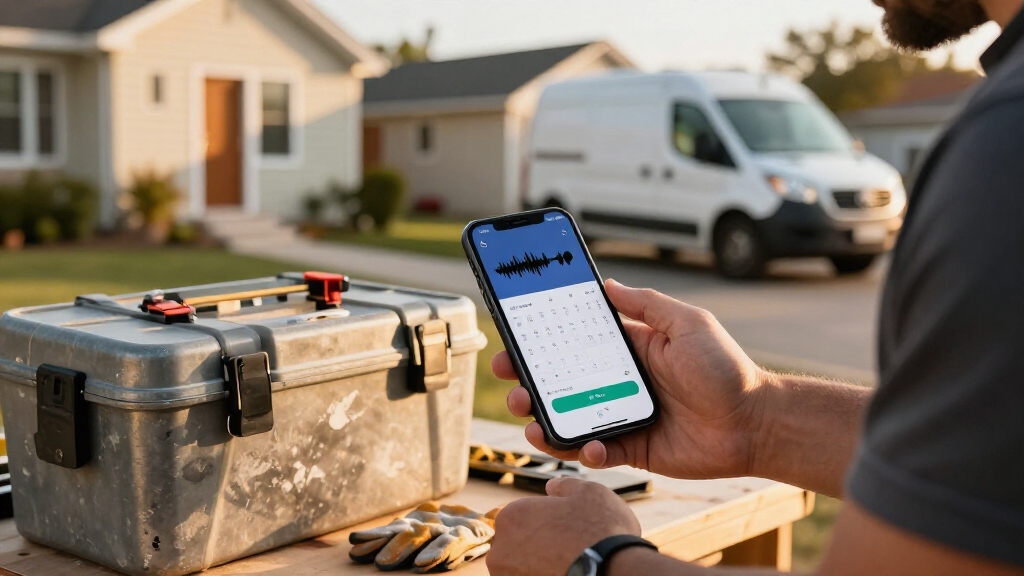
Voice AI is being proposed as a way for plumbing, HVAC and electrical businesses to answer calls, qualify requests and book jobs while owners are working. The suggested test is to forward after-hours calls for five shops over a month, then count jobs booked that would otherwise have been missed; no test results or independently verified performance figures are provided.
Voice AI is being proposed as a way for plumbing, HVAC and electrical contractors to answer incoming calls and book work when owners are busy on jobs. The suggested first test is to route after-hours calls for five shops over one month and count appointments the businesses believe they would otherwise have missed; results from such a test have not been provided.
The proposed service would answer calls with a conversational voice, ask for the job issue, service address and urgency, and schedule an appointment in a business calendar or software such as ServiceTitan or Jobber. It would also text the owner a call summary and pass emergencies to a person for live handling. These are proposed product features, not confirmation that a particular service has deployed them or that every booking system integration is available.
The idea targets owner-operators in the trades who may be unable to pick up while working under a sink, on a roof or at another job. The underlying business case is that a caller who cannot reach one contractor may contact another. However, no call-volume data, missed-call rate, conversion figures or measured revenue gains are supplied, so the scale of the problem and potential benefit for a given business remain unquantified.
The proposed pricing combines a monthly fee per phone line with an additional charge for each booked job. The suggested validation is to compare jobs attributed to the answering system with the shop’s average ticket, while checking whether those jobs were genuinely recovered rather than simply shifted from another booking channel. No price, test outcome or customer evidence is given.
How Contractors Use Voice AI To Manage Job Bookings
Voice AI is proposed as a way for plumbing, HVAC and electrical businesses to answer calls and book work while owners are on the job. Its performance and business value have not yet been demonstrated.
The proposed call workflow
The system would handle structured intake and pass urgent situations to a person.
Ask about the job issue, service address and urgency.
Book an appointment in a business calendar or software and text the owner a call summary.
Pass urgent cases to a person for live handling.
Who it aims to help
The proposal focuses on owner-operators who may be unable to answer while working.
Calls during hands-on work
Owners may be working under a sink or at another job when a customer calls.
After-hours inquiries
A caller who cannot reach one contractor may contact another.
Bookings need accuracy
Wrong details or unsuitable appointments can frustrate customers and add work.
What the trial should measure
Count outcomes against a clear baseline to see whether calls became genuinely recovered work.
- Calls answered and details captured
- Appointments booked and live escalations
- Cancellations and completed work
- Jobs that would otherwise have been missed
- System cost compared with the value of demonstrably recovered jobs
Costs and capabilities remain open
The proposed pricing combines a monthly fee per phone line with an additional charge for each booked job.
- Call intake and appointment booking
- Owner summaries and emergency handoff
- Monthly line fee plus per-booking charge
- Actual prices or cost savings
- Booking accuracy and emergency handling reliability
- Working integrations and trial results
Recovering Calls While Crews Work
If the service reliably answers calls and books appropriate appointments, it could give small contractors a way to handle inquiries without having the owner stop hands-on work. That may matter especially after hours, when callers seeking urgent repairs may continue down a search-results list if no one answers. The proposal’s central promise is fewer opportunities lost to unanswered calls, but the size of that effect has not been established.
For contractors, the practical question is not simply whether an automated voice can hold a conversation. It is whether it can capture accurate details, avoid unsuitable bookings, recognize urgent situations and hand them to a person. A mistaken time, address or assessment of urgency can create extra work or frustrate a customer. The proposed live escalation feature addresses one risk, but no information is available about its reliability or safeguards.
The pricing approach also makes measurement important. A flat subscription creates a recurring cost, while per-booking fees tie some cost to recorded appointments. Businesses would need to define what counts as an AI-generated booking and account for cancellations, duplicate leads and jobs that would have been booked anyway. Without those rules, a tally of appointments alone would not establish a return.
Popular right now

Sony WH-1000XM6 Wireless Noise-Canceling Headphones, Black

De'Longhi Classic Signature Espresso Machine with Adjustable Milk Frother

Ninja Crispi Microwave and Air Fryer with FusionCrisp, Silver, MW101
As an affiliate, we earn on qualifying purchases.
A Limited Test Before Wider Use
The recommendation frames AI call answering as a narrow first use for home-services businesses, rather than a general replacement for office staff. It identifies missed inbound calls as the problem and proposes a sequence of specific tasks: answer, collect basic information, schedule, notify the owner and escalate emergencies. Limiting the initial workflow could make it easier to assess whether the tool performs the tasks contractors need.
It argues that voice AI crossed a reliability threshold for structured intake calls in 2025-2026, and that automated answering may cost less than a human answering service. Those are claims in the proposal; it supplies no comparative pricing, reliability benchmark or supporting test data. Actual costs and performance could vary by provider, call complexity, business hours and the systems a contractor already uses.
The proposed month-long trial across five shops would offer an initial check of whether after-hours calls turn into work. To make the result useful, participating businesses would need to record call outcomes and compare them with a clear baseline, including calls that went unanswered before the trial. Five shops would provide a limited sample, not evidence that the same results would apply across the trades or to businesses with different call patterns.
Performance and Costs Need Testing
No deployment results are reported, and it is not clear how often the system would correctly understand callers, book the right appointment or recognize an emergency. The proposal does not specify response accuracy, handling of unusual requests, support for different accents or languages, or what happens during a system outage.
It also does not give the service’s actual price, the cost of a human answering alternative, or evidence that the suggested combination of subscription and per-booking charges would suit small contractors. Integration with ServiceTitan, Jobber or other calendars is described as a product requirement, but working integrations and their limits are not documented. The number of calls participating shops receive, and how many become completed, paid jobs, are also unknown.
Measure Bookings in a Five-Shop Trial
The next step proposed is a one-month after-hours trial with five shops. Contractors would need to track calls answered, details captured, appointments booked, live escalations, cancellations and completed work, then compare those outcomes with a baseline. They could also compare the system’s cost with the value of jobs that were demonstrably recovered, using their own average ticket rather than assuming every appointment represents new revenue.
No trial dates, participating businesses or results have been announced in the information provided. Until those details emerge, voice AI’s role in contractor booking remains a proposed workflow to test, not a proven source of additional jobs or a demonstrated lower-cost substitute for human answering.
Source: IdeaNavigator AI
Key Questions
What would voice AI do for a contractor?
The proposed system would answer incoming calls, collect the issue, address and urgency, schedule an appointment, text the owner a summary and send emergencies to a person. These functions are proposed, not confirmed features of a named product.
Which businesses is the idea aimed at?
It is aimed at owner-operated plumbing, HVAC and electrical businesses whose owners may be unable to answer while working. The proposal does not establish that the same approach works equally well for larger companies or other trades.
Has the system been shown to book more jobs?
No results are provided. The suggested next step is a one-month test across five shops to count jobs that would otherwise have been missed.
How might the service charge contractors?
The proposed model is a monthly fee per line plus a charge for each booked job. No actual prices or evidence about the model’s cost-effectiveness are provided.
What remains to be tested?
Contractors would need to check whether calls are understood accurately, appointments are booked correctly, urgent cases are escalated and integrations work as expected. They would also need to distinguish genuinely recovered jobs from bookings that would have happened anyway.
Source: IdeaNavigator AI