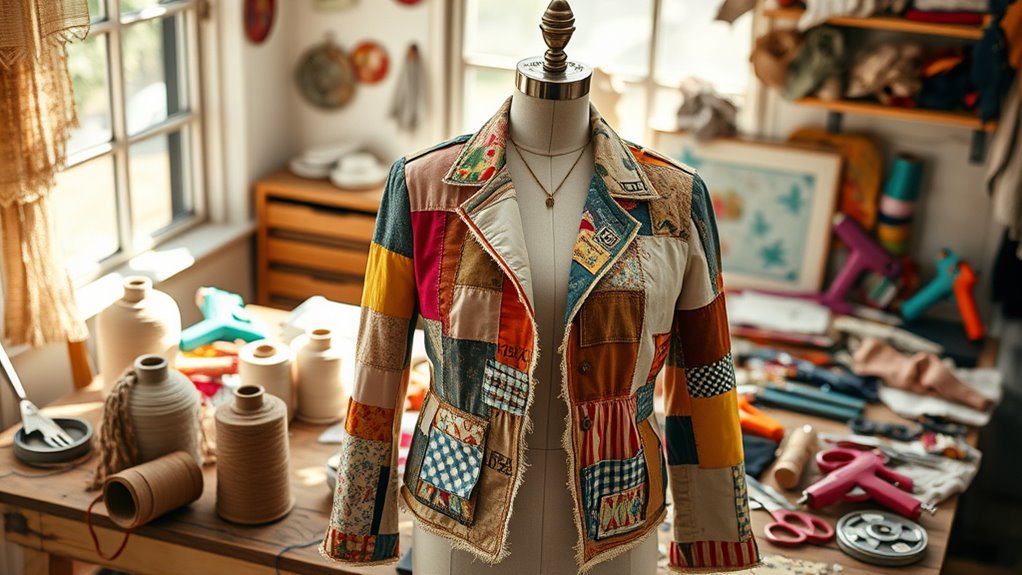

DIY upcycled fashion projects let you turn old clothes or fabric scraps into stylish, eco-friendly pieces that showcase your personality. You can add embroidery, patches, or transform T-shirts into tote bags with simple sewing techniques. Using vintage items or sustainable fabrics helps reduce waste and extend garments’ lives. Embracing experimentation boosts your creativity and confidence. Keep exploring these easy techniques, and you’ll discover how fun and rewarding upcycling can be, opening a world of unique DIY fashion options.
Key Takeaways
- Transform old garments or fabric scraps into unique, stylish fashion items through simple DIY techniques.
- Use sustainable fabrics like organic cotton, hemp, or recycled textiles to enhance eco-friendly upcycling projects.
- Repurpose vintage clothing from thrift stores to create modern, personalized fashion pieces with character.
- Experiment with embroidery, patches, dyeing, or distressing to customize and refresh upcycled garments.
- Embrace a growth mindset by trying new techniques and learning from mistakes to develop your personal upcycling style.
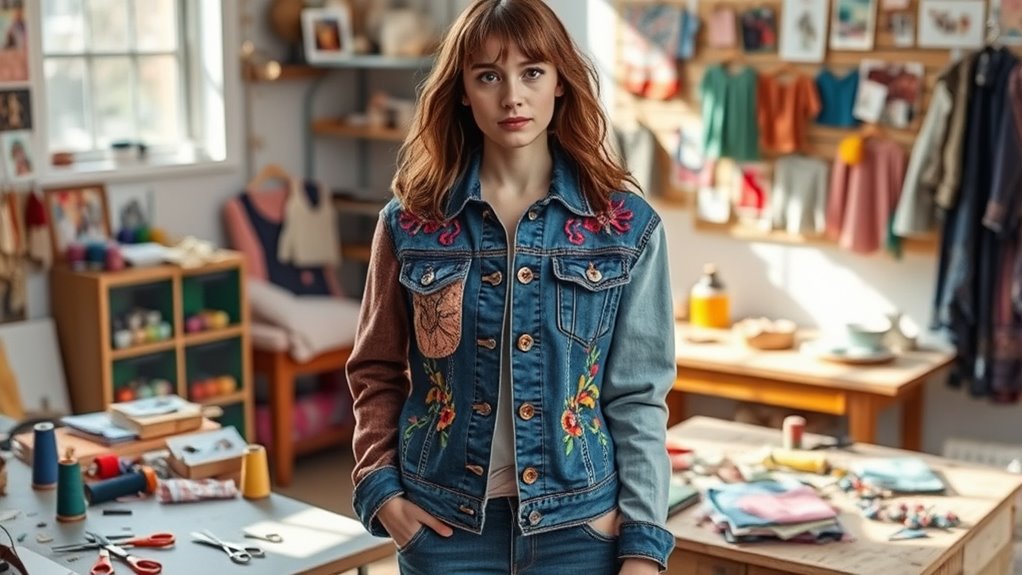
If you’re looking for a creative way to refresh your wardrobe while reducing waste, DIY upcycled fashion projects are the perfect solution. You can transform old garments or fabric scraps into stylish, one-of-a-kind pieces that reflect your personality and eco-conscious values. One way to elevate your upcycled creations is by focusing on sustainable fabrics. These materials, like organic cotton, hemp, or recycled textiles, not only lessen your environmental impact but also add a unique touch to your designs. Incorporating sustainable fabrics into your projects ensures that your fashion choices align with your commitment to reducing waste and supporting eco-friendly practices. Vintage styling is also a key element you can embrace in your upcycling journey. Thrift stores and flea markets often offer timeless pieces with character that can be easily repurposed into modern, trendy outfits. By giving vintage items a new life, you preserve their charm while creating something fresh and personalized. Additionally, understanding growth mindset can encourage you to experiment boldly and learn from any mistakes along the way. Getting started is simple. For instance, if you find a worn-out denim jacket or a flowy dress, you can breathe new life into it with a few DIY tweaks. Adding embroidery, patches, or fabric paint can give your vintage piece a contemporary edge. If you have old T-shirts, turn them into trendy tote bags or crop tops, using basic sewing skills. Repurposing fabric scraps into accessories like headbands, scarves, or jewelry also offers a fun way to upcycle. You don’t need to be an expert; many tutorials online guide you step-by-step through the process, making it accessible for beginners. The key is to be creative and experiment with different techniques, such as distressing, dyeing, or patchwork, to develop your personal style.
Frequently Asked Questions
What Are the Best Fabrics for Upcycling Clothing?
You should choose versatile fabrics like denim, cotton, and linen for upcycling clothing since they’re durable and easy to work with. These fabrics respond well to upcycling techniques like fabric dyeing, allowing you to customize your pieces. Avoid delicate fabrics that may not hold up during dyeing or sewing. By selecting the right materials, you’ll create stylish, sustainable pieces that stand out and last longer.
How Do I Choose Sustainable Materials for Upcycling?
You might think choosing sustainable materials is complicated, but it’s simpler than you think. Focus on sustainable material sourcing by selecting fabrics like organic cotton, hemp, or Tencel, which are eco-friendly options. Pair this with eco-friendly fabric dyes to minimize environmental impact. Always check labels and supplier transparency to guarantee your materials align with your values, making your upcycling projects both stylish and sustainable.
Can Beginners Successfully Complete Upcycling Projects?
Yes, beginners can successfully complete upcycling projects. Start with simple, beginner project ideas to build your skills and confidence. Remember to prioritize upcycling safety by wearing gloves, working in well-ventilated areas, and using proper tools. You’ll learn as you go, and each project will improve your craftsmanship. With patience and creativity, you’ll transform old items into stylish, eco-friendly pieces that showcase your unique style.
What Tools Are Essential for Upcycling Fashion?
Think of your toolkit as the magic wand for transforming old clothes. You’ll need essential tools like scissors, a sewing machine, and pins. Upcycling paint helps add unique touches, while sewing patterns guide your design. These tools are your secret ingredients, turning basic fabrics into one-of-a-kind fashion pieces. With a little practice, you’ll create stunning upcycled garments that reflect your style and creativity.
How Do I Prevent Color Bleeding During Upcycling?
To prevent color bleeding during fabric dyeing, always wash new fabrics before starting your upcycling project. Use colorfast techniques like adding salt or vinegar to the dye bath, which helps set the color. When dyeing, work in cool water and avoid over-saturating the fabric. Testing a small swatch first can also prevent surprises. These steps guarantee your vibrant colors stay intact and your upcycled pieces look professional.
Conclusion
By trying these upcycled fashion projects, you turn old clothes into stunning new pieces, like a butterfly emerging from its cocoon. Each project lets you express your style sustainably, making a positive impact on the planet. So, grab your supplies and get creative—your wardrobe will thank you. Remember, every upcycled item is a small step toward a greener future, shining brightly like a beacon of eco-friendly fashion in a sea of waste.