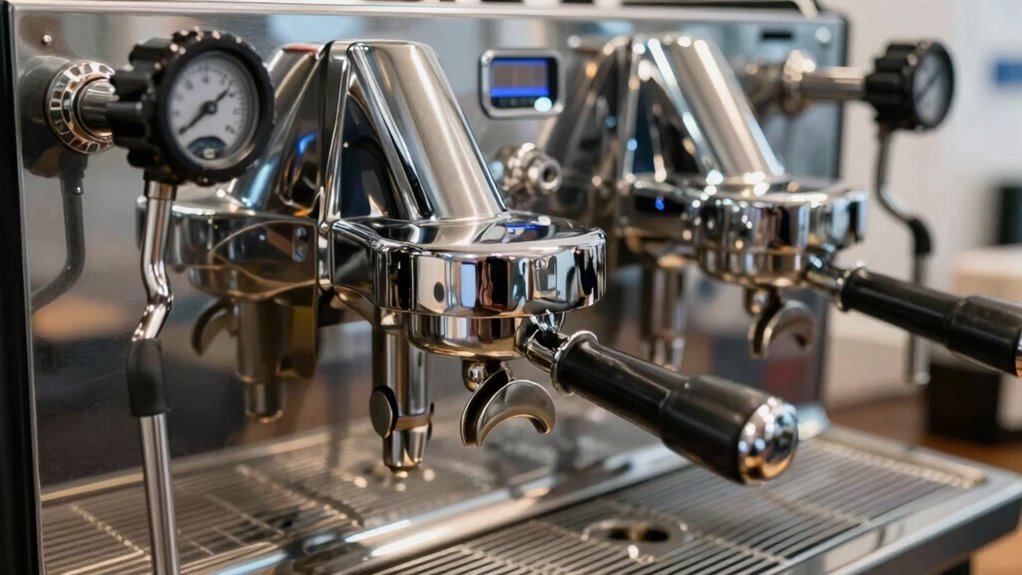

Many espresso machines highlight high-pressure “bars” on their labels, but these numbers are often more marketing than a sign of quality brewing. The pressure gauge mainly shows water pushing through coffee grounds, not extraction success. While 9 bars is a common standard, increasing pressure doesn’t always mean better espresso. Factors like grind, temperature, and technique matter more. Want to uncover what really influences great espresso? Keep exploring to learn more.

Get office and shipping supplies delivered free — and shop member deals
- Fast, free delivery on millions of items
- Access to Prime Big Deal Days deals on October 6–7
- Prime Video, Amazon Music and more included
Key Takeaways
- The pressure gauge on espresso machines mainly indicates water pushing through grounds, not extraction quality.
- Higher pressure (above 9 bars) does not necessarily improve espresso flavor and can cause over-extraction.
- Many manufacturers emphasize high pressure for marketing, but factors like grind, temperature, and technique are more critical.
- The ideal pressure for espresso is around 9 bars; beyond that, it’s often a marketing gimmick.
- Prioritizing temperature stability and grind consistency is more important for quality espresso than focusing solely on pressure ratings.
espresso machine with temperature control
As an affiliate, we earn on qualifying purchases.
As an affiliate, we earn on qualifying purchases.
What Do Those Pressure Bars Really Mean in Espresso Machines?

Ever wonder what those pressure bars on your espresso machine really indicate? Many believe the pressure gauge myths suggest higher pressure always equals better espresso, but that’s not entirely true. The bar pressure standards in espresso machines are often misunderstood. Typically, machines are set to around 9 bars during extraction, but this doesn’t mean more pressure will improve your shot. The gauge shows the pressure required to push water through coffee grounds, but it doesn’t measure extraction quality. Manufacturers sometimes emphasize high pressure to market their machines, even if it doesn’t enhance flavor. Understanding what those pressure bars truly represent helps you avoid misconceptions. In reality, pressure accuracy and proper technique matter more than simply hitting a specific pressure number.
Does More Pressure Always Mean Better Espresso?
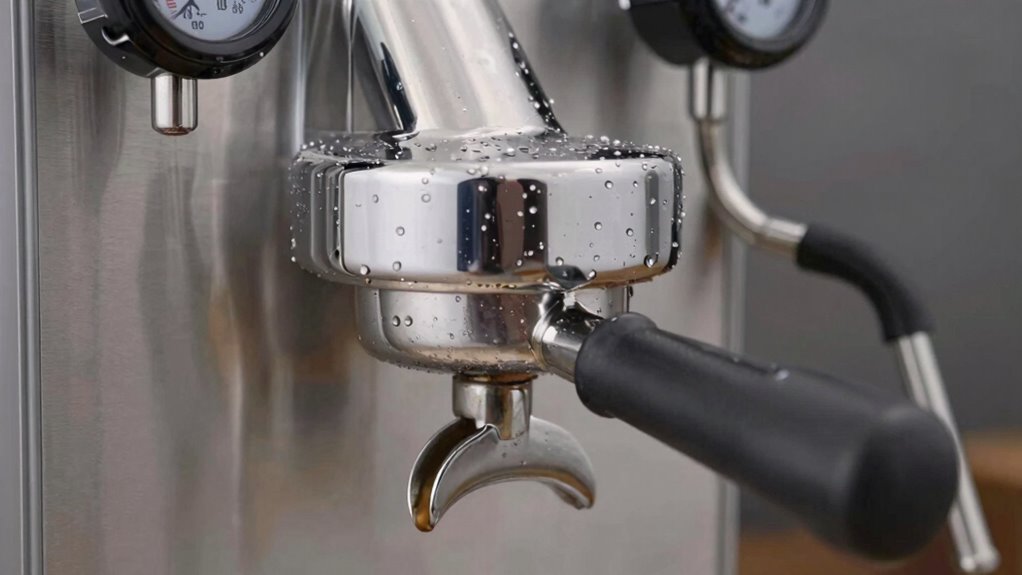
While it might seem logical that increasing pressure will produce a better espresso, that’s not always the case. Many pressure myths suggest that higher pressure automatically results in a richer shot, but brewing nuances matter more. Excessive pressure can lead to over-extraction, making your espresso bitter or harsh. Conversely, too little pressure might produce a weak or underdeveloped flavor. The ideal pressure depends on factors like grind size, tamping, and temperature—all part of the brewing nuances. Instead of chasing higher bars, focus on achieving a balanced extraction. Remember, espresso quality isn’t solely about pressure; it’s about how all these elements work together to create a well-rounded cup. Understanding brewing nuances is essential for optimizing your espresso results. More pressure doesn’t guarantee better espresso—precision and technique do.
What Factors Actually Impact Espresso Quality Besides Pressure?
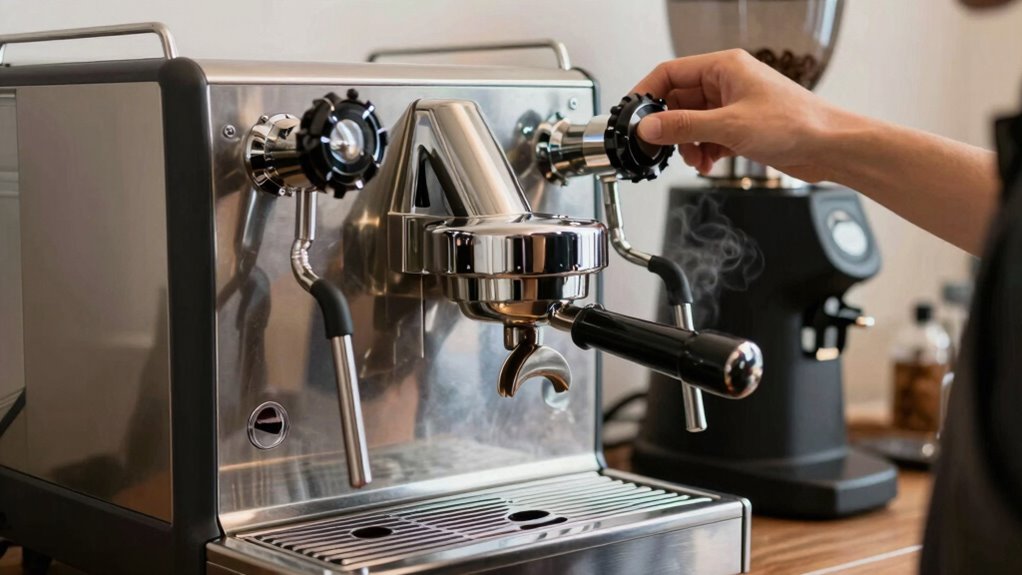
Several key factors beyond pressure directly influence espresso quality. First, grind consistency matters because uneven grounds cause uneven extraction, leading to sour or bitter flavors. You want a uniform grind size to guarantee even water flow and proper extraction. Second, water temperature plays an essential role; if it’s too hot or cold, it affects flavor extraction and body. Ideally, water should be around 195-205°F (90-96°C) for ideal results. Additionally, tamping pressure and shot timing impact extraction quality, but focusing on consistent grind and precise water temperature gives you more control over your espresso. These factors work together to produce a balanced, flavorful shot, proving that pressure alone doesn’t determine great espresso. Understanding extraction is crucial for optimizing all these variables effectively.
Is the Pressure Label Just a Marketing Gimmick?
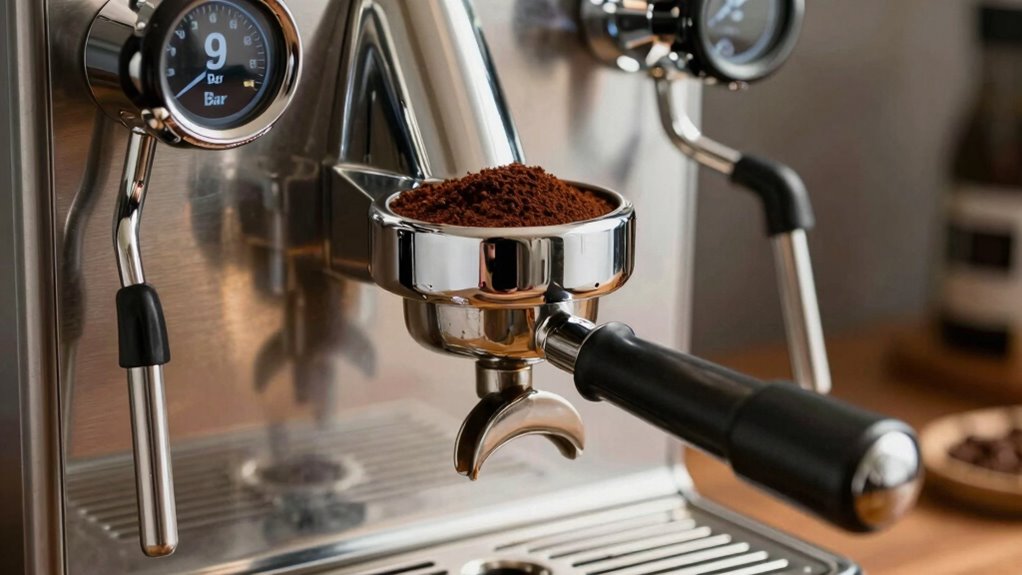
Many espresso machines proudly display a pressure rating, but that number often isn’t the full story. Pressure marketing can be misleading, as higher bars don’t always mean better espresso. The “bar myths” suggest that 9 bars is ideal, but in reality, ideal pressure depends on the machine and grind. Manufacturers sometimes emphasize pressure labels to appeal to consumers, even if it doesn’t improve shot quality. You should focus on how well the machine extracts flavor, not just the pressure number. Additionally, understanding passive voice detection can help improve clarity and effectiveness in your writing.
How to Choose an Espresso Machine That Delivers Great Coffee: Pressure Not the Only Thing to Consider
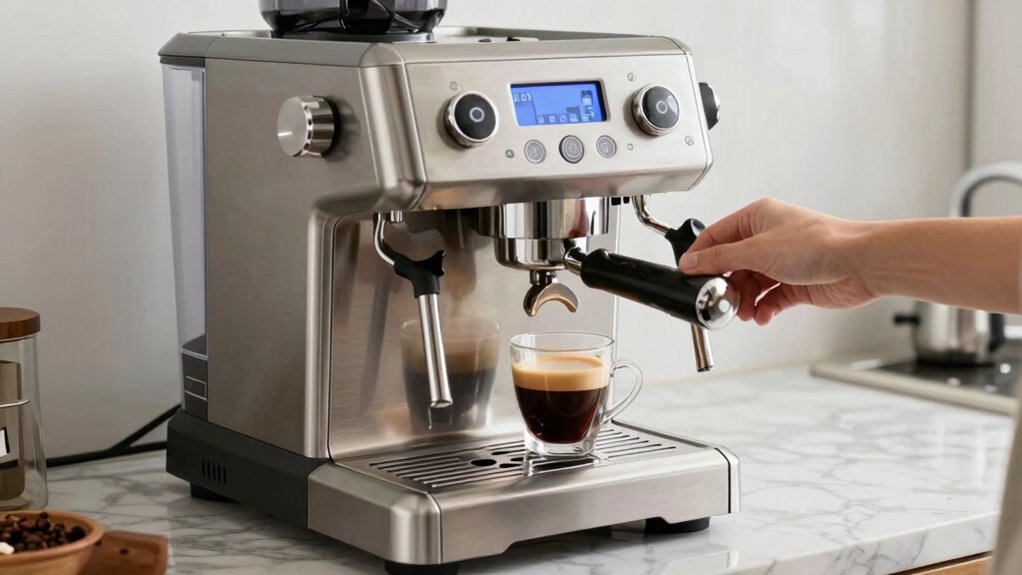
Choosing an espresso machine isn’t just about the pressure rating on the label; other factors play a crucial role in brewing great coffee. First, pay attention to brew temperature, as it directly impacts flavor and extraction. A machine that maintains a stable, ideal brew temperature ensures your espresso isn’t under- or over-extracted. Additionally, grind consistency matters greatly. Uniform grounds allow water to extract evenly, resulting in rich, balanced shots. Even if a machine has high pressure capabilities, poor temperature control or inconsistent grind size can ruin your coffee. Look for machines that offer precise temperature regulation and encourage consistent grind settings. Ultimately, focusing on these factors alongside pressure helps you achieve a well-rounded, flavorful espresso every time.
Frequently Asked Questions
How Does Water Temperature Influence Espresso Flavor?
You’ll notice that water temperature directly impacts your espresso’s flavor profile and water acidity. If the water’s too hot, it can cause over-extraction, making your coffee bitter and harsh. Too cool, and it results in under-extraction, leading to sourness and a weak flavor. Finding the right temperature helps balance acidity and flavor, giving you a richer, more nuanced espresso that truly highlights your beans’ unique qualities.
What Role Does Grind Size Play in Espresso Extraction?
You want the perfect espresso, so grind size is essential. Using consistent grind size guarantees even extraction, preventing under- or over-extraction. If your grind is too fine, it slows extraction, making the shot bitter; too coarse, and it extracts too quickly, resulting in weak flavor. Keep an eye on extraction timing—ideally around 25-30 seconds—and adjust your grind for maximum balance and flavor.
Can Different Beans Require Different Pressure Settings?
Did you know that lighter roasts often need slightly higher pressure for ideal extraction? Yes, different beans can require different pressure settings depending on their roast level and brew method. For instance, a dark roast might extract better at lower pressure, while a medium roast needs more. Adjusting pressure helps bring out the unique flavors of each bean, ensuring you get the best taste from your chosen brew method.
How Does Tamping Pressure Affect Espresso Quality?
Tamping pressure directly impacts your espresso quality by ensuring pressure consistency and proper extraction. If you tamp too lightly, water flows too quickly, resulting in weak flavor; too hard, and it slows down, causing over-extraction and bitterness. Use a consistent tamping technique, applying even pressure each time. This consistency helps your machine extract flavors uniformly, leading to a richer, more balanced shot every time.
Are There Alternative Indicators of a Good Espresso Machine?
Sure, instead of obsessing over pressure bars, look for a machine that offers pressure stability and brewing consistency. Ironically, these factors matter more than the flashy numbers on the machine’s gauge. You want something that maintains steady pressure and delivers a reliable shot every time, ensuring your espresso’s flavor is consistent and rich. Focus on build quality and user reviews—those are better indicators of a good espresso machine than marketing hype.
Conclusion
Remember, rushing to reach high pressure rarely results in perfect pulls. Focus on factors like grind, tamping, and machine consistency instead of just chasing numbers. Don’t be duped by pressure labels—diligence and detail matter more than marketing magic. By balancing basics with a bit of patience, you’ll brew bold, beautiful espresso every time. So, stay savvy, scrutinize specs, and savor the subtle art of superb coffee beyond the bars!
Halloween Picks
halloween
As an affiliate, we earn on qualifying purchases.