
Building in public is often treated as a marketing format: screenshots, shipping logs, launch countdowns and a steady stream of posts announcing that something new has arrived. But its more useful role is internal. Done properly, building in public forces founders to make decisions that can be explained plainly. What is the company building? What belongs under the brand? What is genuinely available? What is still being planned? And, most importantly, what will the company deliberately refuse to build?

Get business pricing on office and shipping supplies
- Business-only prices and quantity discounts
- Tax-exempt purchasing
- Multiple users, one account, clear invoices
Build in public as decision discipline
The founder skill that matters most: saying no
Gewerkton makes strategy visible through a narrow brand architecture, a consolidated front door, honest status labels and a rejected list.
One operating model, three distinct jobs
01Depth behind one front door
02Ten domains became one decision surface. The site serves 27 languages, uses zero trackers, needs no cookie banner and runs fully egress-free. A media bank adds more than 51 self-produced clips and posters.
The rejected list is strategy
03Working near plans, models and commercial workflows did not make either adjacent category part of the core product.
Status before spectacle
04Clear labels separate what users can evaluate today from future intent—without turning direction into a promise.
Speed increases the need for selection
05A solo founder directed coding agents using Codex and Claude, with negative controls and mutation tests.
As implementation gets faster, the scarce founder skill is judgement: what deserves to exist, where it fits and what must remain outside the boundary.
Gewerkton offers a particularly instructive example. The company has chosen one brand, three product lines and one consolidated domain. It has secured an EUIPO trademark and drawn boundaries around the product before expansion could turn into sprawl. Ten domains were consolidated into one. A CAD clone was rejected. So was a payment product.
These decisions are more revealing than a long feature list. They show build-in-public operating as a decision discipline: a way to make strategy visible, constrain unnecessary work and distinguish an actual roadmap from a collection of ambitions.
digital decision-making tools for startups
As an affiliate, we earn on qualifying purchases.
As an affiliate, we earn on qualifying purchases.
One brand has to carry the whole argument
Gewerkton is a voice-first construction documentation and defect management platform for global markets. It was born in the German market and has its deepest German commercial integration through GAEB, REB, XRechnung and DATEV. At the same time, it supports 27 content languages and offers a regional choice of AI providers across the EU, US and Asia, including mainland China.
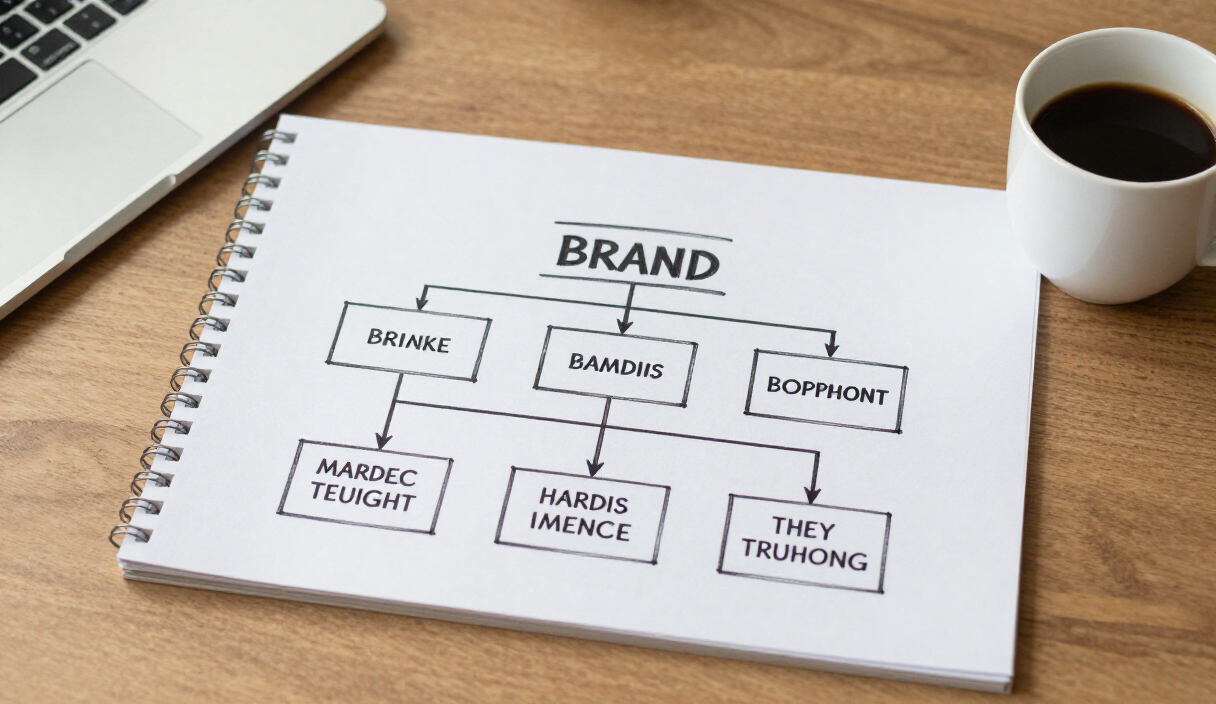
That combination could easily have produced a maze of regional brands, technical sub-brands and standalone tools. Instead, Gewerkton uses a branded-house structure. There is one brand and three product lines: Field, Studio and Cloud.
The advantage is not simply tidier naming. A branded house makes every addition answer the same strategic question: does this belong to the system the brand is already promising?
Gewerkton Field is the voice-first construction site app. It turns dictation into evidence, defects, daywork reports and takt information, and includes a portal. Gewerkton Studio is the browser workspace for plans and models; where no model exists, the site team creates one in the browser. Gewerkton Cloud handles operations and model or data coordination between Field, Studio and third parties.
Each line has a distinct job, but the jobs reinforce one another. Field begins where construction evidence is captured. Studio provides the browser environment for plans and models. Cloud coordinates operations and data across the system and beyond it. The names describe parts of one operating model rather than three unrelated bets.
For founders, this is the practical value of brand architecture. Naming is not decoration applied after product decisions have been made. It is a constraint on those decisions. If a proposed product cannot find a clear place within the structure, that friction is useful information.
Ten domains became one decision surface
Consolidating ten domains to one might look like a housekeeping exercise. In reality, domain proliferation often reflects strategic proliferation. Every additional property can create another message to maintain, another destination to explain and another opportunity for the customer to wonder whether two things belong together.
One domain gives Gewerkton a single place to state the proposition, show the three product lines and disclose the current status. That matters because the product is in beta now, with a public beta planned for fall 2026. There is no need to make the present sound more mature than it is.
The marketing site itself follows the same preference for deliberate limits. It is available in 27 languages, uses zero trackers, requires no cookie banner and runs on a fully egress-free architecture. Gewerkton also has a media bank of more than 51 self-produced clips and posters. The breadth is in language and original material, while the delivery structure remains concentrated.
This is an important distinction for operators. Consolidation does not have to mean communicating less. It can mean putting a wider range of useful material behind one coherent front door. Ten domains can scatter attention even when each contains only a little. One domain can carry substantial depth without making the company feel fragmented.
The rejected list is the real strategy document
Roadmaps naturally attract attention because they point towards future value. Yet a rejected list often says more about a company’s discipline. It records opportunities that were considered but did not survive contact with the product’s purpose.
Gewerkton’s rejected list includes two especially tempting categories: a CAD clone and a payment product. Both could support an impressive expansion story. Neither was built.
The refusal to create a CAD clone is particularly instructive because Studio already works with plans and models. Where no model exists, the site team can create one in the browser. That could invite an ever-broader modelling agenda. The boundary says otherwise. Supporting the site workflow around plans and models is not the same decision as attempting to reproduce an entire CAD category.
The payment-product rejection is equally useful. Payments can look attractive because they sit near commercial workflows, and Gewerkton has deep German commercial integration through GAEB, REB, XRechnung and DATEV. But proximity is not identity. A neighbouring opportunity does not automatically belong in the product.
Nothing in the phrase “customers might also need this” establishes that a company should build it. Founders still have to ask whether the proposed work strengthens the central system, distracts from it or creates an entirely different business inside the existing one.
Saying no is difficult because rejected work produces no launch moment. There is no new page to publish and no feature to demonstrate. The benefit appears indirectly: a more legible product, fewer competing priorities and a better chance that each product line remains understandable.

This is why the rejected list deserves a place beside the roadmap. The roadmap shows where resources are expected to go. The rejected list shows that someone is actively controlling the perimeter.
Beta badges are more credible than future-tense certainty
Gewerkton is in beta now. Its public beta is planned for fall 2026. That status should be read as product information, not as a line to hide beneath a launch narrative.
Build-in-public becomes useful when current status and future intent are visually and verbally separate. Beta badges identify what the product is today. “In planning” chips identify work that has not yet arrived. Neither requires the company to turn a direction into a promise.
This is roadmap honesty in a compact form. Users can distinguish what they can evaluate now from what the company is considering or preparing. Operators inside the company also gain a shared vocabulary. “In planning” is not a synonym for shipped, and beta is not a claim of completion.
Vaporware thrives in ambiguity. A feature appears on a polished page, future tense quietly disappears, and the reader is left to infer availability. Clear status markers resist that pressure. They may make the story sound less dramatic, but they make it more useful.
For founders, the lesson is straightforward: a roadmap should disclose uncertainty rather than disguise it. Plans can change. Beta software can develop. The honest move is to label those states accurately while the work continues.
A solo founder can ship quickly without pretending the product is finished
Gewerkton is built by a solo founder directing a fleet of coding agents using Codex and Claude. In one night, that fleet shipped 21 software packages, verified with negative controls and mutation tests.
The number is notable, but the operating lesson is not simply that coding agents can increase output. Faster production raises the importance of stronger selection. When software can be generated and tested at high speed, the founder’s role shifts further towards deciding what deserves to exist, how it fits and what must remain outside the boundary.
Speed without a rejected list can create twenty-one directions rather than twenty-one packages. Speed without a branded-house structure can produce a collection of tools that requires increasingly elaborate explanation. Speed without honest status labels can turn rapid development into premature certainty.
Gewerkton’s structure provides a counterweight. Work must sit within Field, Studio or Cloud. It must support the central proposition around voice-first construction documentation and defect management. Plans can be shown as plans, and beta can be called beta. Adjacent categories can be declined even if they are technically possible.
This is the founder skill that becomes more valuable as implementation gets faster. The scarce resource is no longer only the ability to make software. It is the judgement to direct making.
Global breadth still needs a narrow centre
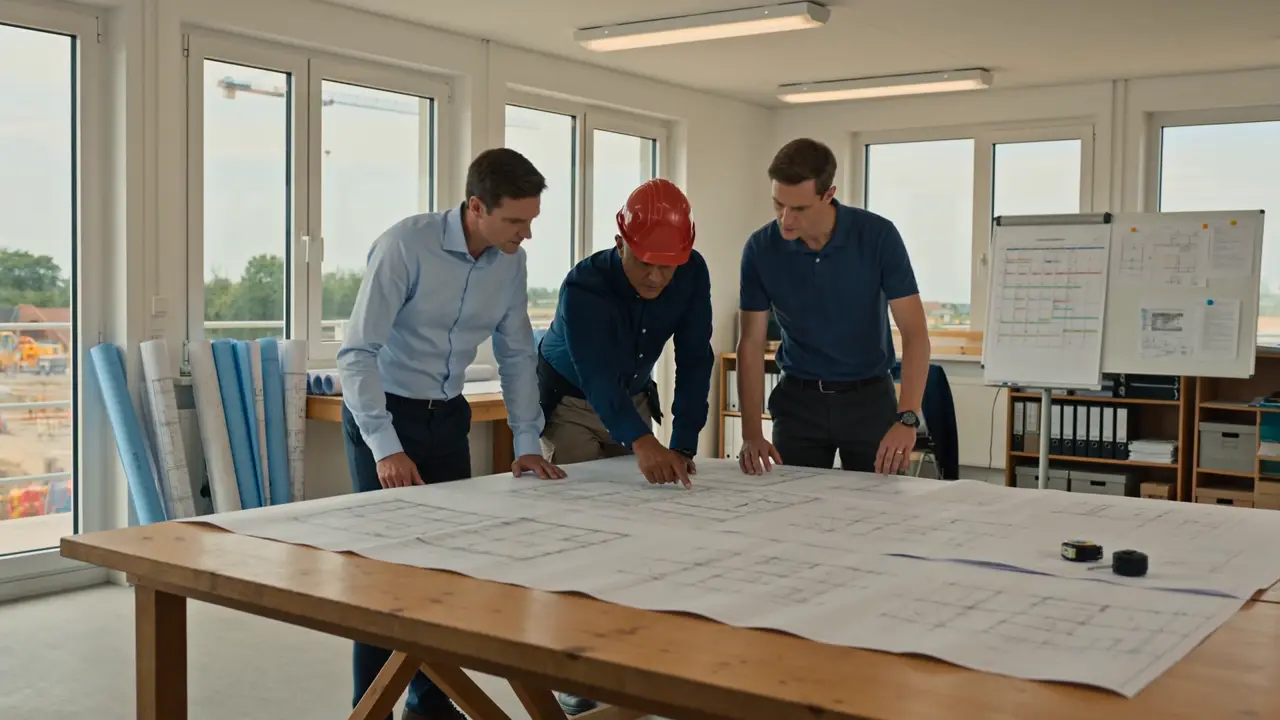
Gewerkton’s potential deployment environments are varied. Wind farms and renewable-energy projects involve distributed sites, rotating crews, field acceptance and offline capture in dead zones. Data centres and industrial plants bring many trades working in parallel under tight deadlines, with meeting decisions becoming trade-sorted task lists.
Housing and building construction involve defects with a photo and deadline, dictated daywork reports and signatures on the device at handover. Infrastructure and tunnel projects can run for long periods, involve many change orders and require instructions backed by original audio.
Cross-border teams may have people in the EU, US and APAC working on the same project, each in their own language, while the evidence original remains unambiguous. Projects in Asia can involve Chinese, Korean and Vietnamese crews, with multilingual handling from capture to report and data residency selected by the customer.
These are different environments, but they do not require different company identities. The common thread is captured evidence and its movement through construction work. Gewerkton’s marketing line puts the centre plainly: “On site, what counts is what’s proven.”
The same focus is visible in its AI model. BYO-AI supports 13 AI providers. Customers bring their own keys and choose a region across the EU, US or Asia, including mainland China, without vendor lock-in. For data residency, they can choose an EU cloud or their own infrastructure.
Regional choice, 27 content languages and varied deployment settings create breadth. The branded house prevents that breadth from becoming conceptual sprawl. Global scope works better when the core promise remains narrow enough to repeat.
The EUIPO trademark is a commitment to coherence
An EUIPO trademark can be viewed as an administrative milestone, but in this context it also reinforces the one-brand decision. Gewerkton is not merely a temporary label attached to a collection of experiments. It is the identity intended to carry Field, Studio and Cloud together.
That makes consolidation consequential. Once one name is expected to hold the system, inconsistent product decisions become brand problems as well as engineering problems. A CAD clone would change what Studio means. A payment product would stretch the commercial boundary. Extra domains could split the explanation into competing versions.
The trademark does not answer those questions by itself. It raises the cost of answering them casually. When founders invest in one identity, they also take responsibility for keeping that identity intelligible.
What founders and operators can copy
Most companies will not share Gewerkton’s exact product architecture, deployment settings or regional requirements. The transferable part is the decision system behind them.
- Define one sentence that the whole product must support.
- Use product lines to establish clear responsibilities, not merely to organise a menu.
- Consolidate destinations when multiple properties are fragmenting the same story.
- Maintain a rejected list alongside the roadmap.
- Label beta as beta and planned work as planned work.
- Treat faster implementation as a reason to strengthen product judgement.
- Separate adjacent customer needs from categories the company should actually enter.
The point is not to reject expansion. Gewerkton already spans Field, Studio and Cloud, supports 27 content languages, offers 13 AI providers and addresses projects across several regions and construction settings. The point is to make expansion pass through a coherent set of decisions.
A founder should be able to explain why a product line exists, why another product does not, why the brand structure is sufficient and which claims describe the present rather than the future. If those answers are unclear, more building is unlikely to resolve the confusion.
Building in public should expose judgement
The strongest build-in-public story is not a continuous parade of output. It is a visible record of judgement under changing conditions.
For Gewerkton, that record includes one branded house, three clearly bounded product lines, ten domains consolidated into one, an EUIPO trademark and a roadmap that distinguishes beta from planned work. It also includes the negative space: no CAD clone and no payment product.
Those refusals do not make the company less ambitious. They clarify where the ambition is directed. Field handles voice-first site work. Studio provides the browser workspace for plans and models, including browser creation when no model exists. Cloud coordinates operations and data between the system and third parties. The product is in beta, and the public beta is planned for fall 2026.
For founders and operators, that is the more durable lesson. As building becomes faster, saying no becomes more consequential. The roadmap can show where the company is going, but the rejected list proves that someone is still steering.
Halloween Picks
halloween
As an affiliate, we earn on qualifying purchases.