
Sergers are fast and efficient, but they aren’t beginner-proof because proper setup and maintenance are essential for good results. You need to understand how to adjust tension, change blades, and keep the machine clean. Skipping these steps can lead to skipped stitches or fabric jams. Building these skills takes patience and practice, but with the right knowledge, you can master your serger. Keep exploring to learn more and get the most out of your machine.
Key Takeaways
- Speed can lead to mistakes without proper setup and practice, making sergers challenging for beginners.
- Incorrect tension adjustments during high-speed sewing cause skipped stitches or fabric bunching.
- Regular machine maintenance is crucial to prevent jams and ensure smooth, consistent stitches at fast speeds.
- Learning machine functions and proper threading techniques reduces errors and improves efficiency for new users.
- Patience and proper routine care help beginners master serger operation despite its rapid stitching capabilities.
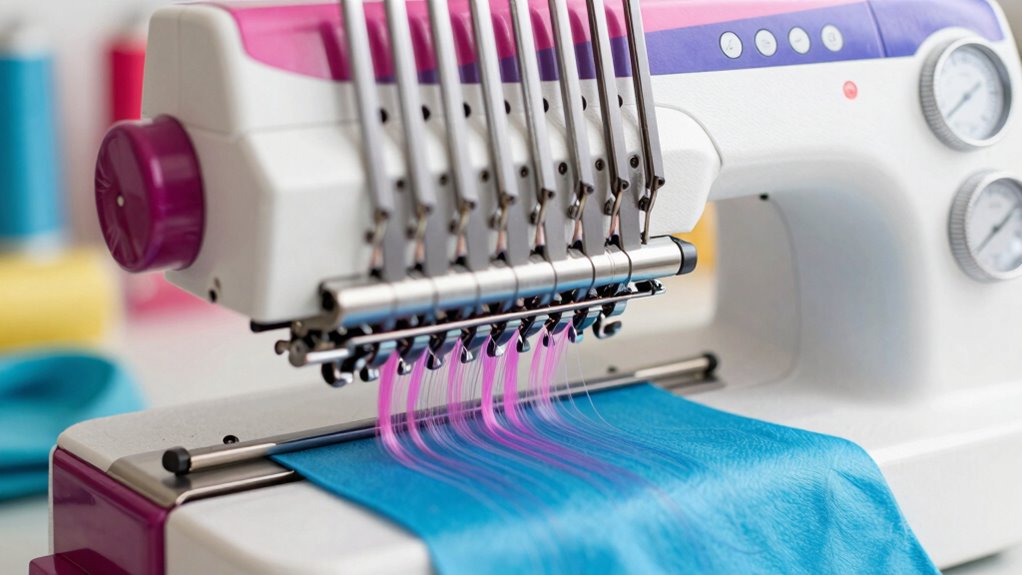
Sergers are renowned for their speed and efficiency, making them a popular choice for experienced sewists looking to streamline their projects. However, if you’re new to serging, you’ll find that mastering the machine isn’t as simple as pressing the foot pedal. One of the most vital aspects to understand is thread tension. Proper tension ensures your stitches are even and secure, preventing issues like skipped stitches or thread bunching. When you’re starting out, it’s easy to overlook the importance of adjusting the tension correctly for different fabrics or thread types. If the tension is too tight or too loose, your seams won’t look professional, and you’ll spend more time troubleshooting than sewing. It’s necessary to learn how to test and adjust the tension settings, which can vary from machine to machine. Take the time to practice on scrap fabric, adjusting the tension as needed to get a balanced stitch.
In addition to understanding thread tension, machine maintenance plays a vital role in keeping your serger running smoothly. Regular cleaning and oiling prevent lint buildup, which can cause jams or uneven stitching. Many beginners underestimate how quickly lint accumulates inside the machine, especially if you sew frequently or with textured fabrics. Neglecting maintenance can lead to frustrating breakdowns and costly repairs. You should develop a routine that includes cleaning out the lint trap, checking the threading path, and replacing worn needles regularly. Also, make sure the machine’s blades are sharp and properly aligned to get clean cuts through your fabric. A well-maintained serger not only produces better stitches but also reduces the likelihood of thread tension issues that could ruin your project. Additionally, understanding the basic functions of your serger can help you troubleshoot problems more effectively and improve your overall sewing experience. Knowing how to adjust thread tension and blade alignment can significantly impact your success with different fabric types. Familiarity with the machine’s components and settings can save you time and frustration during sewing sessions. Exploring the user manual of your specific model can provide valuable insights tailored to your machine’s unique features. Moreover, investing time in learning about machine calibration can further enhance stitch quality and machine longevity.
While sergers are designed for speed, they’re not foolproof, and their efficient operation depends heavily on proper setup and ongoing care. As a beginner, you might find it tempting to rush through threading or skip routine maintenance, but these shortcuts often lead to more problems down the line. Take your time to thread the machine correctly, double-checking each loop and tension dial, and keep up with regular maintenance to prevent issues. Remember, mastering a serger isn’t just about sewing fast; it’s about producing quality stitches consistently. With patience and attention to detail—especially regarding thread tension and machine upkeep—you’ll find that your serger becomes a valuable tool that enhances your sewing projects, rather than a frustrating obstacle. Developing a routine for machine upkeep and understanding how different fabrics influence tension will improve your experience and results.
serger thread tension adjustment tools
As an affiliate, we earn on qualifying purchases.
As an affiliate, we earn on qualifying purchases.
Frequently Asked Questions
Can a Serger Replace a Standard Sewing Machine Entirely?
A serger can’t fully replace a standard sewing machine because it primarily handles finishing edges and creating seams quickly. You’ll need your sewing machine for precise stitches, buttonholes, and detailed work. Adjusting thread tension and foot pressure on your serger is essential for quality results, but it doesn’t offer the versatility of a sewing machine. Both machines complement each other, making them a better combo than one replacing the other entirely.
What Types of Fabrics Are Best Suited for Sergers?
Imagine sliding through soft, lightweight fabrics like silk or chiffon, where your serger’s precision shines. These fabrics respond well to proper thread tension and fabric stabilization, making neat, professional seams. Heavier materials like denim or canvas also work, but require adjustments. Smooth, stable fabrics are your best bet, allowing your serger to glide effortlessly, creating strong, clean edges without snags. Proper tension and stabilization guarantee your stitches stay flawless across any fabric type.
How Often Should I Oil or Maintain My Serger?
You should oil and maintain your serger regularly, ideally after every 10-15 hours of use or once a month if used frequently. Check your thread tension and clean out lint to keep it running smoothly. Regular needle maintenance, like replacing needles when they become dull or bent, also helps prevent skipped stitches and fabric damage. Proper upkeep guarantees consistent stitching and prolongs your serger’s lifespan.
Are Sergers Suitable for Quilting Projects?
Yes, sergers can be suitable for quilting projects because they handle seams quickly and provide a professional finish. To get the best results, you should adjust thread tension appropriately and choose the right needle types for your fabric. Keep in mind that mastering these adjustments takes practice, so start with simple quilting projects. With patience, your serger can become a valuable tool for adding strong, clean seams to your quilts.
What Safety Precautions Should I Take When Using a Serger?
When using a serger, you should always check your thread tension to prevent fabric bunching or breakage. Make sure to select the correct needle type and size for your fabric to avoid damage or skipped stitches. Keep your fingers away from the blades and turn off the machine when adjusting settings or threading. Regularly inspect your machine for any loose parts, and always follow the manufacturer’s safety instructions for a safe sewing experience.
Conclusion
While sergers are undeniably fast and efficient, they’re not beginner-proof. You need patience to learn, practice to improve, and attention to detail to master their quirks. Don’t rush into using one without understanding its mechanics, because speed alone doesn’t guarantee success. Instead, embrace the learning curve, take your time, and develop your skills step by step. Ultimately, a confident, careful approach will turn a formidable machine into a valuable tool for your sewing journey.