
📊 Full opportunity report: Acoustic Dampening, Placement, and the “Rig in the Closet” Setup on ThorstenMeyerAI.com — validation score, market gap, and execution plan.

Get business pricing on office and shipping supplies
- Business-only prices and quantity discounts
- Tax-exempt purchasing
- Multiple users, one account, clear invoices
TL;DR
Moving your rig into a closet significantly reduces noise and reflections, especially when combined with proper placement and sealing. Heat management and material choice are crucial for an effective setup.
Moving a high-powered AI or gaming rig into a closet or another room is the most effective method to drastically reduce noise and reflections, according to recent expert guidance. For detailed insights, see the original analysis on acoustic treatment techniques. Proper placement, sealing gaps, and using absorption materials create a controlled acoustic environment, making the space suitable for professional-quality work or recording.
Experts from ThorstenMeyerAI.com highlight that relocating your rig into a closet can cut noise more effectively than foam treatments alone. Learn more about acoustic dampening, placement, and the “rig in the closet” setup. Strategic placement of acoustic panels at reflection points—behind the mic, side walls, and ceiling—helps minimize echo and harsh reflections. Sealing gaps around doors and walls with weatherstripping or blankets enhances sound isolation, preventing leaks and echo.
Heat buildup is a primary concern when placing high-power equipment in confined spaces. To prevent overheating, ventilation solutions such as exhaust fans or ducted airflow are necessary. Using a combination of intake and exhaust fans, along with temperature management devices like liquid coolers and ducted vents, ensures hardware remains within safe operating temperatures.
Materials like foam panels, moving blankets, rugs, and bass traps are effective in absorbing reflections and controlling low-frequency rumble. Covering about 20-30% of the walls with absorption panels, especially at reflection points, strikes a balance between sound control and natural acoustics. The door should be covered with blankets or foam, and gaps sealed, to prevent sound escape.
Acoustic dampening
& the rig in the closet.
The most powerful noise fix isn’t a material — it’s a floor plan. A rig you can’t hear because it’s in another room beats any amount of foam. Tap the approaches in Part 1 to see what actually works.
(another room)
(levers 1–4)
(door / barrier)
(acoustic foam)
Contain the noise, not the heat
Why Proper Closet Rig Setup Matters for Noise Control
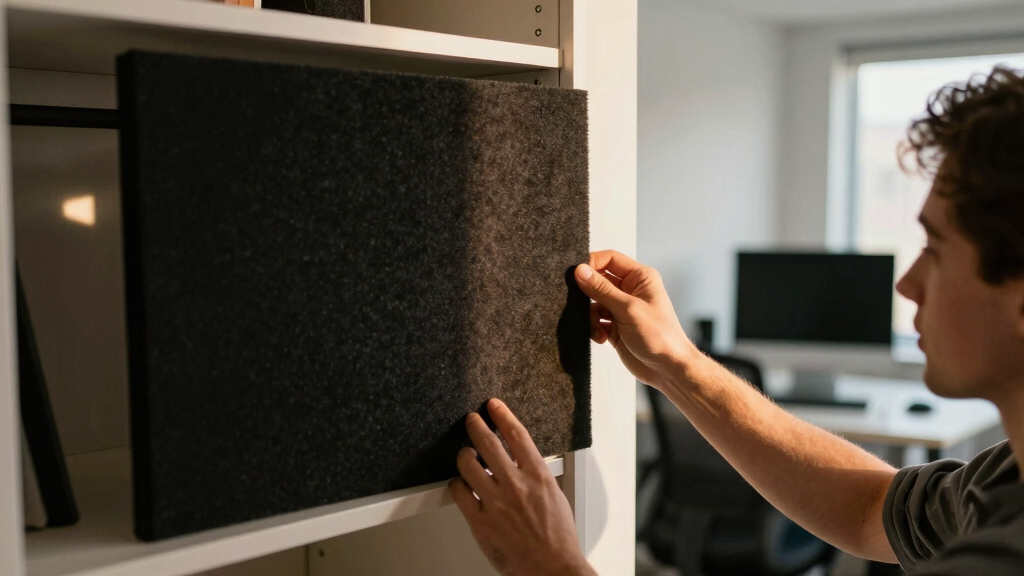
This guidance matters because it enables users to create quiet, professional-quality workspaces in small areas, reducing noise pollution and improving sound clarity. Effective placement and treatment can significantly enhance recording quality, gaming experience, or AI processing without expensive studio spaces. Proper heat management ensures hardware longevity, making this approach practical and sustainable for home setups.acoustic soundproofing panels for closet
As an affiliate, we earn on qualifying purchases.
As an affiliate, we earn on qualifying purchases.
Recent Expert Advice on Closet-Based Rigs and Acoustic Treatment
Over the past year, industry experts have increasingly recommended relocating high-power rigs into closets or separate rooms to address noise concerns. Traditional foam treatments alone are often insufficient; instead, strategic placement of acoustic materials and sealing techniques are emphasized. For a comprehensive overview, see the article on acoustic dampening, placement, and the “rig in the closet” setup. The importance of ventilation and heat management has also gained attention, with many suggesting ducted airflow and quiet fans to prevent overheating in confined spaces.
This approach aligns with broader trends toward home-based AI development, gaming, and content creation, where noise and heat are significant barriers. The advice consolidates best practices from multiple sources, emphasizing that a combination of sound treatment, sealing, and cooling solutions yields the best results.
"Relocating your rig into a closet can drastically cut noise, especially when combined with proper placement and sealing. It’s the most effective solution for quiet operation."
— Thorsten Meyer, expert on acoustic treatment
Uncertainties About Long-Term Effectiveness and Material Choices
While expert advice supports closet relocations and specific treatments, the long-term effectiveness of various materials and configurations in different room sizes remains under study. The optimal balance between sound absorption, heat dissipation, and ease of setup varies depending on individual hardware and space constraints. Additionally, the precise impact of different sealing techniques on noise leakage needs further empirical validation.
Future Developments in DIY Acoustic and Cooling Solutions
Upcoming developments are expected to include more refined guidelines for material selection, advanced cooling solutions integrated into custom closet setups, and real-world testing of different configurations. Manufacturers may also release specialized enclosures combining soundproofing and heat management features tailored for home-based high-performance rigs. Users can anticipate more detailed tutorials and case studies demonstrating long-term results.
Key Questions
Can I use household items like blankets and rugs for sound dampening?
Yes, thick blankets, rugs, and quilts can be effective when strategically placed at reflection points and around the door to reduce echo and sound leakage.
How do I prevent my hardware from overheating in a closet setup?
Implement ventilation with quiet exhaust fans, ducted airflow, and possibly liquid cooling. Ensure proper placement of intake and exhaust vents to promote continuous airflow.
How much acoustic treatment do I need for a small closet rig?
Covering about 20-30% of the walls with absorption panels at reflection points, along with sealing gaps and covering the door, generally provides good results without deadening the room’s natural sound.
Is sealing gaps enough to make a closet soundproof?
No, sealing gaps improves sound isolation but does not make the space fully soundproof. Combining sealing with absorption treatment is most effective for noise control.
Source: ThorstenMeyerAI.com
Fall Picks
fall essentials
As an affiliate, we earn on qualifying purchases.