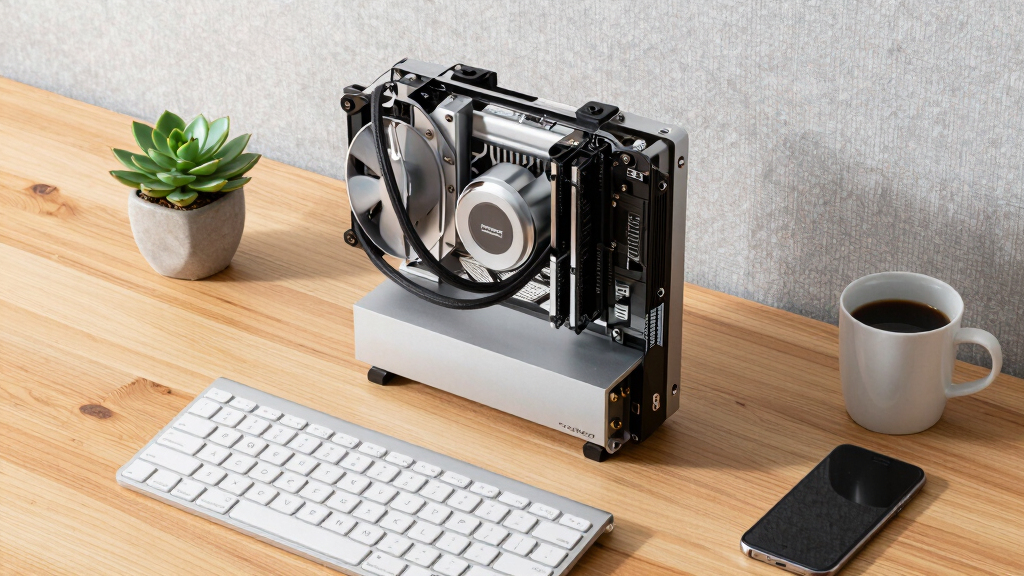
📊 Full opportunity report: Best Quiet CPU Coolers for Sustained AI/Compute Loads on ThorstenMeyerAI.com — validation score, market gap, and execution plan.

Get office and shipping supplies delivered free — and shop member deals
- Fast, free delivery on millions of items
- Access to Prime Big Deal Days deals on October 6–7
- Prime Video, Amazon Music and more included
TL;DR
This article identifies the best quiet CPU coolers suited for sustained AI and compute workloads in 2026. It compares air and liquid cooling options, emphasizing reliability and low noise for continuous operation.
In 2026, the leading quiet CPU coolers for sustained AI and compute workloads are identified as high-performance air coolers like the Noctua NH-D15 G2 and value-oriented options such as the Thermalright Peerless Assassin 120 SE, alongside premium liquid cooling solutions like the Arctic Liquid Freezer III Pro 360.
Recent testing and expert reviews confirm that for long, steady workloads typical of AI inference and training, large dual-tower air coolers with bigger fans and surface area outperform smaller or standard models in maintaining steady, low-noise temperatures. The Noctua NH-D15 G2 remains the benchmark for air cooling, offering near-quiet operation at high thermal loads, suitable for always-on AI workstations. For users seeking better value, the Thermalright Peerless Assassin 120 SE provides close-to-flagship performance at a fraction of the cost, handling sustained loads effectively while remaining quiet.
On the liquid cooling front, the Arctic Liquid Freezer III Pro 360 continues to be the top choice for high-TDP workloads, offering superior thermal stability under continuous operation. Fanless options like the Noctua NH-P1 are also available for ultra-quiet, maintenance-free builds, though they are less common for intensive AI tasks. The choice between air and liquid cooling depends on workload intensity, system size, and noise preferences, with air coolers favored for reliability and low maintenance in long-term deployments.
Best quiet CPU coolers
for sustained AI loads.
A cooler that’s fine for gaming bursts can run out of headroom on hour three of an inference job. What matters here isn’t peak capacity — it’s holding a steady temperature at a quiet fan speed, all day. Tap your priority in Part 3 to find your pick.
- Mainstream to high-end CPU, power-capped.
- You run it 24/7 — no pump to fail, ever.
- You want zero maintenance for years.
- Quiet matters more than the last few degrees.
- Top-tier CPU under sustained all-core load.
- A big air tower won’t physically fit (multi-GPU case).
- You want maximum sustained thermal headroom.
- You’ll accept a pump as one more moving part.
Impact of Cooler Choice on AI Workstation Reliability
Choosing the right cooler for sustained AI workloads is critical because it directly affects system stability, noise levels, and long-term reliability. Proper cooling ensures consistent performance during continuous inference or training, reducing thermal throttling and hardware stress. For professionals and data centers, this means fewer disruptions, lower maintenance costs, and a quieter working environment. The preference for large, quiet air coolers or robust liquid solutions reflects the need for dependable, low-noise operation over years rather than months.
As an affiliate, we earn on qualifying purchases.
Evolution of Cooling Needs for AI and Compute Tasks
As AI workloads grow in complexity and duration, cooling solutions have shifted from being a secondary consideration to a primary factor in system design. Historically, gaming and general-purpose PCs relied on cooling to handle bursty loads, but AI inference and training require sustained, consistent thermal management. This shift has driven demand for larger heatsinks, slower fans, and more reliable liquid cooling options. The market now favors solutions that balance thermal capacity with noise reduction, especially for 24/7 operation in professional environments.
"For AI workloads, the ability of a cooler to handle continuous thermal loads quietly and reliably is more important than peak cooling capacity designed for short bursts."
— Thorsten Meyer, AI hardware expert
Uncertainties in Long-Term Cooler Durability and Performance
While current testing confirms the effectiveness of these coolers under typical conditions, long-term durability data, especially for liquid coolers with pumps, remains limited. It is not yet clear how these solutions will perform after several years of continuous operation, and whether maintenance or pump failure might impact reliability. Additionally, the evolving landscape of AI hardware may shift cooling requirements, making some current solutions less optimal over time.
Future Developments in AI Cooling Technologies
Expect ongoing innovations in passive and hybrid cooling solutions designed specifically for AI workloads, including more efficient heat exchangers and smarter fan controls. Manufacturers may also introduce more reliable, maintenance-free liquid coolers and modular systems tailored for high-density AI servers. Monitoring performance and reliability data from early adopters over the next year will inform best practices and guide future purchasing decisions.
Key Questions
Are air coolers sufficient for high-end AI workloads?
Yes, high-quality large air coolers like the Noctua NH-D15 G2 are capable of handling sustained loads for most high-end CPUs, especially when paired with proper case airflow. However, for the most demanding workloads, liquid cooling may offer better thermal stability.
How does noise level impact cooler selection for AI workstations?
Lower noise levels are crucial for environments where noise can cause distractions or interfere with sensitive tasks. Coolers like the be quiet! Dark Rock Pro 5 are designed for near-silent operation, making them ideal for desk-side setups.
What are the main tradeoffs between air and liquid cooling in 2026?
Air coolers generally offer greater reliability and lower maintenance, with no pump failure risk. Liquid coolers typically provide superior thermal performance under extreme loads but introduce potential pump failure points and higher complexity.
Can I upgrade my cooler later if my workload increases?
Yes, many cooling solutions are modular or compatible with larger radiators or heatsinks. However, case size and motherboard compatibility should be considered before upgrading.
Source: ThorstenMeyerAI.com
Halloween Picks
halloween
As an affiliate, we earn on qualifying purchases.