
TL;DR
The Coldcard hardware wallet was hacked, draining over 1,800 BTC. While some suggest AI played a role, evidence shows the breach was primarily due to a known entropy vulnerability. The story raises questions about AI’s impact on security.
The recent Coldcard hardware wallet breach resulted in the theft of over 1,800 BTC, raising questions about whether advanced AI models, such as Kimi K3, played a role in discovering the security flaw. While some claims suggest AI-assisted vulnerability detection, authorities and the device manufacturer have not confirmed AI involvement. This incident underscores the intersection of AI capabilities and hardware security vulnerabilities, making it a critical point of discussion in the crypto and cybersecurity communities.
On July 30, 2023, over 1,800 BTC was drained from Coldcard wallets in a series of automated operations. The attack exploited a flaw in the device’s seed generation process, which was known publicly since 2021. This flaw reduced the entropy of seed generation from 128 bits to approximately 40 bits, making brute-force attacks feasible with specialized hardware. Coinkite, the maker of Coldcard, confirmed that a firmware change in March 2021 caused the entropy reduction, but has not attributed the breach to any specific actor or technology.
Speculation arose that AI, specifically the open-weighted model Kimi K3, might have been used to identify this vulnerability. A viral post claimed that the timing of the model’s release and the breach suggested AI involvement. However, experts and the company itself have emphasized that no direct evidence links AI to the attack. Independent researchers demonstrated that the vulnerability could be exploited through brute-force methods without AI assistance, given the reduced entropy. The breach was primarily an arithmetic and computational attack, not a discovery of a new flaw via AI.
Implications of AI and Hardware Security Interplay
This incident highlights the potential for AI tools to assist in security analysis, but also underscores that known vulnerabilities—like the entropy flaw—can be exploited with traditional computational methods. The fact that Coinkite’s own AI review failed to detect the bug raises questions about AI’s current effectiveness in security vetting, especially for hardware wallets. The broader concern is how AI might influence future vulnerabilities, whether by aiding attackers or defenders, and the importance of rigorous security protocols that do not rely solely on AI-based assessments.
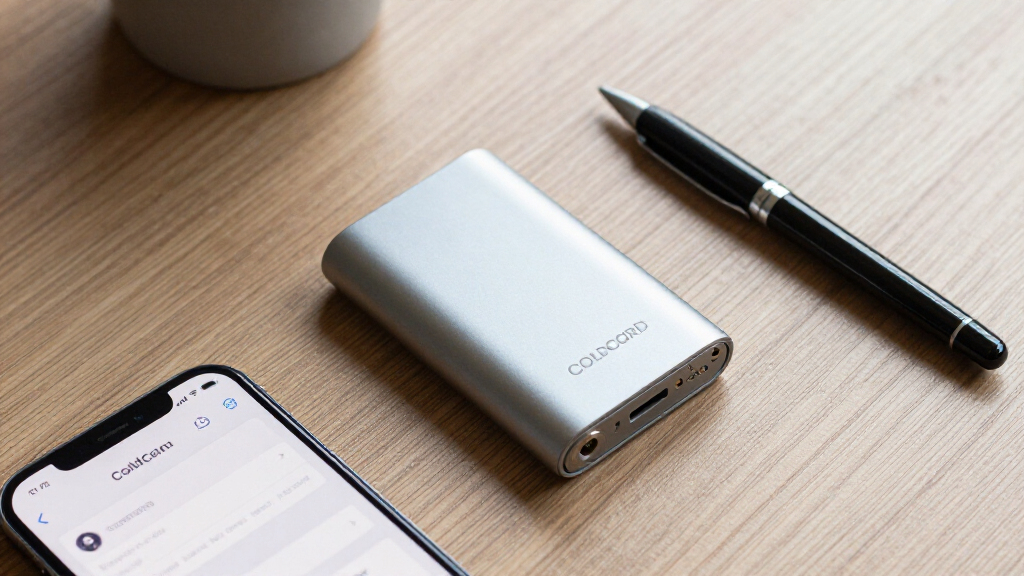
hardware crypto wallet with seed generation
As an affiliate, we earn on qualifying purchases.
As an affiliate, we earn on qualifying purchases.
Background on Coldcard’s Security Flaw and Recent Attack
The Coldcard hardware wallet, produced by Canadian firm Coinkite, is designed for offline Bitcoin storage, emphasizing security through physical isolation. In March 2021, a firmware update was quietly released that inadvertently weakened seed randomness by reducing entropy from 128 bits to about 40 bits. This flaw became publicly known in 2023, but was not initially exploited. The July attack involved automated, large-scale draining of wallets, suggesting the use of precomputed keys or brute-force methods. The debate over AI’s role emerged as some claimed that the timing aligned with the release of Kimi K3, an open-weighted AI model capable of code analysis and vulnerability detection, though no concrete evidence supports this link.
Unconfirmed Role of AI in the Breach
There is no definitive evidence linking AI, including Kimi K3 or similar models, to the discovery or exploitation of the Coldcard entropy flaw. While timing and speculation suggest a possible connection, authorities and researchers agree that the attack was primarily arithmetic, relying on brute-force techniques. The role of AI remains an open question, with current evidence pointing towards traditional computational methods rather than AI-driven vulnerability detection.
Next Steps in Investigating and Securing Coldcard Wallets
Authorities and Coinkite are expected to continue investigations into the breach, focusing on how the entropy flaw was exploited. The company has indicated it will review its firmware and security protocols, possibly releasing updates to prevent similar attacks. Meanwhile, experts advise users to remain cautious and await official security patches. The broader industry will watch how AI tools are integrated into security assessments and vulnerability detection processes, especially in hardware wallets and other critical infrastructure.
Key Questions
Did AI, specifically Kimi K3, directly cause the Coldcard breach?
There is no confirmed evidence that AI was involved. The attack exploited a known entropy vulnerability that could be brute-forced with specialized hardware, independent of AI assistance.
Could AI tools have helped identify the vulnerability earlier?
While AI can assist in analyzing code and vulnerabilities, the firmware flaw was publicly known since 2021, and AI’s role in early detection remains unconfirmed.
What does this incident mean for hardware wallet security?
It underscores the importance of rigorous security reviews and the limitations of AI-based testing, especially for hardware devices where physical and software vulnerabilities intersect.
Is there a risk that future AI models could discover vulnerabilities unassisted?
Yes, AI could potentially analyze code and identify flaws, but current models are not yet capable of reliably discovering zero-day vulnerabilities without human guidance or existing public information.
Source: ThorstenMeyerAI.com