
TL;DR

Get business pricing on office and shipping supplies
- Business-only prices and quantity discounts
- Tax-exempt purchasing
- Multiple users, one account, clear invoices
Europe is investing approximately $14 billion in Mistral to develop a sovereign AI model and infrastructure, aiming to reduce dependence on US and Chinese labs. The funding underscores a strategic push for technological autonomy, though challenges remain regarding model capability and infrastructure independence.
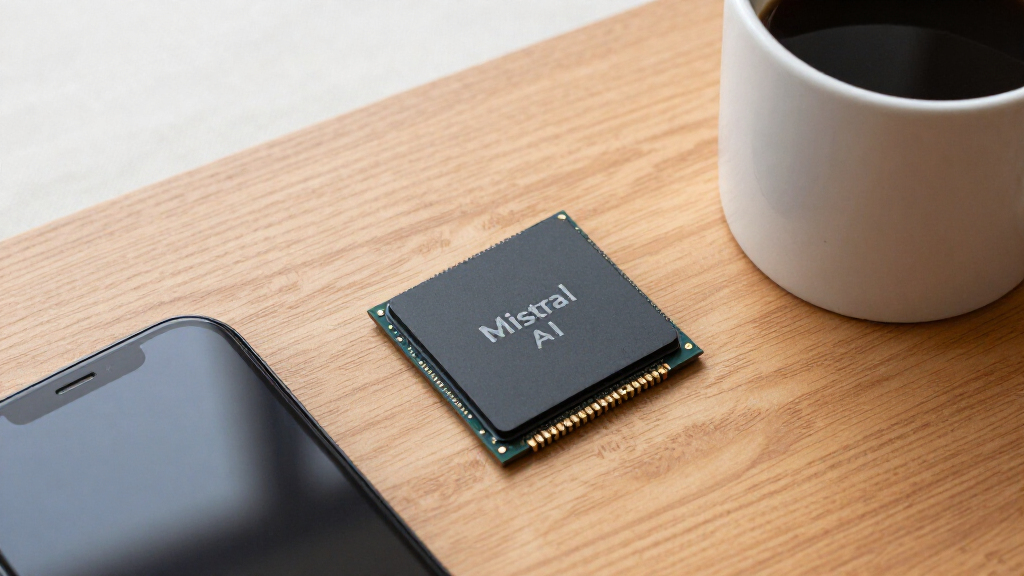
Europe is investing over $14 billion in Mistral, a European AI startup, to develop a sovereign, open-weight AI model and infrastructure, aiming for independence from US and Chinese tech giants. This strategic move reflects Europe’s commitment to establishing a self-sufficient AI ecosystem amid geopolitical tensions and data sovereignty concerns, making Mistral a key player in the continent’s AI landscape.
Confirmed financials show Mistral’s last valuation was approximately €11.7 billion ($13.5 billion), following a €1.7 billion Series C round led by Dutch lithography firm ASML in September 2025. Reports suggest that a further raise of around $3.5 billion is underway, potentially valuing the company at over $20 billion. Revenue growth has been rapid, with annual recurring revenue (ARR) reaching about $400 million by early 2026, up from roughly $20 million a year earlier, and CEO Arthur Mensch targeting $1 billion by year’s end.
Mistral’s strategy centers on sovereignty as a competitive advantage, emphasizing data residency, on-premise deployment, and European jurisdiction. The company is building Mistral Compute, a GPU cloud infrastructure with backing from Bpifrance and NVIDIA, and has acquired Koyeb to bolster its stack. Its models are shipped as open weights to foster developer adoption, funneling usage into paid APIs and enterprise contracts. The company has also garnered political support, with President Macron publicly endorsing the project and France committing over €100 billion to AI development.
Strategic Impact of Europe’s $14 Billion AI Investment
This significant investment underscores Europe’s ambition to establish technological sovereignty in AI amid global competition. By funding Mistral, Europe aims to reduce dependence on US and Chinese models, especially for regulated sectors and public institutions. The move signals a shift toward industrial policy-driven AI development, with the potential to influence global AI governance and supply chains. However, the challenge remains whether Mistral can match the capability and infrastructure of US and Chinese leaders, and whether sovereignty can be maintained as models and open weights become more widespread.
As an affiliate, we earn on qualifying purchases.
Europe’s AI Sovereignty Ambitions and Mistral’s Role
Europe’s push for AI sovereignty has gained momentum over recent years, with governments and industry leaders emphasizing data protection, local infrastructure, and regulatory control. The continent’s major economies, notably France, Germany, and the EU as a whole, have committed billions to AI development, framing it as a matter of strategic autonomy. Mistral emerged as a flagship project, backed by significant funding and political support, aiming to develop a European alternative to dominant US and Chinese AI labs. The company’s valuation and revenue growth reflect strong investor confidence, but questions about model performance and infrastructure independence persist.
Previous efforts to establish European AI capabilities have faced hurdles, including technological gaps and reliance on US hardware. Mistral’s approach, combining open-weight models with European data residency and infrastructure projects, seeks to address these issues directly. The company’s strategy aligns with broader European industrial policies designed to foster innovation while maintaining sovereignty.
“Our goal is to build an AI ecosystem that is truly European, secure, and independent, serving regulated sectors and public institutions first.”
— Arthur Mensch, CEO of Mistral
Challenges to Mistral’s Sovereignty and Capability
While Mistral’s funding and strategic goals are confirmed, several questions remain. The company’s models are currently behind the frontier in raw capability, and evaluations suggest they are slower and less capable than US models. Additionally, the infrastructure remains partly dependent on American hardware and cloud services, complicating claims of full sovereignty. The open-weight approach, while fostering adoption, diminishes differentiation as US and Chinese labs release high-performing open models. It is also uncertain whether Mistral can scale sufficiently to compete globally or if its focus remains limited to European markets.
Next Steps for Mistral and European AI Sovereignty
Expect Mistral to continue expanding its funding rounds, potentially reaching over $20 billion valuation. The company is likely to accelerate model development, aiming to improve performance and infrastructure independence. Politically, European governments will monitor progress, possibly increasing support or setting new regulations to reinforce sovereignty. The company’s IPO plans will also be a key milestone, with the potential to shape Europe’s AI industry and its position relative to US and Chinese competitors. Further evaluation of model performance and infrastructure independence will determine whether Mistral can fulfill its strategic promise.
Key Questions
Why is Europe investing so heavily in Mistral?
Europe aims to establish technological sovereignty in AI, reducing dependence on US and Chinese models and infrastructure, especially for sensitive sectors and public institutions.
Can Mistral compete with US and Chinese AI models?
Currently, Mistral’s models lag behind frontier US models in raw capability, but its focus on sovereignty and European markets offers a strategic niche. Performance improvements are expected.
What are the main challenges Mistral faces?
Key challenges include closing the capability gap, achieving full infrastructure independence, and scaling operations to compete globally while maintaining European sovereignty.
Will Mistral’s European focus limit its global influence?
Yes, its primary market is Europe, and its smaller scale compared to US giants limits global reach. However, it aims to be a regional leader and a model for sovereignty-driven AI development.
What happens if Mistral fails to deliver on its promises?
Failure could weaken Europe’s strategic autonomy efforts, diminish political backing, and leave the continent dependent on US and Chinese AI models and infrastructure.
Source: ThorstenMeyerAI.com
Halloween Picks
halloween
As an affiliate, we earn on qualifying purchases.