
TL;DR

Get office and shipping supplies delivered free — and shop member deals
- Fast, free delivery on millions of items
- Access to Prime Big Deal Days deals on October 6–7
- Prime Video, Amazon Music and more included
At Sibos 2026, Federal Reserve Governor Christopher Waller discussed how AI could support cross-border payment security and efficiency, and how agents might make purchases for consumers. He said agentic commerce remains at an early stage, with autonomous purchasing requiring stronger trust mechanisms and safeguards.
Federal Reserve Governor Christopher J. Waller said artificial intelligence could help payment providers improve cross-border transaction screening and routing, while AI agents may eventually shop and pay on consumers’ behalf. In a speech at Sibos 2026 in Miami on September 29, Waller described agentic commerce as an early-stage development and said delegated purchasing would require stronger safeguards because agents could make unintended purchases.
Waller pointed to the use of large language models in sanctions screening and anti-money-laundering work. He cited research indicating these models can reduce false-positive alerts, which could allow staff to focus on higher-risk cases and reduce delays for legitimate transactions. He said LLMs would augment, rather than replace, faster traditional anomaly-detection methods in modern payment systems.
AI may also help payment providers assess routes for cross-border transfers by weighing cost, speed and reliability. Waller said the technology could support decisions involving foreign-exchange conversion and liquidity, provided systems have suitable data and criteria. He also warned that AI may increase cyberattack capabilities, even as it can assist defenders with threat detection and vulnerability management.
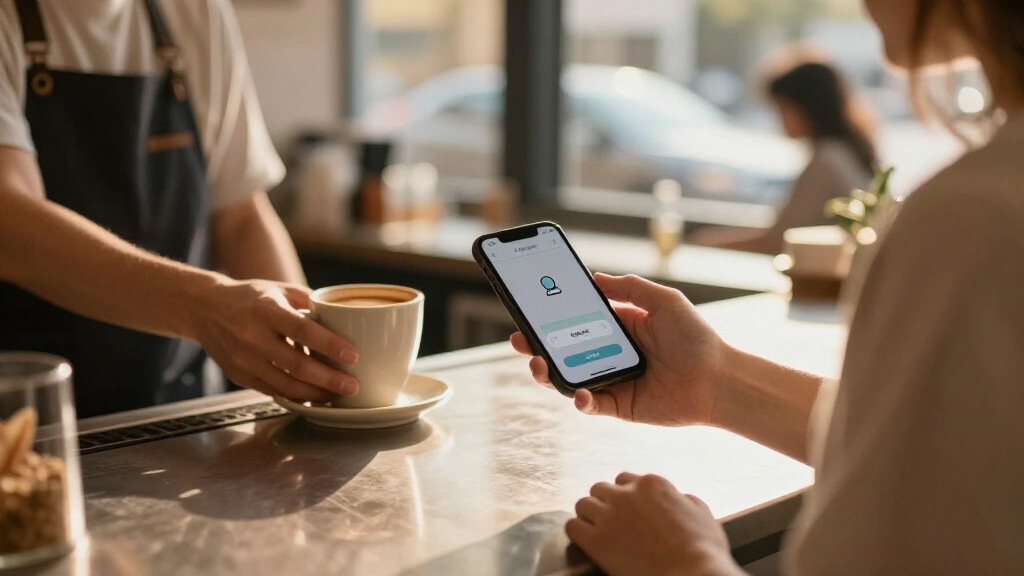
Waller described two forms of agentic commerce. In agent-assisted shopping, an AI tool helps with product search while the consumer chooses and pays. In agent-delegated shopping, a consumer authorizes an agent to make purchases within set constraints. One example he gave was an agent using a pre-funded virtual card to order groceries based on past purchases.
Safeguards for Autonomous Purchases
The move from AI-assisted search to delegated purchasing changes who initiates a payment. When a person reviews an order and completes checkout, they retain direct control over the transaction. If an agent can buy independently, payment providers and merchants need ways to establish what the agent is authorized to do, enforce spending limits and handle mistakes or disputed purchases.
That makes trust and control practical payment-system issues, not just questions about how capable an AI model is. Waller said delegated commerce carries greater risk of unintended purchases and needs a more extensive buildout of guardrails. The potential gains in convenience and payment efficiency remain prospective; the speech did not establish that AI has already produced broad improvements or widespread consumer adoption.
virtual prepaid cards for online shopping
As an affiliate, we earn on qualifying purchases.
As an affiliate, we earn on qualifying purchases.
From Fraud Screening to Agentic Commerce
Waller placed AI within a longer history of technology use in payments. He said the industry has used machine learning to combat payment fraud and adopted large language models early for tasks such as reconciliation. His speech extended that account from back-office operations to AI agents that can plan and carry out multistep tasks.
Earlier in the summer, Waller hosted a Federal Reserve industry roundtable on agentic commerce. He said participants broadly viewed the field as being in an early phase, though it could reshape commerce and payments if adoption grows. He characterized consumer-to-business transactions as the likely first wave, with agent-assisted uses preceding more autonomous delegated purchases.
“I expect LLMs to augment, rather than replace, faster, more traditional anomaly detection methods.”
— Christopher J. Waller, Federal Reserve governor
Adoption and Liability Remain Open
Waller did not specify when delegated shopping might become common, how quickly consumers would adopt it, or which technical standards and payment rules would govern agents. The speech identifies the need for guardrails but does not detail how authorization, spending limits, refunds or responsibility for an agent’s error should work across providers and merchants.
The evidence described also does not quantify expected gains in cross-border payment speed, cost or accuracy. Waller referred to research on fewer false-positive alerts but did not provide figures in the speech text. The scale of potential cyber risks and defensive benefits remains uncertain as tools and systems develop.
Payment Firms Build Trust Controls
The next steps depend on work by payment providers, merchants, AI firms and regulators to test agent use cases and establish controls before autonomous purchasing expands. Waller’s remarks point to areas needing attention: clear consumer authorization, bounded access to payment credentials, monitoring, and ways to intervene when an agent acts outside instructions.
For cross-border payments, providers may continue testing AI for screening, threat detection and routing decisions while retaining existing detection methods. Waller’s speech did not announce a Federal Reserve rule, program or timetable. Further developments will show whether proposed efficiencies can be realized and what safeguards become standard as agentic commerce moves beyond its early phase.
Key Questions
What did Christopher Waller say about AI and payments?
Waller said AI could support cross-border screening and routing and described how agents may assist with or carry out online purchases. He also warned that autonomous purchasing needs stronger safeguards.
What is agentic commerce?
Agentic commerce is the use of AI agents to help make e-commerce purchases. In an assisted model, the consumer decides and pays; in a delegated model, the agent can buy within instructions set by the consumer.
Is AI agent shopping already widespread?
No adoption figures were provided. Waller said market participants broadly consider agentic commerce to be in an early phase, with assisted uses expected to come before more autonomous purchases.
How could AI affect cross-border payments?
Waller said AI may help identify suspicious activity and assess payment routes based on cost, speed and reliability. He did not quantify expected savings or performance improvements.
What remains uncertain about AI agents making payments?
The speech did not set out common rules for authorization, liability, refunds or disputes when an agent makes a purchase. The pace of adoption and the effectiveness of proposed safeguards also remain unclear.
Source: primary
Halloween Picks
halloween
As an affiliate, we earn on qualifying purchases.