
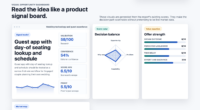
📊 Full opportunity report: The 27% Problem: Why Google Wrote a $750M Check to Catch Anthropic on ThorstenMeyerAI.com — validation score, market gap, and execution plan.

Get business pricing on office and shipping supplies
- Business-only prices and quantity discounts
- Tax-exempt purchasing
- Multiple users, one account, clear invoices
TL;DR
Google announced a $750 million partner fund and rebranded Vertex AI as Gemini Enterprise Agent Platform to compete with Anthropic’s growing enterprise AI dominance. The move aims to secure enterprise distribution before the model layer becomes commoditized.
Google announced a $750 million partner fund and rebranded its Vertex AI platform as the Gemini Enterprise Agent Platform on April 22, 2026, in an effort to regain enterprise AI market share from Anthropic, which currently holds 40% of the market.
The investment aims to accelerate Google’s enterprise AI ecosystem through partner enablement, prototyping subsidies, workforce training, and high-profile enterprise launches such as Merck. The move responds to industry shifts where Anthropic’s strategic focus on safety, long context reasoning, and enterprise-led product releases has helped it capture a significant share, dropping OpenAI from 50% to 27% in enterprise API usage between 2023 and 2026.
Google’s new platform is designed to address the growing problem of agent sprawl within large organizations, where multiple AI agents operate without centralized governance. The platform seeks to become the central control point for managing hundreds of enterprise agents, a critical factor in winning long-term enterprise loyalty.
Google’s $750M Bet on Enterprise AI Distribution
This move signifies a strategic shift by Google to prioritize enterprise distribution over model development, aiming to regain market share before the model layer becomes fully commoditized. It highlights the industry’s focus on governance, integration, and ecosystem lock-in as key competitive factors, potentially reshaping enterprise AI leadership and vendor dominance for years to come.As an affiliate, we earn on qualifying purchases.
Industry Shifts in Enterprise AI Dominance
Between 2023 and early 2026, OpenAI’s share of enterprise LLM API usage declined from 50% to 27%, with Anthropic rising from under 5% to 40%. This shift is driven by Anthropic’s focus on safety, predictable behavior, and enterprise-led product strategies, contrasting with OpenAI’s consumer-first approach. Meanwhile, Google has historically lagged in enterprise lock-in but now aims to leverage its infrastructure, distribution channels, and a new platform to close the gap.
Recent launches, such as Adobe’s CX Enterprise Coworker, and enterprise commitments like Merck’s partnership, reflect broader industry efforts to control AI deployment at scale. The race now centers on who can dominate enterprise distribution and governance before the model layer becomes a commodity, with the 27% figure representing a critical industry benchmark.
“Our goal is to build a comprehensive platform that helps organizations govern and scale their AI agent ecosystems effectively.”
— Google spokesperson
While Google’s $750 million fund and platform rebranding are significant, it remains uncertain whether these efforts will succeed in reversing the decline in enterprise market share or if Anthropic’s strategic advantages will persist through counter-moves such as vertical specialization and sovereignty layering. The industry’s rapid evolution makes outcomes difficult to predict with certainty.
Next Steps in Google’s Enterprise AI Strategy
Google will likely focus on deploying initial high-profile enterprise wins, expanding its partner ecosystem, and accelerating workforce training programs over the next 6 to 12 months. Monitoring the adoption of Gemini Enterprise Agent Platform and the response from competitors like Anthropic will be critical to assessing the effectiveness of this strategy. Additionally, industry watchers will watch for any counter-moves from Anthropic, including aggressive discounting or vertical specialization efforts.
Key Questions
Will Google’s $750 million investment succeed in overtaking Anthropic?
It is uncertain. Success depends on how effectively Google can execute its platform strategy, expand its ecosystem, and counter Anthropic’s current market advantages.
What is the significance of the Gemini Enterprise Agent Platform?
It aims to centralize governance and control over multiple AI agents within large enterprises, addressing the agent sprawl problem and providing a competitive edge in enterprise AI deployment.
How might Anthropic respond to Google’s move?
Possible responses include aggressive enterprise discounting, vertical specialization, and expanding sovereignty regions, which could challenge Google’s gains.
It indicates shifting enterprise preferences toward safety, predictability, and governance-focused models, which favor Anthropic and potentially threaten OpenAI’s dominance.
What is the long-term outlook for enterprise AI market leadership?
Leadership will likely depend on who can best control distribution, govern agent sprawl, and build ecosystem lock-in before the model layer becomes a commodity.
Source: ThorstenMeyerAI.com
Halloween Picks
halloween
As an affiliate, we earn on qualifying purchases.