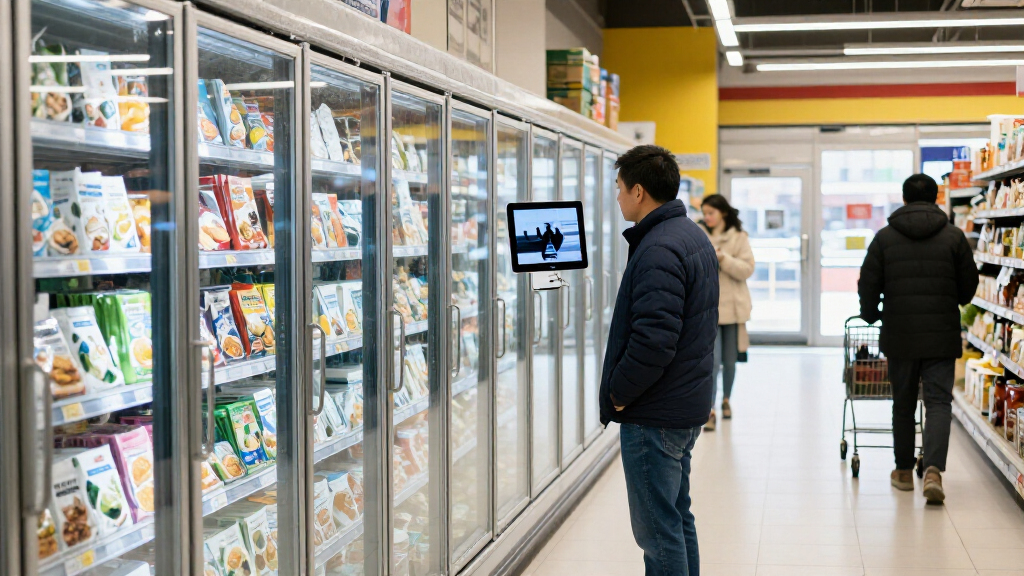
🔍 Read the full analysis: What AI Could Mean For Supermarket Freezer Security on ThorstenMeyerAI.com

Get business pricing on office and shipping supplies
- Business-only prices and quantity discounts
- Tax-exempt purchasing
- Multiple users, one account, clear invoices
TL;DR
More than 115 supermarkets and smaller food businesses in at least six countries reported refrigeration problems during the night of November 1–2, 2026. Reports say attackers remotely switched some refrigeration controllers into defrost or heating modes; authorities have not identified who was responsible, and no source has confirmed AI was used.
More than 115 stores in at least six European countries reported refrigeration disruptions during the night of November 1–2, after internet-reachable controllers were reportedly switched into defrost or heating modes. The incidents echo a French wave reported in October, but the attacker has not been identified, and there is no confirmation that artificial intelligence played any part.
Reports compiled by BleepingComputer counted affected locations in Belgium, the Netherlands, Sweden, Luxembourg, Ireland and Estonia. Finnish authorities and retailer Kesko also reported temperature anomalies at a few smaller stores, so the total geography may be broader. Counts vary by outlet and were still developing on November 2; they should not be read as a final tally.
In Belgium, refrigeration installer Sabcobel chief executive Stephan Moelans told local media that technicians began disconnecting installations from 1 a.m. He said the company itself was not hacked and that internet-accessible controllers at stores were targeted. Sabcobel said the mechanism matched the French incidents: evaporators were remotely put into defrost mode. The company reported that about 20 of the several hundred installations it manages in Belgium were affected.
Retailers described disruptions at individual sites, many of them outside central company networks. Ahold Delhaize reported an IT incident affecting refrigeration systems in several dozen stores; BleepingComputer put the count at about 40 in Belgium and Luxembourg. Carrefour Belgium said 15 of its 700 stores were affected, while Colruyt said the incidents involved about five independently operated Spar stores, not its own stores. Sweden’s Coop reported seven affected outlets among more than 800, and ICA reported at least four stores operating outside its central network.
There are reports of food losses, but the amounts are not established across the affected sites. The Proxy Delhaize in Hoepertingen estimated it had to discard food worth at least €60,000 after freezers reached 15°C, according to Het Belang van Limburg as cited by VRT NWS. A butcher in Hove reported throwing away hundreds of kilos of food. Other businesses said they stopped systems in time or were still assessing the damage.
Remote Controllers Put Food Stocks at Risk
The incidents show how online access to building equipment can create operational risks beyond the computer systems most people associate with cybersecurity. If a refrigeration controller can be reached remotely and its settings are changed, food can warm, businesses may need to discard stock, and stores can face interruptions while systems are isolated and repaired.
The reported pattern also points to a possible gap between centrally managed chains and smaller or independently run locations. Several retailers said affected stores had their own refrigeration equipment or sat outside central networks. That does not establish why those systems were exposed, but it highlights why businesses need to account for older or separately managed equipment when reviewing remote access and security.
The scale and losses remain uncertain. The reported total of more than 115 locations is a collection of developing reports, not a confirmed final count, and individual temperature readings and damage estimates differ. The incidents nevertheless matter to retailers, food businesses and customers because disruption to cold storage can affect stock and store operations even without a physical break-in.
Popular right now

Vitamix Propel Series 750 Professional-Grade Blender, 4 Programs, Black

Bose QuietComfort Wireless Noise-Cancelling Headphones, Petal Pink

Ninja CREAMi 7-in-1 Ice Cream Maker, NC301
As an affiliate, we earn on qualifying purchases.
A Similar French Incident in October
The November reports follow a wave in France during the night of October 11–12. France’s CERT-FR warned on October 12 that remote management interfaces for refrigeration controllers were exposed online contrary to good practice, and said attack campaigns were probably still ongoing. The Paris prosecutor’s office has counted about 700 victims in the French case, according to the source material.
Sabcobel said the method in Belgium was “exactly the same” as in France, describing remote changes that put refrigeration equipment into defrost. That comparison is attributed to the installer; it does not establish that the same person or group carried out both waves. The source material also reports that manufacturers had issued software updates months earlier, but it does not specify which products were updated, whether affected stores installed them, or whether updates would have prevented these incidents.
Counts and descriptions differ across reports. BleepingComputer cited more than 115 stores across six countries, while Belgian media and other outlets gave different totals for individual chains and locations. Reports also describe different temperatures, including 50°C in Eeklo and 15°C in Hoepertingen. These figures refer to particular reported sites, not every affected freezer.
“We have identified an IT incident affecting the refrigeration systems in several dozen stores.”
— Ahold Delhaize
Attribution and AI Role Remain Unknown
No one has publicly claimed responsibility, and the available reporting does not identify an attacker. Belgium’s federal prosecutor has opened a criminal investigation. Belgium’s cyber centre has warned that the attacker may never be identified. The evidence described in the source material does not establish whether the French and November incidents were carried out by the same actor.
There is no confirmation that AI was used in either wave. Belgium’s cyber centre has warned more generally about a rise in attacks partly involving AI, but that broad warning is not evidence that AI enabled these specific intrusions. The headline question of what AI could mean for freezer security remains a wider concern, not a confirmed explanation for this event.
It is also unclear exactly how many locations were affected, which controller models were involved at every site, whether each business had installed available updates, and how much food was lost overall. Reports identify targeted Danfoss models in Finland, according to Finnish news agency STT, but the source material does not establish that every incident involved the same equipment or route of access.
Investigations and Store Checks Continue
Belgium’s criminal investigation is underway, while retailers and refrigeration providers are assessing affected systems and losses. The reports do not give a timetable for findings or identify a next public update. Store operators may continue checking whether controllers are connected to the internet, isolating affected installations and reviewing access and software status; the source material does not confirm which specific steps each business has taken.
Further reporting should clarify the final number of affected locations, whether additional countries or businesses were involved, and whether investigators find a shared technical route across the incidents. Until those details are established, the confirmed picture is a cross-border disruption to refrigeration systems, with the cause attributed in reports to remote access but the responsible actor and any AI involvement still unknown.
Key Questions
What happened to the supermarket freezers?
Reports say refrigeration controllers at stores in several European countries were remotely switched into defrost or heating modes, disrupting cooling during the night of November 1–2, 2026.
How many stores were affected?
BleepingComputer counted more than 115 locations in at least six countries. Counts differ across reports, Finland also reported problems at a few smaller stores, and the total was not final.
Was AI used in the attacks?
No source has confirmed AI was used. Belgium’s cyber centre has made broader warnings about attacks involving AI, but those warnings do not establish a role for AI in these incidents.
Who was responsible?
The attacker has not been identified and no one has claimed responsibility in the reporting cited here. Belgium’s federal prosecutor has opened a criminal investigation.
Did the incidents cause food losses?
Some businesses reported discarding food. The Proxy Delhaize in Hoepertingen estimated losses of at least €60,000, while other reported cases involved hundreds of kilos. There is no overall confirmed loss estimate.
Source: ThorstenMeyerAI.com