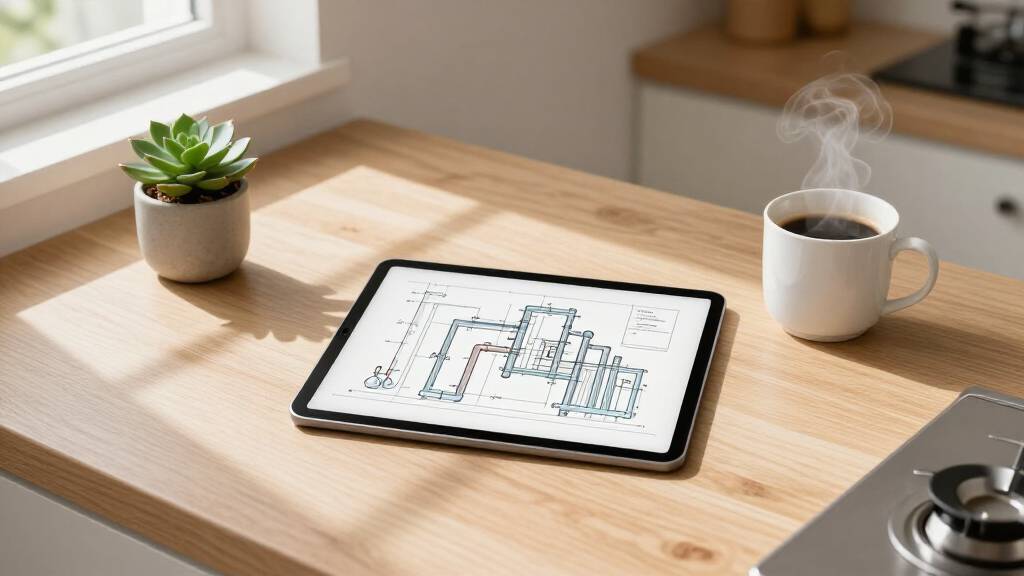
🔍 Read the full analysis: AI's Role In Making Plumbing & HVAC Coordination Effortless on ThorstenMeyerAI.com

Get business pricing on office and shipping supplies
- Business-only prices and quantity discounts
- Tax-exempt purchasing
- Multiple users, one account, clear invoices
TL;DR
A new AI-powered platform significantly improves coordination for plumbing and HVAC installations, cutting unplanned wall breakthroughs from over 40 to fewer than 5 per project. This reduces delays and costs, with confirmed benefits demonstrated in recent case studies. The technology’s full impact and future developments remain under evaluation.
AI-driven technology is now being used to streamline plumbing and HVAC coordination in construction, reducing errors, delays, and rework. The platform, based on the Gewerkton system and powered by Thorsten Meyer AI, has demonstrated significant improvements in project efficiency, with fewer unplanned wall breakthroughs and faster leak location times. This development marks a notable shift in how building services are managed during construction, as detailed in the original analysis.
Recent implementations of the Gewerkton platform incorporate AI to automatically align and verify plumbing and HVAC routing during the construction process. According to Thorsten Meyer, the platform’s core innovation is its ability to detect and prevent conflicts before concrete is poured, significantly decreasing uncoordinated breakthroughs — from over 40 per project down to fewer than 5. The system integrates digital plans, real-time data, and AI analysis to flag potential collisions, enabling trades to address issues proactively.
One key feature involves the wall’s ‘photo grid,’ which captures detailed images of pipe placements before closing walls. This allows for rapid leak localization if issues arise later, reducing leak detection time from two days to approximately 20 minutes. Additionally, the platform generates structured equipment registers and maintenance schedules, streamlining handover processes and ongoing operations management. These improvements are confirmed through recent case studies involving residential buildings and nursing homes, where project delays and rework costs have been notably reduced.
Impact of AI on Construction Efficiency
The adoption of AI in plumbing and HVAC coordination offers substantial benefits for construction firms, including reduced rework, lower labor costs, and faster project completion. By preventing conflicts before they occur, the technology helps protect margins and improve overall project quality. For clients, this translates into more reliable timelines and fewer post-construction issues, such as leaks or system failures. The ability to access detailed, structured data during and after construction also enhances maintenance and operational planning, extending the value of the project beyond completion.
AI plumbing and HVAC coordination software
As an affiliate, we earn on qualifying purchases.
As an affiliate, we earn on qualifying purchases.
Previous Challenges in Building Services Coordination
Traditionally, plumbing and HVAC installations rely heavily on manual planning and on-site adjustments, often leading to unplanned breakthroughs that cause delays and cost overruns. The process involves multiple trades working with plans that can be misaligned or incomplete, resulting in frequent rework and damage to structures like rebar or newly poured concrete. Efforts to coordinate these services have historically depended on manual checks, paper plans, and post-construction corrections, which are time-consuming and error-prone.
The emergence of digital planning tools and Building Information Modeling (BIM) has improved some aspects of coordination, but integration of AI-driven solutions remains limited. The Gewerkton platform represents a significant step forward by embedding AI into the core workflow, enabling real-time conflict detection and automated documentation, thus addressing longstanding inefficiencies in the industry.
Unresolved Aspects of AI-Driven Coordination
While early results are promising, it is still unclear how widely the platform will be adopted across different regions and project types. Long-term reliability, integration with existing workflows, and the ability to handle complex or atypical projects remain under evaluation. Additionally, the full scope of AI’s impact on trade workflows and project margins has yet to be established through broader industry trials.
Next Steps for Broader Adoption and Development
Further pilot projects are planned to validate the platform’s scalability and robustness across diverse construction environments. Industry stakeholders are also exploring integration with other digital tools, such as BIM and enterprise resource planning systems, to enhance interoperability. As adoption grows, ongoing feedback will guide feature enhancements, with the goal of establishing AI as a standard component in building services coordination.
Key Questions
How does AI improve plumbing and HVAC coordination?
AI analyzes digital plans and real-time data to detect potential conflicts early, enabling proactive adjustments and reducing unplanned breakthroughs.
What are the main benefits observed so far?
Significant reductions in uncoordinated breakthroughs, faster leak detection, lower rework costs, and improved project timelines are key benefits confirmed in recent case studies.
Is this technology ready for widespread use?
While initial results are promising, broader industry adoption and long-term reliability are still under evaluation. Further pilot projects are planned to assess scalability.
What challenges might slow adoption?
Integration with existing workflows, training requirements, and industry resistance to change could pose barriers to rapid adoption.
How does this impact project costs?
Early evidence suggests that reducing rework and delays can lower overall project costs, but precise financial impacts depend on project size and complexity.
Source: ThorstenMeyerAI.com
Fall Picks
fall essentials
As an affiliate, we earn on qualifying purchases.