
TL;DR

Get business pricing on office and shipping supplies
- Business-only prices and quantity discounts
- Tax-exempt purchasing
- Multiple users, one account, clear invoices
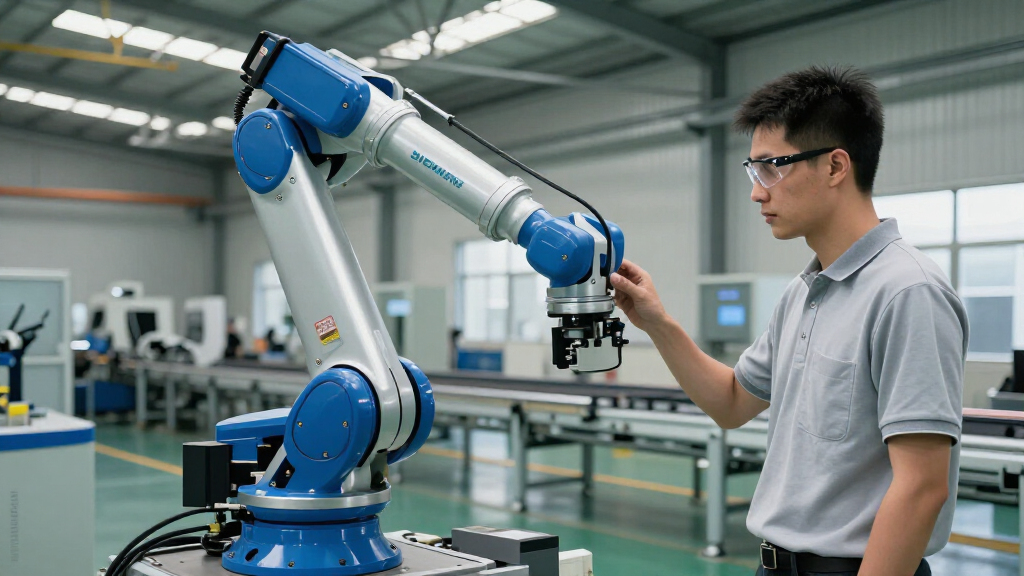
Siemens is leveraging AI to transform manufacturing, focusing on physical-world data and domain expertise. Its partnership with NVIDIA aims to develop an Industrial AI Operating System, with a pilot factory launching in 2026. The approach emphasizes proprietary data and industrial knowledge, but relies heavily on NVIDIA’s infrastructure.
Siemens has revealed a strategic push to embed artificial intelligence across manufacturing processes, focusing on physical data and domain expertise rather than chat-based AI. The company’s plans include launching a fully AI-driven factory in Germany in 2026, backed by a partnership with NVIDIA to build an Industrial AI Operating System.
At CES 2026, Siemens announced the development of its Industrial Foundation Model (IFM), designed to process and contextualize 3D models, 2D drawings, and operational data to optimize engineering and automation. This model aims to serve as a specialized AI for industrial data, distinct from general-purpose language models, leveraging Siemens’ extensive proprietary data accumulated over 175 years.
The partnership with NVIDIA is central to this strategy, focusing on GPU-accelerated simulation, physics-based AI models, and generative digital twins. Siemens plans to launch its first fully AI-adaptive manufacturing site at the Siemens Electronics Factory in Erlangen, Germany, in 2026, with additional tools like Digital Twin Composer and industrial copilots to follow. The goal is to embed AI across the entire manufacturing lifecycle, from design to supply chain management.
Siemens emphasizes its competitive advantages: ownership of proprietary industrial data, deep domain expertise, and existing customer relationships. However, critics note that much of the AI infrastructure relies on NVIDIA’s hardware and software, raising questions about dependency and sovereignty. The timeline for widespread deployment remains uncertain, given the long replacement cycles typical in industrial settings.
Why Siemens’ Industrial AI Strategy Matters for Manufacturing
This initiative signals a shift toward physically grounded AI in manufacturing, where domain-specific models could significantly improve efficiency, predictive maintenance, and automation. Siemens’ approach leverages its extensive industrial data and expertise, potentially giving it a competitive edge in the evolving industrial AI landscape. However, reliance on NVIDIA’s technology and the long sales cycles mean adoption may be gradual, affecting the pace of impact.
As an affiliate, we earn on qualifying purchases.
Background on Siemens’ Industrial AI Initiatives
Siemens has historically been a leader in industrial automation, with decades of experience in manufacturing software and hardware. Its announcement at Hannover Messe 2025 of the Industrial Foundation Model marked a strategic pivot toward AI tailored for physical systems. The company’s collaborations with firms like NVIDIA aim to build a comprehensive platform for AI-driven manufacturing, aligning with broader industry trends toward digital twins and autonomous factories. Despite these developments, the industrial sector’s conservative adoption cycle and the nascent state of physical AI tools mean widespread implementation remains a future goal.
“Industrial AI is no longer a feature; it’s a force that will reshape the next century.”
— Roland Busch, Siemens CEO
Unconfirmed Aspects of Siemens’ Industrial AI Roadmap
Details about the specific hardware configurations, performance metrics, and deployment timelines for Siemens’ AI platform remain undisclosed. The effectiveness of the Digital Twin Composer and the operational success of the Erlangen factory are still to be validated, and the long-term adoption rate within the industrial sector is uncertain due to the lengthy sales cycles and conservative industry practices.
Next Milestones for Siemens’ Industrial AI Deployment
Siemens plans to launch its fully AI-adaptive factory in Erlangen in 2026, serving as a blueprint for future sites globally. The release of Digital Twin Composer and industrial copilots will follow, with pilot projects like PepsiCo’s facility upgrades providing early validation. Monitoring these deployments and their performance metrics will be crucial to assess the platform’s real-world impact and scalability.
Key Questions
How does Siemens’ Industrial Foundation Model differ from general AI models?
The IFM is specifically trained on industrial data such as 3D models, drawings, and sensor telemetry, making it tailored for manufacturing applications rather than general language tasks.
What role does NVIDIA play in Siemens’ AI strategy?
NVIDIA provides the hardware, simulation libraries, and AI frameworks that underpin Siemens’ Industrial AI Operating System, enabling GPU-accelerated simulation and digital twin capabilities.
When will Siemens’ AI-powered factory become fully operational?
The first fully AI-driven factory at Erlangen is slated to launch in 2026, with subsequent deployments expected to follow over the next few years.
What are the main challenges Siemens faces in deploying physical AI at scale?
Long industrial sales cycles, integration complexity, and dependency on NVIDIA’s infrastructure are key challenges, along with the need to validate performance in real-world environments.
Why is Siemens betting on physical-world AI instead of chat-based AI?
Siemens believes that the most significant value lies in optimizing physical manufacturing processes, where data is proprietary, domain-specific, and more complex than text-based communication.
Source: ThorstenMeyerAI.com
Halloween Picks
halloween
As an affiliate, we earn on qualifying purchases.