TL;DR

Get business pricing on office and shipping supplies
- Business-only prices and quantity discounts
- Tax-exempt purchasing
- Multiple users, one account, clear invoices
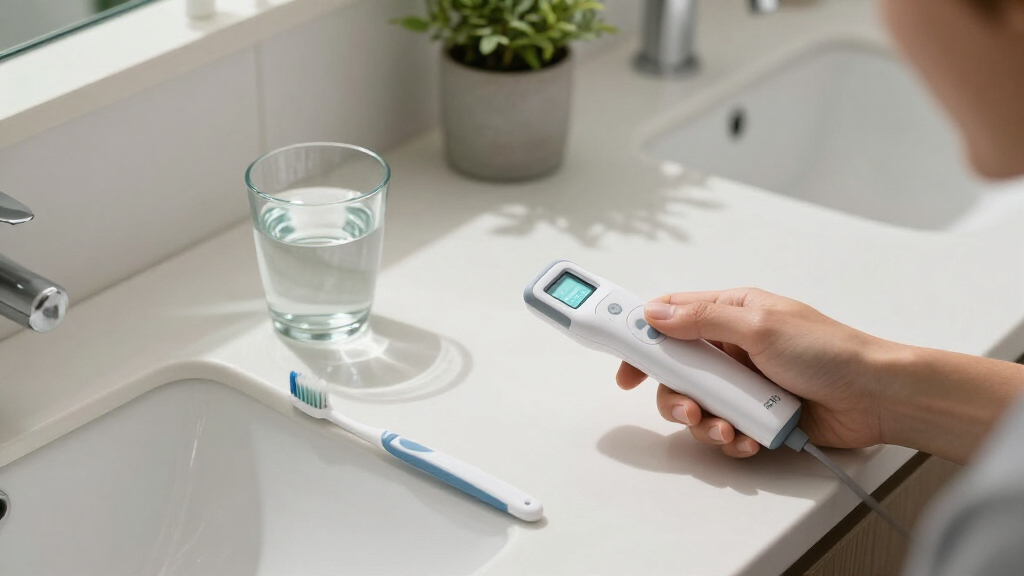
A new mobile app uses guided lighting and phone cameras to objectively track tooth shade progress during home whitening. This innovation could improve product selection and results tracking. Validation against dental standards is ongoing.
A new mobile application is being tested that uses phone cameras and guided lighting to objectively measure tooth shade changes during home whitening routines. This development aims to address the longstanding challenge of subjective shade assessment by consumers, potentially transforming how individuals track whitening progress and select products. The app’s core feature is to provide reliable, calibrated shade scores comparable to professional dental assessments, which could significantly impact the home whitening market.
The application, currently in the testing phase, guides users through a photo capture process that standardizes lighting conditions and uses the phone’s camera to analyze tooth color. The app then compares the captured shade against a dental shade scale, such as VITA, and plots progress over time. Developers aim to validate the app’s accuracy by benchmarking its readings against dentist assessments in a study involving fifty users. If successful, the app will not only help users understand which products effectively whiten teeth but also enable personalized recommendations based on initial shade and progress data.
This innovation is driven by advances in mobile camera technology and lighting calibration, allowing consumers to obtain professional-level shade readings from their smartphones. The app could generate revenue through subscriptions, offering ongoing tracking, and affiliate sales of whitening products proven to move the shade score. The market for such a tool spans consumer oral care and beauty tech, reflecting a growing demand for objective, data-driven approaches to personal grooming.
Potential Impact on Home Whitening Effectiveness
This development could significantly improve the accuracy of at-home teeth whitening efforts by providing objective, consistent shade measurements. Currently, most consumers rely on subjective visual assessment in bathroom mirrors, which can be unreliable. An objective measurement tool would help users identify which products truly deliver results, reduce unnecessary product cycling, and increase satisfaction with their whitening routines. For providers and brands, this technology offers a way to validate product performance and tailor recommendations, potentially boosting consumer confidence and loyalty.
Moreover, by enabling users to track progress over time, the app could foster better adherence to whitening protocols and motivate continued use. The measurement layer could also facilitate more transparent marketing claims and support scientific validation of whitening products, aligning with a broader trend toward personalized, data-backed beauty and health solutions.
teeth whitening shade matching app
As an affiliate, we earn on qualifying purchases.
As an affiliate, we earn on qualifying purchases.
Advances in Mobile Technology Enable Objective Shade Measurement
Until now, home whitening results have largely depended on subjective visual assessments, leading to inconsistent outcomes and consumer frustration. Professional dental shade matching, such as VITA classical shade guides, remains the gold standard but is not accessible to most consumers. Recent advancements in mobile camera sensors, combined with guided lighting and calibration techniques, have opened the possibility of bringing professional-level shade analysis into the home setting.
Initial efforts to create mobile-based shade scoring tools have faced challenges related to lighting variability and camera differences. However, recent prototypes and pilot studies suggest that with proper guidance and calibration, phone cameras can reliably approximate dental shade readings. This progress aligns with a broader trend in consumer health and beauty tech, where smartphones increasingly serve as diagnostic and monitoring devices.
According to developers, the current focus is on validating the app’s accuracy against dentist assessments, a crucial step before widespread adoption. The potential market includes millions of home whitening users who currently lack objective tools to measure their results, representing a significant opportunity for innovation and growth.
“Advances in mobile camera technology and lighting calibration are making it feasible to develop reliable, at-home tooth shade measurement tools.”
— an anonymous researcher
Validation and Accuracy of Phone-Based Shade Scores
It is not yet confirmed how closely the app’s shade scores will match professional dental assessments, such as VITA readings. The validation study involving fifty users is ongoing, and results are pending. There remains some uncertainty about the app’s reliability across different phone models, lighting conditions, and user techniques. Additionally, regulatory considerations and clinical acceptance are still to be addressed before the tool can be widely marketed.
Next Steps for Validation and Market Readiness
The next phase involves completing the validation study, analyzing the correlation between app scores and dentist assessments. If results are strong, developers plan to refine the guided lighting and calibration process for broader device compatibility. They aim to launch a beta version for early user feedback within the next six months. Further clinical validation and potential partnerships with dental professionals or whitening brands are also anticipated to enhance credibility and adoption.
Key Questions
How accurate is the phone-camera shade measurement compared to professional assessments?
The accuracy is currently under validation. Preliminary results suggest promising correlation, but final validation results are pending from ongoing studies involving fifty users.
Can this app help me choose the best whitening product for my teeth?
Yes, once validated, the app aims to track your shade progress and recommend products that have proven effective for similar starting shades, helping you make more informed choices.
Will this technology work on all smartphones?
The developers plan to optimize the app for a range of devices, but some variability may exist due to differences in camera quality and lighting conditions. Calibration steps are being developed to address this.
Is this app available for download now?
The app is currently in the testing phase and not yet available for general download. A beta release is expected within the next six months pending validation results.
What are the privacy implications of using a camera-based shade app?
The developers have stated that all images are processed locally on the device, with no images stored or transmitted without user consent, ensuring privacy and data security.
Source: IdeaNavigator AI
Halloween Picks
halloween
As an affiliate, we earn on qualifying purchases.