
📊 Full opportunity report: The Strategic Importance Of VR In Manufacturing Workforce Education on IdeaNavigator AI — validation score, market gap, and execution plan.

Get business pricing on office and shipping supplies
- Business-only prices and quantity discounts
- Tax-exempt purchasing
- Multiple users, one account, clear invoices
TL;DR
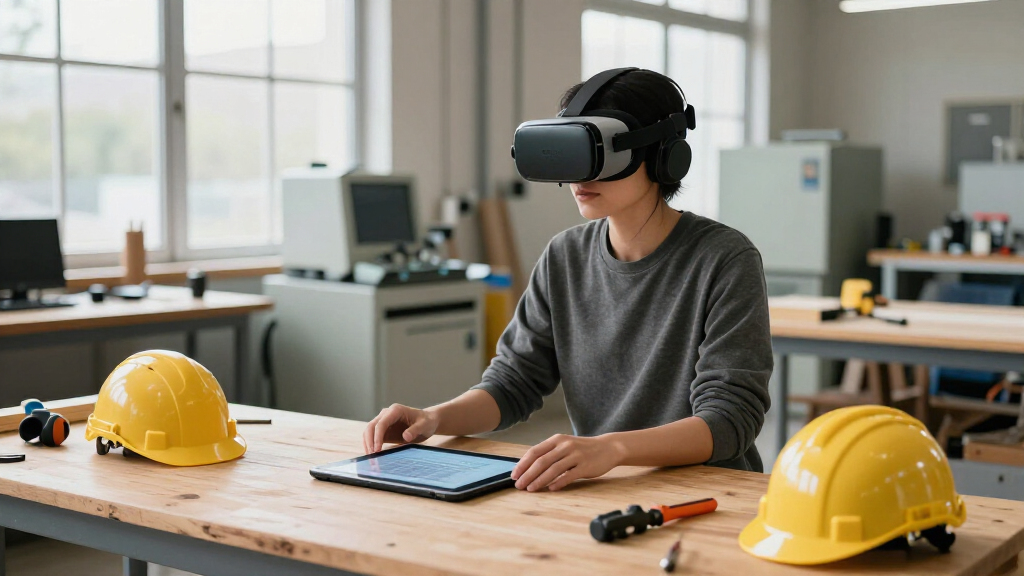
Manufacturers are testing VR training modules to address labor shortages and safety concerns. Early pilots show promise in improving onboarding speed and hazard recognition. The approach could reshape workforce development in manufacturing.
Manufacturing companies are beginning to test virtual reality (VR) training modules as a strategic tool to address critical workforce challenges, including labor shortages and safety risks. Early pilots focus on high-risk procedures like lockout/tagout and machinery safety, aiming to accelerate onboarding and reduce incidents. This development signals a potential shift in how manufacturing firms approach workforce development amid rising operational pressures.
Manufacturers face a severe labor shortage, with approximately 409,000 unfilled positions in the U.S. manufacturing sector as of August 2025, and projections suggest a need for 3.8 million new workers by 2033. Traditional training methods—classroom instruction and on-the-floor demonstrations—are increasingly inadequate due to their slow pace, inconsistency, and safety risks. VR training offers a scalable, standardized alternative that can be deployed rapidly across multiple plants.
Recent initiatives involve deploying standalone VR headsets, such as Meta Quest and Pico devices, which have significantly reduced hardware costs. These modules focus on high-value, high-risk procedures, providing immersive experiences that improve hazard recognition and procedural competence. Pilot programs typically involve a small number of headsets, a core training module, and a cloud dashboard to track individual progress and competency metrics.
Early results from these pilots indicate that VR training can shorten time-to-competency and enhance hazard detection compared to traditional classroom methods. Manufacturers plan to measure success through metrics like hazard recognition accuracy, training duration, and supervisor assessments, with the goal of expanding successful programs across more procedures and facilities.
Implications for Manufacturing Safety and Workforce Development
The adoption of VR training in manufacturing has the potential to significantly improve safety outcomes by providing realistic, risk-free environments for workers to learn high-risk procedures. It also offers a scalable solution to the persistent skills gap and labor shortages, enabling faster onboarding and higher retention of procedural knowledge. As the technology matures and costs decline, VR could become a standard component of workforce training, reducing incident rates and lowering costs associated with accidents and turnover.
VR headset for manufacturing training
As an affiliate, we earn on qualifying purchases.
As an affiliate, we earn on qualifying purchases.
Growing Need for Innovative Training Solutions in Manufacturing
The manufacturing sector has faced persistent labor shortages, with a significant skills gap that hampers productivity and safety. Traditional training methods are often slow, inconsistent, and pose safety risks when conducted on live machinery. The rise of immersive technology, driven by advances in cloud-native XR streaming and affordable standalone headsets, has created new opportunities for scalable, effective training solutions. Pilot programs testing VR modules are emerging as part of broader efforts to modernize workforce development.
Historically, manufacturing training relied heavily on classroom instruction and on-the-job demonstrations, which can vary in quality and effectiveness. The current labor market pressures and safety concerns have accelerated interest in digital and immersive training tools. Industry experts see VR as a promising approach to standardize training, improve hazard recognition, and speed up onboarding processes.
Uncertainties About Long-Term Effectiveness and Adoption
While initial pilot results are promising, it is still unclear how widely VR training will be adopted across the manufacturing sector and whether its benefits will be sustained over time. Questions remain about the scalability of these programs, integration with existing training systems, and long-term impact on safety and productivity. Further research and larger-scale deployments are needed to validate these early findings.
Next Steps in VR Manufacturing Workforce Training Trials
Manufacturers plan to conduct 60-90 day pilot programs focusing on specific high-risk procedures, measuring metrics such as time-to-competency, hazard recognition scores, and supervisor assessments. Success in these pilots could lead to broader deployment across multiple plants and procedures. Industry stakeholders are also exploring customization of VR modules and integration with existing learning management systems to enhance scalability and effectiveness.
Key Questions
How does VR training compare to traditional methods in manufacturing?
Early pilots suggest VR can shorten onboarding time and improve hazard recognition, but comprehensive comparisons across larger populations are still underway.
What are the main benefits of using VR for manufacturing training?
VR offers immersive, standardized training environments that reduce safety risks, speed up learning, and enhance hazard recognition skills.
Are there any downsides or challenges to implementing VR training?
Initial costs, integration with existing systems, and the need for ongoing content updates are potential challenges, though costs are decreasing.
When might VR training become a standard practice in manufacturing?
If pilot programs demonstrate clear benefits, wider adoption could occur within the next few years as technology matures and costs decline.
Will VR replace traditional training entirely?
Most experts see VR as a complement to, not a complete replacement for, classroom and on-the-floor training, providing a more effective hybrid approach.
Source: IdeaNavigator AI
Halloween Picks
halloween
As an affiliate, we earn on qualifying purchases.