
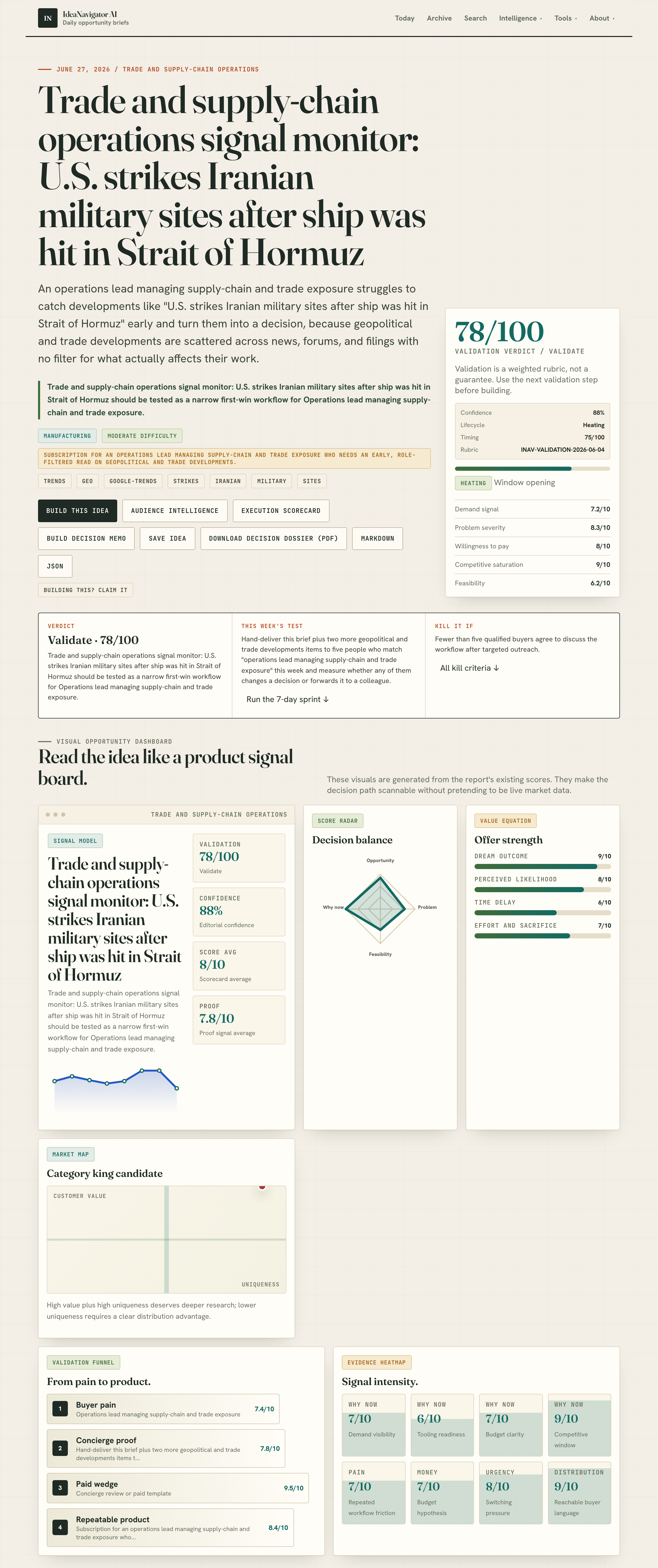
📊 Full opportunity report: Trade and supply-chain operations signal monitor: U.S. strikes Iranian military sites after ship was hit in Strait of Hormuz on IdeaNavigator AI — validation score, market gap, and execution plan.

Get business pricing on office and shipping supplies
- Business-only prices and quantity discounts
- Tax-exempt purchasing
- Multiple users, one account, clear invoices
TL;DR
The United States conducted military strikes on Iranian military sites after a commercial ship was hit in the Strait of Hormuz. This development impacts regional security and global trade routes, with ongoing uncertainty about broader escalation.
The United States has launched military strikes on Iranian military sites in the region following an attack on a commercial vessel in the Strait of Hormuz. This action marks a significant escalation in US-Iran tensions and has immediate implications for regional security and global trade routes.
According to US officials, the strikes targeted military infrastructure in Iran believed to be responsible for the attack on the commercial ship. The incident occurred in the Strait of Hormuz, a critical chokepoint for global oil and trade shipments. The US military confirmed the strikes early this morning, emphasizing that they were in response to the attack on the vessel, which was reported to have sustained damage but no casualties.
Iran has not officially acknowledged responsibility for the attack but has condemned the US response as provocative. The targeted sites included military installations and missile launch pads, as per US military statements. The Iranian government has issued a warning against further strikes and has called for restraint, but tensions remain high.
Implications for Regional Stability and Global Trade
This escalation could destabilize the already volatile Middle East region, potentially leading to broader military conflict. For global trade, especially oil shipments through the Strait of Hormuz, the incident raises concerns about supply disruptions and price volatility. Businesses involved in trade and logistics are closely monitoring the situation for potential impacts on supply chains and shipping routes.
Popular right now

Ninja Mega Kitchen System Blender and Food Processor, 1500W, 72-oz Pitcher, 8-Cup Bowl, Black (BL770)

Bose QuietComfort Headphones (2nd Gen), Wireless Over-Ear Noise-Cancelling Headphones, Black

Breville BES870XL Barista Express Espresso Machine, Brushed Stainless Steel
As an affiliate, we earn on qualifying purchases.
Recent Tensions and Escalations in Strait of Hormuz
Regional tensions between the US and Iran have increased over the past year, with several incidents involving maritime security and military posturing. Learn more about recent US-Iran talks. The Strait of Hormuz has been a flashpoint for conflict, with Iran threatening to close the waterway in response to US sanctions and military actions. The attack on the ship, which US officials attribute to Iranian forces, follows a series of recent proxy conflicts and military exchanges in the region.
Historically, the US has conducted targeted strikes in Iran’s military infrastructure in response to similar incidents, aiming to deter further attacks. This recent strike is part of a pattern of US military responses to threats in the region, but it also raises concerns about potential escalation into broader conflict.
“The strikes were conducted to neutralize Iranian military capabilities responsible for recent attacks on commercial shipping in the Strait of Hormuz.”
— US Defense Department spokesperson
Unclear Broader Escalation and Regional Response
It remains uncertain whether this military action will lead to wider conflict in the region or if Iran will undertake retaliatory measures. The full scope of US military objectives and Iran’s next moves are still developing, and diplomatic efforts are ongoing to de-escalate tensions.
Potential for Diplomatic Engagement or Further Military Action
Next steps include monitoring Iran’s response, potential diplomatic negotiations, and possible US military or regional coalition actions. International actors are urging restraint, but the situation remains highly volatile, with further developments expected within the coming days.
Key Questions
What exactly did the US target in Iran?
The US targeted military installations and missile launch pads believed to be responsible for the attack on the vessel in the Strait of Hormuz.
Has Iran officially claimed responsibility for the attack on the ship?
No, Iran has not officially claimed responsibility but has condemned the US strikes and warned against further escalation.
Could this lead to a wider conflict?
The situation is highly uncertain; while escalation is possible, diplomatic efforts are ongoing to prevent broader conflict.
How might this affect global trade?
Disruptions in the Strait of Hormuz could impact oil supplies and shipping routes, potentially causing price increases and supply chain delays.
What is the US aiming to achieve with these strikes?
The US states the strikes are meant to neutralize Iranian military capabilities responsible for attacking commercial shipping, aiming to deter further attacks and protect maritime commerce.
Source: IdeaNavigator AI