
📊 Full opportunity report: Basketball Analysis Moves From Courtside Cameras To Phones on IdeaNavigator AI — validation score, market gap, and execution plan.

Get business pricing on office and shipping supplies
- Business-only prices and quantity discounts
- Tax-exempt purchasing
- Multiple users, one account, clear invoices
TL;DR
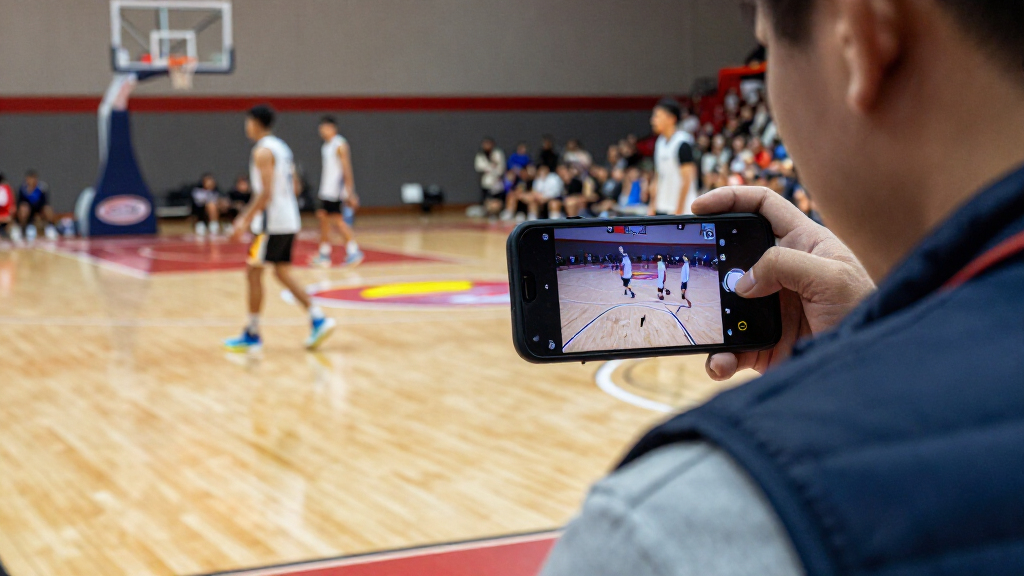
An IdeaNavigator AI proposal outlines an app that would use phone-recorded basketball games to create player highlights, per-game stats and shareable season profiles. It is a product concept, not a launched service: its accuracy, technical performance and willingness-to-pay have not been established.
IdeaNavigator AI has outlined a proposed app that would analyze phone-recorded youth and recreational basketball games, creating player highlight reels and game statistics for families who may not have access to higher-cost team software. The proposal describes a product to test, not a launched or independently validated service; its accuracy and demand remain unknown.
The concept targets a specific user: a parent or player seeking highlights and stats without a budget for a program such as Hudl. The problem identified is that families often record games on phones but may not have the time to manually find and clip individual plays. The proposal argues that this can leave footage unused for player development or recruiting profiles.
The proposed first version would let a user upload game footage and select a player. Software would then attempt to identify that player, create a highlight reel with score overlays, generate a per-game stat line and maintain a shareable season profile. The suggested revenue model is a family subscription for a season, potentially supplemented by charges to export individual reels.
IdeaNavigator AI points to on-device vision models as a reason the product may now be feasible, saying such systems can track players and detect events including shots, rebounds and steals in ordinary phone footage. That is a technical premise of the proposal, not evidence that a particular app already performs those tasks reliably. No product, test results, pricing, launch schedule or customer data are provided.
A Lower-Cost Route to Game Footage
If the proposed workflow works well enough, it could make organized highlights and basic performance records more accessible to families outside well-funded programs. Instead of relying on a team’s camera setup or asking someone to spend hours clipping plays, a parent might be able to use footage already recorded at a game. That could make video easier to share with coaches and players, and give families a more convenient way to review a season.
But the practical value depends on more than generating a reel. The app would need to identify the right player across a crowded court, follow them through changing camera angles, and distinguish meaningful events from ambiguous action. Errors could produce misleading stats or omit important plays. For recruiting and development uses, accuracy and a clear account of limitations matter as much as convenience. The proposal supplies no measured performance or evidence that families will pay for the service.
As an affiliate, we earn on qualifying purchases.
The Proposed Test Before a Launch
The idea is framed as a narrow first-use case in youth and amateur sports technology, rather than as a complete analysis system for every team or level of basketball. Its intended customer is a family that wants player-specific materials but cannot justify, or does not have access to, a more expensive team program. The proposal does not establish the price or identify a specific competitor package for comparison.
To test demand and performance, IdeaNavigator AI suggests processing 100 games filmed by parents, measuring satisfaction with highlight accuracy, and testing season-subscription conversion at AAU tournaments. Those are recommended validation steps, not completed trials. No participating teams, tournament dates, test results or subscription figures are reported.
Accuracy, Pricing and Demand Remain Open
No evidence is provided that the proposed system can consistently identify a selected player in typical phone footage. Factors such as camera movement, distance from the court, overlapping players, lighting and partial obstruction could affect tracking and event detection. The proposal does not state how the app would handle uncertain clips, incorrect score overlays or disputed statistics.
It is also unclear whether analysis would happen entirely on a phone or require uploaded video to be processed elsewhere. The concept offers no subscription price, per-reel export fee, privacy policy or information about how footage of young players would be stored and shared. There are no reported user trials, accuracy measurements or conversion results, and no release date or named product. These gaps mean the idea’s technical and commercial feasibility has yet to be demonstrated.
A 100-Game Validation Milestone
The next step described in the proposal is a test involving 100 games recorded by parents. It would assess whether generated highlights satisfy users on accuracy, then test whether families at AAU tournaments convert to a season subscription. No timetable or commitment to run the study is given.
Any further assessment would need to show how often player identification and event labels are correct, how the app handles poor-quality footage, and what users would pay. Until results or a product release are reported, the phone-based workflow remains a business concept rather than an established alternative to existing basketball video services.
Source: IdeaNavigator AI
Key Questions
Is the basketball video app available now?
No launch or available product is identified. The proposal describes an app concept and suggested validation steps.
What would the proposed app do?
It would analyze uploaded phone footage to identify a selected player, assemble a highlight reel with score overlays, generate a game stat line and maintain a shareable season profile.
Has the app’s accuracy been tested?
No results are reported. The proposed test would process 100 parent-recorded games and measure satisfaction with highlight accuracy.
How might the service charge families?
The suggested model is a subscription covering a season, with possible additional fees for exporting individual reels. No prices are specified.
What remains to be proven?
The proposal has not established whether the software can reliably track players and detect basketball events in everyday phone footage, or whether families will pay for the service.
Source: IdeaNavigator AI
Fall Picks
fall essentials
As an affiliate, we earn on qualifying purchases.