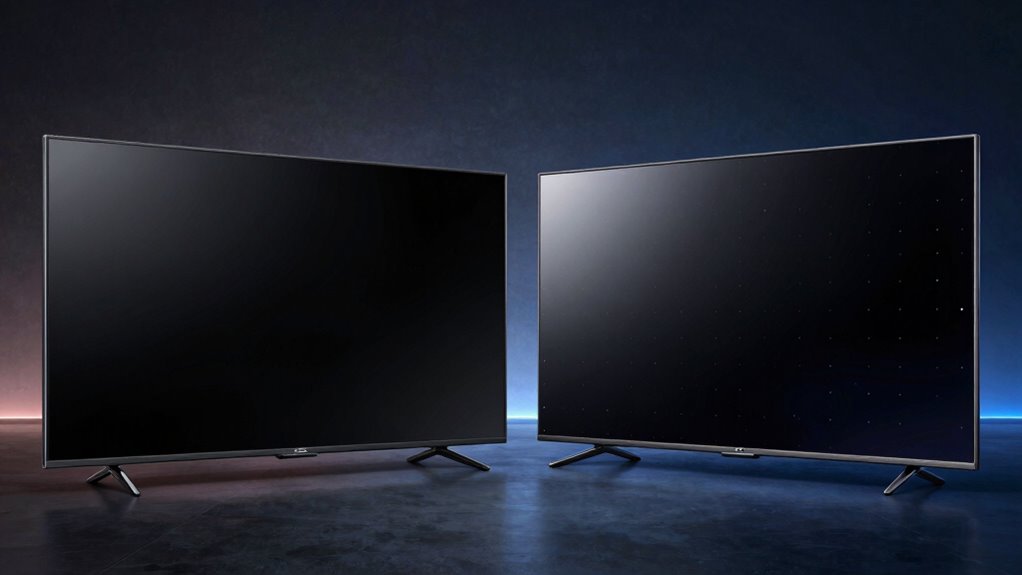

Once you understand the key differences, OLED and Mini-LED become less confusing. OLED offers perfect blacks, richer colors, and superior contrast but can suffer from burn-in and costs more. Mini-LED uses thousands of tiny LEDs for deep blacks and consistent brightness, making it more durable and energy-efficient, especially during bright scenes. If you want to learn more about which fits your needs best, there’s plenty more to discover that can help you decide.

Get business pricing on office and shipping supplies
- Business-only prices and quantity discounts
- Tax-exempt purchasing
- Multiple users, one account, clear invoices
Key Takeaways
- OLED pixels emit their own light, offering perfect black levels and superior contrast, unlike Mini-LED’s backlit LCD technology.
- Mini-LED provides better energy efficiency and durability, especially during bright scenes, compared to OLED’s susceptibility to burn-in.
- OLED screens are more expensive but deliver richer colors and deeper blacks, while Mini-LED balances good color with lower cost.
- OLED’s perfect black levels result in higher contrast ratios, but Mini-LED achieves nearly as good contrast with less risk of burn-in.
- Both technologies now offer high color accuracy; choose OLED for top-tier contrast and color, Mini-LED for durability and efficiency.
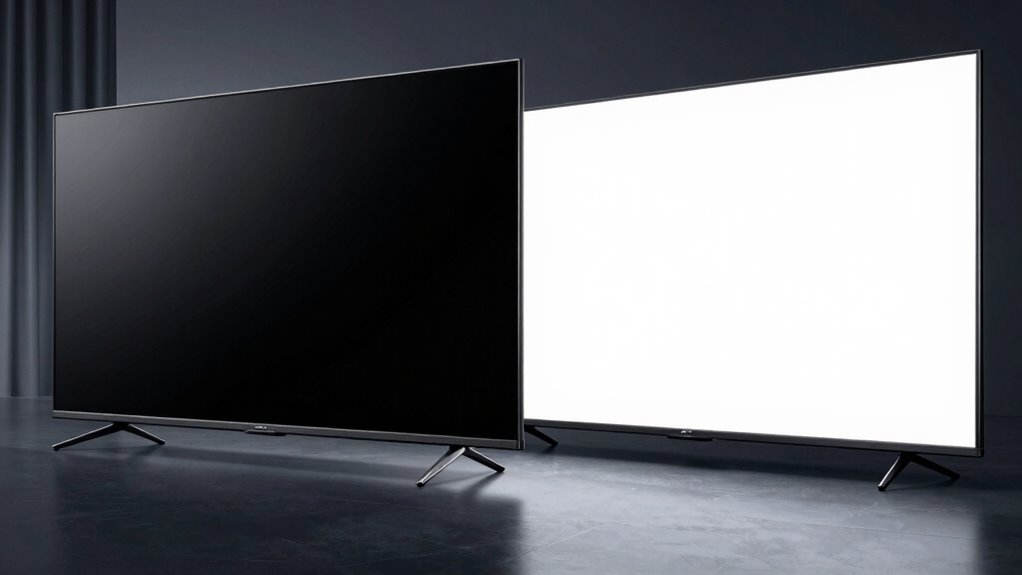
When choosing between OLED and Mini-LED displays, understanding their differences can greatly impact your viewing experience. Both technologies have distinct strengths and weaknesses that influence picture quality, power efficiency, and overall performance. Knowing what sets them apart makes it easier to pick the right screen for your needs. OLED screens use organic compounds that emit light when powered. This means each pixel produces its own light, allowing for perfect black levels and high contrast ratios. Because of this, OLED offers superior color accuracy, with richer, more vibrant colors and deeper blacks that create a more immersive viewing experience. However, this self-emissive nature also means OLED displays tend to consume more power when showing bright, colorful images, especially if the screen is filled with whites or vivid hues. The power consumption can vary depending on what’s displayed; darker scenes generally use less energy, but bright scenes can drain the battery faster. This can be a concern if you’re looking for a display that balances excellent picture quality with energy efficiency. Additionally, OLED panels are more susceptible to burn-in issues, which can affect long-term display quality. Modern OLED screens have made significant improvements in reducing this risk, but it remains a consideration for certain types of use. Another factor to consider is the overall cost of OLED versus Mini-LED displays, as OLED screens tend to be more expensive due to their advanced technology. Mini-LED technology, on the other hand, uses thousands of tiny LEDs behind an LCD panel to provide local dimming. Because the LEDs can be turned on or off independently, Mini-LED displays achieve impressive contrast and deep blacks, although they rarely match OLED’s perfection. They excel at maintaining consistent brightness across the screen, which helps deliver accurate colors and a more uniform picture. When considering display longevity, Mini-LEDs tend to be more durable over time compared to OLEDs. Furthermore, advancements in backlight technology have enhanced the overall performance of Mini-LEDs, making them more competitive with OLEDs. When it comes to color accuracy, Mini-LEDs are quite capable, often surpassing traditional LCDs and coming close to OLEDs. Plus, since Mini-LEDs are part of an LCD panel, they tend to consume less power during bright scenes, making them more energy-efficient overall. If you watch a lot of content with bright scenes or want a display that balances good color reproduction with lower power use, Mini-LEDs are a compelling option.
As an affiliate, we earn on qualifying purchases.
Frequently Asked Questions
Which Technology Has a Longer Lifespan, OLED or Mini-Led?
Mini-LED displays generally have a longer lifespan than OLED screens. OLEDs can experience burn-in over time, especially with static images, affecting color accuracy and overall display quality. Mini-LEDs, with their backlighting technology, resist burn-in, maintaining consistent color accuracy and refresh rates longer. So, if longevity matters most, Mini-LEDs are the better choice, offering stable performance and vivid visuals over time.
Are OLED Screens More Prone to Burn-In Than Mini-Led?
Yes, OLED screens are generally more prone to burn-in than Mini-LEDs. This is because OLED pixels emit light individually, which can cause image retention over time, especially with static images. However, OLEDs typically offer better color accuracy and wider viewing angles. If you watch varied content and avoid static images, you’ll likely experience less burn-in risk, though Mini-LEDs are more durable in that regard.
Can Mini-Led Displays Achieve True Black Levels Like OLED?
Think of mini-LED displays as a painter blending shades, but they can’t quite reach the deep black of OLED’s ink. While mini-LEDs can achieve impressive black levels through localized dimming, they struggle with perfect black uniformity, affecting color accuracy and viewing angles. OLEDs, with their self-emissive pixels, deliver true blacks and consistent colors no matter where you sit. So, mini-LEDs come close but don’t quite match OLED’s black depth.
Which Technology Is More Energy-Efficient for Daily Use?
Mini-LED displays are more energy-efficient for daily use compared to OLEDs. They maintain better color accuracy and screen brightness while consuming less power, especially during bright scenes. OLEDs can use more energy when displaying vibrant colors or bright backgrounds because each pixel emits its own light. So, if you want a display that balances energy efficiency with great color and brightness, Mini-LED is the smarter choice for everyday use.
How Do Manufacturing Costs Compare Between OLED and Mini-Led?
Imagine two factories: one with a sleek, streamlined assembly line for OLEDs, and another with a complex maze for mini-LEDs. OLED manufacturing costs are generally lower because of less complex processes, boosting color accuracy with simpler layers. Mini-LED production is more intricate and costly, involving thousands of tiny LEDs. So, OLEDs tend to be more budget-friendly to produce, making them more accessible, while mini-LEDs require a pricier, detailed manufacturing setup.
Conclusion
Now that you understand the differences between OLED and Mini-LED, it’s like discovering the hidden layers behind a common illusion. Just as lighting reveals what’s beneath, knowing these details uncovers the true potential of your display choices. Sometimes, clarity comes from understanding the unseen, reminding us that what’s beneath the surface often holds the real value. So, trust your newfound knowledge—it’s the light guiding you to smarter, more confident decisions.
Columbus Day / Indigenous Peoples' Day Picks
long weekend sales
As an affiliate, we earn on qualifying purchases.