
Psychological tension creeps up on you slowly, building suspense and a sense of dread that stays long after the film ends. It taps into your fears, using eerie soundtracks and unsettling visuals to create emotional resonance. On the other hand, jump-scare tension gives you quick shocks, eliciting immediate reactions but lacking lasting impact. Both evoke fear uniquely, and understanding their interplay can enhance your viewing experience. Discover more about how these tensions shape horror engagement.

Get business pricing on office and shipping supplies
- Business-only prices and quantity discounts
- Tax-exempt purchasing
- Multiple users, one account, clear invoices
Key Takeaways
- Nature of Fear: Psychological tension builds dread over time, while jump-scare tension delivers sudden shocks for immediate reactions.
- Emotional Depth: Psychological tension resonates emotionally, tapping into personal fears, whereas jump-scare tension relies on surprise without lasting impact.
- Techniques Used: Psychological tension employs unsettling visuals and atmospheric sound, while jump-scares often use silence or sudden shifts to create anticipation.
- Viewer Experience: Psychological horror lingers in the mind, fostering reflection, whereas jump-scares provide a visceral thrill that quickly fades.
- Interplay: Both tension types have unique merits, and a balance of psychological depth and visceral shocks enhances overall viewer engagement in horror films.

As you plunge into the world of horror films, you’ll quickly notice two distinct types of tension: psychological and jump-scare. Each type has its own unique way of gripping you, keeping you on the edge of your seat. Psychological tension often creeps up on you, slowly building suspense that lingers long after the credits roll. You find yourself questioning what’s real, as the film dives deep into the characters’ psyches. It’s not just about the fear of the unknown; it’s about unraveling the emotional turmoil that can resonate deeply within you.
Exploring horror films reveals two gripping tensions: psychological depth that lingers and jump-scares that shock, each evoking fear in unique ways.
When you watch a film that emphasizes psychological tension, you’ll likely experience a sense of dread that grows with each scene. The filmmakers use clever techniques, like eerie soundtracks and unsettling visual cues, to create an atmosphere that feels almost suffocating. This type of suspense building taps into your fears and anxieties, making you reflect on your own experiences and vulnerabilities. You might find yourself relating to the characters, feeling their pain and confusion. This emotional resonance is what makes psychological horror so powerful; it goes beyond mere fright and seeps into the core of your being. Additionally, advances in psychological tension techniques, such as subtle visual cues and atmospheric sound design, have enhanced the immersive experience of psychological horror films. Recognizing how these tension-building methods influence your emotional response can deepen your appreciation for the craft behind horror filmmaking. Moreover, understanding the psychological principles behind tension can help you appreciate why these techniques are so effective in creating a lasting impression. Exploring fear responses and how they are triggered can further enhance your understanding of these suspenseful methods. Effective use of anticipation can also intensify the impact of both psychological and jump-scare moments, making the experience more visceral.
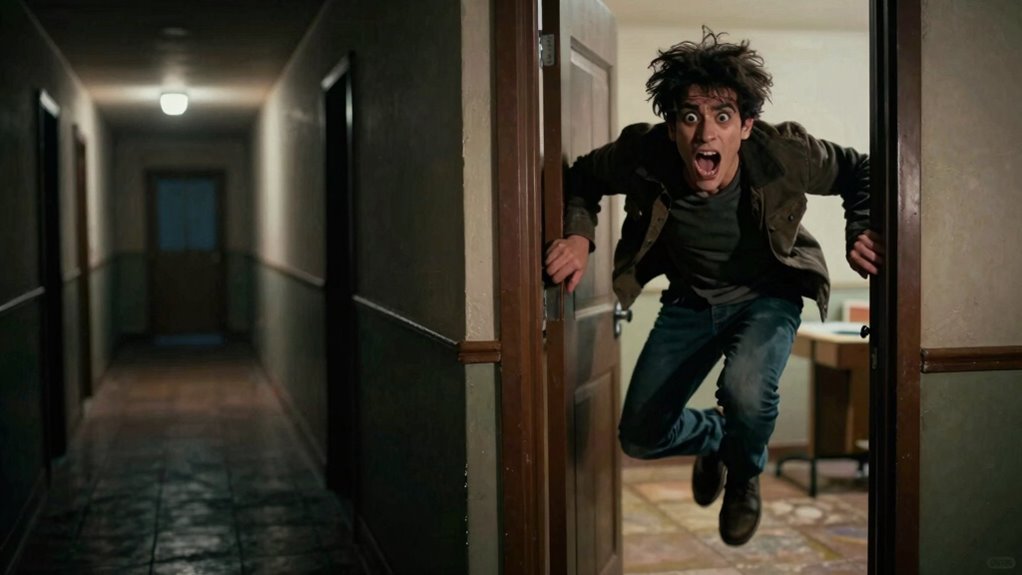
On the other hand, jump-scare tension serves a different purpose. It’s designed to startle you, providing quick bursts of fear that jolt you awake. You know when a jump-scare is coming, often telegraphed by a sudden silence or a shift in the camera angle. But even if you anticipate it, the effect can still be shocking. This tension relies on surprise rather than emotional depth. While it can elicit immediate reactions—like gasping or jumping in your seat—it often lacks the lasting impact of psychological tension.
Both types have their merits. You might enjoy the visceral thrill of a good jump-scare, but you could find that a well-crafted psychological horror lingers in your mind, haunting you long after the film ends. The beauty lies in the way these tensions can intertwine. A film that expertly balances jump-scares with psychological depth can provide both immediate jolts and lasting unease, creating a truly memorable experience. So next time you settle in for a horror movie, pay attention to how it builds tension. You might discover new layers to fear that resonate with you in unexpected ways.
Popular right now

Bose QuietComfort Headphones (2nd Gen), Wireless Noise-Cancelling Over-Ear Headphones, White Smoke

KitchenAid Artisan 5-Quart Tilt-Head Stand Mixer with Flex Edge Beater

Dyson Airwrap i.d. Multi-Styler with Bluetooth Connectivity
As an affiliate, we earn on qualifying purchases.
Frequently Asked Questions
How Do Filmmakers Create Psychological Tension in Movies?
Filmmakers create psychological tension by building deep character development and elevating emotional stakes. They craft complex characters you can connect with, making you invested in their journeys. By placing these characters in morally ambiguous situations, they heighten your anxiety about potential outcomes. Subtle sound design, pacing, and visual cues amplify feelings of dread, keeping you on edge as you anticipate what might happen next, even when there aren’t any jump scares.
What Are Some Examples of Effective Jump-Scare Techniques?
Effective jump-scare techniques often include sudden reveals that catch you off guard. Think of a quiet scene where tension builds, and then—bam! A loud noise or a quick movement jolts you. Filmmakers use music cues to heighten anticipation, making that moment even more shocking. Your heart races, and the audience reaction is palpable, often resulting in gasps or screams. This technique keeps viewers on edge and engaged throughout the film.
Can Psychological Tension Be Found in Non-Horror Genres?
Absolutely, psychological tension thrives in non-horror genres! In fact, studies show that 65% of viewers prefer emotional resonance over pure thrills. You’ll often find it in dramas where character development deepens the story. As you connect with characters facing moral dilemmas or intense relationships, the tension builds subtly, keeping you on edge. This emotional investment makes their struggles feel real and impactful, proving that tension isn’t limited to scares—it’s about the heart.
How Does Music Influence Jump-Scare Tension?
Music heightens jump-scare tension by using strategic musical cues and sound design. When you hear a sudden shift in the score, it signals something’s about to happen, ramping up your anxiety. The buildup of tension in the music creates anticipation, making the eventual scare more impactful. Effective sound design complements these cues, layering in eerie sounds that draw you in, making you more susceptible to the surprise when it finally hits.
Are There Cultures That Prefer One Type of Tension Over the Other?
Yes, cultures do have different preferences when it comes to tension perception. Some might gravitate towards the slow-building dread of psychological tension, savoring every moment of suspense. Others could crave the adrenaline rush of jump-scare tension, enjoying that instant thrill. It’s fascinating how cultural backgrounds shape these tastes, creating a rich tapestry of fear experiences. So, next time you watch a horror film, consider what your culture might reveal about your own tension preference!
Conclusion
In the end, whether you find yourself on the edge of your seat from psychological tension or leaping at a jump scare, both forms pull you into the story’s grip. Like a maestro conducting a symphony of fear, they each play their part in creating unforgettable experiences. So, next time you watch that horror flick, remember: it’s not just about the scares, but the lingering unease that haunts you long after the credits roll—think of it as a modern-day “Tell-Tale Heart.”