
Slow cinema immerses you in intentional storytelling, focusing on prolonged moments and emotional depth, inviting contemplation. It contrasts sharply with simply slow movies, which may drag without purpose or connection. While slow cinema enhances the viewing experience, provoking thought and exploration of themes, slow movies often feel tedious and disconnected. Understanding this difference can elevate your appreciation of film. If you’re curious about how these styles manifest in specific films, there’s more to explore.

Get business pricing on office and shipping supplies
- Business-only prices and quantity discounts
- Tax-exempt purchasing
- Multiple users, one account, clear invoices
Key Takeaways
- Slow cinema prioritizes visual storytelling and atmosphere, while slow movies often lack purposeful engagement and depth.
- Intentional pacing in slow cinema invites reflection and contemplation, whereas slow movies may feel tedious and disconnected.
- Silence and minimal dialogue in slow cinema carry significant meaning, contrasting with the often aimless dialogue in slow movies.
- Artistic depth in slow cinema enhances emotional resonance, while slow movies may simply drag on without enriching the viewer’s experience.
- Slow cinema fosters a deeper connection with characters and themes, unlike slow movies that can feel like endurance tests.

While many people think of slow cinema and slow movies as interchangeable terms, they actually represent distinct approaches to storytelling. When you explore the world of slow cinema, you’re engaging with a specific narrative style that prioritizes visual storytelling over conventional plot-driven techniques. This form often emphasizes long takes, minimal dialogue, and a deliberate narrative pacing that invites you to absorb the atmosphere and emotions instead of racing to the next plot point.
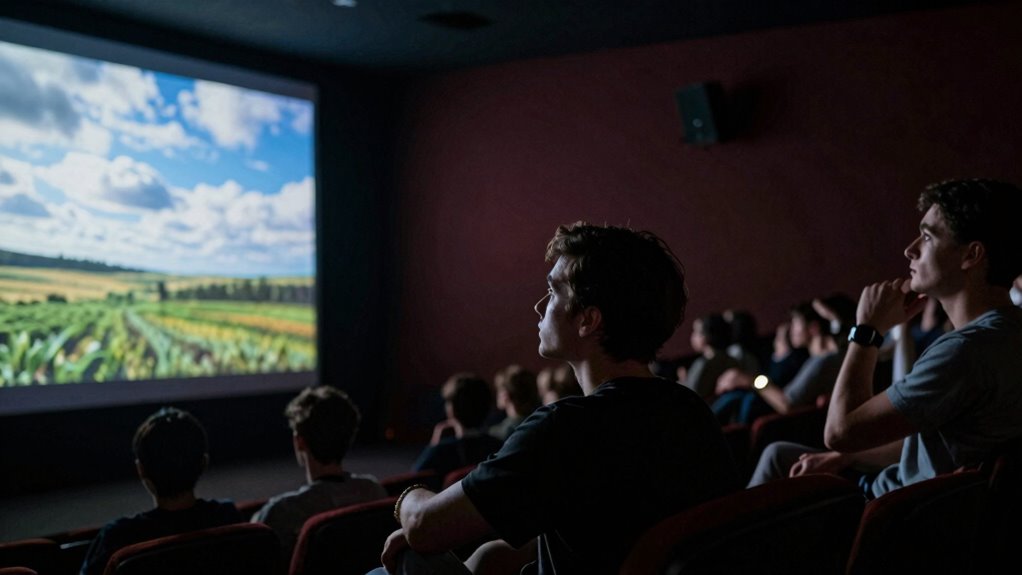
In slow cinema, the focus is on creating an immersive experience. You might find yourself captivated by the subtle details in a scene, such as the play of light or the sounds of nature. These elements are carefully crafted to evoke feelings and provoke thought. Unlike mainstream films that often rely on rapid cuts and quick resolutions, slow cinema encourages you to contemplate the meaning behind each frame. This thoughtful pacing allows you to form a deeper connection with the characters and their environments, fostering a sense of presence that’s hard to replicate.
In slow cinema, every frame invites contemplation, allowing you to deeply connect with characters and their world.
On the other hand, when people refer to slow movies, they might simply mean films that take their time. These films can vary widely in quality and intention. You might encounter movies that drag on without purpose, failing to engage you in any meaningful way. In this case, slow pacing doesn’t enhance the storytelling; it just makes the viewing experience tedious. Slow movies often lack the artistic depth that characterizes slow cinema. They may have long scenes, but without the rich visual storytelling, they might leave you feeling disconnected.
Ultimately, it’s the intent behind the pacing that distinguishes slow cinema from merely slow movies. Slow cinema seeks to immerse you in a world where every moment matters, where the silence between dialogue speaks volumes. This approach encourages a reflective viewing experience, where you’re invited to explore themes of existence, time, and human emotion. In contrast, slow movies might just feel like an endurance test, lacking the layers of meaning that make slow cinema so compelling.
Furthermore, understanding the artistic depth behind slow cinema can help viewers differentiate it from films that are simply slow without purpose.
slow cinema Blu-ray films long takes visual storytelling
As an affiliate, we earn on qualifying purchases.
As an affiliate, we earn on qualifying purchases.
Frequently Asked Questions
What Are Some Examples of Slow Cinema Films?
You’ll find that films like “Stalker” by Andrei Tarkovsky and “The Turin Horse” by Béla Tarr exemplify slow cinema. These movies focus on minimal narrative structure, drawing you into their contemplative worlds. The visual aesthetics are striking, often emphasizing long takes and serene landscapes. “A Ghost Story” and “Uncle Boonmee Who Can Recall His Past Lives” also showcase this style, inviting you to experience the passage of time in a profound way.
How Do Filmmakers Create a Slow Pacing?
Filmmakers create a slow pacing by focusing on visual storytelling, using long takes and minimal dialogue. They draw out moments, allowing you to absorb the atmosphere and emotions. By emphasizing silence and stillness, they enhance audience engagement, encouraging you to reflect on the visuals and themes. This deliberate pace invites you to connect more deeply with the characters and their journeys, transforming your viewing experience into something contemplative and immersive.
Is Slow Cinema Popular Among Mainstream Audiences?
Slow cinema isn’t exactly popular among mainstream audiences. While it offers unique audience engagement through its meditative pacing, many viewers prefer fast-paced storytelling. You’ll find that slow cinema often requires a deeper cinematic immersion, which can be challenging for those accustomed to quick cuts and rapid plots. However, niche audiences appreciate its artistry, and film festivals often celebrate these works, ensuring they have a dedicated, albeit smaller, following.
What Thematic Elements Are Common in Slow Cinema?
In slow cinema, you’ll often find visual storytelling that draws you into the characters’ inner lives. Existential themes come to the forefront, prompting you to reflect on life’s deeper questions. You notice minimalist dialogue, allowing silence to speak volumes and heighten emotional resonance. This approach invites you to experience a slower pace, immersing you in the atmosphere and emotions, making each moment feel significant and thought-provoking.
How Can I Better Appreciate Slow Movies?
Appreciating slow movies is like savoring a fine wine; it takes time to truly enjoy. Focus on character development—watch how they evolve through subtle actions and dialogue. Embrace the visual storytelling, letting the imagery wash over you rather than rushing to the next scene. Allow yourself to get lost in the moments, noticing details that reveal deeper themes. With patience, you’ll discover a richness that quick-paced films often overlook.
Conclusion
In the end, understanding the difference between slow cinema and slow movies enriches your viewing experience. While both invite reflection, slow cinema crafts a unique, immersive journey that lingers in your mind. As the saying goes, “Good things come to those who wait.” Embracing the deliberate pace of slow cinema can reveal profound insights and emotions, proving that sometimes, taking your time can lead to the most rewarding stories. So, savor each frame and dive deep.
Halloween Picks
halloween
As an affiliate, we earn on qualifying purchases.