Choosing between condenser and dynamic mics is a game-changer for your sound quality. Condensers offer high sensitivity and a wide frequency response, making them perfect for capturing detailed vocals and studio work. Dynamic mics are more durable, handle loud sounds, and are better suited for live performances in noisy environments. Your environment and recording needs will determine the best choice. Keep exploring to discover how the right mic can elevate your audio project.

Get office and shipping supplies delivered free — and shop member deals
- Fast, free delivery on millions of items
- Access to Prime Big Deal Days deals on October 6–7
- Prime Video, Amazon Music and more included
Key Takeaways
- The main difference is sensitivity: condenser mics capture more detail, while dynamic mics focus on durability and handling loud sounds.
- Condenser mics excel in studio environments for vocals and delicate instruments; dynamic mics are better for live, noisy settings.
- Choosing a condenser requires external power and careful handling, whereas dynamic mics are more rugged and straightforward.
- Condensers pick up ambient noise, making placement critical; dynamics naturally reject background sounds.
- The key decision hinges on environment and recording needs—clarity and nuance versus durability and high SPL handling.
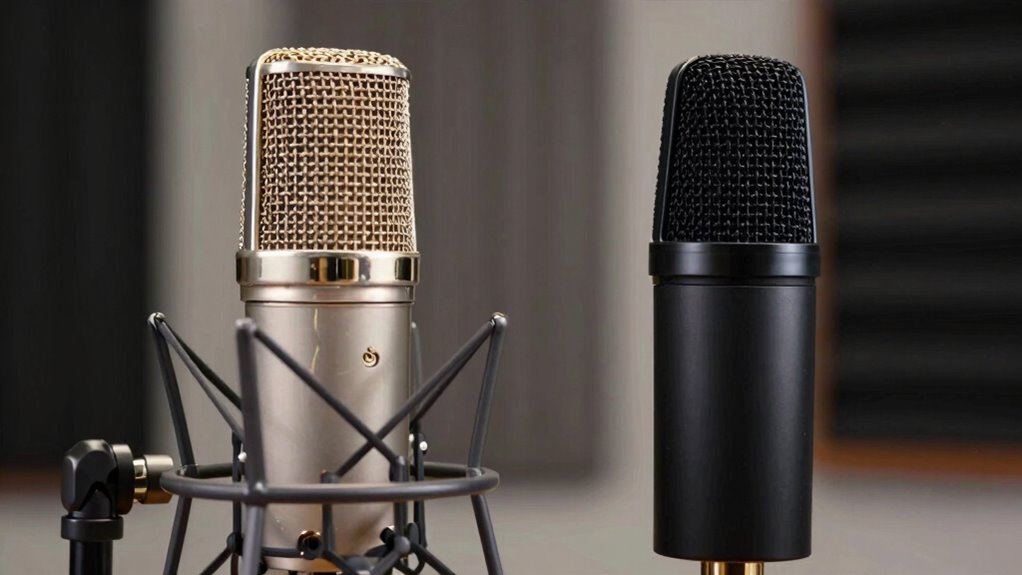
When choosing microphones for recording or live sound, understanding the differences between condenser and dynamic mics is essential. Your decision can significantly impact vocal clarity and how well your sound captures the environment. Condenser microphones are known for their sensitivity and wide frequency response, making them ideal for studio recordings where capturing every nuance of a vocal or instrument matters. They excel in controlled recording environments by providing clarity and detail that can elevate your sound quality. If you’re aiming for crisp, transparent vocals or delicate acoustic instruments, a condenser mic will help you pick up subtle vibrations and tonal variations that a dynamic mic might miss.
Condenser microphones excel in capturing detail and nuance in controlled studio environments for clear, crisp recordings.
However, condensers are also more fragile and require external power, usually through phantom power, which can complicate setups. They tend to pick up more background noise, so they’re best used in quiet, controlled environments where you can fine-tune your recording conditions. This sensitivity means you need to position them carefully, ensuring they’re close enough to capture the desired sound without picking up unwanted room reflections or ambient noise. When used properly, condenser mics can deliver vocal clarity that’s unmatched, making them the go-to choice for vocals, voiceovers, and studio recordings where detail is paramount.
Additionally, condenser microphones rely heavily on sensitive components, which makes them more vulnerable to damage if mishandled or used improperly. Choosing the right microphone type depends heavily on your specific needs and environment, so understanding these key differences is crucial for achieving optimal sound quality.
On the other hand, dynamic microphones are built for durability and high sound pressure levels, making them perfect for live performances and rougher recording environments. They’re less sensitive to background noise, which means they naturally focus on the sound source directly in front of them. This characteristic helps maintain vocal clarity even in noisy or unpredictable settings. Dynamic mics are less prone to feedback and can handle loud vocals or instruments without distortion, making them reliable workhorses in live sound scenarios. Their robustness allows you to move around freely without worrying about delicate components or external factors distorting your sound.
While they may not capture the minute details that condensers do, dynamic microphones produce a punchy, focused sound that cuts through a mix effectively. They’re versatile for various live applications, from vocals to miking guitar amps, and are a staple in many professional setups. Ultimately, your choice between condenser and dynamic will depend on your recording environment and the level of vocal clarity you need. If your priority is capturing every detail and nuance in a controlled space, a condenser mic is the way to go. But if you need a reliable, durable mic that performs well in unpredictable, loud environments, a dynamic microphone will serve you better.
best condenser microphone for studio vocals
As an affiliate, we earn on qualifying purchases.
As an affiliate, we earn on qualifying purchases.
Frequently Asked Questions
How Do Condenser and Dynamic Mics Differ in Durability?
You’ll find that dynamic microphones tend to be more durable because they withstand rough handling and environmental factors better than condensers. Condenser mics, with their delicate diaphragms and sensitive components, are more vulnerable to damage. When considering polar patterns and frequency response, dynamic mics usually have a narrower frequency range but are built to last in live, demanding settings, while condensers excel in capturing detailed sound but require careful handling.
Which Microphone Type Is Better for Outdoor Recording?
For outdoor recording, a dynamic microphone is better because it’s durable and less sensitive to weather conditions. You’ll appreciate its ability to handle wind and noise, especially if it has wireless connectivity for ease of movement. Its frequency response is adequate for capturing voices and ambient sounds effectively. A condenser mic, although offering a wider frequency response, isn’t ideal outdoors due to its sensitivity and vulnerability to elements.
Can Condenser Mics Handle High Sound Pressure Levels?
Condenser mics can handle high sound pressure levels, but their polar patterns and frequency response matter. If you’re recording loud sources like drums or guitar amps, select a condenser with a robust polar pattern, like cardioid or supercardioid, to reduce bleed. Also, verify its frequency response; a wider range guarantees clarity at high SPLs. Properly chosen, condenser mics deliver excellent sound quality even at high volumes.
Are Dynamic Mics Suitable for Studio Vocal Recordings?
Yes, dynamic mics are surprisingly suitable for studio vocals, defying expectations! They excel with their rugged build and focused polar patterns, capturing vocals with impressive clarity. While their frequency response isn’t as wide as condensers, many modern dynamic mics offer tailored responses for vocals, making them versatile. So, if you want a robust, reliable mic that holds up under any studio scenario, dynamic mics might just surprise you!
What Maintenance Do Condenser and Dynamic Microphones Require?
You need to regularly clean your microphones and check their polar patterns and frequency response to guarantee peak performance. For condensers, be cautious of dust and moisture, and keep the capsules dry. Dynamic mics are more rugged but still benefit from occasional cleaning. Avoid exposing both types to extreme temperatures or humidity. Proper maintenance preserves sound quality, prolongs lifespan, and keeps your polar patterns and frequency response consistent for clear recordings.
Conclusion
Choosing between condenser and dynamic mics can feel overwhelming, but the truth is, it’s all about your specific needs. Many believe condenser mics are always better for vocals, but dynamic mics excel in high-volume situations and live settings. The real secret? No one mic rules them all. Test both, understand your environment, and trust your ears. Ultimately, your choice can transform your sound — so pick what suits your style best.
Halloween Picks
halloween
As an affiliate, we earn on qualifying purchases.