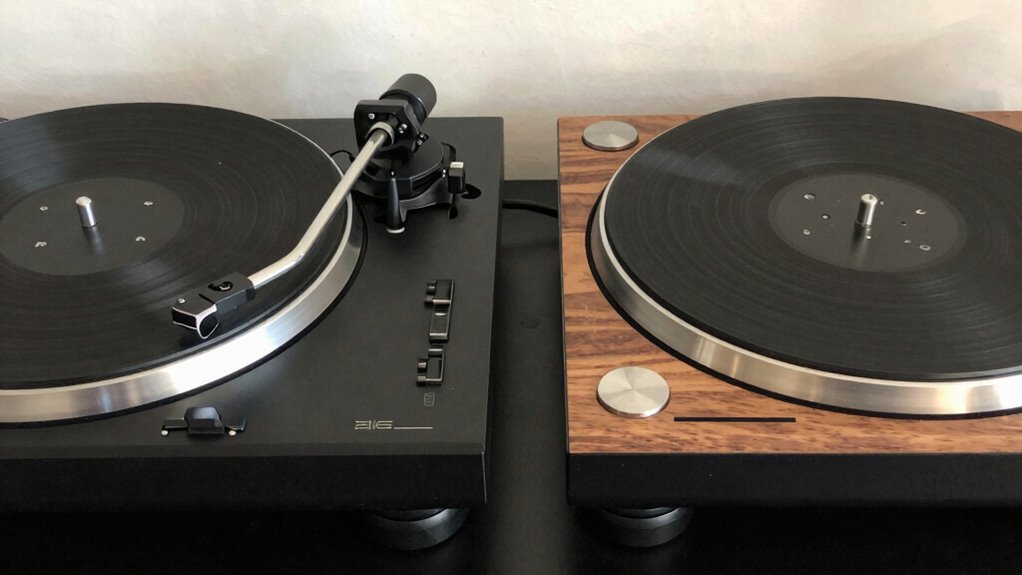

If you’re choosing between direct‑drive and belt‑drive turntables, know that direct‑drive offers quick start times, better torque, and is ideal for DJing or scratching, but may produce more noise. Belt‑drive provides smoother, quieter operation, making it better for home listening and reducing vibrations. Your choice depends on your use, budget, and sound preference. Want to discover which system suits your needs best? Keep exploring to find out more.

Get business pricing on office and shipping supplies
- Business-only prices and quantity discounts
- Tax-exempt purchasing
- Multiple users, one account, clear invoices
Key Takeaways
- Direct‑drive turntables excel in speed stability and quick start-up, ideal for DJing and scratching.
- Belt‑drive models reduce vibrations and noise, offering better sound clarity for home listening.
- Direct‑drive systems are more durable and require less maintenance, suitable for heavy use.
- Belt‑drive turntables provide smoother rotation and easier setup, often at a lower cost.
- Choice depends on usage: DJing favors direct‑drive, while home listening benefits from belt‑drive’s vibration isolation.
Popular right now

Vitamix Propel Series 750 Professional-Grade Blender, 4 Programs, Black
Vitamix 5200 Professional-Grade Blender, 64 oz. Container, Black

Dyson Cyclone V10 Origin Cordless Vacuum
As an affiliate, we earn on qualifying purchases.
What Are the Main Differences Between Direct‑Drive and Belt‑Drive Turntables?
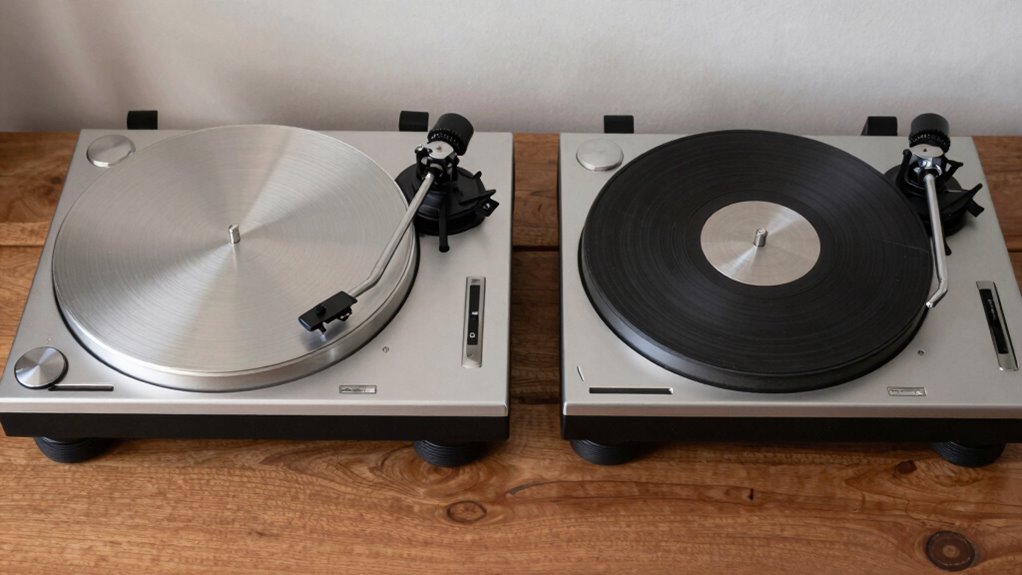
The main differences between direct‑drive and belt‑drive turntables lie in how they transmit power to the platter. With direct‑drive models, the motor is mounted directly beneath the platter, providing a sturdy connection. This design often results in better material durability, as fewer moving parts mean less wear over time. Belt‑drive turntables, on the other hand, use a belt to connect the motor to the platter, which can absorb some vibrations. While this setup may impact tone quality slightly, it also reduces mechanical noise and wear. Overall, direct‑drive turntables tend to be more durable due to their simpler construction, but belt‑drive models offer benefits in vibration isolation that can influence your listening experience. Additionally, Free Floating technology in some turntables can further improve stability and reduce external vibrations, enhancing sound quality.
How Do Direct‑Drive and Belt‑Drive Turntables Compare in Sound Quality?
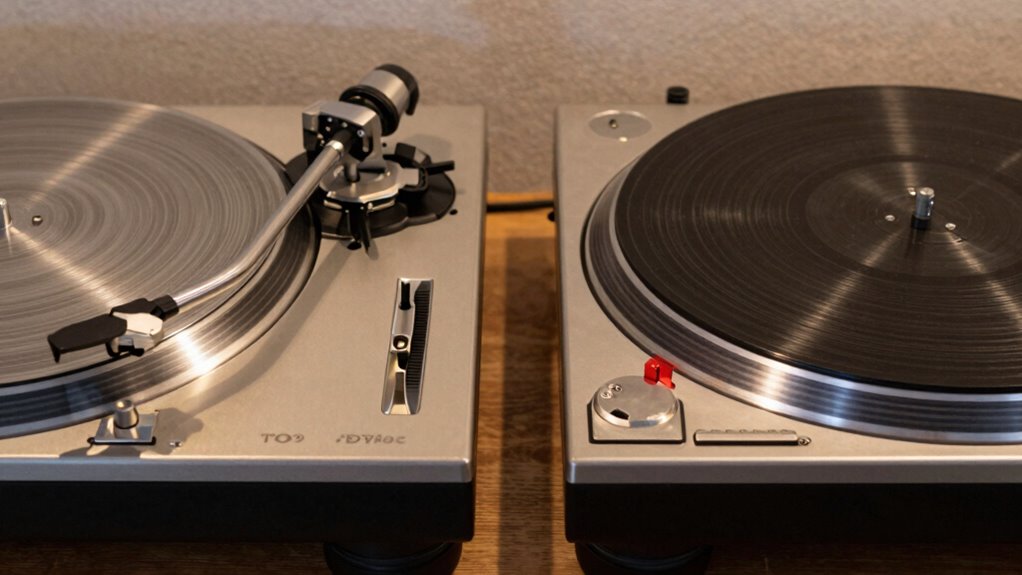
When comparing sound quality, you’ll notice differences in clarity and detail between direct‑drive and belt‑drive turntables. Noise and vibration levels also play a vital role in how clean the audio sounds. Understanding these points helps you choose the turntable that delivers the best listening experience for you. Additionally, the type of drive influences the overall sound fidelity, impacting your enjoyment of music playback.
Sound Clarity and Detail
Sound clarity and detail often distinguish one turntable from another, and understanding how direct-drive and belt-drive models compare in these aspects can help you choose the right setup. Direct-drive turntables generally offer better platter stability, which helps maintain consistent speed and reduces wow and flutter, resulting in clearer sound and sharper detail. Belt-drive models, on the other hand, often excel in minimizing motor vibrations, allowing for more nuanced sound reproduction. Cartridge compatibility plays a role too; a stable platter ensures your cartridge tracks grooves accurately, capturing more detail. While both types can deliver excellent sound quality, your choice depends on whether you prioritize precise speed stability or reduced motor noise. Ultimately, understanding these differences will help you optimize your setup for sound clarity and detail, especially considering motor vibrations and their impact on audio fidelity.
Noise and Vibration Levels
Since noise and vibrations directly impact sound quality, understanding how direct-drive and belt-drive turntables compare in this area is essential. Background noise from motor operation can interfere with your listening experience, so vibration control is vital. Direct-drive turntables often produce more background noise because their motors are attached directly to the platter, which can introduce more vibrations. However, they usually feature advanced vibration control systems to minimize these effects. Belt-drive turntables excel at reducing background noise since the motor is isolated from the platter by a belt, resulting in quieter operation. They typically offer superior vibration control, leading to cleaner sound with less interference. Additionally, spec verification ensures that the turntable’s components and claims meet quality standards, further influencing sound fidelity. Ultimately, your choice depends on balancing noise levels and vibration management for ideal sound quality.
Which Turntable Type Is Better for DJs and Scratch‑Mixing?
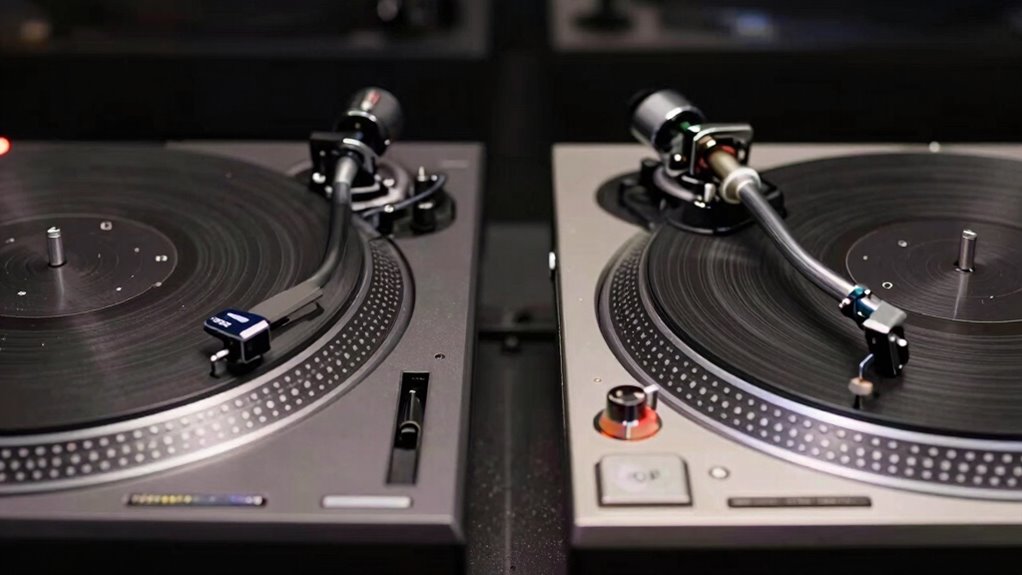
When choosing a turntable for DJing and scratch-mixing, response time and accuracy are vital for tight performances. You’ll also want to take into account durability and how much maintenance each type requires, as well as how portable and easy setup is. Let’s compare these factors to see which turntable suits your mixing style best.
Response Time and Accuracy
Choosing the right turntable for DJing and scratch-mixing hinges on response time and accuracy, as these factors directly impact your ability to keep beats in sync and execute precise scratches. Direct-drive turntables excel here because they offer superior speed stability, maintaining consistent rotation even during rapid cueing or scratching. Their quick response time helps you react instantly to changes, ensuring tight timing. However, motor noise can sometimes be more noticeable with direct-drive models, which might affect your focus. Belt-drive turntables tend to have slower response times and less speed stability, making them less ideal for real-time manipulation. For precise, fast-paced scratching, direct-drive turntables generally provide the accuracy and responsiveness you need. Additionally, understanding motor design can help you choose a turntable that minimizes noise while maximizing performance.
Durability and Maintenance
Durability and maintenance are essential factors to consider when selecting a turntable for DJing and scratch-mixing. Direct-drive turntables generally offer better durability because their motor is built to handle constant use and heavy scratching. They require minimal maintenance beyond regular cleaning and occasional belt or platter checks. Belt-drive models, however, tend to be more sensitive to wear and tear, especially the belt itself, which needs periodic replacement. Maintenance tips for both include keeping the platter clean, avoiding dust buildup, and ensuring the motor is properly lubricated. When comparing durability, direct-drive turntables usually withstand the rigors of DJing better over time. Overall, they demand less upkeep and are more suited for frequent, demanding use, making them the more durable choice for scratch-mixing. Additionally, motor design plays a crucial role in a turntable’s overall durability and performance, especially for professional use.
Portability and Setup
Portability and setup are essential considerations for DJs and scratch-mixers who often perform at different venues or on the go. A portable setup allows you to quickly assemble your gear without hassle, making your performances smoother. Direct-drive turntables are typically heavier and more robust, which can make them less convenient for easy transport. In contrast, belt-drive models are often lighter and more compact, offering better ease of transport. If you frequently switch locations, a belt-drive turntable might suit your needs better because of its portability. However, direct-drive models tend to be quicker to set up due to their sturdy build and straightforward connections. Ultimately, your choice depends on balancing the need for a portable setup with the durability required for frequent use.
Are Belt‑Drive Turntables Better for Home Listening?
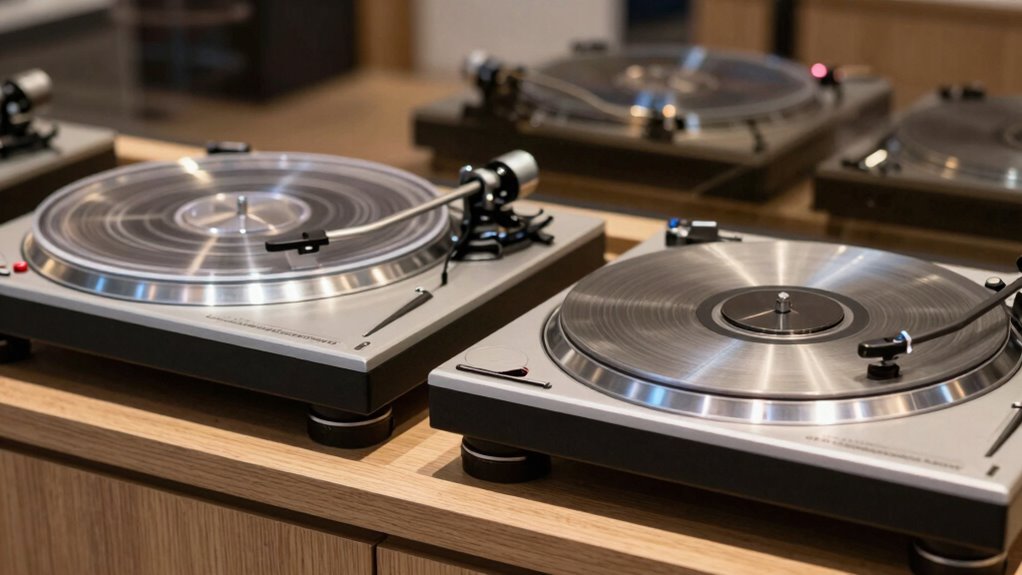
Belt-drive turntables are often considered ideal for home listening because they tend to deliver smoother, quieter playback compared to other types. This quiet operation helps you focus on your music without distractions, enhancing vinyl preservation. If you prefer listening over streaming, a belt-drive turntable offers a warm, authentic sound that digital sources can’t match. Here are some reasons why they’re a good choice:
- Reduced motor noise improves sound clarity.
- Gentle motor operation minimizes vibrations.
- Better for long listening sessions without fatigue.
- Creates a stable platform for high-quality playback.
- The vibration reduction features of belt-drive turntables contribute significantly to overall sound fidelity.
While they excel at delivering refined sound, they’re less suited for DJing or scratching. Overall, belt-drive turntables support an immersive, high-fidelity listening experience perfect for home environments.
What Are the Pros and Cons of Direct‑Drive Turntables?
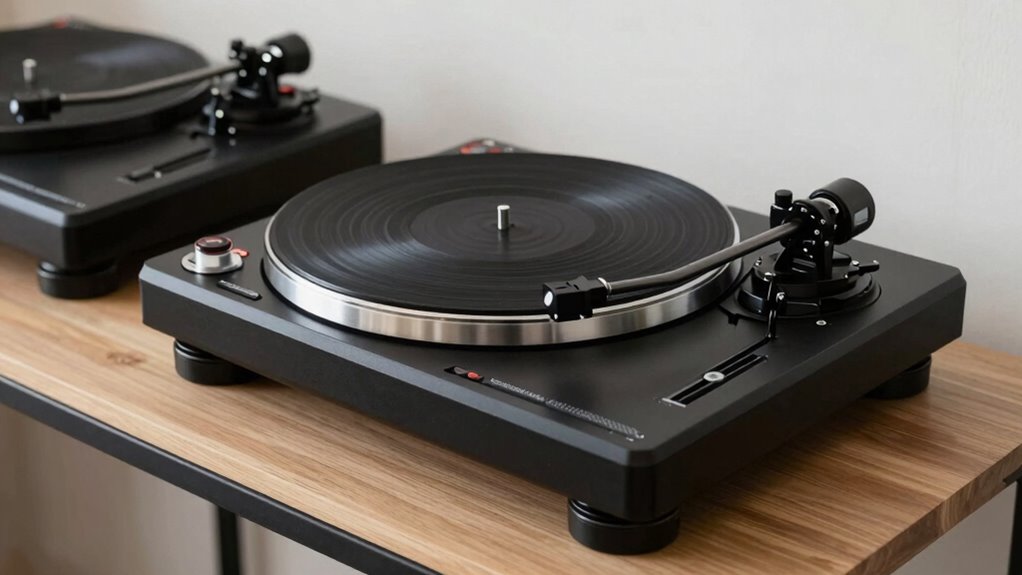
Direct-drive turntables are known for their quick start-up times and precise speed control, making them popular among DJs and enthusiasts. Their direct motor attachment guarantees consistent torque, which helps maintain stable playback, benefiting vinyl preservation by reducing speed fluctuations. This setup also allows for better cartridge compatibility, especially with cartridges designed for high-torque environments. However, some purists argue that the motor’s direct contact can introduce vibrations, potentially impacting sound quality. While this isn’t a concern for most casual listeners, it might matter if you’re seeking the purest sound. Additionally, the robust build of direct-drive models can be less ideal for delicate home setups, but their durability and responsiveness make them a solid choice for those who prioritize performance and versatility.
What Are the Advantages and Disadvantages of Belt‑Drive Turntables?
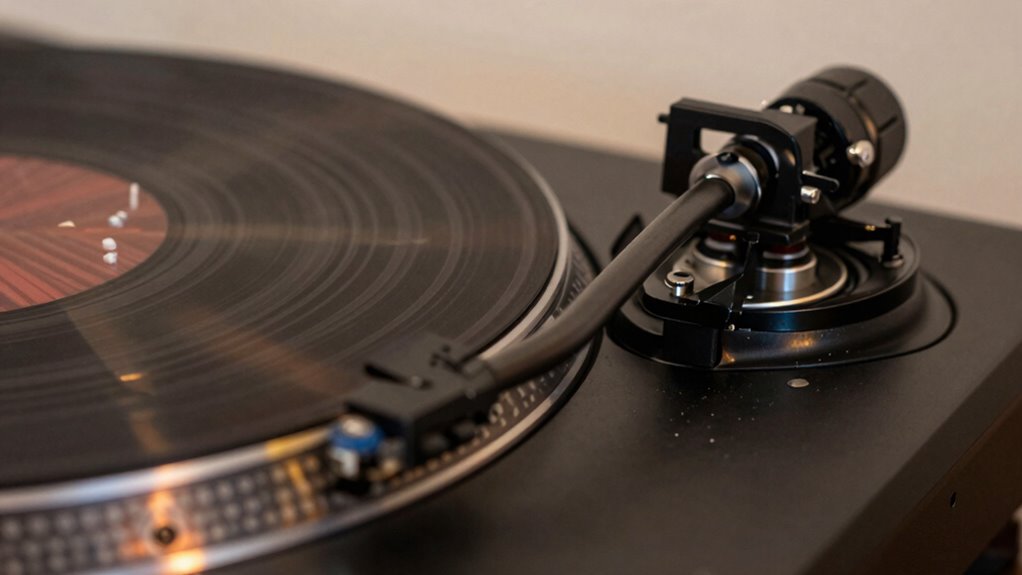
Although belt-drive turntables often feature a softer, more isolated motor setup, they offer several advantages that appeal to audiophiles and casual listeners alike. First, their design minimizes motor vibrations, helping preserve vinyl quality during playback. Second, the smoother rotation enhances sound clarity, making record cleaning and playback more satisfying. Third, belt-drive models are generally more affordable and easier to maintain, simplifying vinyl preservation. Fourth, they allow for quieter operation, reducing background noise. Additionally, the motor vibration damping contributes significantly to overall sound quality. However, belt drives can be more susceptible to belt wear and stretching over time, potentially affecting speed stability. This requires regular record cleaning and belt checks to keep your setup performing at its best. Overall, belt-drive turntables are excellent for those prioritizing sound quality and vinyl preservation.
How Do Your Budget and Price Range Affect Your Turntable Choice?

Your budget considerably influences which turntable you can afford and the features you’ll get. Budget considerations determine whether you opt for a basic model or a more advanced, high-end turntable. Your price range affects the quality of components, build, and sound performance you can expect. If your budget is limited, you might prioritize affordability over extra features, potentially choosing entry-level belt-drive or direct-drive models. Conversely, a higher budget allows for better materials, precision engineering, and additional functionalities. Keep in mind that investing more often results in improved sound quality and durability. Ultimately, understanding your budget helps you narrow down options, ensuring you select a turntable that fits your financial situation while satisfying your listening needs.
Which Drive System Is Right for Your Listening Style and Needs?

Choosing the right drive system depends on how you listen to music and what features matter most to you. If you prioritize tone quality and pitch stability, your choice becomes clearer.
Selecting the right drive system depends on your listening style and desired features for optimal sound quality.
Consider these factors:
- Tone Quality: Belt-drive turntables often produce smoother sound with less motor noise, enhancing tone quality.
- Pitch Stability: Direct-drive systems excel in maintaining consistent pitch, especially during DJing or scratching.
- Listening Style: For casual listening, belt-drive is usually sufficient; for professional or DJ use, direct-drive offers better stability.
- Maintenance & Durability: Belt-drive units typically require less maintenance, while direct-drive turntables are built for longevity and frequent use.
- Compatibility with Accessories: Depending on your setup, certain drive types may better accommodate additional components like tonearms or cartridges for an optimized experience.
Evaluate your priorities to select a system that best supports your listening experience.
Frequently Asked Questions
How Does Maintenance Differ Between Direct‑Drive and Belt‑Drive Turntables?
You’ll find that maintenance differs mainly in lubrication schedules and wear and tear. Belt-drive turntables require regular belt replacement and occasional belt lubrication to keep things smooth. Direct-drive models, on the other hand, need less frequent maintenance but may experience more wear on the motor’s components over time. Keep an eye on these parts, and follow the manufacturer’s suggested schedules to guarantee peak performance and longevity of your turntable.
Can Upgrade Options Improve the Performance of Either Turntable Type?
Imagine fine-tuning a musical instrument, and you’ll see how upgrades can transform your turntable’s performance. Both types often support upgrade compatibility, allowing you to enhance sound quality profoundly. Upgrading components like cartridges, tonearms, or motor controls can boost clarity and reduce noise. Whether you have a direct-drive or belt-drive turntable, thoughtful upgrades enable richer sound and greater listening pleasure, turning your setup into a true audiophile experience.
What Is the Typical Lifespan of a Belt in Belt‑Drive Turntables?
The typical lifespan of a belt in belt-drive turntables is about 3 to 5 years, depending on belt durability and usage. You should expect to replace it more frequently if you listen often or notice speed inconsistencies. Regular maintenance, like inspecting for cracks or slipping, helps extend its life. Replacing the belt when it shows signs of wear ensures your turntable keeps running smoothly and maintains peak sound quality.
Are There Specific Brands Known for High-Quality Direct‑Drive or Belt‑Drive Turntables?
You’ll find that brands like Technics and Denon are celebrated for their high-quality direct-drive turntables, known for their durability and precision. For belt-drive options, Rega and Audio-Technica stand out with impressive model diversity and focus on sound warmth. These brands have built strong reputations over time, making it easier for you to choose a turntable that matches your style and listening needs, ensuring many enjoyable spins ahead.
How Does Motor Noise Impact Sound Quality in Each Turntable Type?
Motor noise can markedly affect your turntable’s sound quality by increasing the noise floor and causing motor hum. In direct-drive models, you might notice more motor hum due to the motor being directly attached to the platter, but modern designs reduce this issue. Belt-drive turntables generally produce less motor noise, resulting in a cleaner sound. Your choice depends on balancing motor hum and overall sound clarity for your listening experience.
Conclusion
Ultimately, whether you choose a direct‑drive or belt‑drive turntable depends on your listening habits and priorities. As you sit back and enjoy your favorite vinyl, it’s like discovering a new layer of sound you didn’t notice before. Sometimes, the best choice feels like a lucky coincidence—aligning perfectly with your needs just when you didn’t realize what you were missing. Trust your instincts, and your perfect turntable will find you.