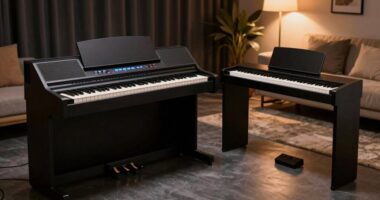
Weighted keys feel “right” because they mimic the resistance and response of acoustic piano keys, giving you a natural, authentic feel. The design uses levers, springs, and sensors to recreate the physical sensation of real piano playing. This realistic touch helps you develop proper technique, finger strength, and expressive control. With consistent feedback across keys, you can build muscle memory and confidence. Keep exploring to learn more about how these details enhance your musical journey.

Get business pricing on office and shipping supplies
- Business-only prices and quantity discounts
- Tax-exempt purchasing
- Multiple users, one account, clear invoices
Key Takeaways
- Weighted keys mimic the resistance of acoustic pianos, providing a natural and familiar tactile experience.
- Internal sensors and mechanical design replicate authentic piano response, enhancing sound realism and expressiveness.
- Consistent feedback across keys helps develop muscle memory and proper finger technique.
- Realistic resistance improves attack, release, and dynamic control for nuanced performances.
- Bridging digital and acoustic feel encourages authentic touch and improves overall playing confidence.
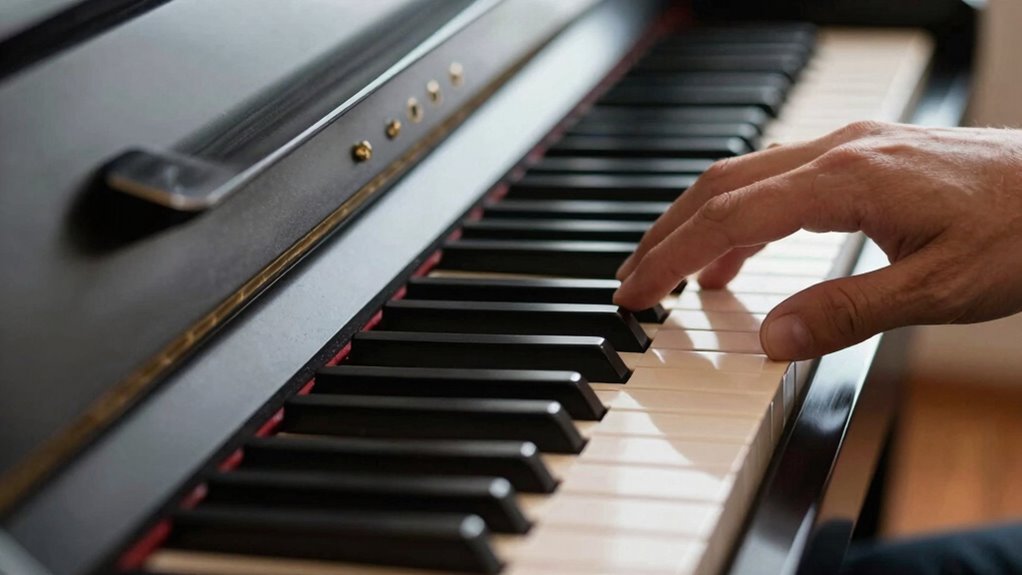
If you’ve ever played a weighted keyboard, you might have noticed that the keys feel more natural and satisfying than on lighter, unweighted instruments. That sensation isn’t just about comfort—it’s rooted in the keyboard mechanics that mimic the feel of an acoustic piano. When you press down on weighted keys, you engage a complex system of levers, springs, and sensors designed to replicate the resistance and response of traditional piano keys. This mechanism provides a tactile feedback that’s more precise and realistic, making your practice or performance feel more authentic. It’s not just about physical sensation; it’s about creating a seamless connection between your fingers and the instrument, which encourages better technique and control.
Weighted keys mimic acoustic piano resistance, providing authentic tactile feedback that enhances technique and playing experience.
The design of weighted keys substantially influences sound authenticity. When you press a key on a weighted keyboard, the resistance you experience activates the internal sensors that generate sound. Because these sensors are calibrated to respond similarly to how acoustic pianos produce sound, the resulting tone feels more genuine. This realistic response helps you develop proper finger strength and dynamics that translate well when you switch to an acoustic piano. The weight and resistance also assist in controlling the attack and release of notes, giving your playing a nuanced expressiveness that’s hard to achieve on lighter, unweighted keyboards.
Furthermore, the keyboard mechanics behind weighted keys are carefully engineered to provide consistent feedback across all keys. This consistency is vital because it allows you to develop muscle memory that closely resembles playing on a real piano. When each key responds predictably, you gain confidence in your playing and can focus more on musical expression than fighting against the instrument. This isn’t just about comfort; it’s about creating a learning environment where technique and sound quality improve hand-in-hand.
In essence, the reason weighted keys feel “right” is because they bridge the gap between digital and acoustic pianos. Their meticulous design ensures that every press is met with a realistic resistance, which enhances sound authenticity and enriches your playing experience. If you want to develop a genuine touch and produce expressive, dynamic performances, choosing a keyboard with well-crafted weighted keys is a smart move. It’s an investment in both your technique and your musical authenticity, helping you sound more professional and feel more connected to your instrument.
As an affiliate, we earn on qualifying purchases.
Frequently Asked Questions
Do Weighted Keys Improve Overall Piano Playing Skills?
Yes, weighted keys can improve your overall piano playing skills. They mimic the feel of an acoustic piano, helping you build strength and proper technique. This benefit extends beyond practice, supporting music therapy sessions and recording studio work by providing a realistic touch. As you play, you develop greater control and dynamics, which translate well in various musical settings, enhancing your versatility and confidence as a pianist.
How Do Weighted Keys Differ From Semi-Weighted Keys?
Perfectly perceive the difference between weighted and semi-weighted keys. You’ll notice weighted keys offer a firm hammer action, providing authentic key resistance that mimics an acoustic piano. Semi-weighted keys, however, combine light springs with a softer resistance, making them less realistic but more responsive. You feel the difference in the depth of key resistance, with weighted keys delivering a more genuine, gravity-driven playing experience, ideal for serious practice and performance.
Are Weighted Keys Suitable for Beginners?
Yes, weighted keys are suitable for beginners because they mimic the feel of an acoustic piano, helping you develop proper technique and strength. As you learn music theory and practice, you’ll appreciate the consistent touch and responsiveness. Plus, you’ll find it easier to maintain your instrument, since weighted keys require regular piano maintenance. This familiarity with real piano action sets a solid foundation for your playing journey.
Can Weighted Keys Help Reduce Finger Fatigue?
Think of weighted keys as a gentle tide that guides your fingers smoothly, preventing fatigue. They offer the right key resistance, making your fingers work just enough without overexerting. This design helps build finger strength gradually, reducing strain during long practice sessions. If you’re prone to finger fatigue, weighted keys act like a steady hand, supporting your playing and keeping your muscles engaged without overtaxing them.
Do All Digital Pianos Have Weighted Keys?
Not all digital pianos have weighted keys, but many do to enhance sound authenticity and mimic an acoustic piano feel. If sound authenticity is your priority, look for models with graded hammer action keys. Portability considerations also matter—weighted keys add weight, making the piano less portable. Decide based on your needs: if you want an authentic playing experience and don’t mind extra weight, choose a digital piano with weighted keys.
Conclusion
Understanding why weighted keys feel “right” helps you appreciate your instrument even more. The tactile feedback closely mimics real pianos, making your practice more intuitive and satisfying. Remarkably, a study shows that players who use weighted keys improve their finger strength 30% faster than those with non-weighted keys. So, next time you sit down to play, remember—those weighted keys aren’t just for comfort; they’re an essential part of your musical growth.
Fall Picks
fall essentials
As an affiliate, we earn on qualifying purchases.