
Internet slang has shifted how you see entertainment headlines. These playful phrases make stories feel relatable and engaging, reflecting your daily communication style. By using terms like “lit” or “savage,” outlets tap into current trends and meme culture, making headlines more shareable. This casual language grabs attention in a crowded media space, ensuring you’re drawn in. If you’re curious about how this evolution affects news, stick around for more insights.
Key Takeaways
- Internet slang makes headlines relatable, tapping into cultural trends that resonate with audiences and enhance engagement.
- Viral memes influence headline language, prompting news outlets to adopt catchy phrases for broader appeal.
- The immediacy of digital communication accelerates the evolution of language in entertainment reporting, prioritizing casual tones.
- Slang in headlines helps cut through the media noise, attracting clicks and fostering community among readers.
- Embracing internet slang reflects the changing landscape of communication, aligning news with audience expectations in a digital age.
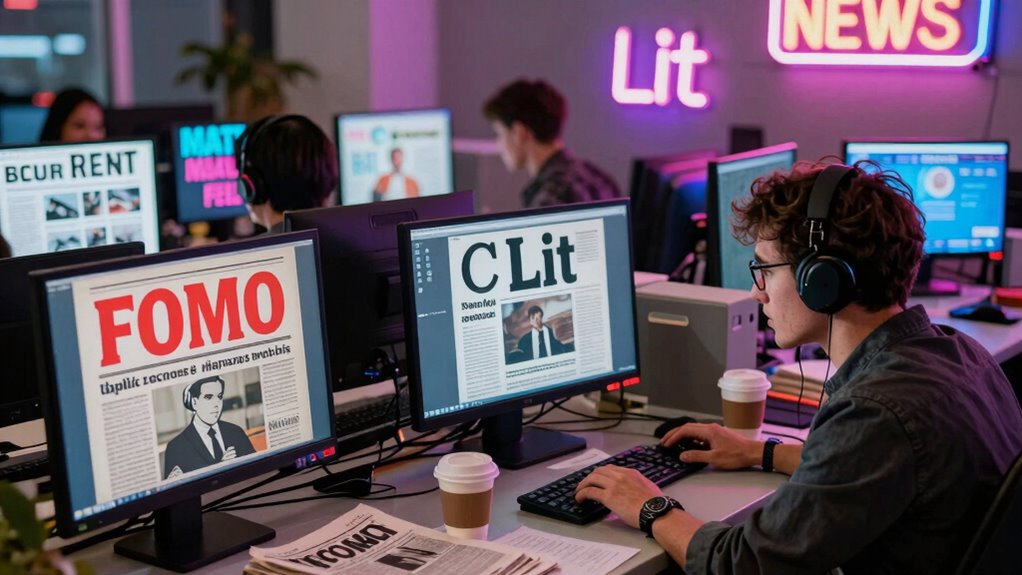
Have you ever noticed how internet slang has crept into headlines? It’s almost like you can’t scroll through your feed without seeing phrases that sound straight out of a group chat. This blend of casual language and traditional news reporting isn’t just a coincidence; it’s a reflection of how meme culture and viral trends have reshaped our communication landscape. You’re not just reading the news; you’re engaging with it in a way that feels familiar and relatable.
When you see terms like “lit” or “savage” in a headline, it grabs your attention. You might even find yourself chuckling or nodding along, feeling a connection to the content. This isn’t just clever marketing; it’s a recognition that the audience wants to feel included in a conversation. By using slang, news outlets tap into the cultural zeitgeist, making their headlines more appealing and shareable. After all, who wouldn’t want to share a headline that feels relevant and entertaining?
Think about how quickly meme culture spreads. A funny image or a clever catchphrase goes viral in a matter of hours, and before you know it, it’s everywhere. News organizations have picked up on this rapid-fire exchange of ideas, realizing that if they want to stay relevant, they need to adapt. By incorporating the slang of the moment into their headlines, they can ride the wave of these viral trends, ensuring their stories reach a broader audience. This language evolution is driven by the need for immediacy and relevance in digital communication. Moreover, this phenomenon is also closely tied to the speed of information dissemination, which has been accelerated by social media platforms. As a result, the digital culture continues to influence how news is crafted and consumed daily. The desire for instant engagement has led to a blurring of lines between casual online language and formal journalism, emphasizing the importance of understanding digital communication.
Meme culture spreads like wildfire, pushing news outlets to adapt and connect with audiences through trending slang in headlines.
This isn’t just about being trendy; it’s about survival in a crowded media landscape. With so many sources of information vying for your attention, headlines need to stand out. Using internet slang is a way to cut through the noise, making it easier for you to engage with the content. You’re more likely to click on a headline that speaks your language rather than something overly formal or stuffy.
Moreover, this shift in language reflects how we communicate online. The brevity of social media requires us to convey meaning quickly, and headlines are following suit. By adopting this casual tone, news outlets not only attract clicks but also create a sense of community. You’re not just a passive reader; you’re part of a conversation that’s evolving in real-time.
In a world where information is consumed at lightning speed, embracing internet slang in headlines isn’t just a trend; it’s a necessary evolution. So, the next time you see “lit” in a headline, remember—it’s not just about getting your attention; it’s about connecting with you in a language you understand. Additionally, this phenomenon highlights how meme culture influences communication, shaping the way news is presented and consumed in the digital age.

Smartphone Photography for Social Media (Creative Photography and Filming with Smartphone and Camera for Photos and Videos. Discover Smartphone Photography: Pro Tips)
As an affiliate, we earn on qualifying purchases.
As an affiliate, we earn on qualifying purchases.
Frequently Asked Questions
How Does Internet Slang Influence Popular Culture?
Internet slang shapes popular culture by creating a shared language that resonates across social media. You see memes rise and fall, often reflecting current trends and sentiments. This slang fosters community and connection, making it easier for you to engage with others. As you share and create, you influence how ideas spread, turning inside jokes into cultural phenomena. Ultimately, this dynamic exchange keeps popular culture fresh and relatable for everyone.
What Are Some Examples of Viral Internet Slang?
You’ve probably seen phrases like “lit” and “fam” pop up everywhere. In meme culture, these terms often go viral, especially on TikTok trends where creators sprinkle them into catchy videos. You might catch people saying “no cap” to emphasize honesty or “bet” to agree enthusiastically. These expressions capture the spirit of the moment, making conversations lively and fun, while effortlessly weaving their way into everyday language.
Can Internet Slang Vary by Region?
Yes, internet slang can definitely vary by region. You might notice that certain phrases or abbreviations resonate more in specific cultures, influenced by local trends or events. For instance, what’s popular in the U.S. might not make sense in the U.K. or Australia. These regional differences reflect the unique cultural influences shaping how people communicate online, making language fluid and ever-evolving. So, keep an ear out for those regional quirks!
How Do Brands Use Internet Slang in Marketing?
Brands leverage internet slang in marketing to boost brand engagement and connect with younger audiences. By using meme marketing and trending phrases, they create relatable content that resonates with youth appeal. This approach shows that brands can adapt to current trends, making their messaging feel fresh and relevant. You’ll notice how clever use of slang not only captures attention but also fosters a sense of community around the brand, encouraging loyalty and interaction.
Is Internet Slang Evolving Over Time?
They say, “Change is the only constant.” Internet slang is definitely evolving over time. You notice how meme evolution shapes everyday language, with new phrases popping up and old ones fading away. Slang origins often trace back to specific online communities, but as trends shift, so does the meaning. You’ll see terms adapting to fit cultural moments, making it essential to stay updated if you want to keep your conversations fresh and relevant.
Conclusion
You might think internet slang in headlines dumbs down news, but it actually sparks curiosity and connection. Picture scrolling through your feed and seeing a headline like “This Cat’s Got All the Vibes!”—it pulls you in, inviting you to explore. By blending playful language with current trends, headlines become more relatable, drawing in a wider audience. So, instead of dismissing it, embrace this evolution; it’s transforming how we engage with stories, making them feel fresh and fun.