
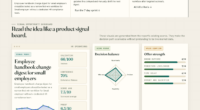
📊 Full opportunity report: AI Trading Bot — Week Two: The candidate edge collapsed on ThorstenMeyerAI.com — validation score, market gap, and execution plan.

Get business pricing on office and shipping supplies
- Business-only prices and quantity discounts
- Tax-exempt purchasing
- Multiple users, one account, clear invoices
TL;DR
After a promising start, the AI trading bot’s main strategy lost nearly all gains in a single night, nullifying earlier signs of edge. The overall fleet now faces significant losses, raising doubts about the viability of these approaches.
Last night, the AI trading bot’s leading BTC fair-value strategy lost roughly $850 in a single overnight session, erasing its previous gains and confirming that the initial positive signals were likely coincidental. This marks a significant setback for the project, which had been cautiously optimistic about its early results.
The primary strategy, which showed a low win rate but large asymmetric payouts, had been the only candidate to demonstrate potential edge after analyzing approximately 700 paper trades. However, after the recent loss, the strategy’s equity has plummeted from around $800 to nearly $2, indicating a complete wipeout of its initial success.
Additionally, a backup hypothesis involving a maker-quoter approach was tested mid-week but was also thoroughly falsified, finishing the week at just $0.49 in equity with a 22% win rate over 120 trades. Overall, the entire fleet of 25 parallel experiments now stands at roughly -33% of the initial bankroll, with aggregate paper P&L around -$2,500 on $7,500 deployed.
These results suggest that the previously observed edge was likely a statistical anomaly rather than a sustainable strategy, as the shape of the performance changed during the collapse, with payout sizes shrinking and losses increasing.
Implications for AI Trading Strategy Development
This development underscores the difficulty of reliably identifying trading edges in short-duration binary markets, especially when early signals may be due to chance. The collapse of the leading strategy and the failure of backup approaches highlight the risks of overfitting and the importance of extensive testing before deploying strategies with real capital. For traders and developers, it serves as a cautionary tale that winning a few trades does not guarantee profitability, and that statistical signatures can be misleading when sample sizes grow or market conditions change. The findings challenge the assumption that simple mathematical models can consistently outperform the market in such environments, emphasizing the need for more robust, adaptive approaches.As an affiliate, we earn on qualifying purchases.
Previous Results and Testing Framework
The project involved testing roughly 700 paper trades across 21 different strategies on Polymarket’s 5-minute Up/Down markets. Building an AI Trading Bot — Week One: Why a 90 % Win Rate Can Still Lose Money The initial positive signal came from a single BTC fair-value strategy, which showed a low win rate but large asymmetric payouts, suggesting potential edge. This strategy was cautiously monitored, with about 250 settled trades initially indicating some positive performance. However, subsequent testing with an additional 500 trades revealed a complete reversal, with the strategy losing nearly all gains and the payout structure shifting unfavorably. Other strategies, including wide-band BTC sniper variants and alt fair-value experiments, also failed to demonstrate profitability, with all ending the week in the red. The overall fleet’s performance has been negative, casting doubt on the reliability of these approaches. Building an AI Trading Bot — Week One: Why a 90 % Win Rate Can Still Lose Money“The collapse across the entire fleet confirms that the initial edge was likely a statistical fluke rather than a genuine advantage.”
— Thorsten Meyer
Unconfirmed Aspects of Strategy Performance
It is not yet clear whether any of the tested strategies might recover or demonstrate genuine edge over a longer time frame. The current results are based on a limited sample size, and further testing is needed to determine if the observed failures are due to market conditions, model flaws, or statistical noise. Additionally, the impact of transaction costs, market volatility, and potential regime shifts remains to be fully understood, leaving open the possibility that some strategies could still prove viable in different contexts.Next Steps for Strategy Validation and Testing
Further testing with larger sample sizes and varied market conditions will be conducted to assess whether any strategies can demonstrate sustainable edge. Building an AI Trading Bot — Week One: Why a 90 % Win Rate Can Still Lose Money Developers will also explore more adaptive models that can better respond to changing market dynamics. The project team plans to pause deployment of current strategies with real capital until more robust evidence of profitability is obtained. Additionally, they will analyze the reasons behind the recent failure to refine their models and avoid similar pitfalls in future iterations.
Key Questions
Does the recent loss mean the AI trading bot is a failure?
The recent loss indicates that the tested strategies do not currently have sustainable edge, but it does not necessarily mean the entire approach is invalid. Further testing and model refinement are needed.
Can these strategies recover or improve in the future?
It is uncertain at this stage. Longer-term testing and adjustments to the models are required to determine if any strategies can demonstrate genuine profitability.
What lessons does this development provide for algorithmic trading?
It highlights the importance of extensive sample sizes, understanding payout structures, and avoiding overfitting to short-term signals. Strategies must be rigorously tested before real capital deployment.
Will the project continue testing other strategies?
Yes, the team plans to develop and test new models, focusing on adaptive approaches and larger datasets to better identify genuine edges.
Source: ThorstenMeyerAI.com
Halloween Picks
halloween
As an affiliate, we earn on qualifying purchases.