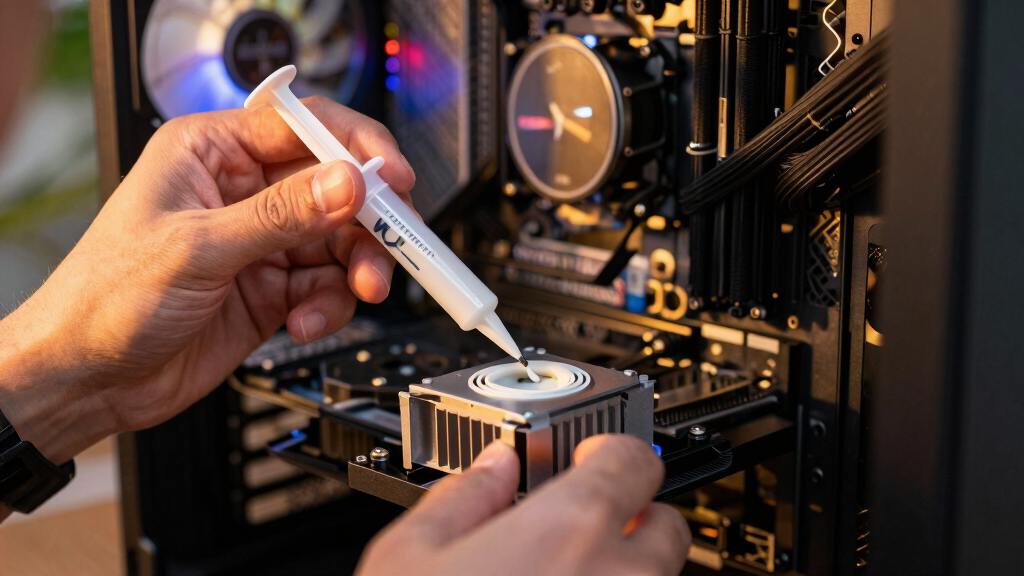

📊 Full opportunity report: Best Thermal Paste and Pads for High-TDP GPUs on ThorstenMeyerAI.com — validation score, market gap, and execution plan.
TL;DR
This article reviews the best thermal pastes and pads for high-TDP GPUs, emphasizing long-term stability under continuous load. Honeywell PTM7950 is recommended for sustained 24/7 operation, while other options offer easier application or premium performance.
Honeywell PTM7950 phase-change material is identified as the top choice for high-TDP GPUs running continuously, due to its resistance to pump-out and long-term stability, according to recent testing and user reports.
Traditional thermal pastes are often selected based on initial temperature drops, but for high-TDP, 24/7 GPUs, long-term stability matters more. PTM7950, a phase-change material, remains stable over years of continuous operation, resisting pump-out and thermal degradation. Arctic MX-6 offers an easy-to-apply, durable traditional paste suitable for users seeking a reliable, low-maintenance solution, lasting around 8-10 years. Noctua NT-H2 is a premium traditional paste known for consistent performance and durability. The Thermal Grizzly Kryosheet, a graphene reusable pad, provides a long-lasting, reusable option but requires careful handling due to its electrical conductivity. Experts agree that for sustained workloads, materials that resist pump-out outperform standard pastes that may dry or degrade over time, leading to increased temperatures and potential throttling or hardware issues.Best thermal paste
for a high-TDP GPU.
The standard “coldest on day one” advice is wrong for a 24/7 rig. Continuous heat slowly squeezes traditional paste out — a failure called pump-out — so the real question is what stays cold for years.
Why Long-Term Thermal Stability Is Critical for AI GPUs
For high-power, continuous workloads like AI inference, maintaining stable GPU temperatures over years is essential to prevent thermal throttling, hardware degradation, and increased noise. Using the right thermal interface material can extend GPU lifespan, reduce maintenance, and ensure consistent performance, making this choice a key factor in professional and enterprise GPU setups.As an affiliate, we earn on qualifying purchases.
Thermal Interface Material Choices for High-TDP GPUs
Most consumer-grade thermal pastes are optimized for gaming GPUs that cycle between load and idle, leading to pump-out and drying over time. For AI and continuous workloads, thermal interface materials must withstand sustained high temperatures and thermal cycling. Honeywell PTM7950 has gained recognition for its phase-change properties that resist pump-out, making it ideal for long-term use. Traditional pastes like Arctic MX-6 are easier to apply and last several years, but may require reapplication sooner under continuous load. Reusable pads like Thermal Grizzly Kryosheet offer a maintenance-free alternative but demand careful handling due to electrical conductivity. The choice of thermal interface impacts GPU longevity, performance stability, and noise levels in high-demand environments."Our Kryosheet graphene pad is designed for durability and reusability, but requires precise application due to its electrical conductivity."
— Thermal Grizzly technical team
Long-Term Performance Data for Phase-Change Materials
While PTM7950 is highly rated for long-term stability, extensive real-world data over multiple years is still emerging. Some users report variability in performance depending on application and operating conditions, and official long-term studies are limited.Monitoring and Updating Thermal Material Recommendations
Manufacturers are expected to release further long-term testing data, and new materials may enter the market. Users should stay informed about updates, re-evaluate their cooling solutions periodically, and consider reapplication or replacement as part of routine maintenance for high-TDP GPU setups.Key Questions
Can I use regular thermal paste for a 24/7 high-TDP GPU?
Regular thermal pastes may degrade faster under continuous high load, leading to increased temperatures over time. For sustained workloads, materials like phase-change compounds or high-quality pastes designed for long-term stability are recommended.
Is applying phase-change material more difficult than traditional paste?
Yes, phase-change materials like PTM7950 require cutting and placement rather than squeezing from a tube, but they offer superior long-term stability for continuous operation.
Are reusable thermal pads safe for high-TDP GPUs?
Reusable pads like Kryosheet can be effective, but due to their electrical conductivity, they require precise application and handling to avoid short circuits.
How often should I reapply thermal interface material in a high-TDP, 24/7 setup?
Materials like Arctic MX-6 typically last 8-10 years, but monitoring GPU temperatures and reapplying if temperatures rise significantly is advisable. Phase-change materials may require less frequent reapplication.
What is the main advantage of using PTM7950 over traditional pastes?
PTM7950 resists pump-out and maintains low thermal resistance over years of continuous operation, making it ideal for high-TDP, long-term workloads.
Source: ThorstenMeyerAI.com