📊 Full opportunity report: Are Your Skincare Products Working? Check Your Progress Photos on IdeaNavigator AI — validation score, market gap, and execution plan.

Get business pricing on office and shipping supplies
- Business-only prices and quantity discounts
- Tax-exempt purchasing
- Multiple users, one account, clear invoices
TL;DR
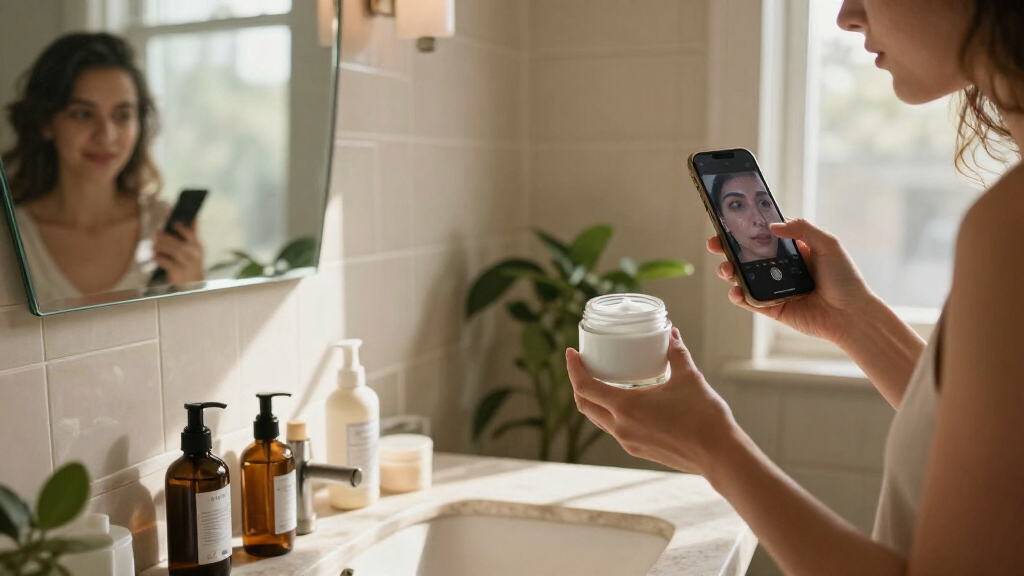
IdeaNavigator AI has outlined a product concept that would use guided weekly selfies to track changes in skin texture, tone and blemishes. The proposal suggests testing it with 500 users over 12 weeks, but no completed trial, accuracy results or working product are reported.
IdeaNavigator AI has proposed a skincare-tracking app that would use guided weekly selfies to measure changes in skin texture, tone and blemishes. The concept targets people spending money on routines without a clear way to tell whether products are helping, but it is a product proposal, not evidence that such an app has been tested or shown to work.
The proposed app would guide users through taking photos under more consistent conditions, including help with image alignment and lighting normalization. It would then score selected skin characteristics over time and let users annotate when they start, stop or change products. The intended report would show which routine changes came before measurable shifts in the tracked metrics.
IdeaNavigator AI frames the potential customer as a skincare user who spends roughly $50 to $200 a month on products but judges progress from memory and the changing appearance of skin under bathroom lighting. That spending range is part of the proposal’s description of the problem; no survey methods or independent market data are provided to establish how typical it is.
For validation, the proposal recommends a 12-week cohort of 500 users, comparing the app’s measurements with dermatologist assessments of photos for a subsample and tracking user retention. These are suggested study details, not reported results. The proposal does not identify an operating app, a study sponsor, a launch date or any measured accuracy figures.
Why Consistent Skin Tracking Matters
Skin changes can be gradual, and appearance in a photograph can vary with lighting, angle and distance from the camera. A guided capture process could make comparisons more consistent than relying on recollection or casual selfies. If validated, this kind of record might help users notice changes they would otherwise miss and make more informed decisions about whether to keep or change a routine.
But a score would not, by itself, establish that a specific product caused an improvement. Skin may change for reasons unrelated to a new product, and the proposed system would need to show that its measurements are reliable across different skin types, devices and capture conditions. The commercial plan also proposes subscriptions and affiliate revenue from products associated with user improvement. That creates a reason to make clear how product recommendations are selected and whether paid relationships affect them.
For readers, the immediate news is not a new proven skincare tool. It is a proposed way to test whether photo-based tracking can address a common measurement problem. Until results are published, consumers should not treat the concept’s projected metrics as proof that a product works or that an app can assess skin health.
As an affiliate, we earn on qualifying purchases.
From Skincare Routine to Photo Record
The concept responds to a practical difficulty: many routines involve multiple products, while visible changes may take time and everyday photos are not captured under controlled conditions. A person can therefore have trouble separating a real change from differences in lighting, camera position or memory. The proposal’s answer is to make weekly capture repeatable and pair the images with a record of routine changes.
The suggested measurements are texture, tone evenness and blemish counts. Those are proposed tracking categories, not confirmed capabilities of a released product. The proposal also describes models that could quantify changes, but supplies no technical description, benchmark data or evidence that the measures match professional assessments.
Its proposed comparison with dermatologist photo assessments would be one step toward testing whether app scores correspond to human evaluations. A subsample review, however, would not automatically establish performance for every user or every skin concern. The proposal does not specify how participants would be recruited, what products they would use, or how the study would account for other influences on skin.
Accuracy and Trial Status Remain Unknown
No trial findings, dermatologist comparisons or user-retention results are reported. It is not clear whether development has started, whether the proposed 500-person cohort has been recruited, or when the concept might be tested. The proposal also does not specify how the app would handle different skin tones, camera quality, medical conditions, or changes caused by factors beyond skincare products.
Even if a photo metric changes, the reason for that change may remain uncertain. Establishing whether an individual product caused improvement would require a study design capable of separating that product’s effects from other routine changes and normal variation. The proposal describes tracking associations between routine changes and later measurements; it does not report a method for proving causation.
A Trial Would Test the Concept
The next meaningful development would be a disclosed pilot or study with a clear protocol, participant details and results. The proposed plan calls for 12 weeks of weekly image capture, comparison of app scores with dermatologist assessments for some participants, and measurement of retention. Whether that study will take place, and who would conduct it, has not been stated.
Readers assessing any eventual product should look for published information on measurement accuracy, the range of users included, privacy and handling of face photos, and how commercial recommendations are separated from tracking results. Until those details and trial findings are available, the concept remains a proposal rather than a validated way to decide whether skincare products are working.
Source: IdeaNavigator AI
Key Questions
Is there a tested app available?
The proposal describes an app concept, but does not report a released product or completed testing.
What would the app track?
It proposes using weekly guided photos to score skin texture, tone evenness and blemish counts, while allowing users to record routine changes.
Has the proposed 500-person study started?
No study start or results are reported. A 12-week cohort of 500 users is presented as a validation plan.
Would a better photo score prove a product works?
No. A change in a tracked measure would not by itself establish that a particular product caused it. Other routine changes and natural variation could also affect results.
Source: IdeaNavigator AI
Halloween Picks
halloween
As an affiliate, we earn on qualifying purchases.