
🔍 Read the full analysis: 10 Graphics Cards To Weigh For Your 2027 Gaming And Work Setup on ThorstenMeyerAI.com

Get business pricing on office and shipping supplies
- Business-only prices and quantity discounts
- Tax-exempt purchasing
- Multiple users, one account, clear invoices
TL;DR
A ThorstenMeyerAI.com roundup compares 10 graphics cards for prospective gaming and work setups, spanning current high-end models, midrange options and older display-focused cards. It highlights tradeoffs in performance, memory, cooling and compatibility, but provides no independent benchmark data or prices to establish which card is best value in 2027.
ThorstenMeyerAI.com has outlined 10 graphics cards for people planning gaming and work PCs, ranging from the high-end ASUS ROG Astral GeForce RTX 5080 to older cards such as the Radeon RX 550 and GeForce GT 730. The guide sorts the options by intended use, but its recommendations are not backed in the supplied material by benchmark results, prices or a stated testing date, leaving readers to verify performance and availability before buying.
The guide names the ASUS ROG Astral GeForce RTX 5080 as its premium option, citing ray-tracing capability, cooling and overclocking headroom. It positions the ASUS Dual GeForce RTX 5060 Ti as a midrange choice and says the series includes a 16GB GDDR7 configuration. The roundup also includes the AMD Radeon RX 9070 XT as an alternative for rasterization-heavy gaming.
The other products identified in the source are the PNY RTX 5080, an unspecified RTX 9070 model, the RTX 3060, VisionTek RX 580, RX 550 and GT 730. The source gives no model-specific prices or comparative frame rates for these cards, and it does not spell out a complete product-by-product ranking. Its advice is to match a card to workload, memory needs, power supply and case space.
For its selection method, the guide says it considered GPU architecture, memory bandwidth and thermal performance, along with build quality, connectivity and form factor. It favors newer architectures and cards with at least 8GB of memory for gaming models. Those criteria are the guide’s stated approach; the supplied text does not include test methodology, benchmark charts or evidence that each card was tested directly.
The 10 picks
- 1
 ASUS ROG Astral GeForce RTX 5080 OC Edition 16GB GDDR7 Graphics CardView on Amazon →
- 2
 PNY NVIDIA GeForce RTX 5080 OC Triple-Fan Graphics CardView on Amazon →
- 3
 ASUS Prime Radeon RX 9070 XT 16GB GDDR6 OC Edition Gaming Graphics CardView on Amazon →
- 4
 ASUS Prime Radeon RX 9070 EVO 16GB GDDR6 OC Gaming Graphics CardView on Amazon →
- 5
 ASUS Dual GeForce RTX 5060 Ti 16GB GDDR7 White OC Edition Graphics CardView on Amazon →
- 6
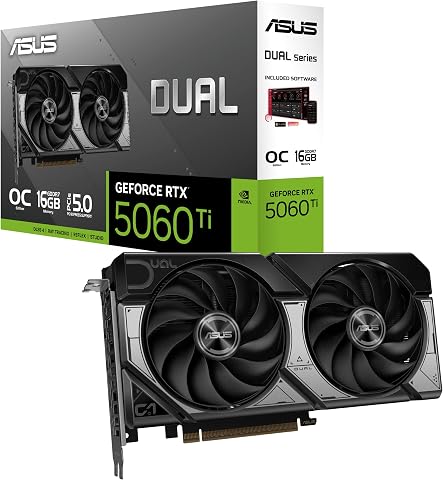 ASUS Dual GeForce RTX 5060 Ti 16GB GDDR7 OC Edition Gaming Graphics CardView on Amazon →
- 7
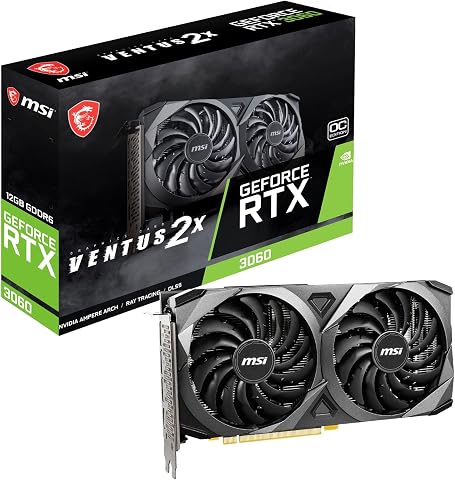 MSI GeForce RTX 3060 Ventus 2X 12G OC V1 Graphics CardView on Amazon →
- 8
 VisionTek AMD Radeon RX 580 8GB Graphics Card with 6 Mini DisplayPort OutputsView on Amazon →
- 9
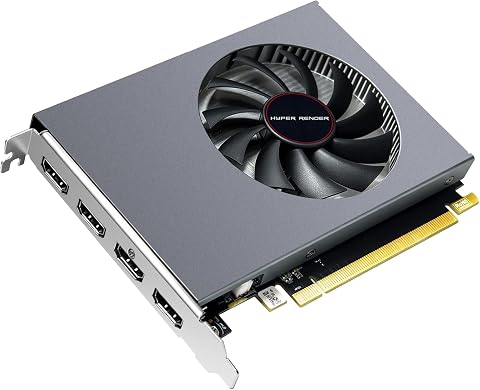 RX 550 4GB GDDR5 Graphics Card 4 HDMI GPU Tarjeta Gráfica 4 Port Video cardView on Amazon →
- 10
 Vandossy GeForce GT 730 4GB GDDR5 Graphics Card with 4 HDMI PortsView on Amazon →
Matching GPUs to Real Workloads
The list underscores how different a graphics card purchase can be depending on the job. A high-end GPU may suit demanding games or creative applications, while older budget models can still serve basic display tasks. Treating those categories as interchangeable could leave a buyer with hardware that does not meet their performance needs.
Compatibility can affect the total cost as much as the card itself. The guide warns that larger, high-power models may require more case clearance and a stronger power supply; a compact midrange card may be easier to install but could have different cooling behavior. Buyers using editing, rendering or AI software also need to check which vendor’s tools their applications support, rather than relying on gaming specifications alone.
Popular right now

Ninja CREAMi Scoop & Swirl 13-in-1 Ice Cream and Soft Serve Maker, NC701

Roborock F25 BX Cordless Wet/Dry Vacuum Cleaner

Apple AirPods Pro 3 Wireless Earbuds with Active Noise Cancellation
As an affiliate, we earn on qualifying purchases.
What the Guide Compares
The source divides the candidates across several hardware generations. It describes the RTX 50-series as using NVIDIA Blackwell architecture and the RX 9000-series as using AMD RDNA 4, contrasting them with older cards such as the RTX 3060 and RX 580. This is a buying-guide comparison, not news of a product launch or a reported change in prices.
Memory is another focus: the guide points to 16GB configurations on the RTX 5060 Ti and RX 9070 family, and says higher-capacity memory may help with demanding games. It also notes that multi-display connections can make a legacy card such as the VisionTek RX 580 useful in a workstation, even when it is not a strong fit for current games. The source does not provide independent compatibility checks or details on current driver support for each product.
“I evaluated these graphics cards based on three primary criteria: architectural generation, memory bandwidth, and thermal efficiency.”
— ThorstenMeyerAI.com guide
Prices and Test Results Missing
The supplied guide does not state prices, regional availability, benchmark settings or test results, so readers cannot use it to verify relative value or quantify performance differences. It also does not identify a testing date, an exact RTX 5060 Ti model for every specification, or full specifications for all 10 entries.
Several broad claims need additional qualification. For example, the guide says older cards lack support for newer features or games, but gives no specific game, driver version or software test. It also presents power-supply guidance without model-specific manufacturer recommendations. Readers should check current specifications, software requirements, driver status and PSU guidance before making a purchase.
Verify Models Before Buying
The next step for shoppers is to compare current local prices and independent benchmarks for the exact card models under consideration. They should confirm memory capacity, physical dimensions, power connectors, recommended PSU capacity and outputs, then check whether the card is supported by their games and work software.
No later update, review test or price change is announced in the source material. The guide’s recommendations may need reassessment as availability, prices and software support change; until then, its list is best read as a shortlist of different hardware categories, not a definitive ranking for every 2027 setup.
Key Questions
Which card does the guide recommend for high-end gaming?
It names the ASUS ROG Astral GeForce RTX 5080, citing cooling, ray tracing and overclocking headroom. The supplied material does not provide benchmark results to independently compare that recommendation with other cards.
Does the guide establish which card is the best value?
No. It identifies the RTX 5060 Ti series as a midrange contender, but supplies no prices or price-to-performance comparisons. Value will depend on local pricing and the exact model.
Are the RX 550 and GT 730 suitable for modern gaming?
The guide characterizes them as cards for basic display output and light tasks, not modern gaming. Buyers should check the requirements of specific games and applications before relying on either card.
What should buyers verify before installing a high-end GPU?
Check the card’s length and slot clearance, power connectors, recommended PSU capacity and case airflow. Also confirm the GPU works with the software and features needed for the intended workload.
Source: ThorstenMeyerAI.com