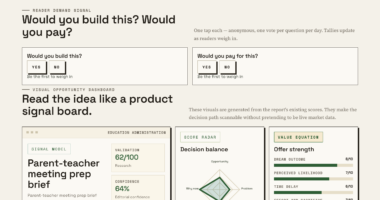
📊 Full opportunity report: Can Pro-Level Technique Benchmarks Fit Youth Sports Training? on IdeaNavigator AI — validation score, market gap, and execution plan.

Get business pricing on office and shipping supplies
- Business-only prices and quantity discounts
- Tax-exempt purchasing
- Multiple users, one account, clear invoices
TL;DR
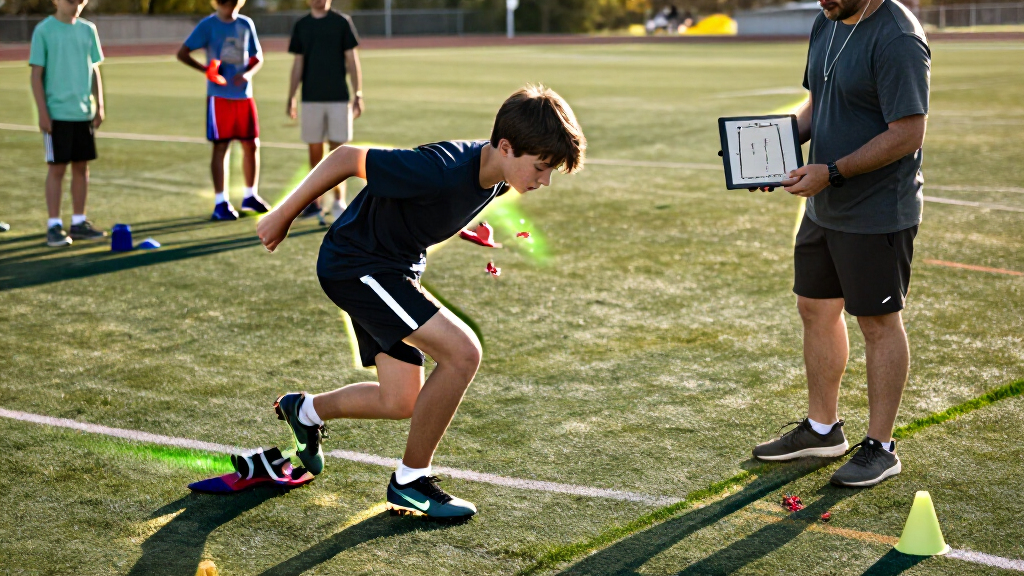
IdeaNavigator AI has outlined a proposed youth-sports app that compares a young athlete’s recorded movements with pro-derived reference mechanics and recommends one drill per session. The concept is not a launched or validated product: its suggested first test is a baseball-hitting pilot in which certified coaches review grades for 100 children.
IdeaNavigator AI has proposed a phone-based form-grading app for young athletes, with an initial test focused on baseball hitting. The concept would compare a child’s recorded mechanics with pro-derived reference movements and have certified coaches audit its grades across 100 children; no pilot results or evidence of a launched product were provided.
The proposed workflow is aimed at parents whose children practice without a private coach. A user would film a swing, throw or stride, then receive feedback on selected checkpoints such as hip rotation, release angle or stride. The app would identify what it calculates to be the largest gap and prescribe one drill per session, rather than offering a broad training plan.
IdeaNavigator AI presents the concept as a way to make technique feedback more accessible than private instruction, which it says can cost $75 to $150 per session. That price range is part of the proposal’s rationale, not an independently established measure of coaching costs across locations or sports. The concept also assumes phone-based pose-estimation models can compare a child’s movement with reference profiles accurately enough for this use; no model performance figures or test results were supplied.
The suggested business model is a family subscription for each sport, with a separate coach tier for team use. The proposal recommends starting with one sport rather than building for multiple activities at once, then comparing app grades with certified coaches’ assessments for 100 young baseball players. It does not specify a timetable, participating coaches, age range, or how the children would be recruited.
Testing Access to Technique Feedback
If the approach works as proposed, it could give families a way to review practice reps between coaching sessions, particularly where regular private instruction is unaffordable or unavailable. A tool that turns a video into a focused cue and a single drill could also help parents avoid trying to diagnose a child’s movement themselves. These are potential benefits, not outcomes established by the proposal.
The stakes are not limited to convenience. The concept argues that repeated movement flaws can become habits and may contribute to injury risk. But it supplies no injury data showing that app-based grading prevents injuries, nor evidence that matching a young athlete to pro-derived mechanics improves performance. For families and coaches, the core question is whether the feedback is accurate, age-appropriate and useful in real practice.
Coach review would be an important initial check, but agreement with coaches alone would not establish that the app improves technique or reduces harm. The proposed pilot could test whether its grades correspond with expert assessments; further evidence would be needed to determine whether children can act on the recommendations and whether their mechanics change over time.
Popular right now

Vitamix 5200 Professional-Grade Blender, 64 oz. Container, Black

TCL 65 Inch QM8L Series SQD-Mini LED QLED 4K Smart Google TV

Dyson Big Ball Multi Floor Canister Vacuum, Yellow
As an affiliate, we earn on qualifying purchases.
A Single-Sport Pilot Proposal
The proposal is framed as a narrow first test within youth sports training technology, not as a report of a completed study or product launch. Baseball hitting is the suggested starting point, with swings offering a repeatable movement that can be recorded and reviewed. The proposed checkpoints include hip rotation and other mechanics, though the exact grading criteria are not laid out.
IdeaNavigator AI says advances in phone-based pose estimation make this kind of comparison plausible. The information provided does not identify a specific model, benchmark, or independent evaluation. Nor does it explain how “pro-derived” reference mechanics would be selected, adjusted for children’s different ages and bodies, or distinguished from a single preferred style of movement.
The proposal’s validation step is therefore central to the idea: ask certified coaches to grade the same performances and compare those assessments with the app’s output. The suggested sample is 100 children in one sport. That would be an initial check of grading, not by itself proof of broad accuracy across sports, age groups or levels of experience.
Accuracy, Safety and Pilot Details
No results are available to show whether phone-based grading matches certified coaches or improves a child’s technique. The proposal does not provide accuracy thresholds, error rates, details of the reference-motion library, or safeguards for cases where a camera angle or recording quality makes a rep difficult to assess.
It is also unclear how the app would account for differences in children’s age, growth, mobility, experience and coaching goals. A pro-derived reference may not be appropriate as a direct target for every young athlete, and the proposal does not explain how coaches or families could challenge or correct a grade. Although the idea mentions injury risk, it provides no evidence that the proposed feedback would reduce injuries.
The timing and practical terms of the suggested 100-child pilot remain unspecified, including how coaches would be selected, whether assessors would review videos independently, and what measures beyond grade agreement would be collected. Product availability, subscription pricing, privacy practices for children’s videos and any plans for sports beyond baseball are also not stated.
Coach Audit Before Expansion
The next step described in the proposal is a baseball-hitting pilot in which certified coaches compare their assessments with the app’s grades across 100 children. No launch date, recruitment plan or results announcement has been provided, so it is not clear whether that test is underway or planned.
If conducted, the audit could offer an early indication of whether the system grades selected mechanics in a way that aligns with coaches. Before the idea could support broader claims about training outcomes or injury prevention, it would need additional testing, including whether children can safely and effectively use the drills and whether feedback leads to lasting changes. Expansion to other sports and a paid family or coach subscription remain proposed possibilities, not confirmed next steps.
Key Questions
Is the youth form-grading app available now?
The proposal does not say that an app has launched. It outlines a possible product and a suggested pilot, with no availability date provided.
What would the first test cover?
The suggested pilot would focus on baseball hitting and compare the app’s grades with certified coaches’ assessments across 100 children.
What feedback would the app give?
The proposed app would analyze a filmed rep, grade selected movement checkpoints and recommend one drill aimed at the largest identified gap. The exact grading rules and drills have not been specified.
Has the approach been shown to prevent injuries?
No injury-prevention results were provided. The proposal identifies injury risk as a concern but does not establish that app-based feedback reduces that risk.
Source: IdeaNavigator AI