📊 Full opportunity report: How UT Austin Police Characterized The Speedway Activity on IdeaNavigator AI — validation score, market gap, and execution plan.

Get business pricing on office and shipping supplies
- Business-only prices and quantity discounts
- Tax-exempt purchasing
- Multiple users, one account, clear invoices
TL;DR
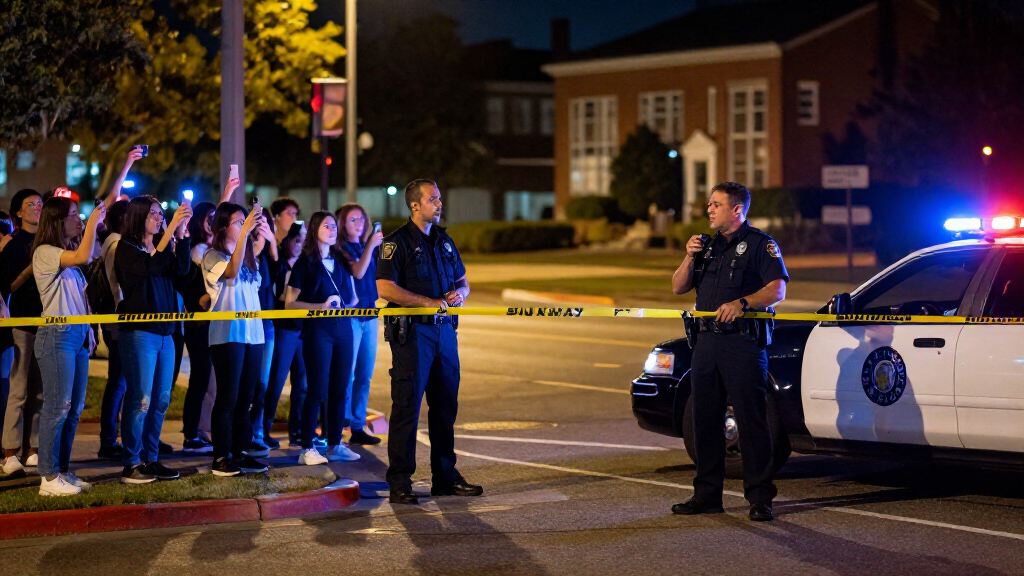
A news item summarized by IdeaNavigator AI says UT Austin police characterized activity on the university’s Speedway as a medical emergency response. The material does not provide the incident’s date, circumstances, people involved, or outcome, and no direct police statement is included.
UT Austin police characterized activity on Speedway as a medical emergency response, according to an item attributed to KEYE and summarized by IdeaNavigator AI. The available details do not identify when the response occurred or what prompted it, leaving the nature and outcome of the incident unclear.
The description identifies the activity as a medical emergency response, rather than specifying a crime, threat, or other police action. It does not say whether police, emergency medical personnel, or other responders attended, or whether anyone was treated or transported.
The item appears in an IdeaNavigator AI brief about monitoring consumer health and safety developments. The brief’s headline refers to UT Austin police and a KEYE report, but it does not reproduce a police statement or provide further reporting details from KEYE. The characterization can therefore be attributed to the brief’s account, not independently verified from the material provided here.
No information is supplied about the precise location on Speedway, the number of people involved, any injuries, or whether the response disrupted campus activity. Those details are not established by the available account.
How UT Austin Police Characterized the Speedway Activity
An IdeaNavigator AI brief says UT Austin police characterized activity on Speedway as a medical emergency response. The incident’s date, circumstances and outcome are not provided.
What the account establishes
The description is limited to the reported police characterization.
Medical emergency response
The brief attributes this characterization to UT Austin police and refers to a KEYE report.
Cause or outcome
No circumstances, medical details, treatment or transport are reported.
Attribution limits
The material includes no police statement, incident number or follow-up.
What readers still don’t know
The missing details prevent readers from assessing the event’s timing, impact or current relevance.
Incident report vs. business proposal
The brief uses the item to illustrate a proposed monitoring service; that proposal is separate from the incident.
- Reports a medical emergency response characterization
- Does not establish a continuing threat or wider public-health issue
- Does not connect the event to food, products or contamination
- Would turn health and safety developments into short briefs
- Proposes testing a brief with five target-role professionals
- Provides no evidence the test has happened or customers have adopted the service
What would clarify the story
A fuller KEYE report or direct update from UT Austin police could address the open questions.
The date, time and precise Speedway location are not supplied.
The available account does not explain what prompted the response or whether anyone received care.
No current scene status or campus impact is reported.
What the Medical Response Characterization Establishes
The description narrows what can responsibly be said about the incident: police reportedly characterized the Speedway activity as a medical emergency response. That is useful to readers seeking to distinguish a health-related response from speculation about a crime or campus threat. It does not, by itself, establish what medical condition or circumstances prompted the response.
For people on or near campus, the missing details matter. Without a date, location beyond Speedway, or information about any continuing hazard, readers cannot tell whether the event has an immediate bearing on their plans. The account also does not say whether university operations were affected or whether anyone should take further action.
IdeaNavigator AI presents the item as an example of a broader monitoring product for safety and compliance staff at consumer-health or food companies. That business proposal is separate from the incident itself: the provided information does not connect the Speedway response to a product, food, contaminant, or consumer-health finding. The event’s relevance to those industries is therefore not demonstrated in the details given.
Popular right now

Vitamix 5200 Professional-Grade Blender with 64 oz Container, Black

TCL 75-Inch QM8L Series 4K QLED Smart Google TV

Ninja Mega Kitchen System Blender and Food Processor, 1500W, 72 oz Pitcher, 8-Cup Bowl, Black (BL770)
As an affiliate, we earn on qualifying purchases.
How the Incident Was Presented
The item is framed around the wording that UT Austin police confirmed the activity was a medical emergency response, with KEYE named in the headline. IdeaNavigator AI uses it to illustrate a proposed service that collects health and safety developments and converts them into short, role-specific briefs for company safety or compliance leads.
The accompanying proposal says such findings can be scattered across news, forums, and filings, and argues that a same-day alert may be more useful to a specialist than a general weekly roundup. It gives the item a signal score of 88 out of 100, but does not explain how that score is calculated or what comparison set it uses. The score is a rating in the brief, not a measure of the incident’s severity.
IdeaNavigator AI also outlines an early validation exercise: deliver the brief alongside two other health and safety items to five people in the target job role, then see whether anyone changes a decision or forwards an item. This is a proposed test of the monitoring service, not evidence that customers have adopted it or that the Speedway incident led to a business or regulatory action.
Incident Details Still Missing
The available account does not provide the date or time of the response, the exact location, or what led police to describe it as medical. It does not name the person or people involved, describe any medical condition, or report whether anyone was injured, treated, or taken to a hospital.
It is also unclear which UT Austin police communication supports the characterization and whether KEYE reported additional information beyond the headline summarized in the brief. No direct statement, incident number, or follow-up from police is included. The current status of the scene and any effect on campus activity are not stated.
Accordingly, the account supports only the limited description that police characterized the Speedway activity as a medical emergency response. It does not establish a cause, a continuing risk, or a connection to consumer products, food safety, contamination, or a wider public-health issue.
Further Reporting Needed on Speedway
More detail would require a fuller KEYE report or a direct update from UT Austin police. The key points to confirm are when and where the response occurred, what prompted it, whether anyone received medical care, and whether the university or police reported any continuing impact.
Until such information is available, readers should treat the medical-emergency description as the reported police characterization and avoid inferring a cause or outcome. IdeaNavigator AI’s separate next step is to test its proposed monitoring brief with five safety or compliance professionals, but the brief does not say that this test has taken place or give a timetable for any follow-up on the incident.
Source: IdeaNavigator AI
Key Questions
What did UT Austin police say the Speedway activity was?
According to the item summarized by IdeaNavigator AI, police characterized it as a medical emergency response. No direct police statement is included in the available details.
When did the response happen?
The date and time are not specified in the information provided.
Was anyone injured or taken to a hospital?
The account does not say whether anyone was injured, treated, or transported for care. The outcome remains unclear.
Does the report describe a continuing threat to campus?
No continuing threat or hazard is identified in the available account. It also does not include a current status update from police or the university.
IdeaNavigator AI uses the KEYE-related item as an example in a proposal for a monitoring service aimed at consumer-health and food-company safety or compliance staff. The proposal is not evidence that the incident involved a consumer product or food-safety issue.
Source: IdeaNavigator AI