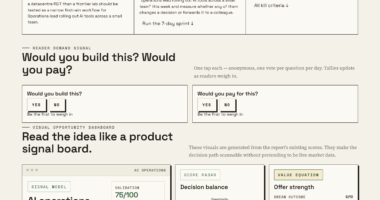
📊 Full opportunity report: Remote Work Musculoskeletal Assessments: Benefits And Best Practices on IdeaNavigator AI — validation score, market gap, and execution plan.

Get business pricing on office and shipping supplies
- Business-only prices and quantity discounts
- Tax-exempt purchasing
- Multiple users, one account, clear invoices
TL;DR

Employers are adopting remote musculoskeletal assessments to identify early MSK decline among remote workers. Using phone-based pose estimation, these tools aim to prevent costly health issues and reduce absenteeism. Pilot programs are underway to validate their effectiveness.
Remote work strength and mobility assessments are emerging as a new tool for employers aiming to prevent musculoskeletal (MSK) problems in distributed employees. These assessments, leveraging smartphone camera technology, are designed to identify early signs of MSK decline before costly clinical episodes occur. Employers, especially in the mid-to-large self-insured sector, and benefits consultants see this as a timely solution to address rising MSK-related medical claims and workday losses caused by sedentary remote work.
Recent developments in pose estimation technology—using smartphone cameras to analyze movement—have enabled the creation of guided self-assessment tools for remote employees. These tools involve a 10-minute battery of strength, mobility, and posture tests, such as sit-to-stand repetitions, shoulder and hip range-of-motion exercises, and static posture photos. The assessments produce a personalized MSK risk score, along with tailored corrective routines and progress tracking over time.
Initial pilot programs are planned with one or two employers to validate the scoring accuracy, engagement levels, and the correlation between camera-derived risk scores and traditional self-report measures scored by physical therapists. The goal is to develop a privacy-safe dashboard that aggregates team-level risk trends and facilitates referrals to clinical MSK or physical therapy providers for employees flagged as high risk. These pilots will run over 60 to 90 days, with success measured by completion rates, retention, and score validity.
The market for these tools is primarily corporate wellness and digital MSK health benefits tailored for remote and hybrid workforces. Revenue models include a per-employee-per-month subscription, optional outcomes-based pricing, and revenue sharing with clinical partners. The approach aims to shift employer focus from reactive treatment to proactive prevention, reducing long-term costs and improving employee well-being.
Potential Impact of Remote MSK Prevention Tools
This development could significantly change how employers manage employee health in remote settings. By enabling early detection of MSK issues, companies can intervene before pain or injury leads to increased claims, absenteeism, or reduced productivity. The approach aligns with broader trends toward preventive healthcare and personalized wellness, especially as remote work becomes a permanent fixture for many organizations. Successful validation of these assessments could lead to widespread adoption, lowering healthcare costs and improving employee quality of life.
smartphone pose estimation app for MSK assessment
As an affiliate, we earn on qualifying purchases.
As an affiliate, we earn on qualifying purchases.
Rise of Sedentary Work and MSK Costs in Remote Work Era
The shift to remote and hybrid work arrangements has reduced incidental movement—such as commuting and office-based activities—leading to increased sedentary behavior among employees. This trend has contributed to a surge in MSK problems, particularly neck, back, and posture-related issues, which are now among the top drivers of employer medical claims. Traditionally, MSK interventions have been reactive, addressing pain after it occurs. However, the current technological landscape, including advances in pose estimation via smartphone cameras, offers an opportunity for early, non-invasive screening.
Several benefits brokers and benefits leaders are actively exploring these tools as part of broader wellness strategies. The goal is to integrate early screening into existing benefits programs, creating a proactive front door for MSK health that can feed into clinical care pathways. The development of validated, easy-to-use remote assessments signals a shift toward more preventive, data-driven employee health management.
“Smartphone camera-based pose estimation has matured enough to run guided self-assessments at home, providing a new front line for MSK prevention.”
— an anonymous researcher
Validation and Adoption Challenges for Remote MSK Assessments
It remains unclear how accurately the camera-based assessments will correlate with traditional clinical evaluations across diverse populations. The success of pilot programs will depend on engagement levels, privacy considerations, and the ability to seamlessly integrate these tools into existing benefits platforms. Additionally, regulatory and data security concerns may influence adoption rates, and long-term impact on MSK health outcomes has yet to be established.
Next Steps for Pilot Validation and Market Rollout
Within the next 3 to 6 months, pilot programs are expected to launch with selected employers to test assessment validity, engagement, and integration workflows. Results from these pilots will inform product refinement and scalability plans. If successful, broader deployment could follow, supported by further validation studies and partnerships with clinical MSK providers. Employers and benefits brokers will monitor these developments closely to evaluate the potential for long-term cost savings and improved employee health outcomes.
Key Questions
How do remote musculoskeletal assessments work?
Employees use their smartphone cameras to perform guided strength, mobility, and posture tests. Pose estimation algorithms analyze their movements in real-time, generating a personalized MSK risk score and recommended corrective exercises.
Are these assessments secure and privacy-compliant?
Developers aim to ensure privacy by processing video data locally on devices or anonymizing data before transmission. However, the specifics of privacy safeguards are still being finalized as pilots commence.
Can these tools replace in-person MSK evaluations?
Currently, they are designed as screening tools to identify early risk factors. They are not intended to replace comprehensive clinical assessments but to serve as a front door for early intervention and referral.
What are the benefits for employers adopting remote MSK assessments?
Employers can proactively identify at-risk employees, reduce long-term health costs, lower absenteeism, and enhance overall employee wellness, especially in remote and hybrid work settings.
When will these assessments be widely available?
Widespread adoption depends on pilot validation results, regulatory approvals, and integration into existing benefits platforms. Expect initial deployments within the next 6 to 12 months if pilots prove successful.
Source: IdeaNavigator AI
Halloween Picks
halloween
As an affiliate, we earn on qualifying purchases.