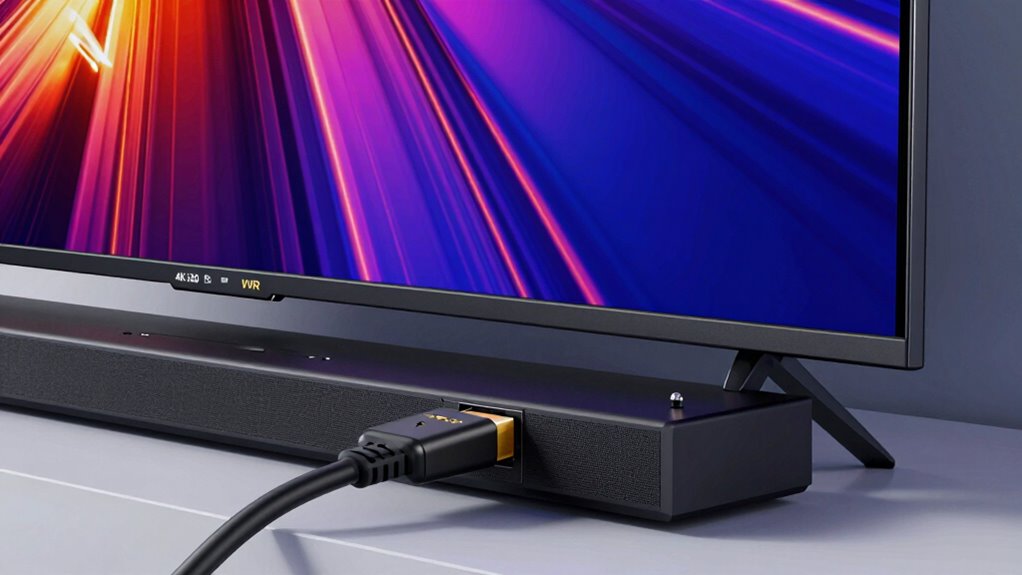

HDMI 2.1 brings big upgrades like supporting 4K at 120Hz, smoother gaming with variable refresh rate (VRR), and automatic low latency mode (ALLM) for less input lag. It also offers richer visuals and sound for your movies and games. To get these benefits, make sure your devices have HDMI 2.1 and use certified cables. Want to understand how all these features work together? Keep exploring to get the full picture.

Get business pricing on office and shipping supplies
- Business-only prices and quantity discounts
- Tax-exempt purchasing
- Multiple users, one account, clear invoices
Key Takeaways
- HDMI 2.1 supports higher resolutions and refresh rates, including 4K at 120Hz and 8K, for sharper visuals and smoother gameplay.
- Variable Refresh Rate (VRR) synchronizes the display with your GPU, reducing tearing and jitter during fast-paced gaming.
- Auto Low Latency Mode (ALLM) automatically switches your TV to gaming or streaming mode for minimal input lag.
- Certified Ultra High Speed HDMI cables ensure you get the full bandwidth and features of HDMI 2.1.
- Upgrading to HDMI 2.1 future-proofs your home theater for advanced content, higher resolutions, and new gaming technologies.
Popular right now

Dyson Ball Animal Total Clean Upright Vacuum
Apple AirPods Pro 3 Wireless Earbuds with Active Noise Cancellation

Dyson Ball Animal 3 Extra Upright Vacuum
As an affiliate, we earn on qualifying purchases.
What Is HDMI 2.1 and Why Should You Care?
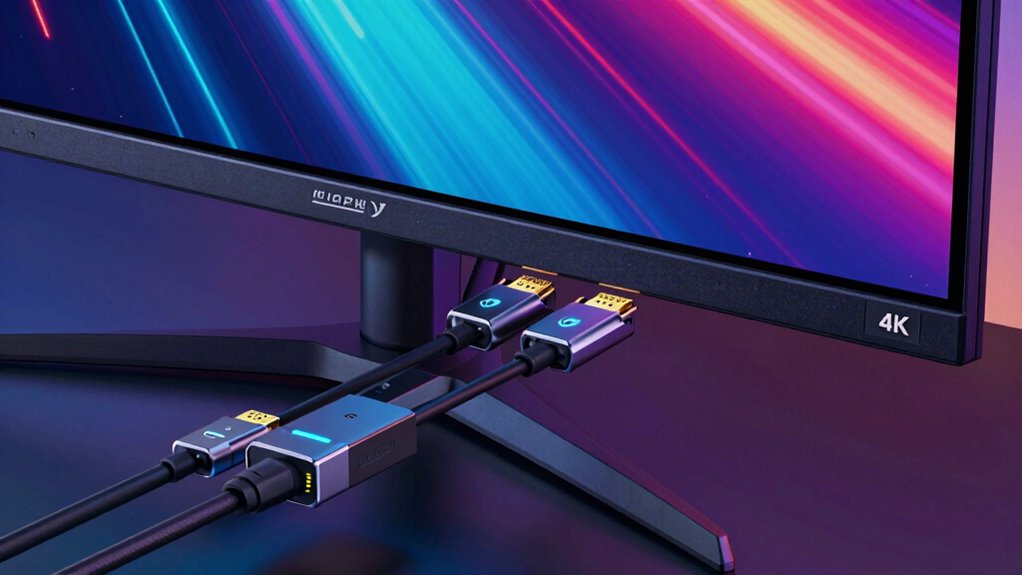
HDMI 2.1 is the latest version of the popular high-definition multimedia interface, and it brings significant improvements over previous versions. You should care because it’s designed to handle higher resolutions, faster refresh rates, and richer audio, making your setup more future-proof. One key benefit is cable compatibility; HDMI 2.1 cables support higher bandwidths, ensuring you can connect future devices without hassle. This means you won’t need to upgrade your cables again when new technology arrives. With HDMI 2.1, you get options that keep your home entertainment system ready for upcoming innovations. Whether you’re gaming, streaming, or using VR, this version offers the flexibility and performance needed to stay ahead in your entertainment setup. Digital content formats are also evolving alongside HDMI standards, enhancing the overall experience.
How HDMI 2.1 Improves 4K and 8K Video Quality
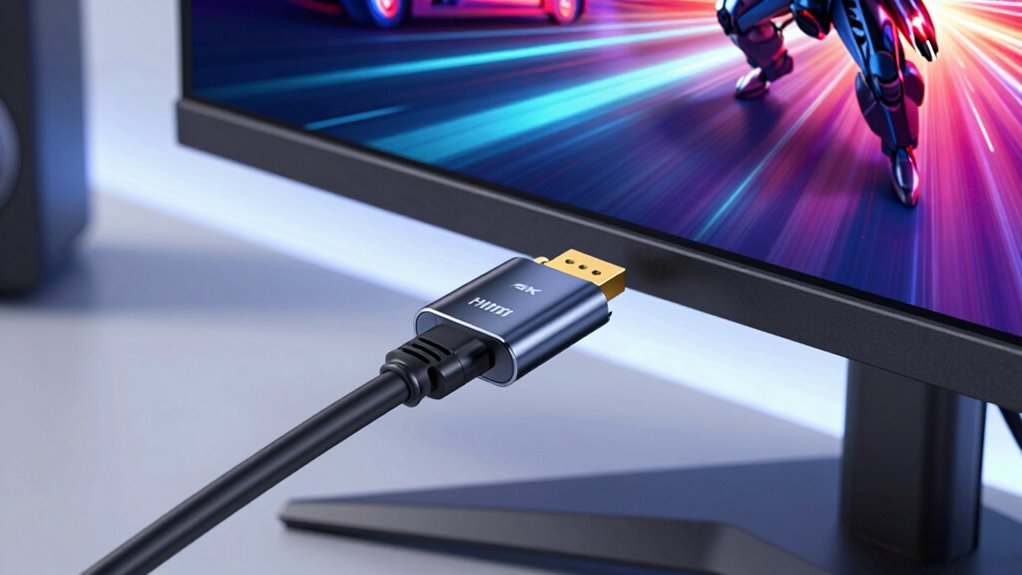
Thanks to HDMI 2.1’s increased bandwidth, you’ll notice a significant boost in the clarity and detail of 4K and 8K videos. This higher bandwidth allows for richer HDR enhancements, providing more vibrant colors and improved contrast. It also supports higher bit depths, making images look more lifelike. The increased bandwidth meets the demanding bandwidth requirements of 8K content, ensuring smooth playback without compression artifacts. You’ll enjoy sharper images, more accurate color reproduction, and seamless motion handling at higher resolutions. HDR enhancements are more effective, delivering deeper blacks and brighter highlights. Overall, HDMI 2.1 enables a more immersive viewing experience by maximizing the potential of 4K and 8K displays. Video quality is significantly improved thanks to these advancements.
What Does 4K120 Mean for Gaming and Streaming?
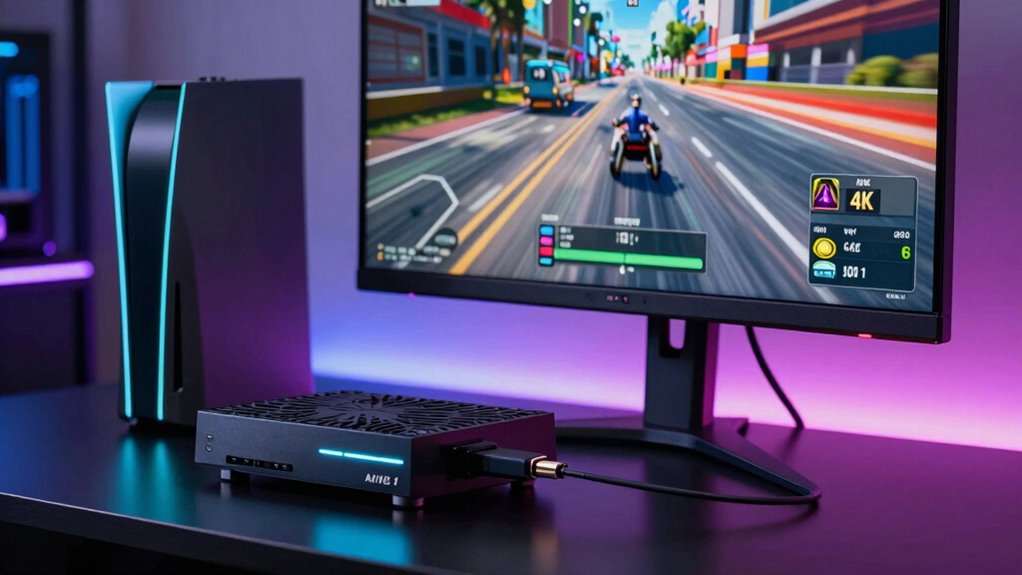
When you play games or stream content at 4K120, you’ll notice sharper images and more detailed visuals. This high refresh rate also guarantees smoother gameplay, reducing lag and motion blur. Ultimately, it elevates your gaming and streaming experience to a new level of clarity and fluidity. Additionally, understanding environmental impact can help consumers make more eco-friendly choices when selecting display equipment.
Enhanced Visual Fidelity
With 4K120 support, gamers and streamers can experience sharper, more detailed visuals that make fast-paced action look smoother and more immersive. This enhancement boosts color accuracy, allowing your visuals to appear more vibrant and true-to-life. HDR enhancement also plays a vital role, delivering richer contrast and improved dynamic range for stunning visuals. You’ll notice deeper blacks and brighter highlights, making scenes more realistic. Higher refresh rates combined with 4K resolution ensure that fast movements stay clear without blurring or ghosting. The overall visual fidelity becomes more engaging, whether you’re gaming or streaming content. This upgrade elevates your viewing experience, making every detail pop and ensuring your content looks its best on compatible displays. Additionally, refresh rate compatibility is crucial to fully leverage these capabilities and ensure seamless performance.
Smooth Gameplay Experience
Achieving 4K120 support with HDMI 2.1 transforms your gaming and streaming experiences by delivering ultra-smooth motion and reduced input lag. You’ll notice faster reactions and clearer gameplay, especially in fast-paced titles. To maximize this performance, confirm your cables are compatible and meet HDMI 2.1 standards, preventing issues like audio lag or signal dropouts. Proper cable compatibility guarantees stable high-bandwidth connections, avoiding disruptions during intense gaming sessions. This setup allows your system to fully utilize 4K120, enhancing visual fluidity without sacrificing audio quality. The table below highlights key aspects of a smooth gameplay experience:
| Feature | Benefit | Requirement |
|---|---|---|
| 4K120 Support | Ultra-smooth motion | HDMI 2.1 cable |
| Low Input Lag | Faster reactions | Compatible hardware |
| Audio Sync | Clear sound, no lag | Proper cable setup |
| VRR & ALLM | Seamless gameplay | Supported TV and console |
| Cable Compatibility | Reliable signal transfer | Certified HDMI 2.1 cables |
How VRR Makes Your Gaming Look Smoother
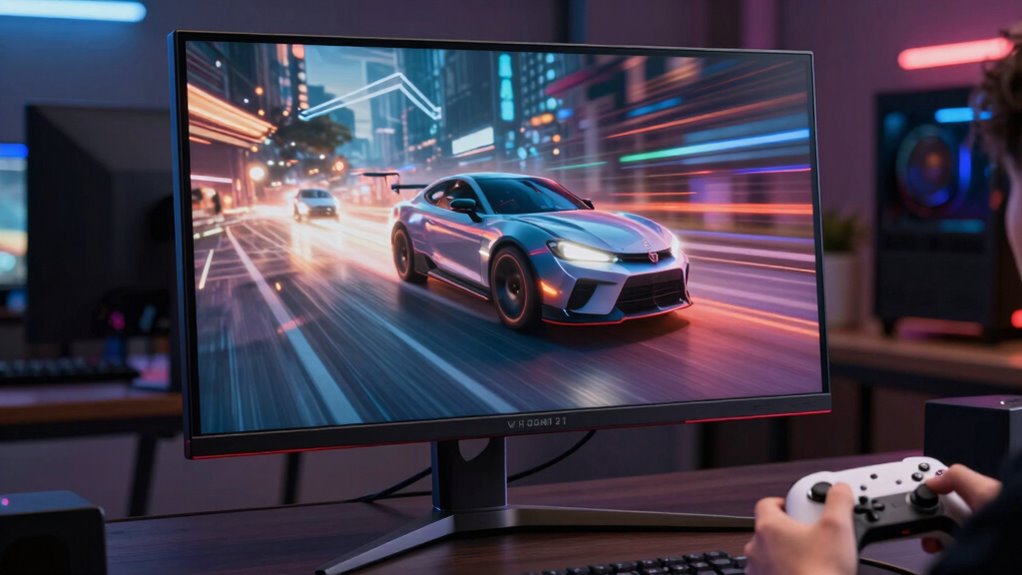
When you enable VRR, you’ll notice fewer screen tears and smoother gameplay. It keeps frames consistent, so your game looks fluid even during fast action. Overall, VRR elevates your gaming experience by making visuals sharper and more seamless. Additionally, VRR technology is supported by many trusted hardware providers, ensuring reliable performance across various devices.
Reduces Screen Tearing
Screen tearing occurs when your display shows multiple frames at once, causing a disjointed and choppy image during fast-paced gameplay. This happens because the graphics card’s frame rate doesn’t match the display’s refresh rate, leading to visual artifacts. With VRR (Variable Refresh Rate), your monitor dynamically adjusts its refresh rate to match the GPU’s output. This synchronization removes the mismatch, reducing screen tearing markedly. You’ll notice smoother gameplay without distracting visual artifacts or sudden jumps in image quality. VRR ensures each frame is fully rendered before the display updates, resulting in a seamless experience. This technology is especially beneficial during rapid movements or high-action scenes, making your gaming visuals clearer and more consistent. A key benefit of VRR is that it can also help reduce input lag, providing a more responsive gaming experience. Overall, VRR helps you enjoy a more fluid, tear-free gaming session.
Enhances Frame Consistency
Variable Refresh Rate (VRR) substantially enhances frame consistency by ensuring each frame is fully rendered before the display updates. This leads to improved frame stability, reducing flickering or jitter that can occur when frames are mismatched. With VRR, your gaming experience becomes smoother because the display adjusts its refresh rate to match your graphics card’s output, maintaining high refresh accuracy. This synchronization prevents stuttering caused by dropped or uneven frames, so movement appears fluid and consistent. As a result, your gameplay feels more natural, with fewer distractions from visual artifacts. VRR’s ability to adapt dynamically to frame rates guarantees that each scene remains stable, delivering a more immersive and enjoyable gaming experience.
Improves Visual Fluidity
VRR actively adapts the display’s refresh rate to match your graphics card’s output, which results in smoother gameplay. This synchronization reduces screen tearing and stuttering, making fast-paced scenes look more fluid. It also minimizes the need for artificial effects like frame interpolation or motion smoothing, which can introduce artifacts or lag. With VRR, your game’s frames are displayed as soon as they’re ready, delivering real-time motion. You’ll notice that fast movements and rapid camera shifts appear more natural and less choppy. This creates a more immersive experience, especially during intense gaming moments. Ultimately, VRR enhances visual fluidity by aligning display timing with your GPU’s output, ensuring a seamless, smooth, and responsive gaming experience. Additionally, VRR shares similarities with adaptive technologies that optimize visual performance for a more seamless gameplay experience.
What Is ALLM and How Does It Make Watching Better?
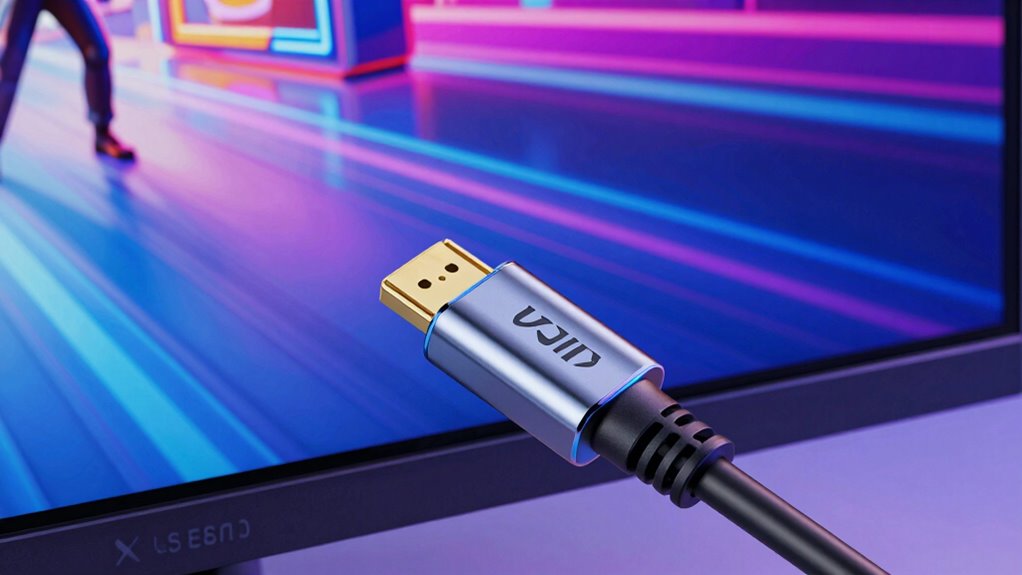
Have you ever experienced a delay between your game console or streaming device and your display? That lag can disrupt your viewing experience, but HDMI 2.1’s ALLM (Auto Low Latency Mode) fixes this. When you enable ALLM, your device automatically detects when gaming or streaming begins and switches your display to the suitable calibration settings for low latency and smooth performance. This means less input lag and more responsive gameplay or video watching. Additionally, ALLM can improve overall quality by coordinating with audio enhancements, ensuring everything syncs perfectly without manual adjustments. It’s like having a smart system that knows exactly what mode to switch to, so you don’t have to fuss with settings, making your viewing experience seamless and more enjoyable. Moreover, because ALLM relies on content recognition technology, it can swiftly adjust settings based on the type of content being played, further enhancing your experience.
Do You Need New Cables for HDMI 2.1? Here’s What to Know
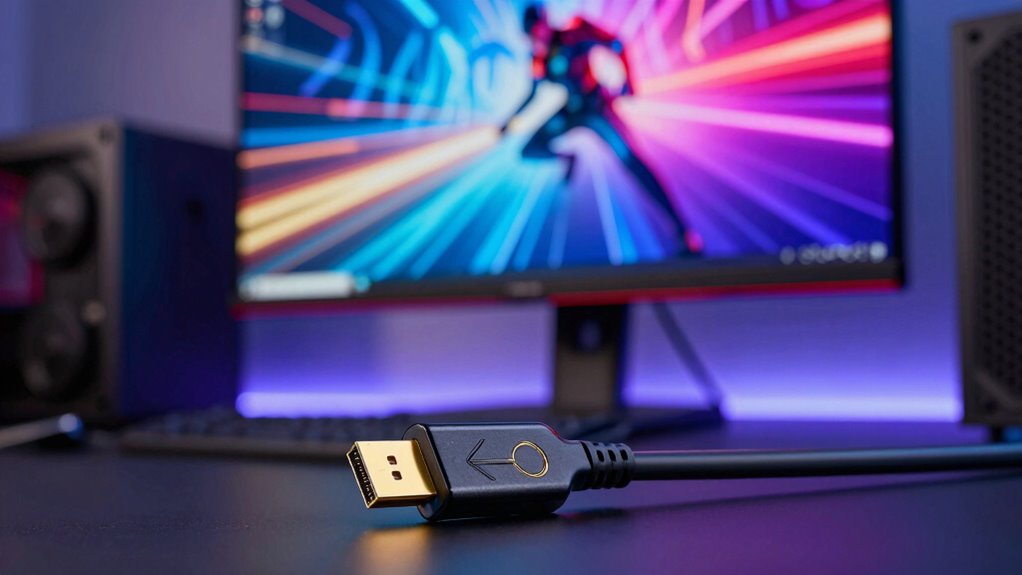
You might wonder if upgrading to HDMI 2.1 requires new cables, and the answer depends on what you currently have. If your existing HDMI cable is high-speed and supports HDMI 2.1, you’re good to go. However, many older cables may lack the necessary cable compatibility to handle the increased bandwidth for features like 4K120 or VRR. For future proofing options, investing in certified Ultra High Speed HDMI cables is a smart choice. These cables are designed specifically for HDMI 2.1’s demands.
- Supports higher bandwidth (48 Gbps)
- Compatible with HDMI 2.1 features
- Ensures peak performance
- Provides future proofing options
Choosing the right cable ensures you get the most out of your upgraded setup without unnecessary upgrades later.
Which Devices Support HDMI 2.1? How to Check Compatibility
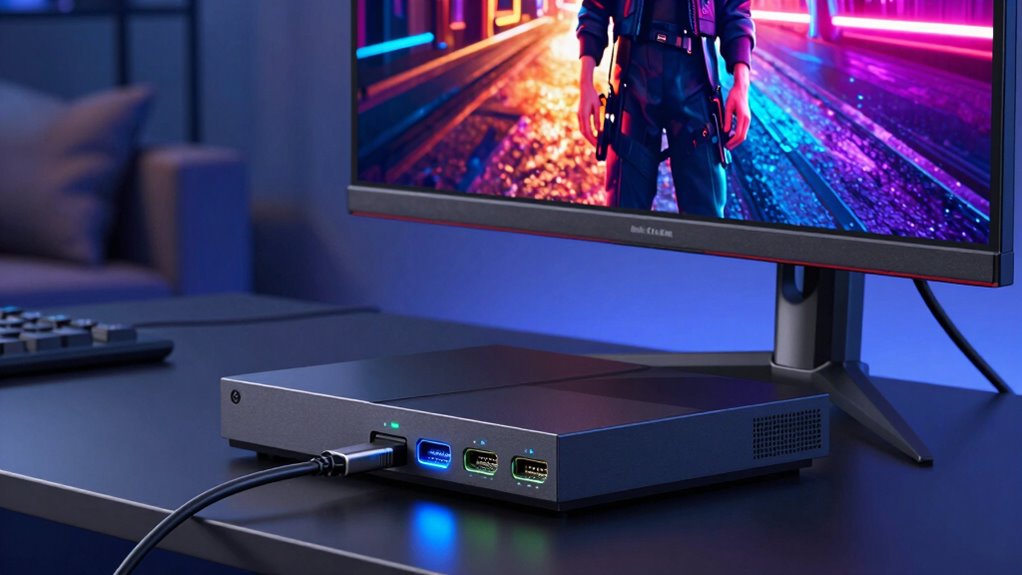
Determining whether your devices support HDMI 2.1 is essential before upgrading, as this new standard offers advanced features like higher bandwidth and improved refresh rates. To check device compatibility, start by reviewing your device specifications, manufacturer websites, or user manuals. Many newer TVs, gaming consoles, and soundbars now list HDMI 2.1 support explicitly. Additionally, firmware updates can enable HDMI 2.1 features on some devices released before the standard’s adoption. Keep in mind that even if your device supports HDMI 2.1, you might need the latest firmware to activate full compatibility. Always verify the model number and firmware version to guarantee you’re getting the benefits of HDMI 2.1 without unnecessary upgrades.
HDMI 2.0 vs. HDMI 2.1: What’s the Difference?
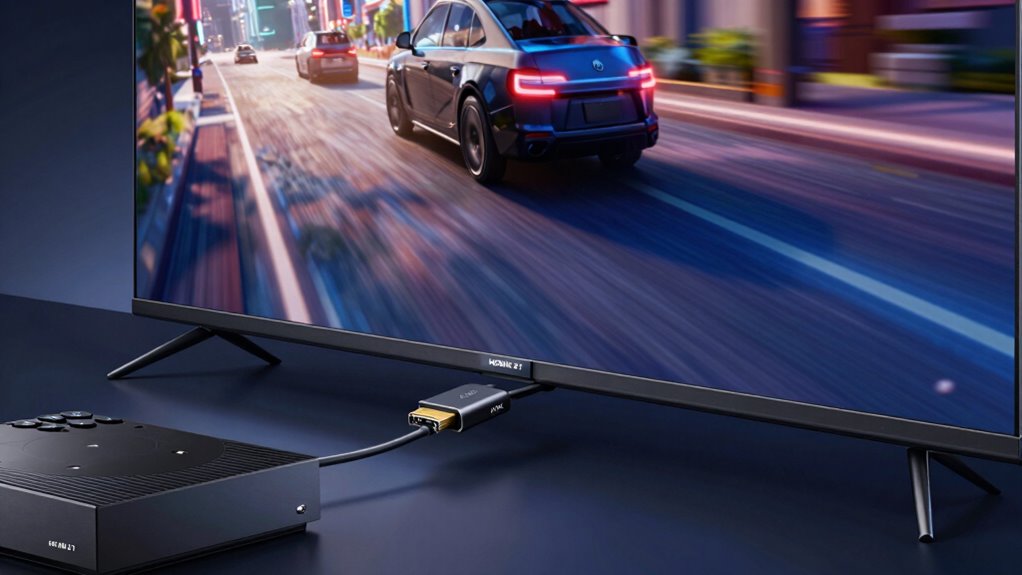
HDMI 2.1 introduces significant upgrades over HDMI 2.0, enhancing your home entertainment experience with higher data transfer rates and advanced features. The key differences include support for 4K at 120Hz, dynamic refresh rate features like VRR, and improved audio return channel (eARC). These improvements guarantee smoother visuals and better audio quality. Additionally, HDMI 2.1 demands newer cables for peak performance, affecting cable compatibility.
- Higher bandwidth (48 Gbps vs. 18 Gbps)
- Support for 4K120 and 8K resolutions
- Enhanced audio return channel (eARC)
- Better cable compatibility for full feature support
Understanding these differences helps you choose the right cables and devices to maximize your setup’s potential.
How HDMI 2.1 Can Upgrade Your Home Theater Setup
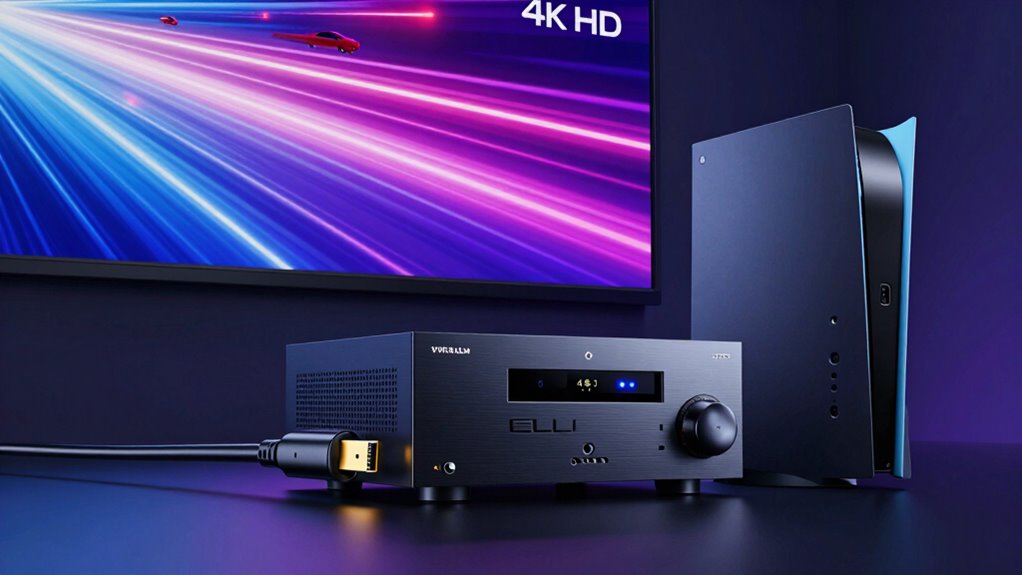
Wondering how to elevate your home theater experience? HDMI 2.1 offers significant upgrades that can transform your setup. With its higher bandwidth, you’ll enjoy stunning 4K120 and smooth VRR gaming, making visuals sharper and more responsive. It also simplifies audio calibration, ensuring richer sound quality through compatible devices. Plus, HDMI 2.1 supports advanced display calibration features, helping you fine-tune your TV’s picture for perfect colors and contrast. These improvements mean less hassle and better performance overall. Upgrading your cables and devices to HDMI 2.1 can access these benefits, giving you a more immersive and balanced home theater. Whether gaming, streaming, or watching movies, HDMI 2.1 helps you get the most out of your entertainment system.
Common Myths About HDMI 2.1 Debunked
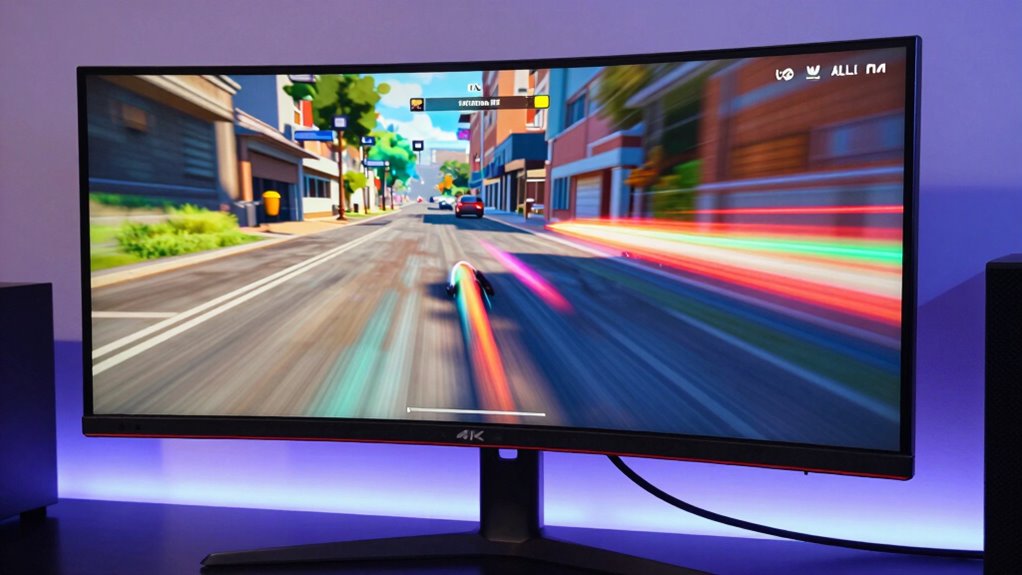
Many people believe that upgrading to HDMI 2.1 automatically guarantees perfect picture and sound quality, but that’s not entirely true. While HDMI 2.1 offers higher bandwidth and features like 4K120 and VRR, it doesn’t eliminate issues caused by video compression or improve device interoperability on its own. You still need compatible hardware and proper setup to experience the benefits fully.
Additionally, Discover Daily Startup Ideas With Actionable Insights that highlight the importance of understanding the underlying technology and proper configuration to truly leverage HDMI 2.1 capabilities.
Here are some common myths debunked:
- HDMI 2.1 always delivers lossless, uncompressed video—video compression still plays a role.
- All HDMI 2.1 cables are equal—quality and capabilities vary.
- Device interoperability is seamless—different manufacturers’ devices may not work perfectly together.
- Upgrading hardware guarantees instant performance boosts—settings and compatibility matter too.
Frequently Asked Questions
Can Older Devices Be Upgraded to Support HDMI 2.1?
Older devices generally can’t be upgraded to support HDMI 2.1 because of hardware limitations. Firmware updates alone won’t add new capabilities if the necessary hardware components aren’t present. To access HDMI 2.1 features like 4K120 or VRR, you’ll need a new device designed with the HDMI 2.1 specifications. Check your device’s hardware specs first, and consult the manufacturer if you’re unsure.
Is HDMI 2.1 Backward Compatible With HDMI 2.0?
Imagine stepping through a doorway into new tech territory—HDMI 2.1 is backward compatible with HDMI 2.0, meaning your existing cables and devices can still connect. While you won’t get all the new features, you can upgrade your setup with HDMI 2.1-compatible devices, ensuring smoother gaming and better resolution. Check your equipment’s ports and consider upgrade options to access the full potential of HDMI’s latest iteration.
How Does HDMI 2.1 Impact Audio Quality and Formats?
HDMI 2.1 substantially boosts your audio quality and supports advanced formats like Dolby Atmos and DTS:X, enhancing your surround sound experience. It improves audio fidelity by transmitting higher bitrates and uncompressed audio, making dialogues clearer and sounds more immersive. With HDMI 2.1, you get richer, more detailed audio, perfectly syncing with your high-resolution visuals for a complete, cinematic experience right in your living room.
Are There Cost Differences Between HDMI 2.0 and 2.1 Cables?
You’ll find that HDMI 2.1 cables tend to be more expensive than HDMI 2.0 cables because of their advanced features and higher bandwidth. The cost comparison shows that cable pricing for HDMI 2.1 often mirrors its ability to handle 4K120, VRR, and other high-performance functions. While they might cost more upfront, investing in HDMI 2.1 cables guarantees you’re fully compatible with the latest technology and future-proof your setup.
What Future Features Might HDMI 2.2 Introduce?
Future HDMI 2.2 might introduce increased bandwidth to support higher resolutions like 8K and advanced features, ensuring smoother gaming and streaming experiences. You could also see smarter features like enhanced audio controls, better device interoperability, and improved support for emerging tech like augmented reality. These upgrades will make your setup more versatile, allowing you to enjoy sharper visuals and more seamless connectivity as technology continues to evolve.
Conclusion
Ready to elevate your entertainment experience with HDMI 2.1? With stunning 4K120, smoother gameplay, and smarter features like VRR and ALLM, you’re set for a seamless, immersive setup. Don’t settle for outdated tech—are you ready to access the full potential of your devices? Upgrading now means better picture, faster response, and a future-proof system that keeps you ahead of the curve. Why wait to enjoy the ultimate home theater upgrade?