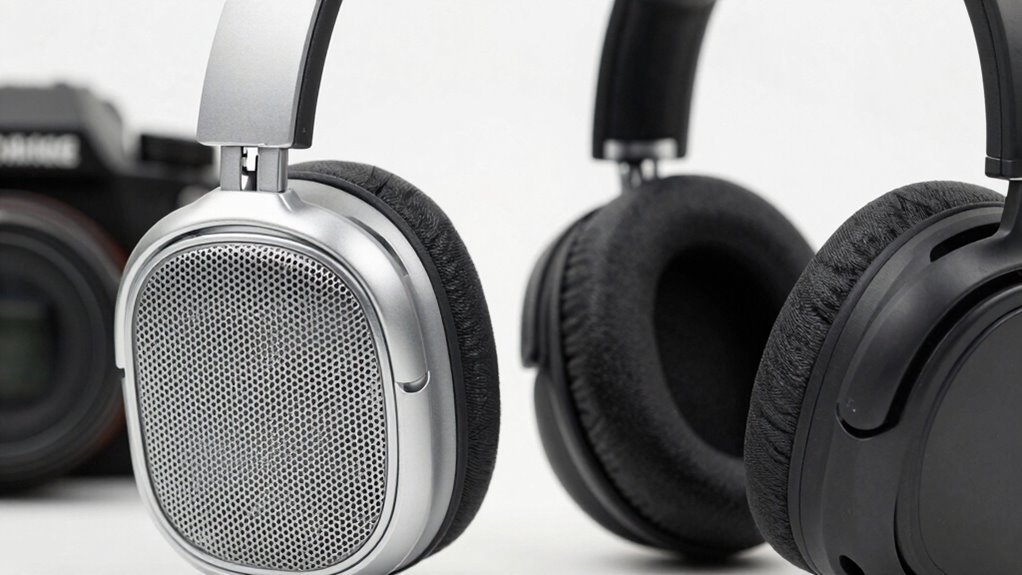

Choosing between open-back and closed-back headphones depends on your listening environment and priorities. Open-backs offer natural sound, wide soundstage, and comfort, making them ideal for home use but they leak sound and let noise in. Closed-backs provide better noise isolation, deep bass, and durability, perfect for recording or outdoor use. To match your needs and environment, consider what matters most—comfort, sound quality, or isolation—and this overview will help you pick the right style.

Get business pricing on office and shipping supplies
- Business-only prices and quantity discounts
- Tax-exempt purchasing
- Multiple users, one account, clear invoices
Key Takeaways
- Open-back headphones provide a natural, spacious soundstage ideal for relaxed listening at home, while closed-back headphones offer better noise isolation for noisy environments.
- Open-backs have a lightweight, breathable design with sound leakage, making them unsuitable for public or shared spaces.
- Closed-backs deliver stronger bass and sound isolation, suitable for recording, studio use, or private listening sessions.
- Comfort and portability vary; open-backs are often lighter and better for extended use indoors, while closed-backs can be more durable for travel.
- Choose based on environment, sound preference, and need for noise isolation—open-backs for natural sound, closed-backs for privacy and noise reduction.
open-back headphones for home listening
As an affiliate, we earn on qualifying purchases.
As an affiliate, we earn on qualifying purchases.
What Are Open-Back and Closed-Back Headphones? An Overview
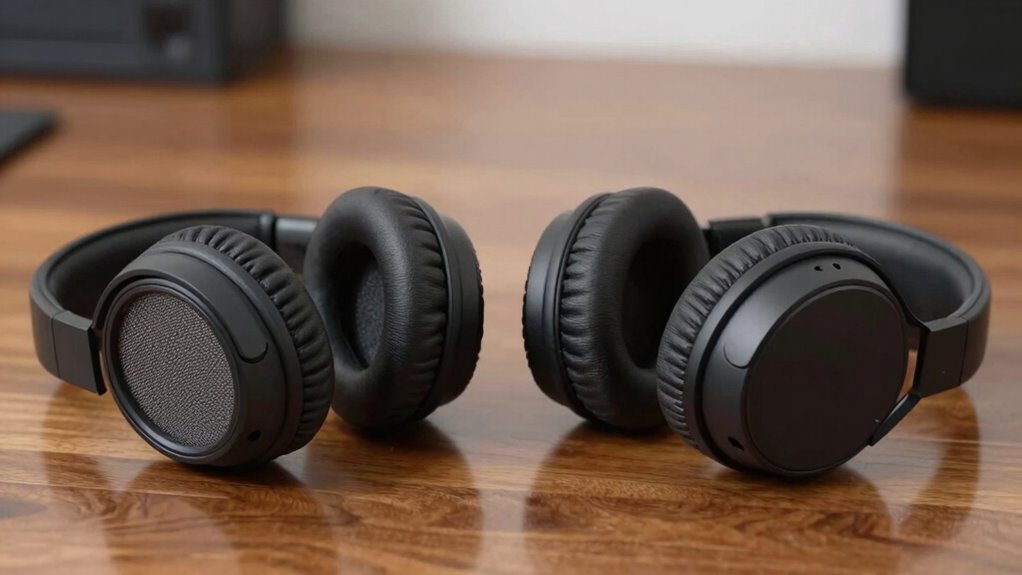
Have you ever wondered what distinguishes open-back from closed-back headphones? It all starts with their design and manufacturing materials. Open-back headphones feature a lattice or vented outer shell, allowing air and sound to flow freely. This creates a more natural, spacious sound experience. Their aesthetic design often emphasizes sleek, minimalistic styles, using lightweight materials like metal and high-quality plastics. Closed-back headphones, on the other hand, have solid ear cups that block out external noise, thanks to sturdy materials like dense plastics, leather, or foam. Their aesthetic design tends to focus on durability and a snug fit, making them ideal for noise isolation. Both types use different manufacturing materials to optimize their specific functions, but their overall look and feel are tailored to their unique sound characteristics. Additionally, sound isolation plays a critical role in choosing between open-back and closed-back headphones, depending on your environment and listening preferences.
How Do Open-Back and Closed-Back Headphones Differ in Design and Sound?
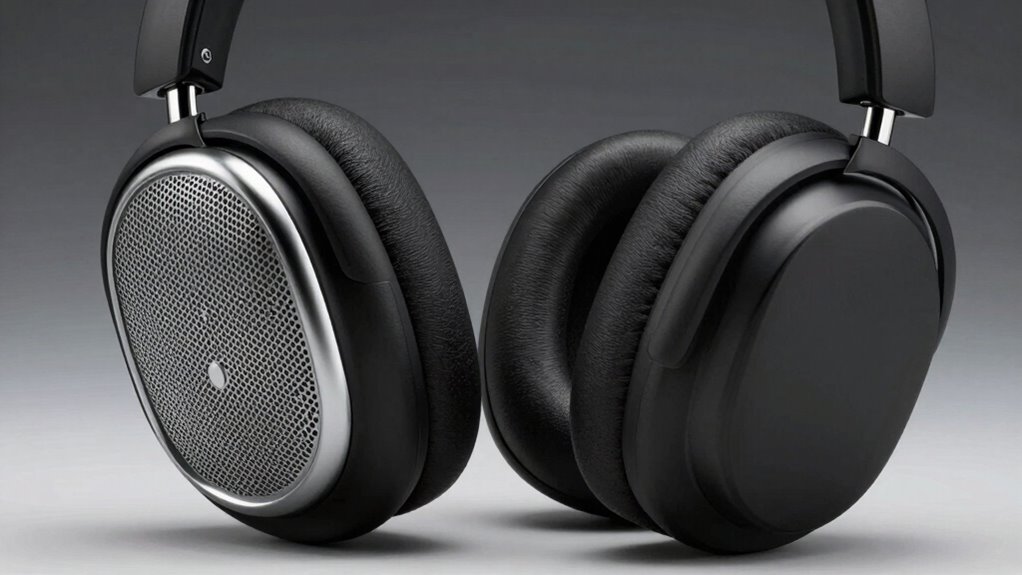
Open-back and closed-back headphones differ markedly in both their design and how they influence sound. The aesthetic differences are noticeable, with open-backs often featuring grills or vents that reveal the drivers, giving a more airy and transparent look. Closed-back headphones have solid enclosures, providing a sleek, sealed appearance. The manufacturing materials also vary: open-backs typically use lightweight metals or plastics for better airflow, while closed-backs might incorporate denser plastics or composites for sound isolation. These design choices impact sound delivery—open-backs offer expansive, natural audio with a sense of openness, whereas closed-backs provide more bass and isolation by preventing sound leakage. Your choice depends on whether you prioritize soundstage or noise isolation, which directly relates to their differing designs and materials. Additionally, the sound leakage of open-back headphones makes them less suitable for noisy environments, emphasizing their design purpose for personal listening.
Which Headphone Type Offers Better Sound Quality for Home Listening?
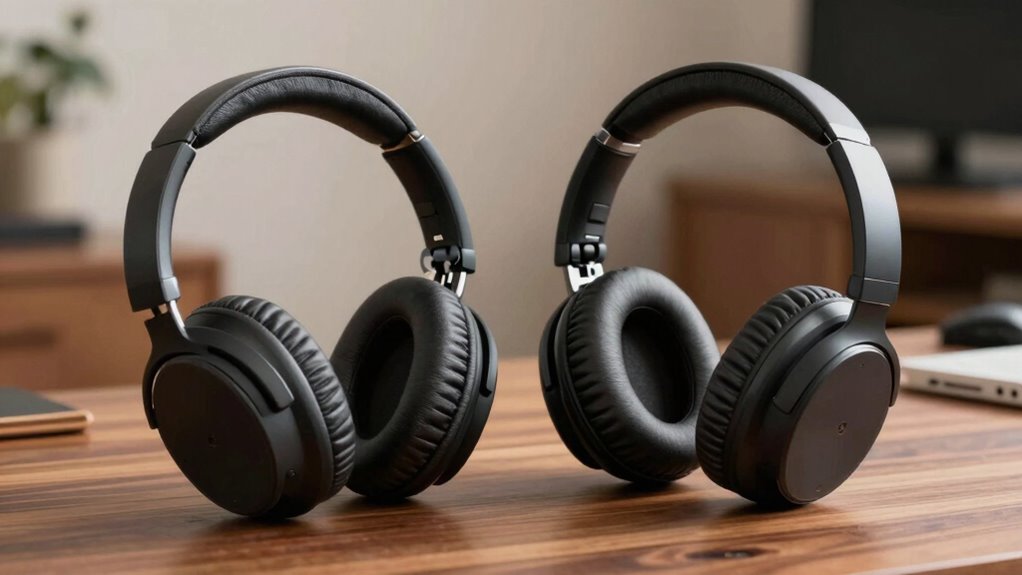
When choosing headphones for home listening, consider how well they block out surrounding noise, as closed-back models excel at sound isolation. Open-back headphones, however, often provide a wider soundstage and greater depth, making music feel more immersive. Think about whether you prioritize a transparent acoustic experience or prefer to keep external sounds out. Additionally, understanding yarn yardage can be helpful if you’re interested in customizing your audio equipment setup with DIY accessories.
Sound Isolation Capabilities
While open-back headphones are prized for their expansive soundstage, they typically offer less sound isolation compared to closed-back models. This means outside noises can easily leak in, and your music may leak out, making them less ideal for noisy environments or shared spaces. Closed-back headphones excel in soundproofing techniques, sealing around your ears to block ambient sound. The choice of headphone materials, such as dense plastics or foam padding, also enhances sound isolation. If you prioritize keeping sound contained for home listening, closed-back designs are your best bet. They ensure minimal disturbance from external noise and prevent your music from disturbing others. However, if you prefer a more natural, open sound, you’ll accept the trade-off of reduced soundproofing. Additionally, sound isolation can be influenced by headphone design and fit, making proper adjustment essential for optimal performance.
Soundstage and Depth
Open-back headphones naturally create a wider soundstage, making music feel more immersive and spacious because their design allows sound to flow freely into your environment. This results in a more realistic sense of depth, helping you perceive individual instruments and vocals as if they’re positioned in a three-dimensional space. You’ll experience a spacious sound that enhances the overall listening experience, especially at home. The open design reduces the bottleneck effect, giving each sound layer room to breathe. As a result, your music feels more alive and natural. If you crave an immersive experience with a sense of depth and dimension, open-back headphones excel in delivering that expansive soundstage that truly brings your favorite tracks to life.
Acoustic Transparency
Which headphone type offers better sound quality for home listening? Open-back headphones excel in acoustic transparency, delivering a more natural, spacious sound. They let in ambient noise, creating a sense of openness that mimics listening in a room. Imagine:
- Hearing your music blend seamlessly with your environment.
- Feeling the air move around the drivers, adding realism.
- Noticing less sound bleed, so others aren’t disturbed.
- Experiencing a wider soundstage with clearer instrument separation.
- Recognizing how Free Floating designs contribute to a more authentic listening experience.
Closed-back models tend to trap sound, reducing acoustic transparency but minimizing sound bleed. This makes open-backs ideal for immersive listening at home, where a natural, open sound is key. If you value clarity and spaciousness, open-back headphones are the better choice for home listening.
Are Closed-Back Headphones Ideal for Recording and Studio Use?
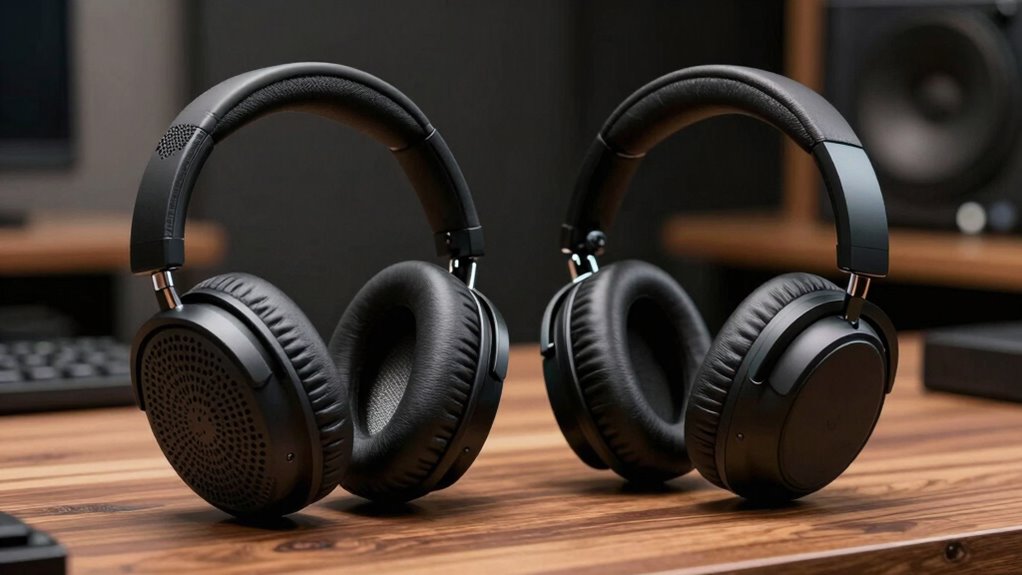
Closed-back headphones are popular choices for recording and studio work because they effectively isolate you from external noise and prevent sound from leaking into microphones. This isolation improves audio fidelity, ensuring your recordings stay clean and free from unwanted noise. When choosing closed-back headphones for studio use, consider their design, as a snug fit enhances sound isolation and comfort during long sessions. The sturdy enclosure minimizes sound leakage, making them ideal for tracking vocals or instruments without disturbing others. Additionally, look for headphones with flat frequency response to accurately reproduce audio, which is essential for mixing and mastering. Overall, their design considerations and noise-blocking capabilities make closed-back headphones a practical, reliable choice for professional recording environments.
How Do Noise Isolation and Sound Leakage Differ?
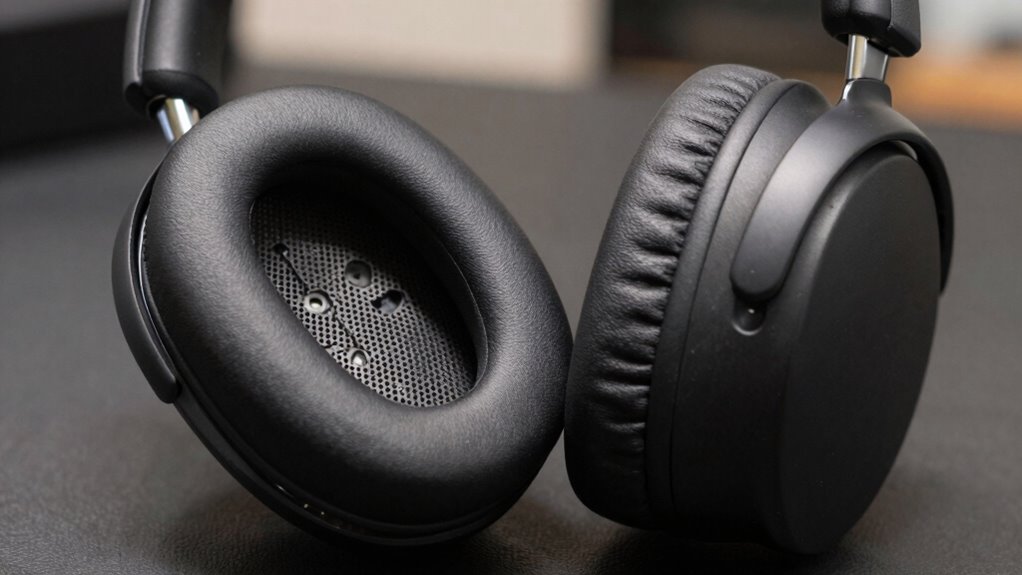
While closed-back headphones excel at blocking out external noise, understanding the difference between noise isolation and sound leakage helps you choose the right pair. Noise isolation refers to how well headphones prevent ambient sounds from reaching your ears, achieved through soundproofing techniques like tight seals. Sound leakage, on the other hand, is when your audio escapes the headphones and can be heard by others. To envision this:
- You turn up the volume, and others nearby hear your music.
- Your headphones create a barrier, keeping outside noise out.
- The design minimizes sound escaping into the environment.
- Audio transparency allows you to stay aware of your surroundings without losing sound quality.
- Recognizing these features can help you select headphones that align with your spiritual awakening and enlightenment goals, ensuring a peaceful listening environment.
Which Headphones Are Best for Outdoor or Mobile Use?
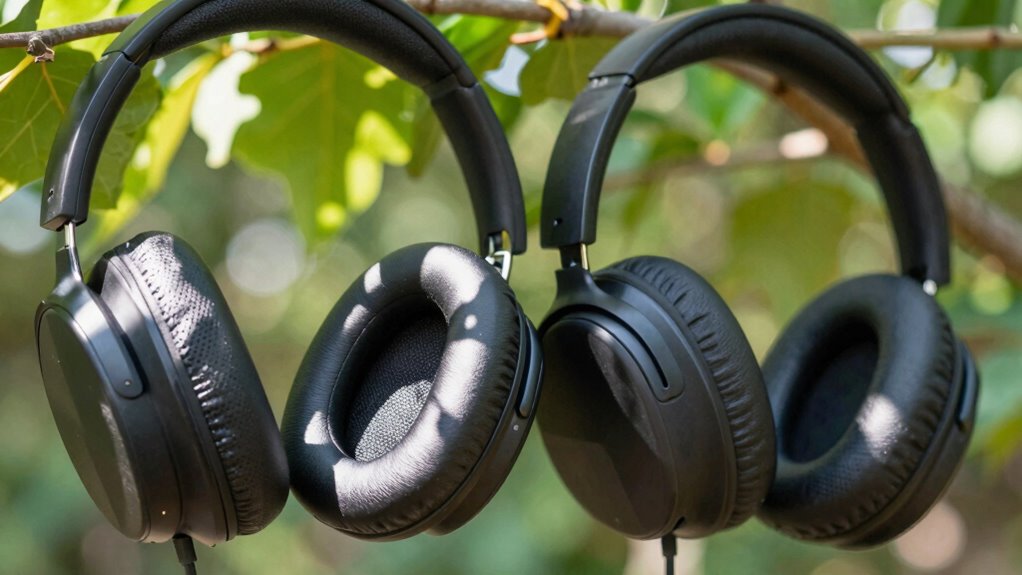
When choosing headphones for outdoor or mobile use, consider how well they block out noise and prevent sound leakage. You’ll also want models that are portable and comfortable for long wear, even on the go. Finally, look for sound quality that stays clear and balanced while you’re moving around. Additionally, be aware of your privacy settings, as some headphones may incorporate features that require user consent and data management.
Noise Isolation Capabilities
If you’re looking for headphones that block out external noise effectively, closed-back designs typically excel in this area. They create a sealed environment around your ears, minimizing ambient noise intrusion. Imagine:
- Sound leakage is almost nonexistent, so your music stays private.
- External sounds like traffic or chatter are muffled, keeping you immersed.
- You won’t hear much ambient noise, making them ideal for noisy outdoor or transit environments.
- Your audio remains clear and undisturbed, with less distraction from the world around you.
- The energetic alignment of the headphones and your environment can further enhance your listening experience by reducing distractions.
Portability and Comfort
For outdoor or mobile use, portability and comfort are crucial factors to contemplate when choosing headphones. An ergonomic fit ensures your headphones sit comfortably during extended wear, preventing fatigue and discomfort. Look for models with adjustable headbands and cushioned ear cups that conform to your head’s shape. Good weight distribution is equally important, as it minimizes pressure points and keeps the headphones balanced, even during active movement. Lightweight designs are preferable for prolonged use, reducing strain on your neck and ears. Foldable or compact options enhance portability, making them easy to carry in bags or pockets. Additionally, selecting headphones with folding mechanisms can significantly improve their portability and storage convenience. Overall, selecting headphones with ergonomic fit and ideal weight distribution guarantees a comfortable, hassle-free experience whether you’re commuting, exercising, or exploring outdoors.
Sound Quality in Motion
Choosing headphones for outdoor or mobile use means prioritizing sound quality that can withstand environmental noise and movement. You want a pair that stays connected and delivers clear audio despite your busy surroundings. Imagine:
- Seamlessly switching tracks with wireless connectivity, no tangled cords.
- Enjoying deep bass and crisp highs even when jogging or commuting.
- Wearing an ergonomic design that fits snugly without causing discomfort.
- Noise isolation that blocks out city sounds, letting you focus on your music.
- Selecting durable materials that can withstand daily wear and tear during outdoor activities.
For outdoor use, closed-back headphones often excel due to their ability to contain sound and reduce external noise. Look for models with reliable wireless connectivity and ergonomic shapes to keep your sound quality steady, no matter where you go.
What Factors Should You Consider When Choosing Between Open and Closed-Back Headphones?
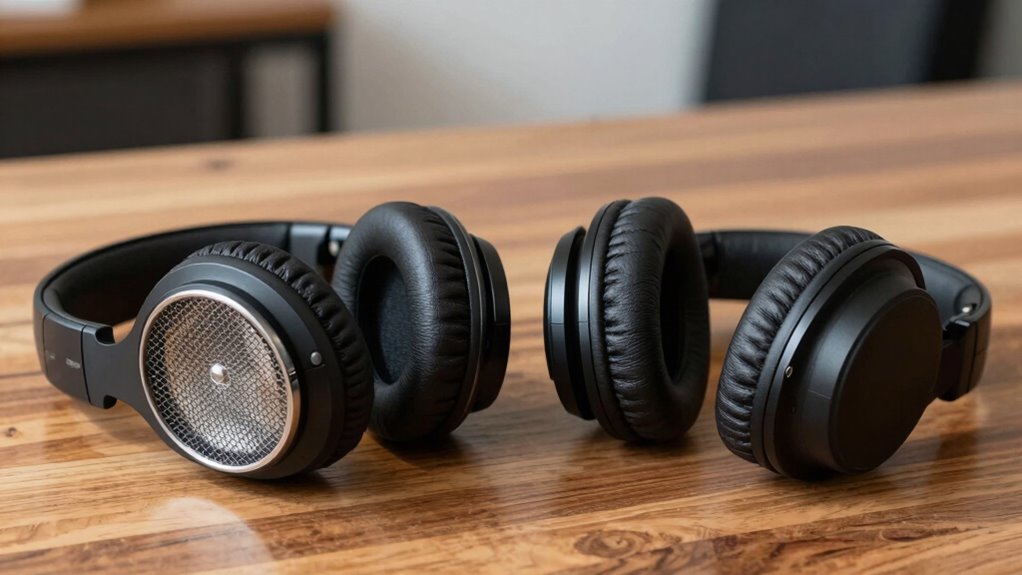
When selecting between open-back and closed-back headphones, several key factors can influence your decision. First, consider the aesthetic design—whether you prefer a sleek, modern look or something more traditional, as it impacts your overall satisfaction. Brand reputation also plays a role; choosing trusted brands often guarantees better durability and sound quality. Think about your environment: open-back headphones suit quiet, personal spaces, while closed-back ones are better for noisy settings or outdoor use. Comfort is another factor—some designs may fit your head better than others. Lastly, reflect on your listening priorities, whether it’s accurate sound reproduction or isolation. Balancing these elements will help you pick the style that best aligns with your needs and preferences. Additionally, understanding the sound characteristics of each type can ensure you select headphones that deliver the audio experience you desire.
Can You Use Open-Back and Closed-Back Headphones for the Same Activities?
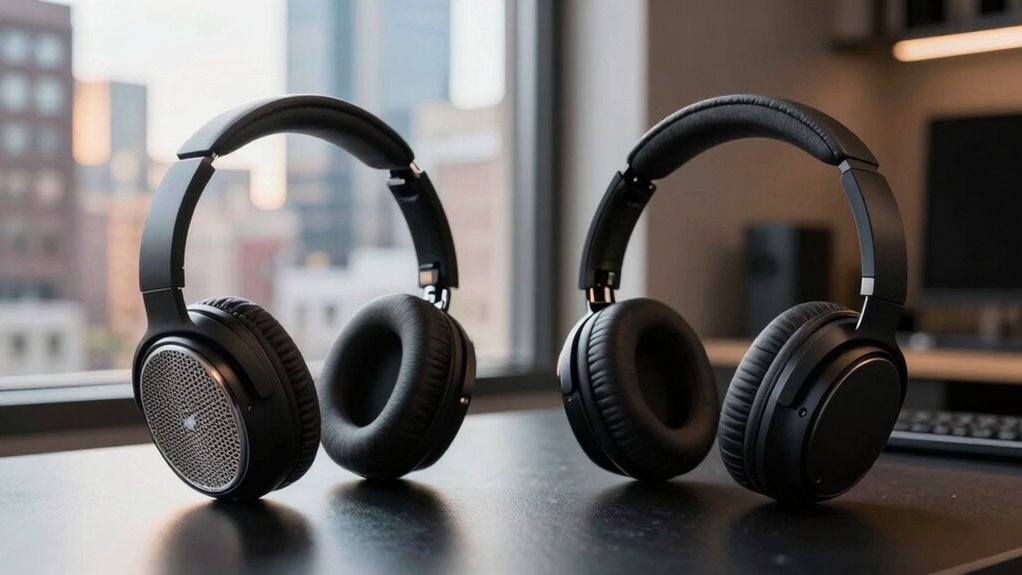
Open-back and closed-back headphones each have unique features that make them better suited for different activities, but many users wonder if they can be used interchangeably. For casual listening, you might try both styles in different contexts: imagine yourself
- immersing in lively music genres like jazz or classical with open-back headphones, where natural soundstage shines,
- gaming intensely in your room with closed-back headphones that block distractions and keep sound focused,
- enjoying quiet, private moments using closed-backs to prevent sound leakage, or
- sharing your favorite tunes with friends without disturbing others, which open-backs excel at. While you can use either for various activities, matching headphone style to the task enhances your experience, especially with music genres or gaming experiences that demand specific sound qualities. Additionally, sound isolation is a key factor to consider when choosing between open-back and closed-back designs to optimize your listening environment.
Matching Headphone Styles to Your Listening Environment
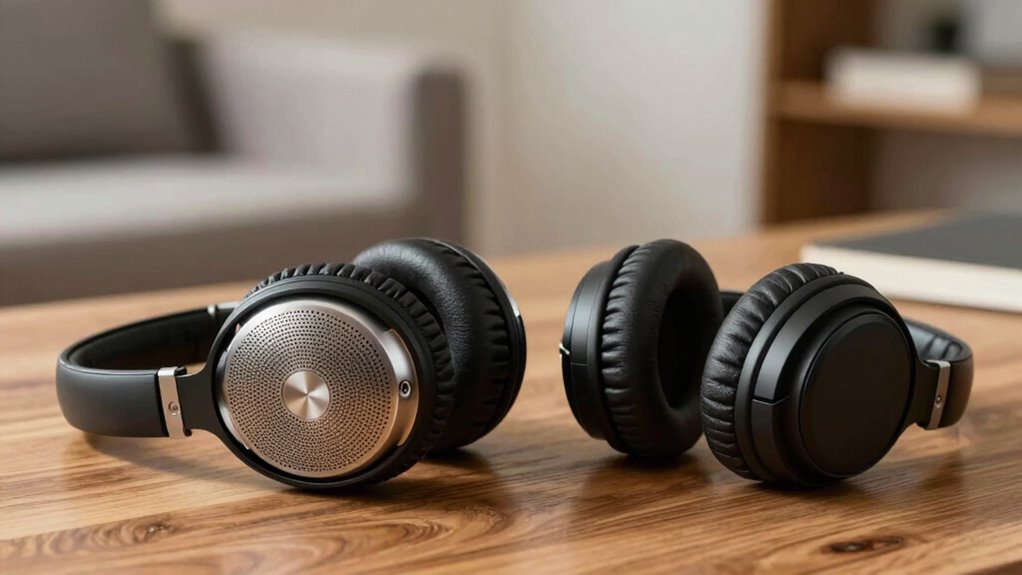
Your listening environment plays a crucial role in selecting the right headphone style, as each type performs best under specific conditions. If you value aesthetic preferences, choose headphones that match your style and environment, whether sleek and modern or vintage and bold. Consider maintenance requirements too; open-back headphones often need careful handling and regular cleaning, while closed-back models tend to be more durable and easier to maintain. In noisy settings, closed-back headphones provide better isolation, making them ideal for commuting or busy spaces. Conversely, open-backs excel in quiet environments like studios or home listening rooms, where sound leakage isn’t an issue. Proper headphone maintenance can extend the lifespan of your gear and ensure optimal sound quality. Matching your environment with the right headphone style ensures excellent sound quality, comfort, and longevity.
Frequently Asked Questions
Are Open-Back Headphones More Comfortable for Long Listening Sessions?
Open-back headphones are generally more comfortable for long listening sessions because they offer better airflow, reducing heat and pressure on your ears. The comfort comparison shows they feel less tight and more natural. However, keep in mind sound leakage; open-backs let sound escape, which could disturb others nearby. If comfort is your priority and sound leakage isn’t an issue, open-back headphones are a great choice for extended use.
How Do Open-Back and Closed-Back Headphones Affect Audio Staging?
Open-back headphones are like windows to a stage, giving you expansive sound that enhances spatial awareness. They create a sense of depth and natural soundstage, making you feel immersed in the music. Closed-back headphones, on the other hand, act like walls, offering better sound isolation but narrower soundstage. Your choice affects how you perceive spatial cues and how much sound leaks, impacting your overall listening experience.
Can Open-Back Headphones Be Used Effectively for Gaming?
Yes, you can use open-back headphones for gaming, but they’re not ideal for priority noise isolation or immersive surround sound. Open-backs provide a more natural, spacious soundstage, making it easier to locate in-game sounds. However, they leak sound and don’t block out external noise, so if you need focus or privacy, closed-back headphones are better. For a balanced experience, consider open-backs for clarity and closed-backs for noise isolation.
What Maintenance Is Required for Each Headphone Type?
Like tending a garden, maintaining your headphones keeps them thriving. You should follow cleaning routines, gently wiping surfaces with a damp cloth and avoiding moisture inside the ear cups. For storage tips, keep them in a cool, dry place, preferably in a case to prevent dust and damage. Regularly check for loose parts or wear, ensuring your open-back or closed-back headphones stay in prime condition for ideal sound.
Are There Hybrid Headphones Combining Open and Closed-Back Features?
Yes, hybrid headphones combining open and closed-back features do exist. These hybrid designs offer a mix of the best of both worlds, providing good sound isolation along with a more natural, spacious sound. You’ll find them useful if you want versatility, as they deliver combined features like open-back airflow and closed-back noise reduction. They’re ideal for situations where you need balanced sound quality and comfort without choosing a strictly open or closed-back design.
Conclusion
Choosing between open-back and closed-back headphones is like selecting the right lens for a photograph—you’ll want the one that brings your preferred scene into focus. Think about your environment, activity, and sound priorities to find your perfect match. Whether you crave the airy openness of open-back or the isolating embrace of closed-back, each style is a key to revealing your ideal listening experience. Make your choice, and let your sound journey unfold with clarity and depth.
Fall Picks
fall essentials
As an affiliate, we earn on qualifying purchases.