
TL;DR

Get business pricing on office and shipping supplies
- Business-only prices and quantity discounts
- Tax-exempt purchasing
- Multiple users, one account, clear invoices
Halloween themed promotional products are seasonal branded giveaways or merchandise that businesses use to attract attention, support events, and encourage repeat visits. Choose an item that fits the audience, check safety and total costs, order with enough time for production and shipping, and connect the giveaway to a measurable action such as a coupon redemption or event sign-up.
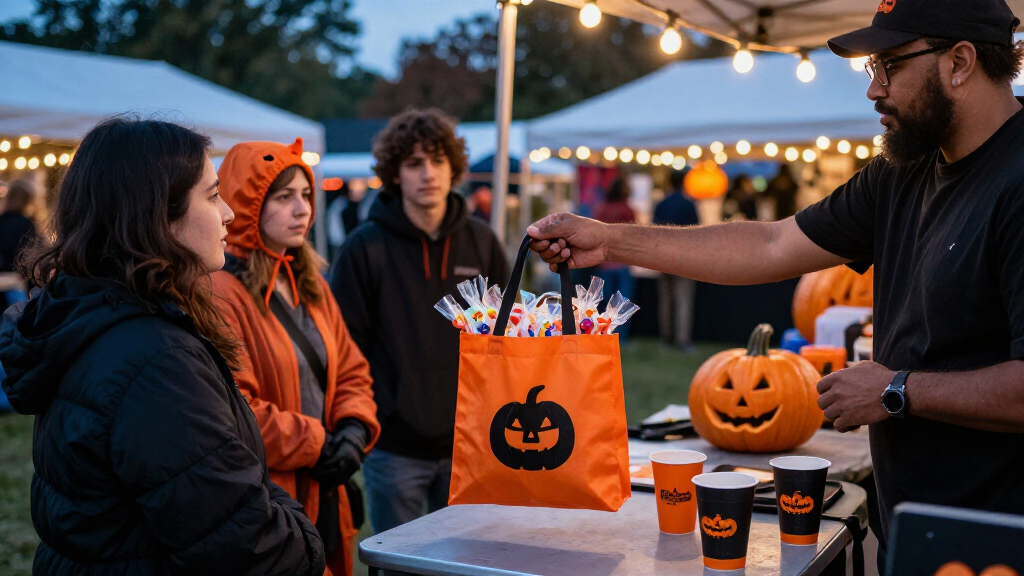
A tiny orange treat bag can bring a family through your shop door, while a sturdy tote can carry your logo around town long after the last pumpkin goes soft. Halloween themed promotional products work best when the giveaway fits both the person receiving it and the reason you’re handing it out.
This guide covers product choices, design, safety, timing, budget, and campaign tracking. You’ll see how a neighborhood café, school fair, or healthcare clinic can turn a seasonal giveaway into a useful interaction instead of another piece of clutter.
Choose products for the audience and setting: treat containers for family events, useful merchandise for customers likely to keep it.
Pair seasonal colors or motifs with a readable logo and a clear campaign message.
Compare total delivered cost, including setup, customization, packaging, shipping, and minimum order quantities.
Review age guidance, choking hazards, food-allergen information, and documentation for material claims.
Tie each giveaway to a trackable action such as a coupon redemption, sign-up, or event attendance.
What Halloween Promotional Products Can Do for Your Campaign
Halloween promotional products are branded giveaways or merchandise designed around the season, from treat bags and stickers to reusable cups and event kits. Businesses use them to attract attention, create a memorable customer interaction, support an event, or invite people back for another visit. The right item makes your campaign feel festive while giving the recipient a clear reason to engage.
Think of the product as a small invitation. A bakery might hand out a pumpkin-shaped cookie sleeve with a card for a weekend special; a clinic could offer glow stickers at a family safety fair. In both cases, the item fits the moment and gives the business a natural way to start a conversation.
The useful question is, “What should someone do after receiving this?” A coupon, event date, sign-up link, or simple message can connect the giveaway to an action. Without that link, even a fun little ghost keychain may disappear into a junk drawer before it helps your campaign.
Choose a Giveaway People Will Want to Keep
The best Halloween giveaway matches the audience, setting, and campaign goal. Each choice involves a tradeoff: treats create an immediate seasonal moment but are quickly consumed, while useful merchandise may keep a brand visible longer but can cost more and may not suit every recipient. Consider what people can use in the place where they receive the item, and whether that use supports the action you want them to take.
| Product | Good fit | What to check |
|---|---|---|
| Candy bags or treat containers | Trick-or-treat events and family promotions | Allergen details, labeling, and age suitability |
| Stickers, pencils, or temporary tattoos | School fairs and lower-cost handouts | Age guidance, small parts, and print readability |
| Glow accessories | Evening events and community walks | Product instructions and age recommendations |
| Tote bags or reusable cups | Retail, food service, and customer appreciation | Material details, capacity, and total cost |
| Photo props or event kits | Parties, launches, and social-friendly events | Setup needs and whether the branding shows in photos |
For example, a bookstore could give children a small sticker sheet during a costume parade, then offer adult visitors a tote with a seasonal reading list. The two items serve different people, but both support the same autumn campaign. Match the item to the person holding it, not just to the holiday. A product that is convenient for one audience can be awkward or unwanted for another.
Useful products often last longer, but they can cost more per unit or require larger minimum orders. Their longer life only helps if recipients actually use them. A low-cost pencil may be the better choice when hundreds of children pass through a school event, while a tote may make sense for customers who already shop at your store. Ask for a quote that includes customization, setup, packaging, shipping, and minimum quantities so you can compare the total investment against likely use, not just the unit price.
Make the Design Festive and Keep Your Brand Readable
A strong design pairs a clear logo with one seasonal idea, such as a smiling pumpkin, a moonlit purple background, or a short message. Keep the words readable at arm’s length; a logo crowded by bats, spiderwebs, and tiny text can vanish into the decoration. The product should look like your brand dressed for Halloween, not a costume that hides it. This matters because recipients need to recognize who gave them the item if they are to associate it with your offer or return visit.
Picture a local coffee shop printing “Witching Hour: 3–5 p.m.” beside a small logo on a reusable cup sleeve. The orange ink catches the eye, and the offer gives customers a reason to return that afternoon. A design tied to a real promotion can do more than a generic “Happy Halloween” on an unrelated item: it explains what to do next and gives the seasonal design a purpose.
Personalization can make a giveaway feel made for the event. Add the school fair’s date, a store location, or a short campaign message when the print area allows it. Every added detail competes for limited space, though, so prioritize information people need to act. Check the final proof at actual size so small details don’t turn into a blur on the finished item.
Order Early and Budget for the Full Delivered Cost
To get Halloween products ready on time, plan backward from the event and leave room for artwork approval, production, shipping, and a possible revision. Seasonal stock and production schedules vary by supplier, so confirm the current timeline before you commit. Starting early can also give you more choices in colors, materials, and decoration methods. It reduces the chance that a delay forces you into a more expensive substitute or leaves you with products that arrive after the event.
- Set the event date and quantity. Estimate attendance, likely participation, and a small buffer for unexpected visitors. A realistic quantity prevents both shortages and costly leftovers.
- Request a complete quote. Compare product price with setup, customization, packaging, shipping, and minimum order quantities. These charges can change which option is the better value.
- Approve a final proof. Check logo placement, spelling, colors, and the size of any printed message. Fixing an error before production is usually easier than trying to use a misprinted order.
- Confirm delivery and inspect the order. Leave time to resolve a short shipment or print issue before the event. A delivery date is useful only if there is still time to act on a problem.
Say a restaurant wants 300 branded treat bags for a Saturday family event. The per-bag price alone won’t show the real cost if printing, freight, and a setup fee sit on separate lines. Compare the full delivered total and divide it by the quantity you expect to distribute. That gives you a more practical cost per interaction than dividing by the number ordered.
Don’t order more than you can use just to lower the unit price. Leftover Halloween artwork may have a short shelf life, while a plain reusable tote with a small autumn design may work at later events. A larger order is worthwhile only if the savings exceed the cost of unused stock and storage. Your budget should reflect what you can hand out and what people are likely to keep.
Keep Children Safe and Describe Materials Accurately
For child-focused events, check age guidance, choking hazards, materials, and food-allergen information before distributing products. Product suitability depends on the specific item and setting, so review the supplier’s specifications and follow any applicable local rules. Food should have clear ingredient or allergen information when required for your distribution plan. These checks matter because a giveaway is still a product someone will handle, eat, or take home, and parents need enough information to decide whether it is appropriate.
A community center planning a costume event might choose stickers and pencils instead of small detachable trinkets for younger children. A retailer offering packaged candy can keep labels visible rather than transferring treats into an unmarked bowl. Those choices make risks easier to assess and reduce the chance that convenience hides information families need.
Be just as precise with environmental claims. A reusable cup is designed for repeated use, but that alone doesn’t prove it is recyclable, compostable, or made from recycled material. Check the exact material and supporting documentation before making a claim on packaging or in campaign copy. A claim that goes beyond the evidence can mislead recipients and undermine trust in the rest of your message.
Measure Whether the Giveaway Brought People Back
A giveaway becomes easier to evaluate when it connects to a specific campaign action. You can track attendance, coupon use, sign-ups, contest entries, or follow-up sales, then compare those results with the campaign’s cost and goal. The product is one part of the campaign; the response gives you evidence about what worked. Without a defined measure, a busy event or a pile of distributed items may feel successful without showing whether the giveaway reached the people you intended.
For instance, a café could put a unique code on each Halloween cup sleeve and offer a small discount on a November drink. The code can show how many recipients returned, while event attendance shows whether the promotion brought people through the door. A short QR link or sign-up card can serve a similar purpose if the audience prefers digital offers. Each method captures a different response, so choose one that fits how customers already behave.
Set the measure before placing the order. If your goal is to build awareness at a school fair, count meaningful interactions or opt-in sign-ups; if your goal is repeat visits, track redemptions. Choose one or two measures you can actually collect so the results answer a useful question rather than creating more paperwork. Compare results with the campaign’s cost and your original goal, and use what you learn to adjust the next event; a redemption count alone does not prove the giveaway caused every return visit.
Use These Takeaways to Pick Your Halloween Giveaway
Start with the person receiving the item and the action you hope they’ll take. A family event may call for labeled treats or simple activity items, while a retail promotion may benefit from a reusable bag tied to a return-visit offer. The strongest choice feels natural in the moment and keeps your brand easy to spot. Think through the full path from receiving the product to using it: if that path is unclear, a more exciting design or a larger quantity is unlikely to fix the underlying mismatch.
- Match product to audience: consider age, setting, and how the item will be used.
- Keep the design readable: use a seasonal motif without crowding your logo or message.
- Budget for the full order: include setup, customization, packaging, shipping, and minimum quantities.
- Check safety and claims: review product guidance, food labels, and material documentation.
- Connect the item to a measure: use a code, sign-up, event count, or other clear response.
These choices don’t guarantee sales or repeat visits. They do give you a campaign you can explain, run, and evaluate with more confidence than an untargeted handout. The results can then help you decide whether a higher-cost keepsake or a simple, low-cost item makes more sense next time.
Frequently Asked Questions
What are popular Halloween promotional products?
Common choices include candy packaging, treat bags, glow items, stickers, small toys, and reusable bags. The best fit depends on your audience, event, budget, and how long you want the item to remain useful.
When should a business order Halloween giveaways?
Order early enough to allow for artwork approval, production, shipping, and revisions. Because supplier schedules vary, ask for the current timeline before you commit to a quantity or event date.
What are good low-cost Halloween giveaways?
Stickers, pencils, temporary tattoos, and small treat bags are options to compare for lower-cost handouts. Ask for the total price with customization, setup, packaging, and shipping included.
Are Halloween promotional products suitable for children?
Some products suit children, but check the age guidance, small parts, materials, and safety information for each item. For food, review allergen details and keep required labeling available.
How can a business measure a Halloween giveaway campaign?
Tie the item to a trackable response, such as a unique coupon code, QR link, sign-up, or event count. Compare the results with your campaign goal and total cost; past results can inform future planning but don’t guarantee the same outcome.
Conclusion
Pick one Halloween giveaway that fits the person receiving it, make your brand easy to recognize, and connect it to an action you can track. A well-chosen tote, treat bag, or sticker can carry a little autumn color—and a clear invitation—far beyond the moment it changes hands.
Fall Picks
fall essentials
As an affiliate, we earn on qualifying purchases.