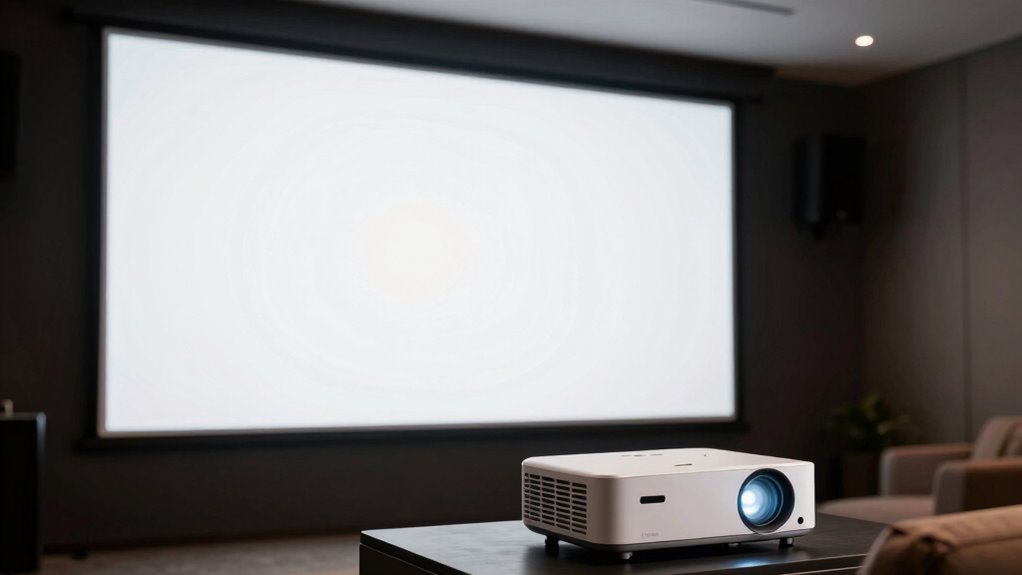

Many buyers overlook the importance of gain when choosing a projector screen, but it greatly affects how bright, contrasty, and clear your images appear. If you pick the wrong gain, your picture can look washed out or too reflective, especially in different room lighting. Higher gain screens boost brightness in well-lit spaces, while lower gain screens diffuse light evenly in darker rooms. Understanding gain helps you select the right screen for your environment—learn more to make the best choice.

Get business pricing on office and shipping supplies
- Business-only prices and quantity discounts
- Tax-exempt purchasing
- Multiple users, one account, clear invoices
Key Takeaways
- Many buyers overlook gain, which significantly affects brightness, contrast, and glare in different room lighting conditions.
- Selecting the correct gain ensures optimal image quality by matching screen reflectivity to ambient light.
- High-gain screens are ideal for bright rooms, while low-gain screens suit darker environments for even light distribution.
- Ignoring gain can cause images to appear washed out or overly reflective, reducing viewing satisfaction.
- Proper gain choice, aligned with room conditions, enhances projector performance and overall viewing experience.
Are you looking for a way to enhance your home theater or professional presentations? One critical factor often overlooked is the projector screen’s gain number. Gain measures how much light the screen reflects back to your eyes, directly impacting the brightness and contrast of your image. Many buyers focus solely on resolution or size, but understanding the gain number can make a significant difference in your viewing experience.
Most people don’t realize that the gain number is tied closely to the screen materials used. Standard matte white screens usually have a gain of around 1.0, offering a balanced reflection that works well in rooms with controlled lighting. However, if your room has ambient light — whether from windows, lamps, or overhead fixtures — a higher gain screen might be more suitable. Higher gain screens, like those with a gain of 1.8 or 2.0, reflect more light directly back to you, boosting brightness and contrast in well-lit environments. Conversely, screens with a gain below 1.0 are called low-gain screens and are designed to diffuse light more evenly, reducing hot spots and glare, especially in darker rooms.
Higher gain screens reflect more light, ideal for bright rooms, while low-gain screens diffuse light for darker, controlled environments.
Many buyers ignore the importance of matching the gain number with the ambient light conditions of their space. If you have a bright room, a high-gain screen can compensate for the excess ambient light, ensuring your image remains clear and vibrant. On the other hand, if your room is dark and controlled, a standard or low-gain screen might give you a more evenly lit image with better color accuracy. Ignoring this can lead to dissatisfaction, with images appearing washed out or overly reflective, diminishing your viewing pleasure. Additionally, the screen material itself plays a vital role in how the gain performs in different environments. Understanding the gain number helps in selecting a screen that matches your specific needs, ultimately optimizing your projector’s performance. When choosing a projector screen, it’s also helpful to consider the viewing environment because it influences the ideal gain for your setup. The key is understanding that the right screen material combined with an appropriate gain number creates a suitable viewing environment. For rooms with lots of ambient light, choosing a screen with a higher gain makes your projector’s light more effective. In darker spaces, sticking with a standard or low-gain screen ensures even light distribution and better color fidelity. The gain number isn’t just a technical detail; it’s a fundamental factor that influences how well your projector performs in your specific environment.
As an affiliate, we earn on qualifying purchases.
Frequently Asked Questions
How Does Gain Affect Image Brightness in Different Room Settings?
Gain directly impacts image brightness in various room settings by affecting reflection quality. A higher gain screen material reflects more light, making images brighter, which is ideal for well-lit rooms. Conversely, low gain screens diffuse light more evenly, reducing glare and maintaining contrast in darker environments. So, choosing the right gain helps you optimize brightness and image clarity based on your room’s lighting conditions.
What Are Common Misconceptions About High-Gain Projector Screens?
Many people think high-gain projection materials always produce brighter images, but that’s not true. They often overlook that high-gain screens have narrower viewing angles, which means your image can look dim or washed out from off-center seats. If you want consistent brightness and wide viewing angles, it’s best to choose a screen with an appropriate gain for your room’s setup, rather than assuming high gain automatically improves performance everywhere.
Can a High-Gain Screen Cause Image Distortion or Glare?
Like looking through a tinted window, a high-gain screen can cause image distortion or glare if you’re outside the ideal viewing angle. Your screen’s material, with its reflective properties, amplifies brightness but can narrow the viewing angle, making the image appear washed out or creating hotspots. To avoid this, make sure the screen’s gain suits your room and seating arrangement, maintaining a clear, vibrant picture from various positions.
How Do Ambient Light Conditions Influence Gain Choice?
Ambient light considerably impacts your gain choice because high ambient light can wash out images on low-gain screens, reducing projection quality. To combat this, opt for a higher gain screen, which reflects more light and maintains brightness despite bright surroundings. Conversely, in dark rooms, a lower gain screen prevents glare and image distortion, ensuring sharp, clear visuals. Matching your gain to ambient light conditions optimizes your viewing experience.
Is a Higher Gain Always Better for Outdoor Projector Screens?
A higher gain isn’t always better for outdoor projector screens. While it increases brightness and improves visibility in bright conditions, it narrows viewing angles and can cause hot spots. Your choice of screen material affects this as well—some materials maintain wider viewing angles even at higher gain levels. Consider your outdoor setup, ambient light, and audience position to balance brightness and viewing comfort effectively.
Conclusion
So, next time you’re choosing a projector screen, remember that the gain number isn’t just a random figure—it’s the key to revealing brighter, sharper images that dance vividly across your space. Ignoring it is like sailing a ship without a compass; you might get there, but the journey won’t be smooth. Pay attention to the gain, and you’ll turn your home theater into a cinematic paradise where visuals pop like fireworks on a clear night.
Fall Picks
fall essentials
As an affiliate, we earn on qualifying purchases.